Cheap High-Protein Breakfasts
Mornings are rushed, which is exactly why breakfast ends up being the meal with the least protein in it — a piece of toast, a coffee, maybe nothing at all. That’s unfortunate, because breakfast is one of the easiest places to add cheap protein if you plan around it even slightly. Eggs and cottage cheese are two of the best protein values in any grocery store, and neither one requires much skill or time, especially with a little bit of prep the night or week before.
Why breakfast protein matters for a tight budget
A high-protein breakfast tends to hold hunger off longer than a carb-only one, which matters for your wallet as much as anything else — the alternative is usually an expensive coffee-shop snack around 10:30am because breakfast didn’t carry you through the morning. Spending a little more thought on breakfast upfront is often cheaper than the mid-morning backup plan.
How much protein do you actually need at breakfast?
There is no single breakfast number that fits everyone, but 20–30g is a useful planning range for comparing meals. Your ideal amount depends on your total daily needs, portion size, and how long breakfast needs to carry you. Use the estimates below as a shopping and meal-prep tool rather than a rigid target.
More is not automatically better for a tight budget. Start with a normal portion from the list, then adjust based on appetite: add one egg, 1/2 cup Greek yogurt, or a glass of milk if the meal feels too light instead of automatically stacking an expensive protein shake on top.
The cheapest high-protein breakfast options
For the full cost-per-gram comparison across protein sources generally, see the cheap protein sources guide. For breakfast specifically, eggs, cottage cheese, and Greek yogurt are consistently the best value.
Cheap high-protein breakfast ideas
Egg and potato meal prep
Prep once on a day off, reheat all week in under two minutes. One of the cheapest per-serving breakfasts on this whole site. Full recipe: Egg and Potato Breakfast Meal Prep.
Scrambled eggs
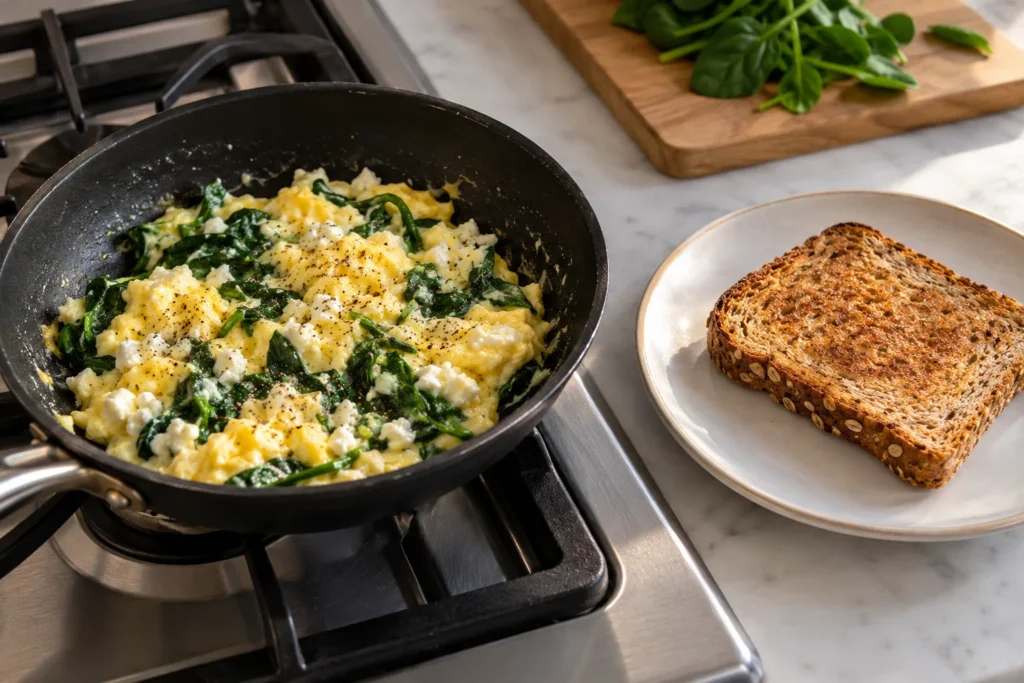
Five minutes, very cheap, roughly 18g of protein for three eggs. Works with or without toast. Stir a spoonful of cottage cheese into the eggs while they cook for an easy protein boost — it melts into the curds and barely changes the flavour.
Greek yogurt with a side
Among the lowest-effort options here — plain Greek yogurt alone provides roughly 15–20g of protein per cup. Plain beats flavoured here — flavoured versions typically carry noticeably less protein and more sugar for the same price. Add fruit or a small amount of granola for bulk.

Cottage cheese, plain or dressed up
Eaten straight from the container, topped with fruit, or used in an actual recipe like cottage cheese cookie dough. A cup provides roughly 25g of protein. Prices have risen in some areas, but it’s still one of the better values per gram of protein in the dairy aisle.
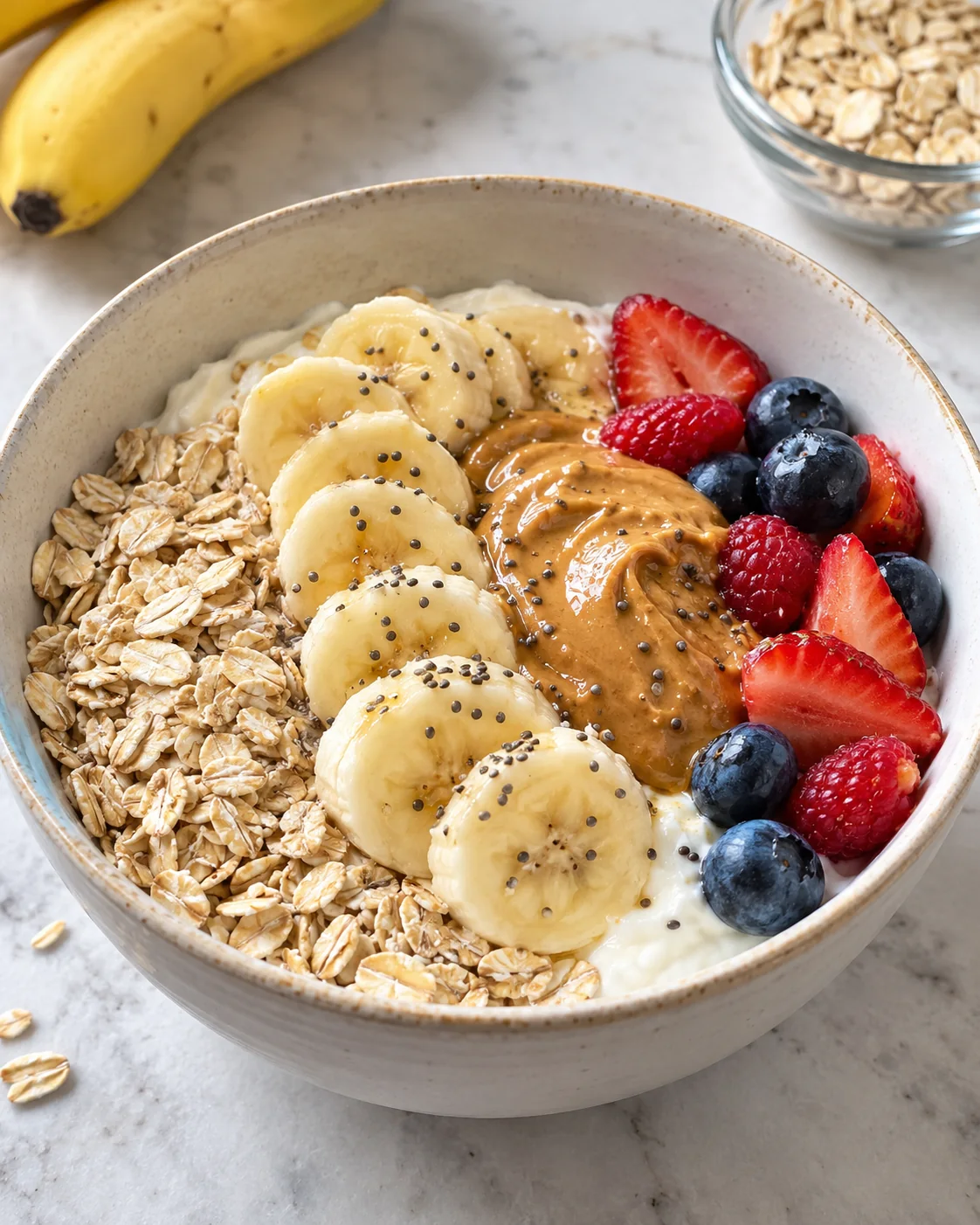
Peanut butter on toast or oatmeal
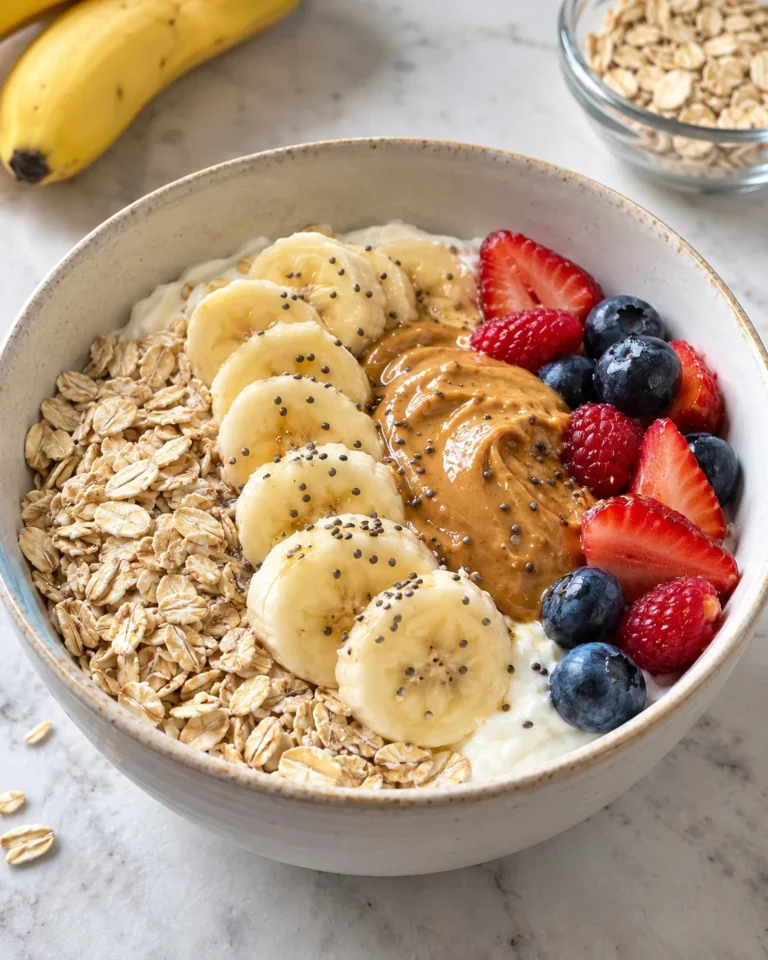
Worth being honest about this one: it’s cheap and popular, but lower in protein than the other options here — roughly 7–8g per two tablespoons. Treat it as a moderate add-on rather than the main event, and pair it with eggs or Greek yogurt if protein is the goal.
Hard-boiled eggs, batch prepped
Boil 6–8 eggs on a Sunday, keep them in the fridge for the week. The fastest grab-and-go option on this list — roughly 6g of protein and very cheap per egg at typical prices.

High-protein overnight oats
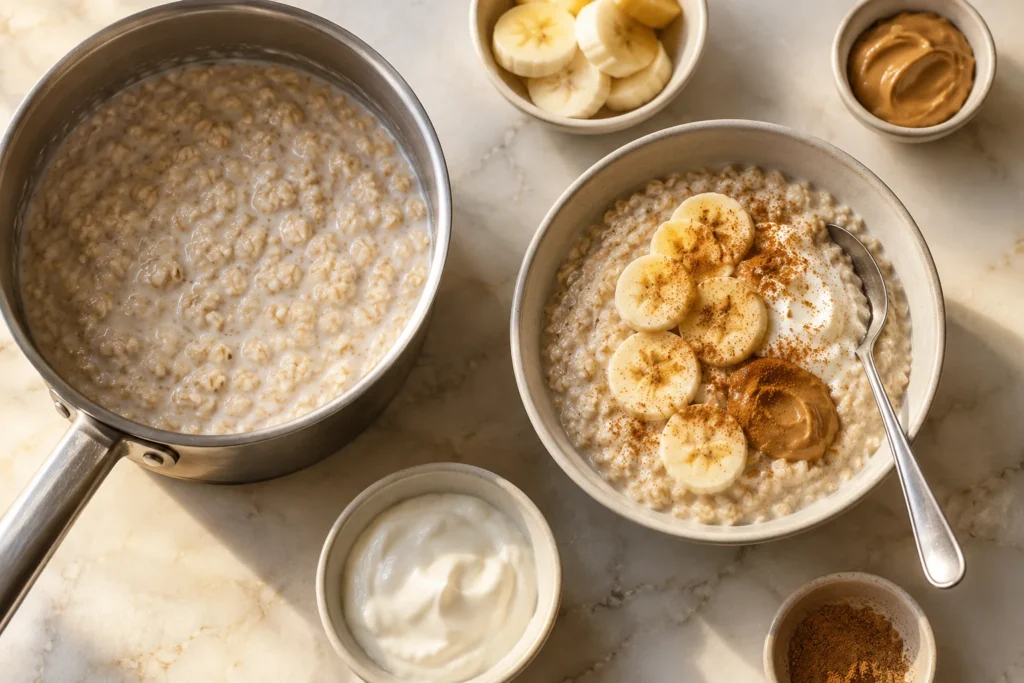
No cooking at all — mix in a jar the night before, eat cold the next morning. Greek yogurt and a spoonful of dry milk powder push this one to roughly 20–24g of protein, well past what a standard oats-and-milk breakfast carries. Full recipe: High-Protein Overnight Oats.

Cottage cheese protein pancakes
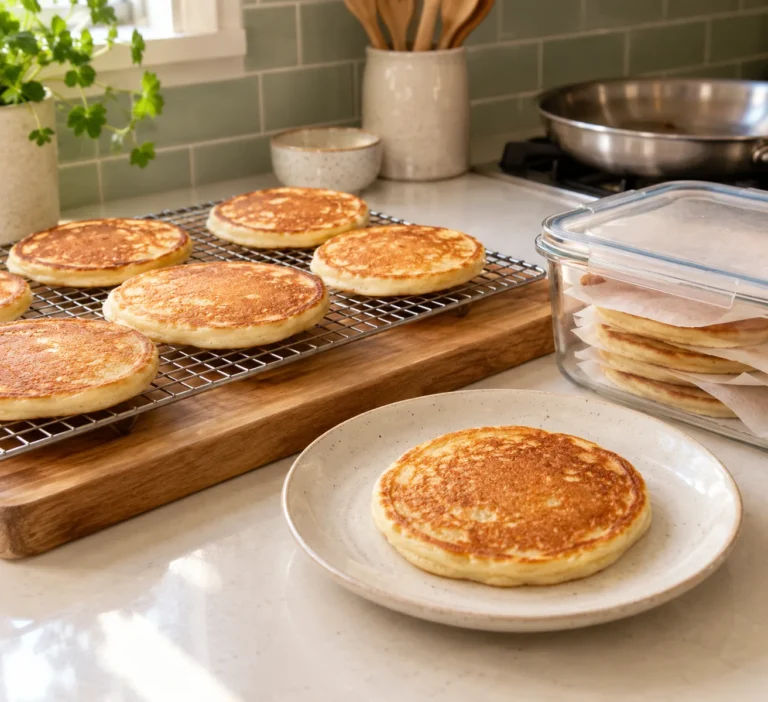
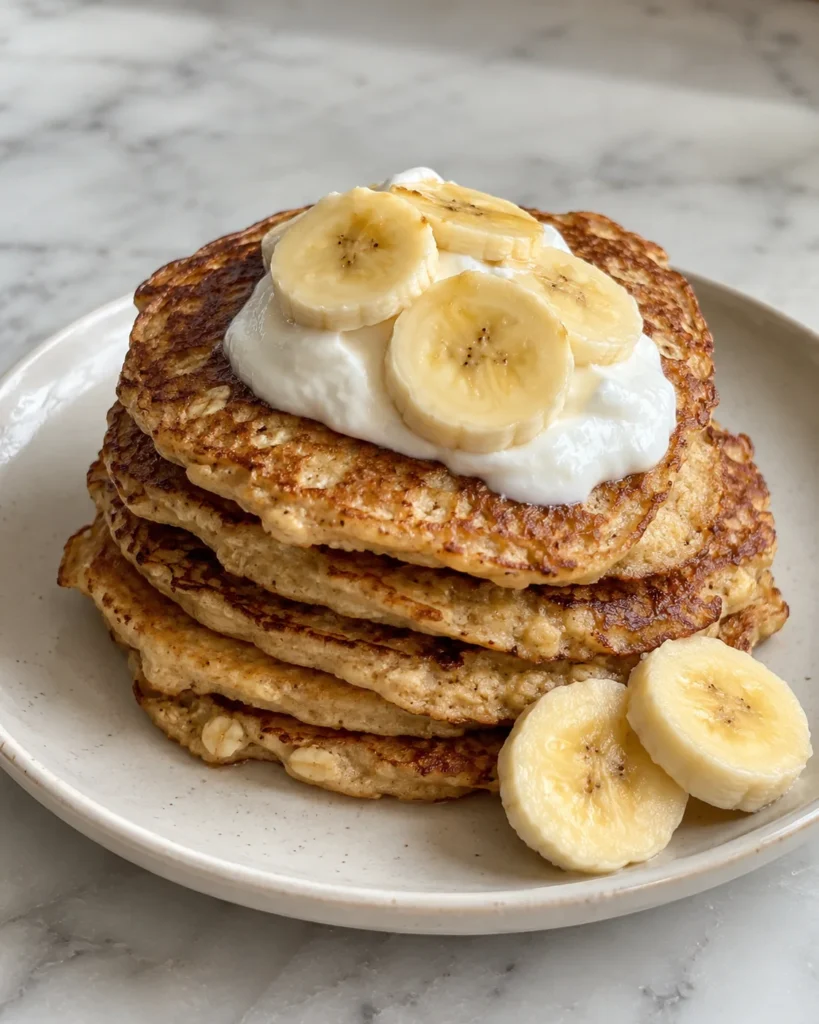
Blended cottage cheese and eggs make a batter that cooks up like a normal pancake with none of the usual low-protein pancake problem — about 18–22g per serving. Takes about 15 minutes stovetop, and the batch freezes well for busy mornings. Full recipe: Cottage Cheese Protein Pancakes.
Egg muffins (meal prep)
A dozen baked in a muffin tin, grab two or three on your way out. More portable than the egg and potato bowls above, and freezes better since there’s no potato involved to change texture on reheating. Full recipe: High-Protein Egg Muffins.

Freezer breakfast burritos
Eggs, hash browns, and black beans rolled into a tortilla and frozen individually — the most genuinely portable option here, eaten one-handed with zero plate or fork required. About 22–26g of protein each. Full recipe: Freezer Breakfast Burritos.

High-protein baked oatmeal
A sliceable, cake-like oatmeal bake that’s good warm or straight from the fridge cold. One batch makes six servings, each around 14–17g of protein thanks to eggs and dry milk powder folded into the batter. Full recipe: High-Protein Baked Oatmeal.
Storage roadmap
- Cook fresh in 5–10 minutes: scrambled eggs or cottage cheese toast.
- Prepare for the next 3–4 days: egg muffins, egg-and-potato bowls, overnight oats, or baked oatmeal.
- Prepare once for the week: keep hard-boiled eggs unpeeled for up to 1 week and peel them as needed.
- Build a freezer reserve: breakfast burritos, cottage cheese pancakes, baked oatmeal slices, and egg muffins all freeze in individual portions.
For the lowest-effort system, keep one no-cook option in the fridge, one batch recipe for the next few days, and one freezer option for mornings when the plan falls apart. That three-layer setup is more reliable than trying to make one recipe cover every breakfast.

Which one should you actually pick?
If you’ve never meal-prepped a breakfast before, start with hard-boiled eggs — it’s the lowest-effort entry point and teaches you the basic habit of having something ready before you reach for it. If you eat at a desk or in a car, the freezer breakfast burritos or egg muffins are the most genuinely one-handed options. If you’d rather eat something that feels less like “protein food” and more like a normal breakfast, the cottage cheese pancakes or baked oatmeal both disguise their protein boost completely. And if cooking anything before 7am sounds unbearable, the overnight oats need zero morning effort beyond opening a jar.
Prep-ahead vs. quick-cook
Some of these are better planned ahead, others are faster fresh. Egg and potato bowls, hard-boiled eggs, and Greek yogurt all hold up well pre-portioned into containers for grab-and-go mornings. Scrambled eggs and plain cottage cheese are better made fresh — scrambled eggs specifically don’t reheat all that well, and cottage cheese needs no prep at all, so there’s no real benefit to doing it ahead.
Common breakfast mistakes that quietly cost you protein
Buying flavoured yogurt instead of plain. Flavoured Greek yogurt often has less protein per cup than plain, with sugar making up the difference — check the label rather than assuming “Greek” on the front means the same protein count across every variety on the shelf.
Skipping breakfast on busy mornings instead of grabbing a prepped option. This is the single biggest reason batch prep matters here — if the choice on a rushed morning is between nothing and a 90-second reheat, having the reheat option already in the fridge is what actually gets eaten.
Treating toast or cereal as the base and protein as an afterthought. Flipping the order — eggs or cottage cheese as the main event, toast as the side — usually gets you to 20g+ without changing what’s actually on the plate very much.
Not checking egg and cottage cheese prices against the flyer. Both are frequently on sale somewhere nearby in any given week; stocking up a little when the price dips is one of the easiest ways to lower the average cost of every option on this list.
Grocery staples worth always having on hand
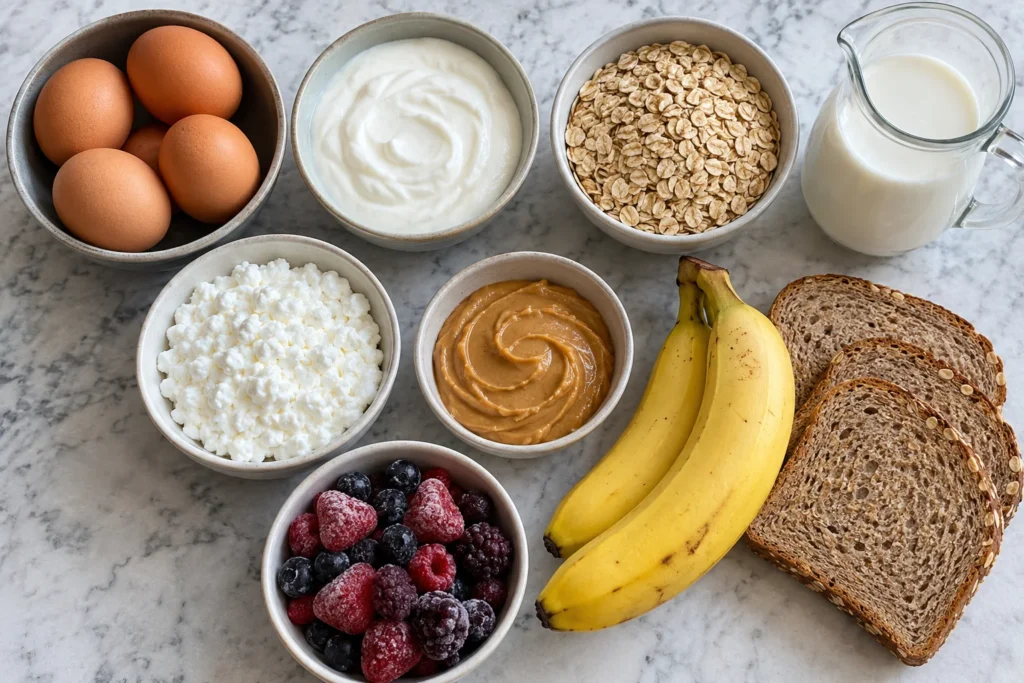
Every option on this list draws from a short shared list of ingredients, which is part of why it’s realistic to keep stocked continuously rather than shopping for a different breakfast each week: eggs, plain Greek yogurt or cottage cheese, a bag of potatoes, rolled oats, and a jar of peanut butter. Dry milk powder is a less obvious one — it’s shelf-stable, cheap per gram of protein, and shows up as the quiet protein boost in both the overnight oats and the baked oatmeal without adding any real flavour of its own.
Keeping these five or six items stocked means a high-protein breakfast is always possible without a special grocery trip — the limiting factor becomes time, not whether the ingredients are in the house.
Cost comparison
| Breakfast building block | Amount | Price basis (BLS, October 2026) | Cost |
|---|---|---|---|
| Hard-boiled eggs | 2 eggs | $2.32 per dozen | about $0.39 |
| Toast | 2 slices (about 56 g) | $1.86 per lb of white bread | about $0.23 |
| Cheddar | 1 oz | $6.13 per lb | about $0.38 |
| Milk | 1 cup | $4.10 per gallon | about $0.26 |
| White potatoes | 1 lb | $0.99 per lb | about $0.99 |
| Banana | 1 medium (about 118 g) | $0.66 per lb | about $0.17 |
Two eggs, two slices of toast and an ounce of cheddar cost about $1.00. A pound of potatoes costs less than a dollar, which keeps the egg and potato bowls the cheapest batch option on this list. Greek yogurt and cottage cheese are not tracked by the Bureau of Labor Statistics, so they are missing from the table. Check the unit price on your shelf tag, then run it through the cost per serving guide. Source: BLS Average Price Data, checked November 15, 2026.
Building a rotation so you don’t get bored
Eating the same breakfast every day for a month is how most high-protein routines quietly fall apart — not because the food was bad, but because the ninth bowl of plain Greek yogurt in a row is genuinely hard to want. A rotation of three or four options, not just one, tends to last far longer than a single “best” choice.
A practical way to build one: pick one no-cook option for your slowest mornings (Greek yogurt or overnight oats), one batch-prep option you make once and eat from all week (egg muffins, egg and potato bowls, or hard-boiled eggs), and one “feels like a treat” option for when plain protein food has lost its appeal (cottage cheese pancakes or baked oatmeal). Rotating between just those three categories — rather than between six individual recipes — keeps the decision simple while still giving enough variety that nothing becomes the thing you dread opening the fridge to find.
It’s also worth changing what you pair things with before changing the base recipe itself. The same batch of egg muffins tastes noticeably different with hot sauce one day and salsa the next; the same Greek yogurt bowl changes completely with frozen berries instead of a banana. Varying the toppings is faster than cooking a new recipe and solves most of the boredom problem on its own.
Related reading: Egg and Potato Breakfast Meal Prep, High-Protein Meals Without Protein Powder, and Best Cheap Protein Sources by Cost Per Gram.
Frequently asked questions
Can I meal prep eggs for the whole week?
Keep hard-boiled eggs unpeeled in the fridge for up to 1 week. Egg muffins and other cooked egg dishes are better used within 3–4 days or frozen in individual portions. Plain scrambled eggs are best cooked fresh because reheating makes them firmer.
What’s the cheapest high-protein breakfast on this list?
Hard-boiled eggs and egg and potato bowls are typically the lowest-cost options at average grocery prices. Cottage cheese and Greek yogurt cost somewhat more per serving but need zero cooking equipment, which has its own kind of value on a rushed morning.
Do I need a protein powder to hit these numbers?
No — every option on this list reaches 15g or more using only whole food: eggs, dairy, or both. Protein powder isn’t a bad tool, but it’s not necessary at breakfast specifically, since eggs and dairy are already two of the most cost-effective protein sources in a typical grocery store.
What if I don’t like eggs or dairy?
This particular list leans heavily on both because they’re the cheapest options available, but a budget high-protein breakfast without either is possible — canned fish, cooked lentils, or a protein-fortified oatmeal are workable substitutes, just generally at a slightly higher cost per gram of protein than eggs or cottage cheese.