How to Calculate Cost Per Serving for Any Recipe
Knowing what a meal actually costs per serving is one of the most useful habits in budget cooking. It lets you compare two recipes side by side, decide whether a sale is worth stocking up on, and stop buying groceries on autopilot.
The math itself is simple. What trips people up is knowing which numbers to use, because the price on the package is almost never the same as the cost in your pot.
This guide shows you the full method, step by step, using common grocery items as examples.
Price note: This guide uses typical grocery-store examples rather than fixed prices. Grocery prices change by province, store, sale cycle, package size, and availability. Use your own receipt, local flyer, or store app for the most accurate calculation.
Quick Answer
The formula:
Total recipe cost ÷ Number of servings = Cost per serving
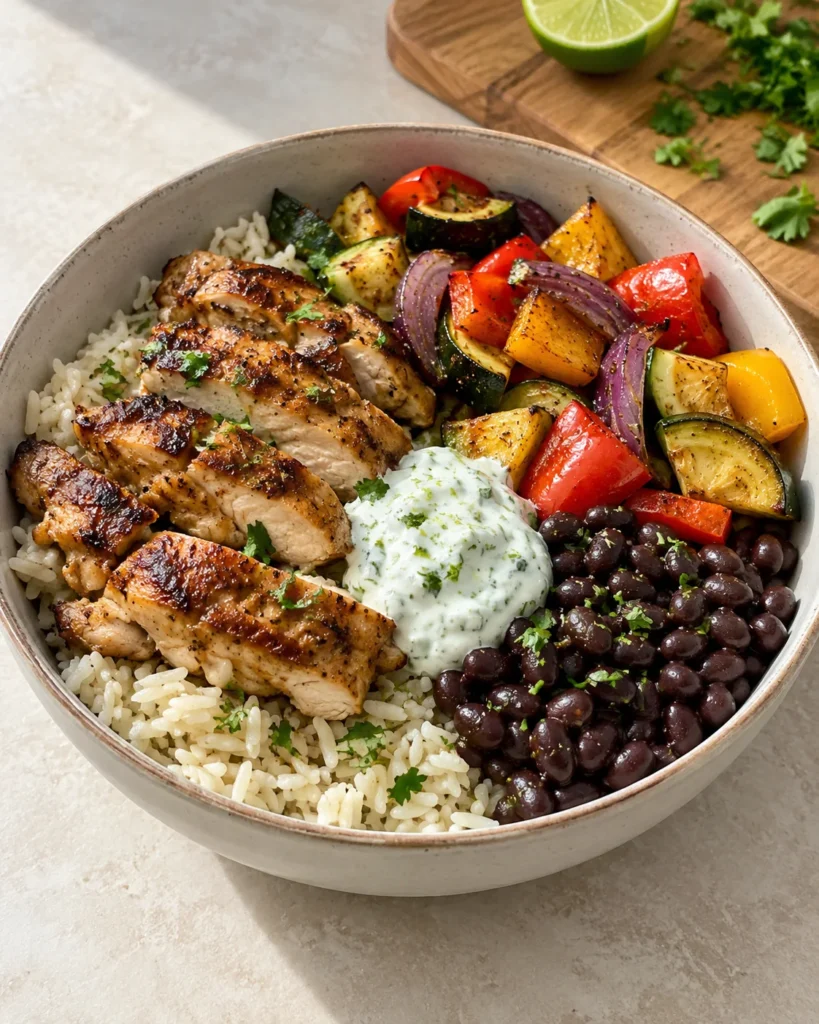
Example: If a batch of lentil rice bowls makes 4 servings, you’d divide the total ingredient cost by 4 to get the cost per serving.
That is the basic idea. The rest of this guide is about calculating that “total recipe cost” accurately.
The Simple Formula
Total recipe cost ÷ Number of servings = Cost per servingNothing fancy. The challenge is getting the “total recipe cost” right. That means counting only what you actually used, not everything you bought during the grocery trip.
Step-by-Step Method
Step 1 — List every ingredient in the recipe
Write out every ingredient you use, including small things like oil, salt, spices, sauces, broth, and toppings. These are easy to skip, but they add up when you cook often.
Step 2 — Find the package price
Check your grocery receipt, store app, or local flyer. Use the price you actually paid when calculating a recipe you already made. For future planning, use a normal regular-price estimate unless you are specifically planning around a sale.
Step 3 — Calculate only the amount you used
This is the most important step.
If a 2 kg bag of rice costs a certain amount and your recipe uses 500 g, you used one-quarter of the bag — so one-quarter of the bag price counts toward your recipe.
For liquids, convert to millilitres. For proteins, use weight in grams when possible, especially for more expensive foods like chicken, beef, salmon, or Greek yogurt.
Formula for a partial package:
(Amount used ÷ Total package size) × Package price = Ingredient costStep 4 — Add a small pantry-cost estimate
Oil, spices, salt, broth powder, and sauces are real costs but awkward to measure exactly. A practical approach is to estimate them consistently.
- Oil: a small, consistent amount per tablespoon, depending on the type.
- Salt, pepper, dried spices: add a small flat estimate per recipe for a typical spice mix.
- Broth powder, cubes, or concentrate: calculate from the package if it is a major ingredient.
- Sauces: estimate small amounts per tablespoon.
The goal is not to calculate every grain of salt to the penny. The goal is to avoid pretending pantry ingredients are always free.
Step 5 — Divide by realistic servings
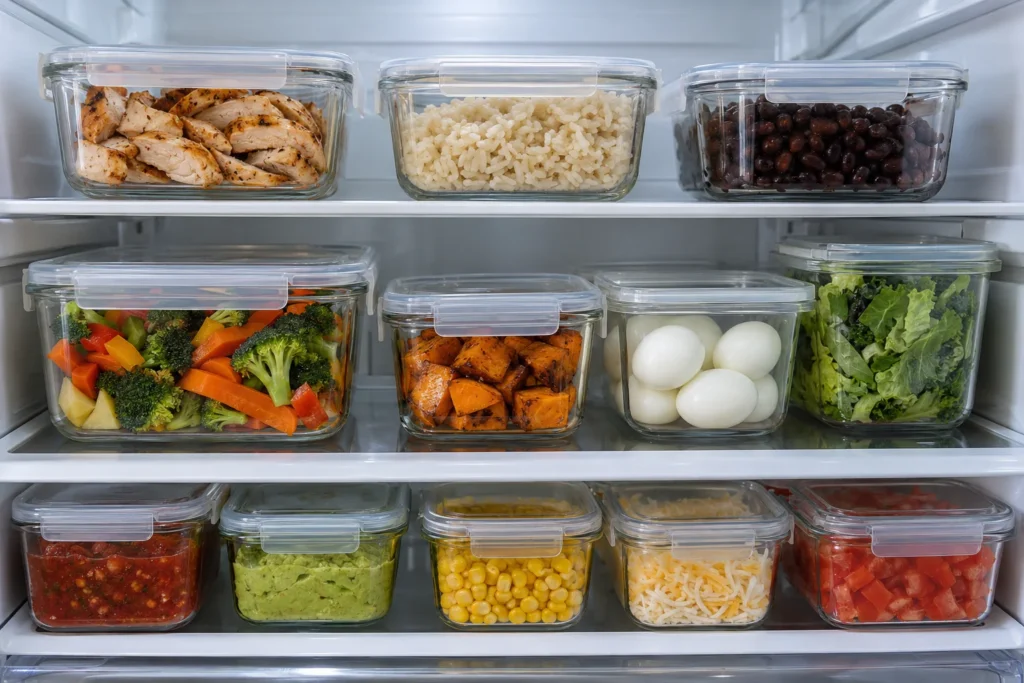
Add all ingredient costs together, then divide by the number of servings the recipe actually makes.
A recipe that says it “serves 6” might only serve 4 hungry adults. For budget high-protein meal prep, servings should be realistic enough that the meal actually fills you.
Why Package Price Is Not Recipe Cost
This is the biggest beginner mistake.
If you buy a pack of chicken thighs and use half of it, only half the pack price counts toward that recipe — not the whole pack. Counting the whole package inflates the cost per serving and makes budget meals look more expensive than they are.
The reverse is also true. A bottle of oil may be a bigger upfront purchase, but if you only use one tablespoon, the cost in that recipe is small.
Always ask: how much of this did I actually use in this recipe?
Handling Pantry Staples
Some ingredients are hard to track because you buy them infrequently and use small amounts.
| Staple | Practical approach |
|---|---|
| Olive or vegetable oil | Estimate per tablespoon from package price. |
| Spices | Use a small flat estimate unless using large amounts. |
| Salt | Treat as near-zero for most recipes. |
| Broth | Calculate cost per litre if it is a main ingredient. |
| Soy sauce or hot sauce | Estimate per tablespoon for small amounts. |
You do not need perfect precision. You need a consistent habit.
Handling Bulk Items
Large rice bags
Divide the bag price by the number of grams in the bag to get a per-gram cost. Then multiply by how much your recipe uses.
Example: A large 10 kg bag works out to a much lower cost per 100 g than a small 2 kg bag. Use your actual store price instead of assuming one national number.
Costco packs and family packs of meat
These are handled the same way as any partial package. If you buy a large pack of chicken and use one-quarter of it, count roughly one-quarter of the pack price in that recipe.
Portioning tip
For protein foods, a kitchen scale gives the cleanest calculation. Without a scale, piece count is a reasonable fallback. For example, if a pack has 12 chicken thighs and you use 4, count roughly one-third of the pack cost.
Sale Prices vs. Regular Prices
Use the price you actually paid when calculating a recipe you made this week.
For planning future meals, keep two numbers when possible:
- Regular estimate: what the recipe usually costs without a special sale.
- Sale estimate: what it costs when a key ingredient drops in price.
This matters because a chicken meal prep recipe might look very cheap during a sale but cost noticeably more at regular price. Both numbers are useful. They just answer different questions.
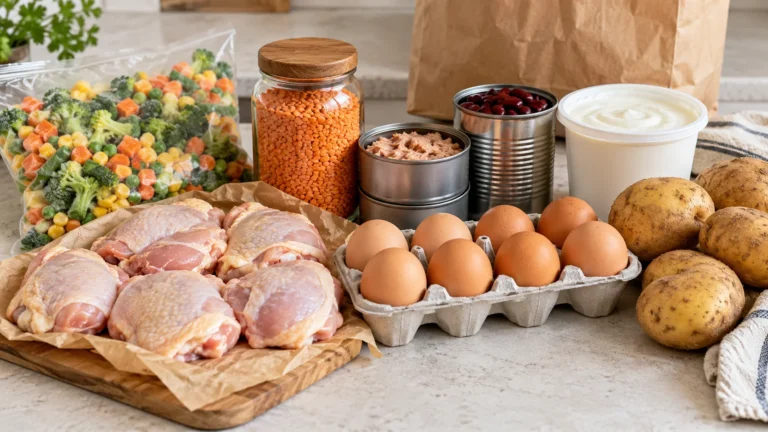
Grocery Staples Worth Knowing
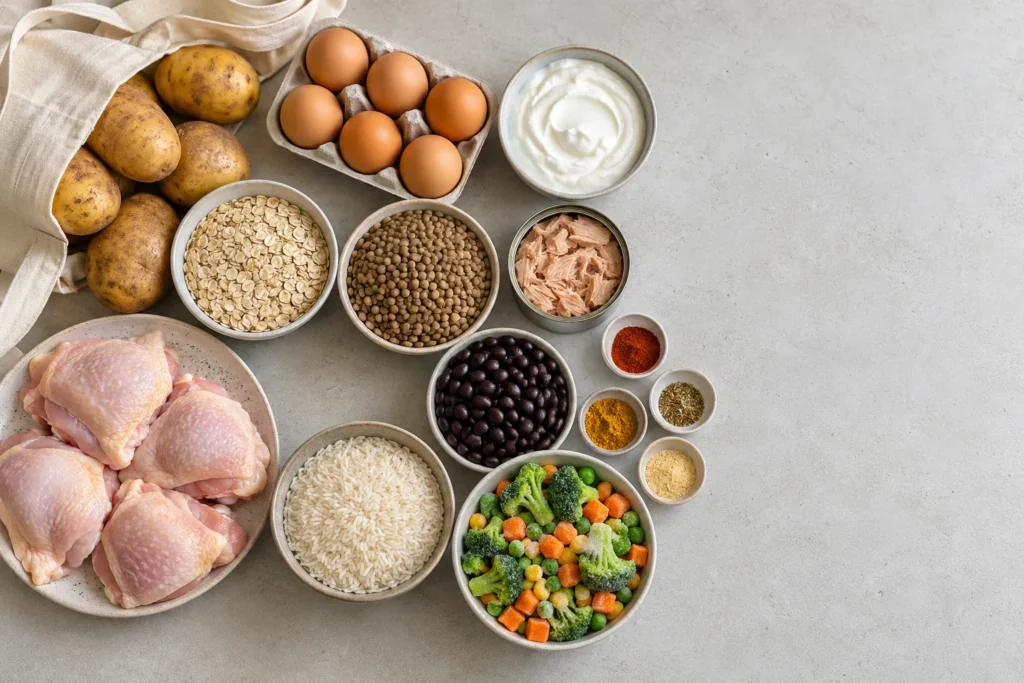
Exact prices vary by region, store, and sale cycle, so this guide skips specific numbers — check your own receipt or flyer instead. But these staples consistently behave the same way cost-wise:
| Ingredient | Notes |
|---|---|
| White rice, 2 kg bag | Cost per 100 g drops in larger bags. |
| Chicken thighs, bone-in | Sale and family-pack pricing can change the math. |
| Eggs, 12-pack | Conventional eggs are usually cheaper than specialty eggs. |
| Lentils, 900 g bag | Strong protein-per-dollar and long shelf life. |
| Frozen vegetables, 750 g | Store brand is often the best value. |
| Plain Greek yogurt, 750 g tub | Larger tubs usually beat single-serve cups. |
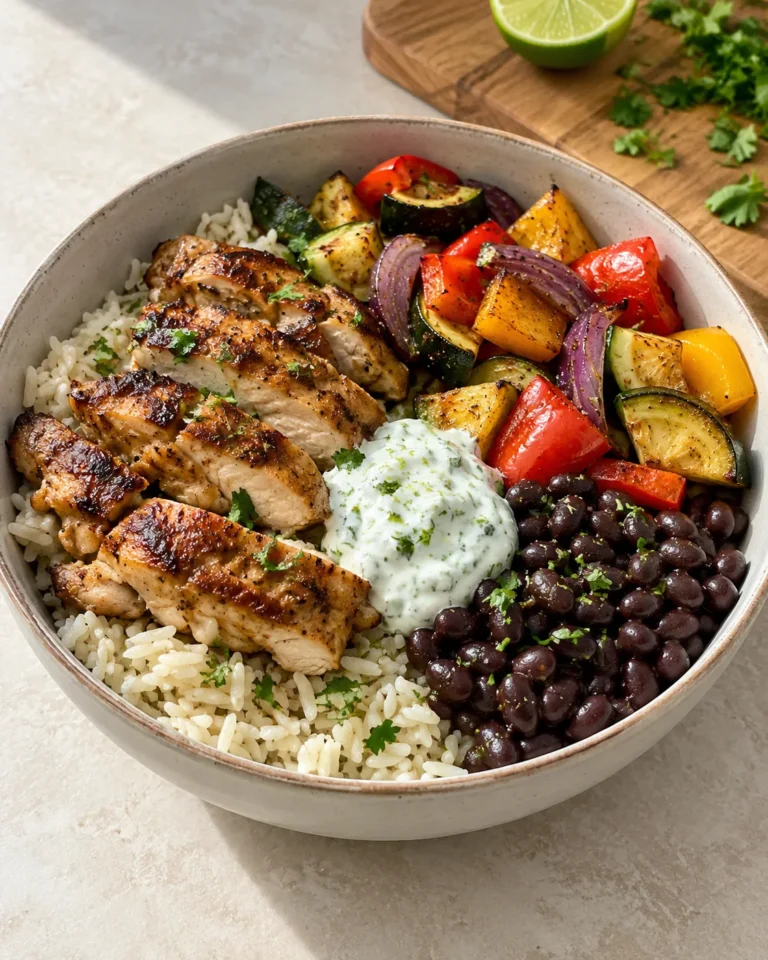
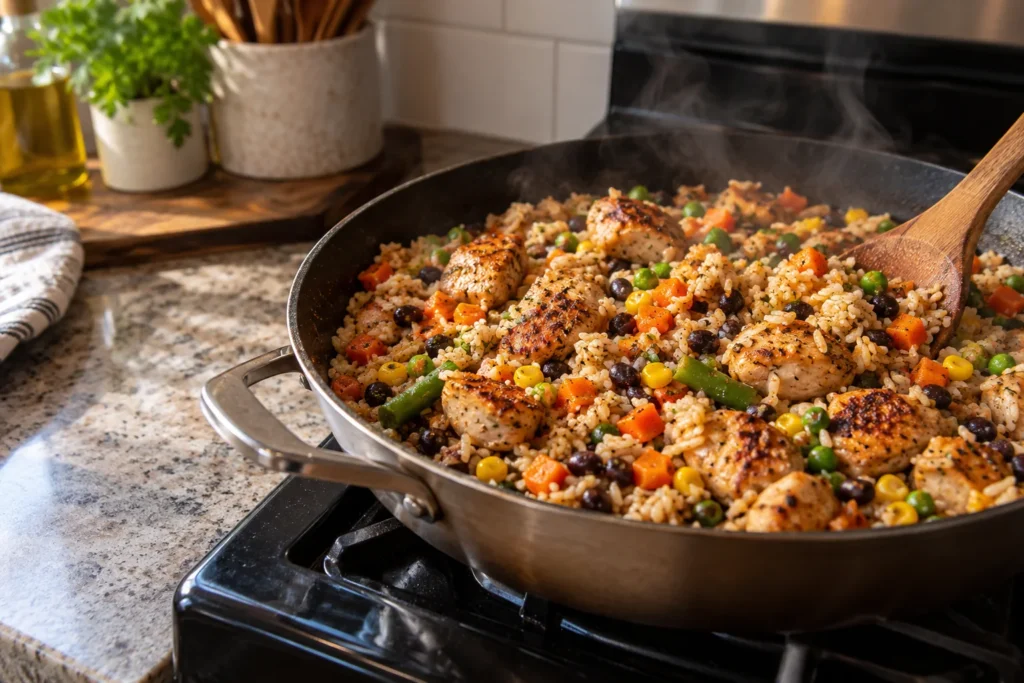
Example Calculation: Chicken Rice Meal Prep Bowls
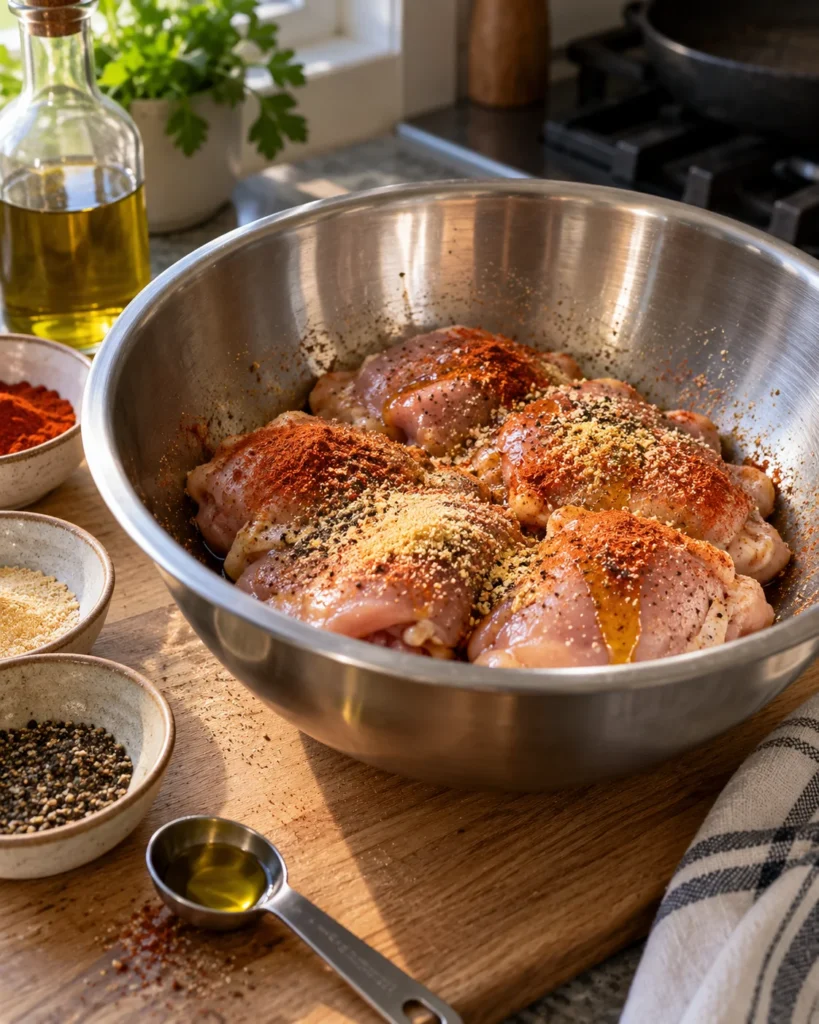
Recipe makes 4 servings.
| Ingredient | Amount used | Share of total cost |
|---|---|---|
| Bone-in chicken thighs | 800 g from a larger pack | Largest share — the protein usually drives most of the cost |
| White rice, dry | 400 g from a 2 kg bag | Small share — rice is cheap per gram |
| Frozen mixed vegetables | 300 g from a 750 g bag | Small-to-moderate share |
| Oil, salt, spices | Pantry estimate | Minor addition |
| Total recipe cost | Add the four amounts, then divide by 4 servings |
Add up what you actually paid for each line using your own receipt or flyer price, then divide the total by 4 to get your real cost per serving. The breakdown above just shows which ingredients carry the most weight — chicken first, then vegetables, then rice, with pantry items adding the least.
To see the full recipe with cooking steps and prep notes, visit the High-Protein Chicken Rice Meal Prep Bowls guide.
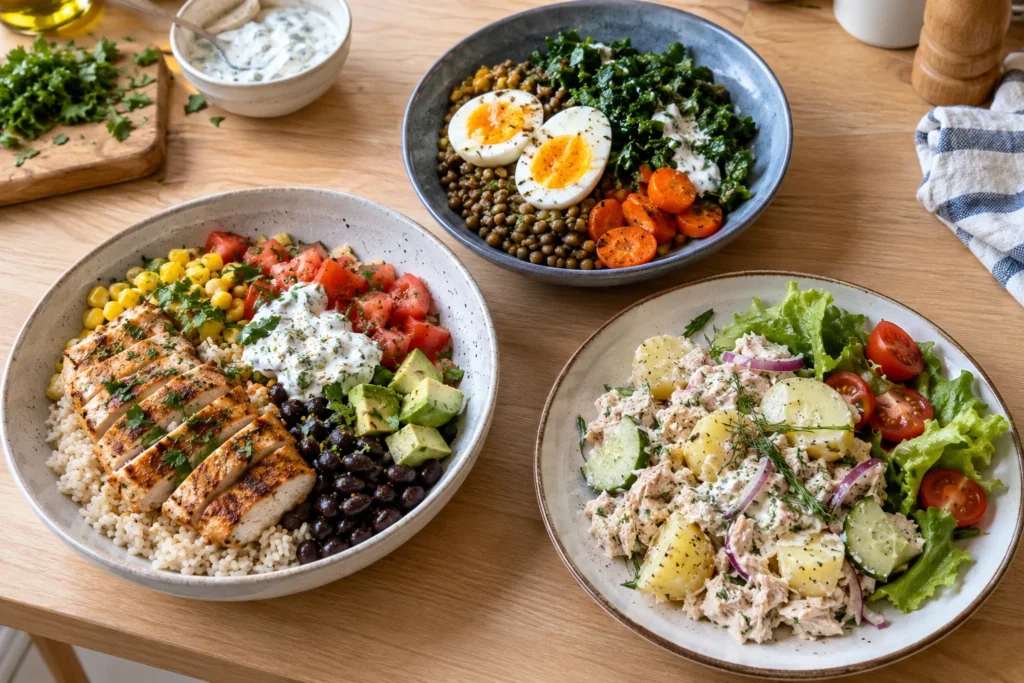
Example Calculation: Lentil Rice Bowls
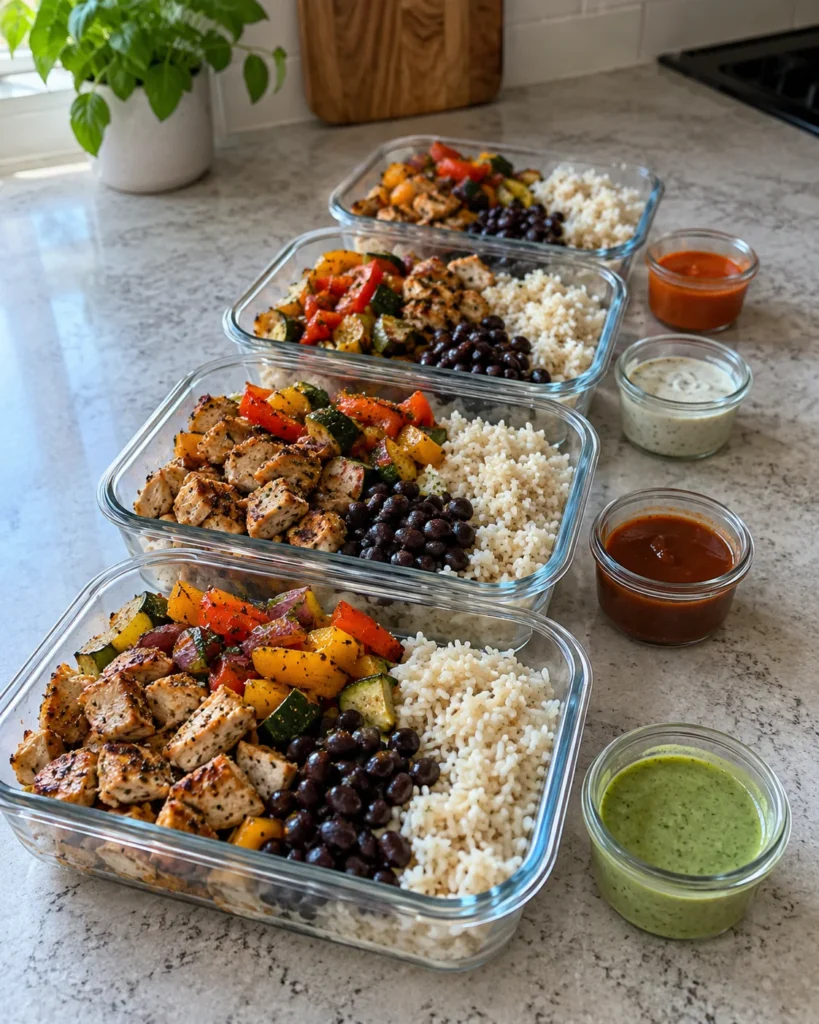
Recipe makes 4 servings.
| Ingredient | Amount used | Share of total cost |
|---|---|---|
| Red lentils | 300 g from a 900 g bag | Small share — one of the cheapest proteins per gram |
| White rice, dry | 300 g from a 2 kg bag | Small share |
| Canned diced tomatoes | 1 can | Moderate share — usually the single biggest line item here |
| Oil, onion, garlic, spices | Pantry estimate | Minor addition |
| Total recipe cost | Add the four amounts, then divide by 4 servings |
This recipe is one of the cheapest in this guide to make — dry lentils and rice are both inexpensive, and the only real cost driver is the canned tomatoes.
Cost Per Serving vs. Cost Per Gram of Protein
Cost per serving and cost per gram of protein answer different questions.
- Cost per serving tells you how affordable the meal is.
- Cost per gram of protein tells you how efficient the protein source is.
A lentil bowl may have an excellent cost per serving, while canned tuna may deliver more protein in less time. Both can be smart budget choices depending on the meal. For examples of how both measures work in practice, see the guide to cheap high-protein meal prep.
For ingredient comparisons, use the same method with protein grams instead of servings:
Food cost ÷ grams of protein = cost per gram of proteinBest Foods for Low Cost Per Serving
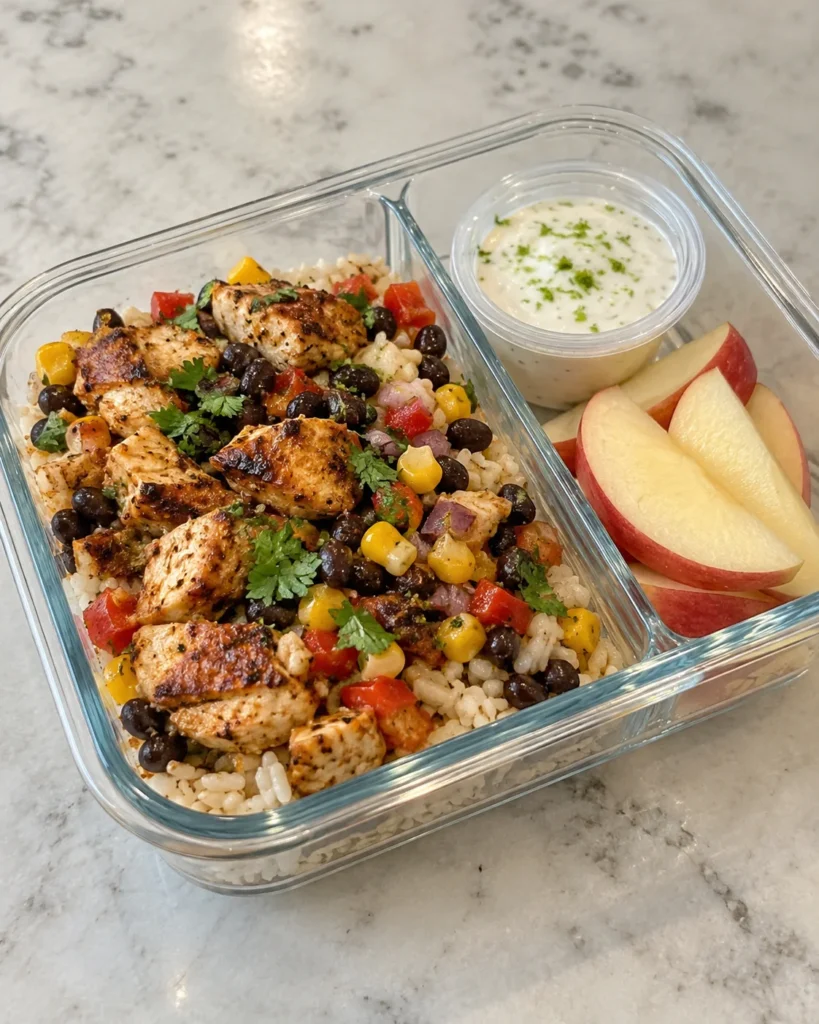
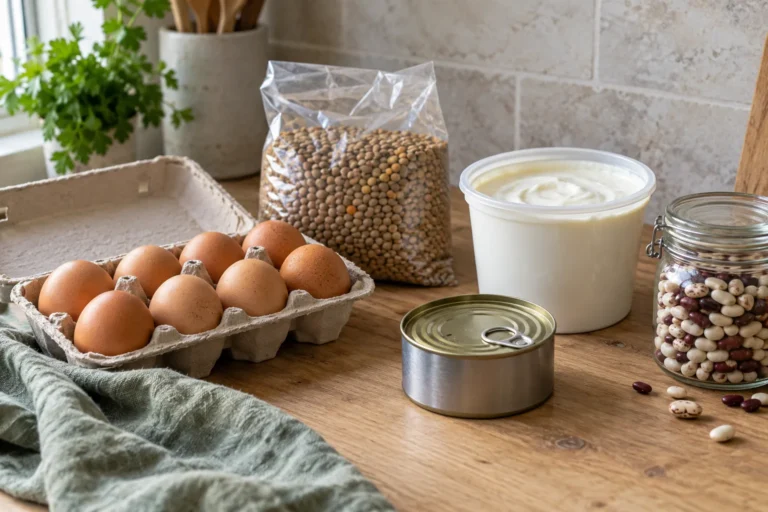
Some foods consistently help keep meal prep costs down:
- Dry lentils and beans: very strong value, especially for soups, bowls, stews, and vegetarian meals.
- Rice: affordable carbohydrate base, especially in larger bags.
- Eggs: flexible protein for breakfast, fried rice, wraps, and quick meals.
- Canned tuna: useful no-cook protein for students and busy weeks.
- Chicken thighs on sale: often better value than chicken breast.
- Frozen vegetables: predictable cost, less waste, easy meal prep.
- Tofu: often a strong plant-based protein value, especially from Asian grocery stores.
- Greek yogurt in large tubs: usually better value than single-serve cups.
For a ready-to-use shopping list built around these staples, see the Cheap Protein Grocery List.
Simple Cost-Per-Serving Template
Use this mini-template when building or reviewing a recipe:
| Ingredient | Package price | Amount used | Estimated recipe cost |
|---|---|---|---|
| Ingredient 1 | |||
| Ingredient 2 | |||
| Ingredient 3 | |||
| Pantry estimate | |||
| Total recipe cost | |||
| Number of servings | |||
| Estimated cost per serving |
The more often you do this, the faster it becomes. After a few recipes, you will start to know which meals are naturally cheap and which ones only look cheap because the package price is hiding the real cost.
When Cost Per Serving Is Not the Only Thing That Matters
Cost matters, but it is not the only thing that makes a meal useful.
A slightly more expensive meal may still be the better choice if it:
- has more protein per serving,
- reheats better,
- freezes well,
- uses food you will actually eat,
- saves time during the week, or
- helps you avoid takeout.
The cheapest recipe that sits untouched in the fridge is not a budget win. The goal is realistic cooking, not spreadsheet perfection.
Common Mistakes
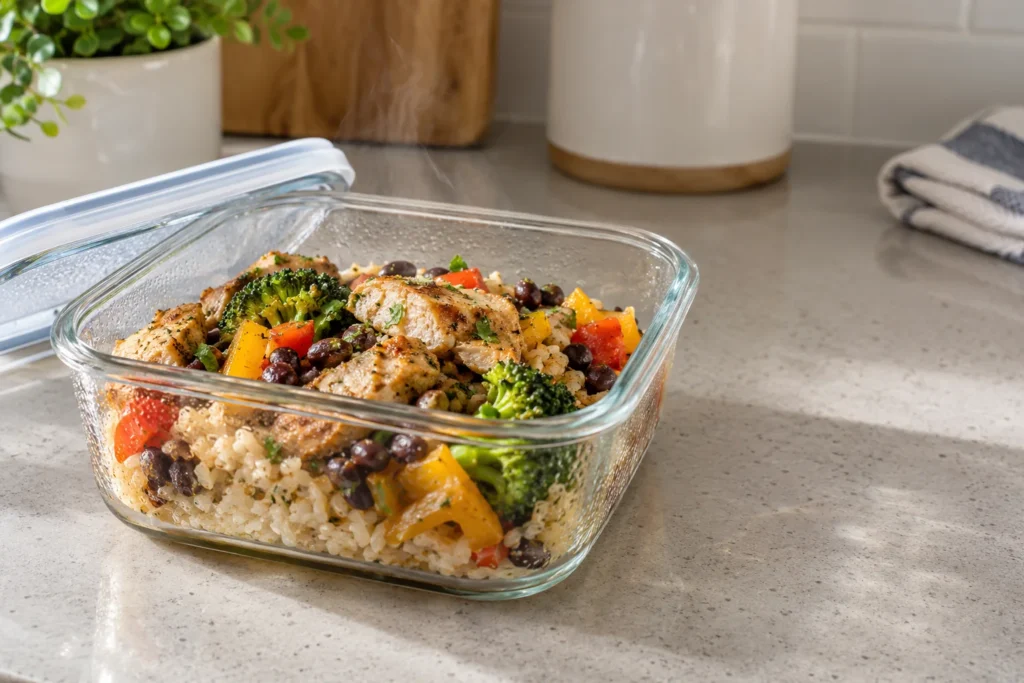
Counting the full package when only part is used
If you use half a bag of lentils, count half the bag price, not the full bag.
Forgetting oil, spices, sauces, and toppings
Small ingredients do not need perfect math, but they should not disappear completely.
Using sale prices as permanent prices
Sale prices are useful for stock-up decisions. Regular prices are better for everyday planning.
Underestimating servings
A meal that claims six servings but only fills you four times will be more expensive per real serving.
Ignoring food waste
If a bulk item spoils before you use it, the real cost per serving goes up.
Assuming homemade is always cheaper
Homemade food is often cheaper, but not automatically. Expensive ingredients, waste, and tiny serving sizes can change the math.
FAQ
How do you calculate cost per serving for a recipe?
Add the cost of all ingredients used in the recipe, then divide by the number of servings. The basic formula is total recipe cost divided by number of servings.
Should I include spices and oil in recipe cost?
Yes, at least roughly. For most simple recipes, a small pantry estimate is enough. You do not need perfect math, but pretending oil and spices are free makes recipe costs less honest.
Do I count the full package price or only what I use?
Count only what you use. If you buy a 2 kg bag of rice and use 400 g, count 20% of the bag price in that recipe.
How do I calculate cost per serving for bulk groceries?
Divide the full package price by the total package size to get a per-gram or per-unit cost. Then multiply by the amount used in the recipe.
Should I use sale prices or regular prices?
Use the price you actually paid for a meal you are making now. For planning future meals, use regular prices and keep sale prices as a separate “stock-up” note.
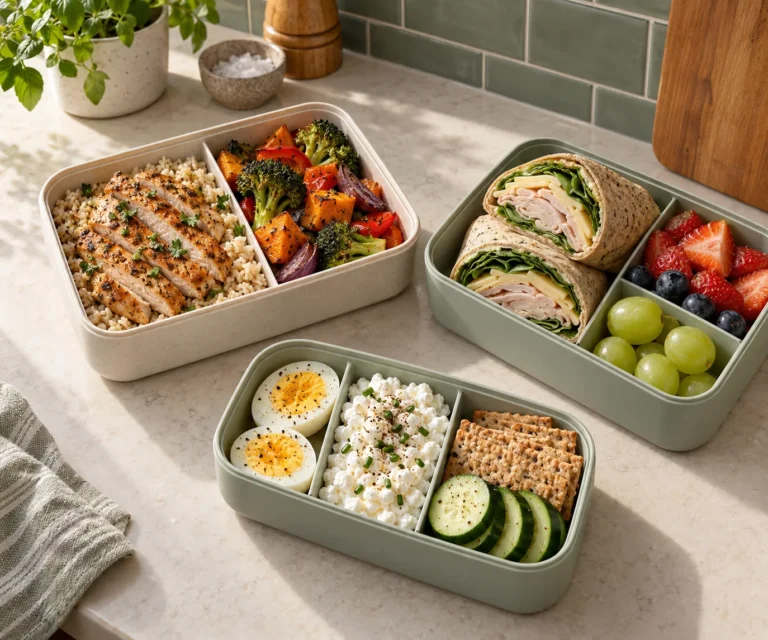
How do I calculate cost per serving for meal prep?
Calculate the total batch cost, then divide by the number of meal prep containers or real servings. If one container is much larger than the others, adjust the serving count realistically.
What is a good cost per serving for budget meal prep?
It depends on the protein, region, and grocery store. Many simple budget meals land on the cheaper end of the spectrum, but meat-heavy recipes usually cost more than lentil, egg, bean, or rice-based meals.
Is homemade food always cheaper than takeout?
Not always, but it often can be when you use affordable staples, avoid waste, and cook multiple servings. Homemade meals become expensive when they rely on specialty ingredients, small packages, or food that gets thrown away.
Final Thoughts
Cost per serving is not complicated, but it changes how you shop.
List the ingredients. Count only what you used. Add a realistic pantry estimate. Divide by the number of real servings. Then compare meals honestly.
Once you understand this system, budget high-protein cooking becomes easier. You stop guessing, you notice which meals are actually affordable, and you can build a grocery routine around foods that work for your budget.