High-Protein Egg Muffins (Meal Prep)
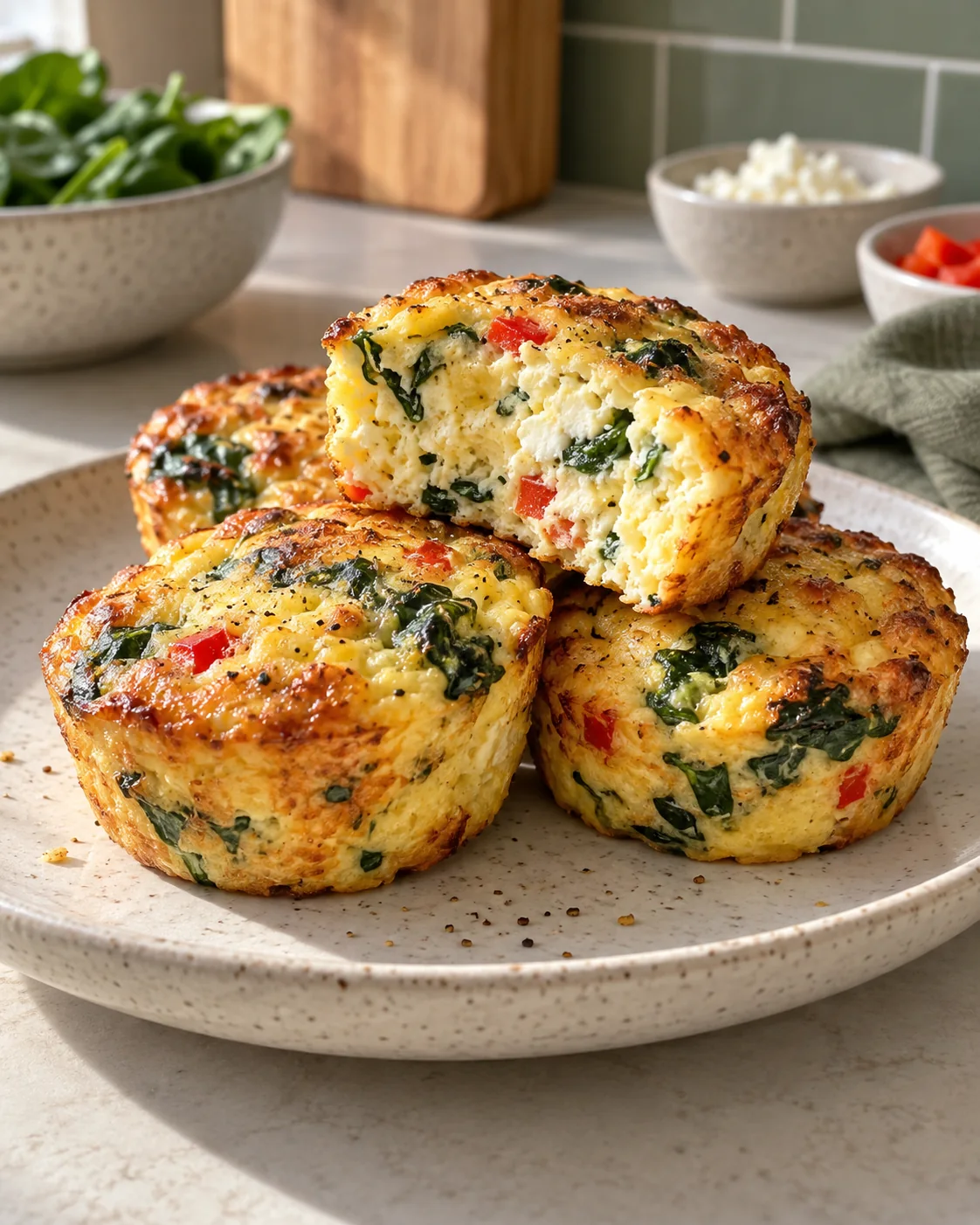
Egg muffins solve a different problem than the egg and potato breakfast cups already on this site — these are smaller, fully portable, no fork required, and freeze noticeably better since there’s no potato involved to change texture. Bake a dozen on Sunday and breakfast for the week is a 45-second reheat.
| Estimated cost per muffin | Very cheap |
| Protein per muffin | ~5–6g* |
| Prep time | 10 minutes |
| Cook time | 18 minutes |
| Yield | 12 muffins |
| Freezer-friendly | Yes |
*Protein is an estimate. Actual values depend on your exact ingredients and portions.
Egg muffins vs. a crustless quiche
Both are baked-egg dishes and both reheat well, but they’re built for different situations. This recipe makes 12 individually-portioned muffins meant for grab-and-go eating — no plate, no cutting, no reheating anything but exactly what you need. The crustless quiche is a single large dish sliced into wedges, which makes it a better fit for a sit-down breakfast or brunch where people are serving themselves at the table. If portability is the priority, these muffins win; if you want fewer dishes to wash and don’t mind a fork, the quiche is the easier one to scale up for a group.
Ingredients
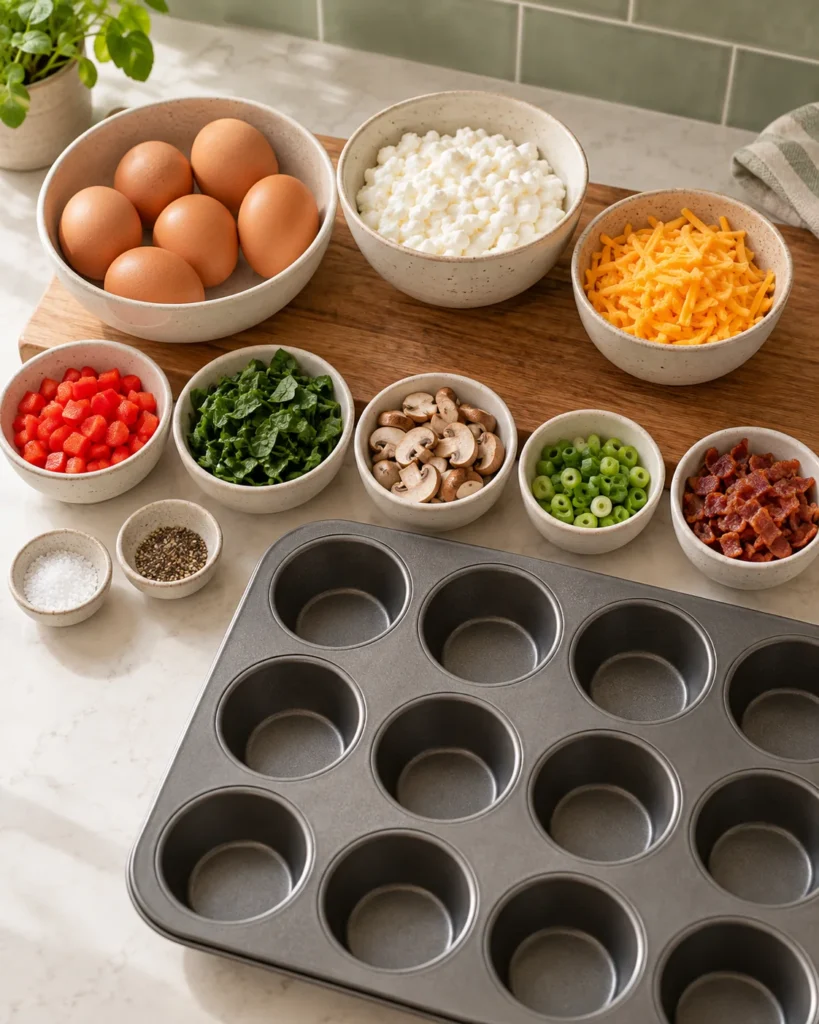
- 10 large eggs
- 1/4 cup milk
- 1 cup diced vegetables (bell pepper, spinach, onion)
- 1/2 cup diced cooked ham or turkey bacon, optional
- 1/2 cup shredded cheese
- Salt and pepper to taste
- Oil or non-stick spray for the muffin tin
How to make them

- Preheat the oven to 350°F / 175°C. Grease a 12-cup muffin tin well — this is the step people skip and regret, since eggs stick to a dry tin far more than batter does.
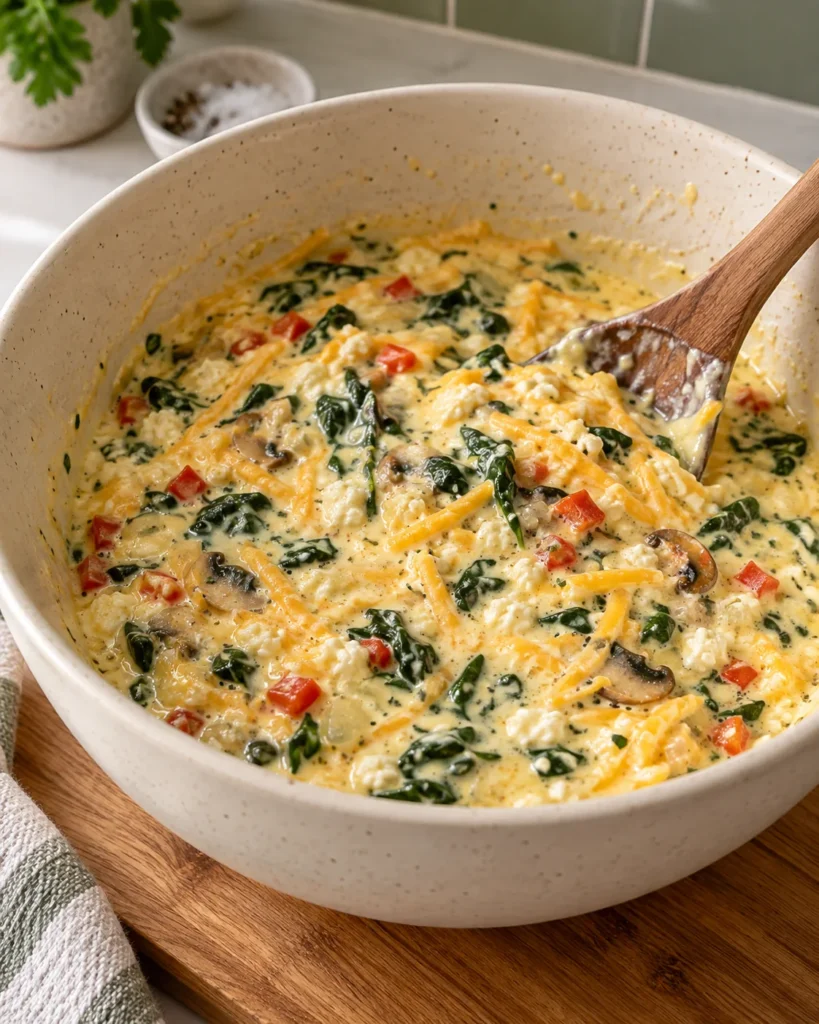
- Whisk the eggs and milk together with a pinch of salt and pepper.
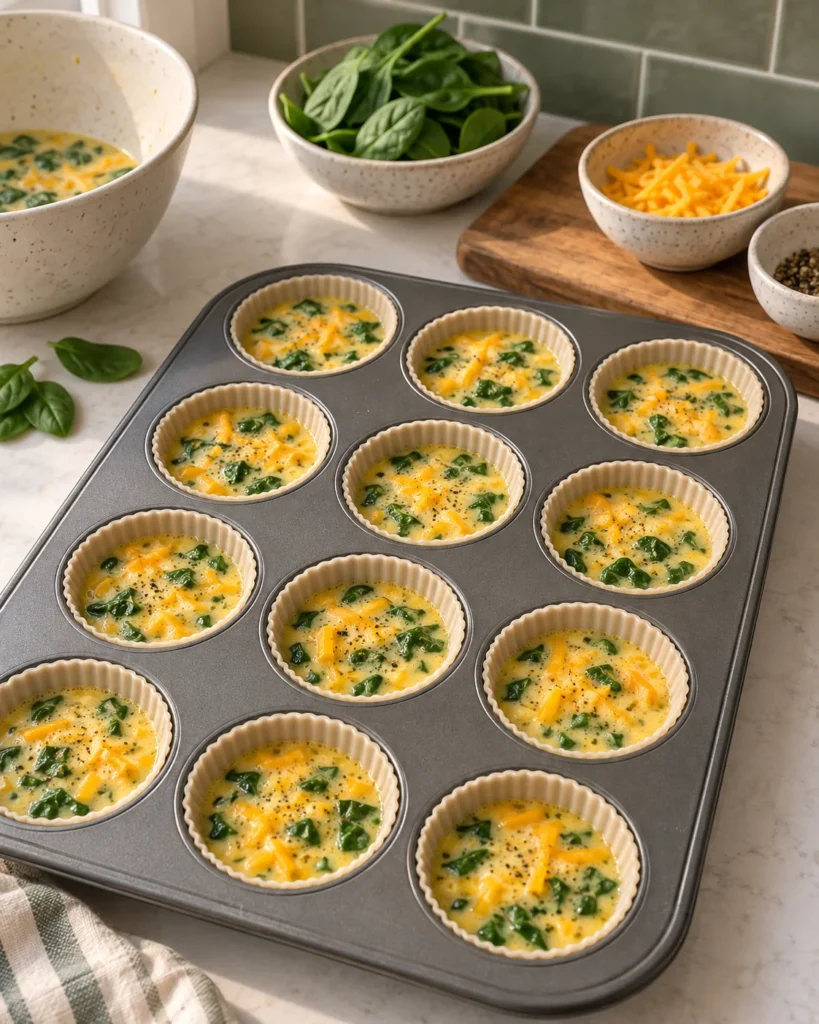
- Divide the diced vegetables, meat if using, and cheese evenly between the 12 cups.
- Pour the egg mixture over top, filling each cup about three-quarters full to leave room for the eggs to puff.
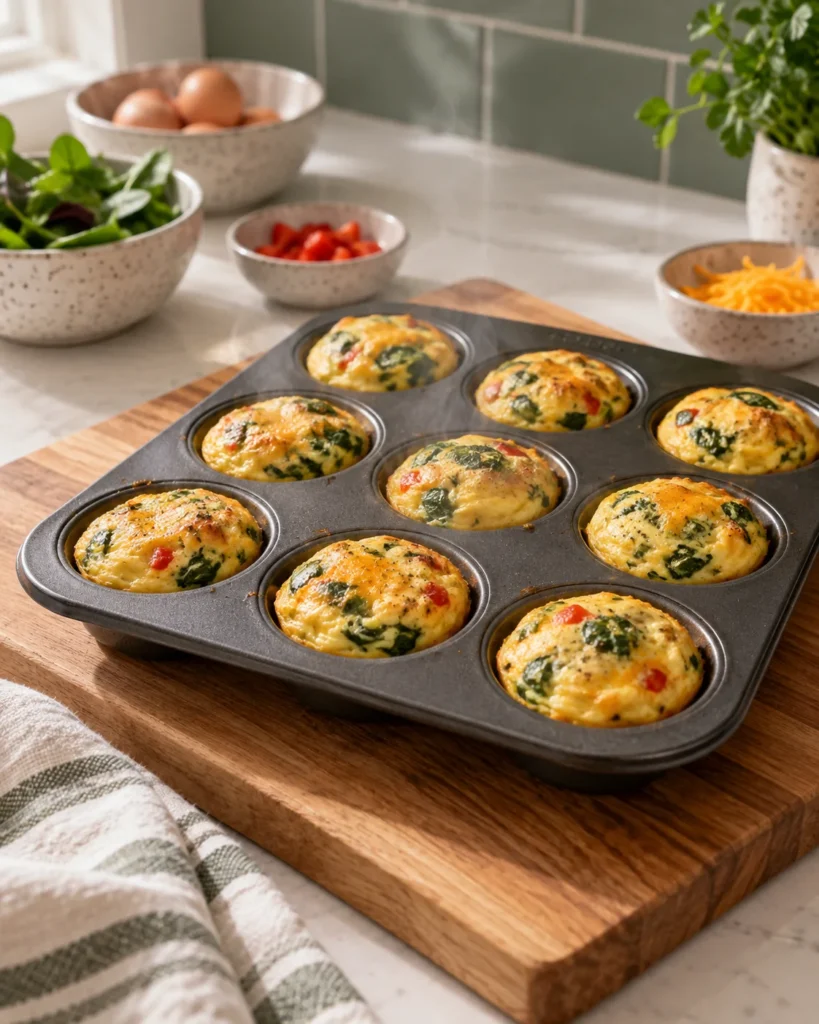
- Bake 16–18 minutes, until the centres are set, no longer wet looking, and reach 165°F / 74°C. Let cool for 5 minutes before running a knife around the edges to release them.

Air fryer method for 6 egg muffins
Make a half batch and divide it among 6 lightly greased silicone muffin cups that fit in the air fryer basket. Cook at 300°F / 150°C for 10–13 minutes, until the centres reach 165°F / 74°C. Rest 5 minutes before unmoulding. This is useful for a small batch, but two air-fryer rounds are slower than one full oven tray.
Pressure cooker egg bites
Divide a half batch among a greased 7-cup silicone egg-bite mould and cover loosely with foil. Place the mould on a trivet over 1 cup water. Cook on high pressure for 8 minutes, allow a 5-minute natural release, then release the rest. Rest 5 minutes before turning out the bites; the centres should reach 165°F / 74°C.
Which method is best?
- Best overall and for a double batch: oven. One or two 12-cup tins cook evenly with the least hands-on work.
- Best small batch: air fryer. Six muffins cook quickly without heating the full oven.
- Softest texture: pressure cooker. The steam keeps the bites tender, but it requires a silicone mould and makes fewer at once.
Cost and protein breakdown
- 10 eggs — the main cost, cheaper still bought by the flat
- Vegetables, meat, cheese — flexible add-ins; use whatever’s on hand or cheapest that week
- Total estimate — very cheap to make, per muffin
Protein lands around 5–6g per muffin, which adds up quickly — three muffins puts you in the same range as a full scrambled-egg breakfast, in a format you can eat in the car.
Silicone liners vs. greasing the tin
Reusable silicone muffin liners release eggs far more reliably than even a well-greased metal tin does, and they’re a worthwhile one-time purchase if you plan to make these regularly. Paper liners don’t work well for eggs — the eggs stick to the paper itself, unlike with a batter-based muffin.

Why watery vegetables are the main failure point
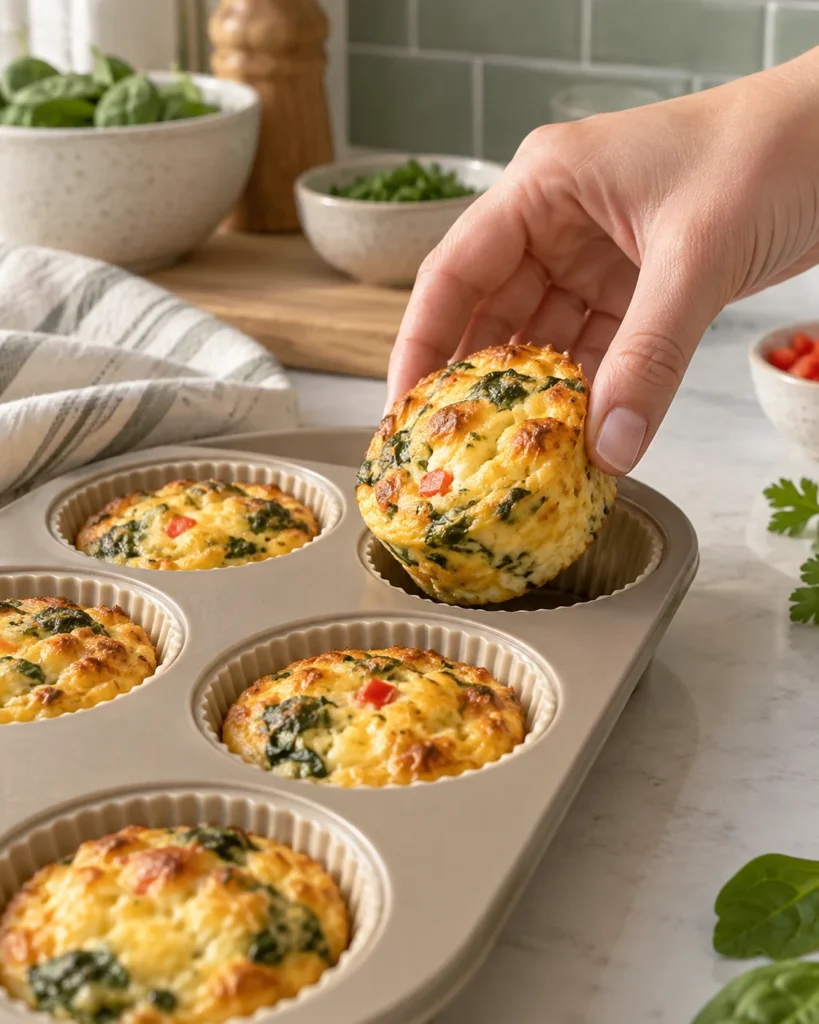
Eggs set in the oven around 160–180°F, and anything releasing liquid while that happens dilutes the custard around it rather than mixing cleanly in. Fresh tomato, raw zucchini, and mushrooms that haven’t been pre-cooked are the three most common culprits for a batch of muffins that looks fine going into the oven and comes out soggy at the bottom. Any vegetable that’s visibly wet when you cut into it — you can see this just by looking at a cut tomato versus a cut bell pepper — needs either a quick sauté first to drive off moisture, or needs to be left out entirely. Bell pepper, onion, and spinach (fresh or thawed-and-squeezed frozen) are all low-moisture enough to go in raw without causing problems.
Flavour combinations worth trying
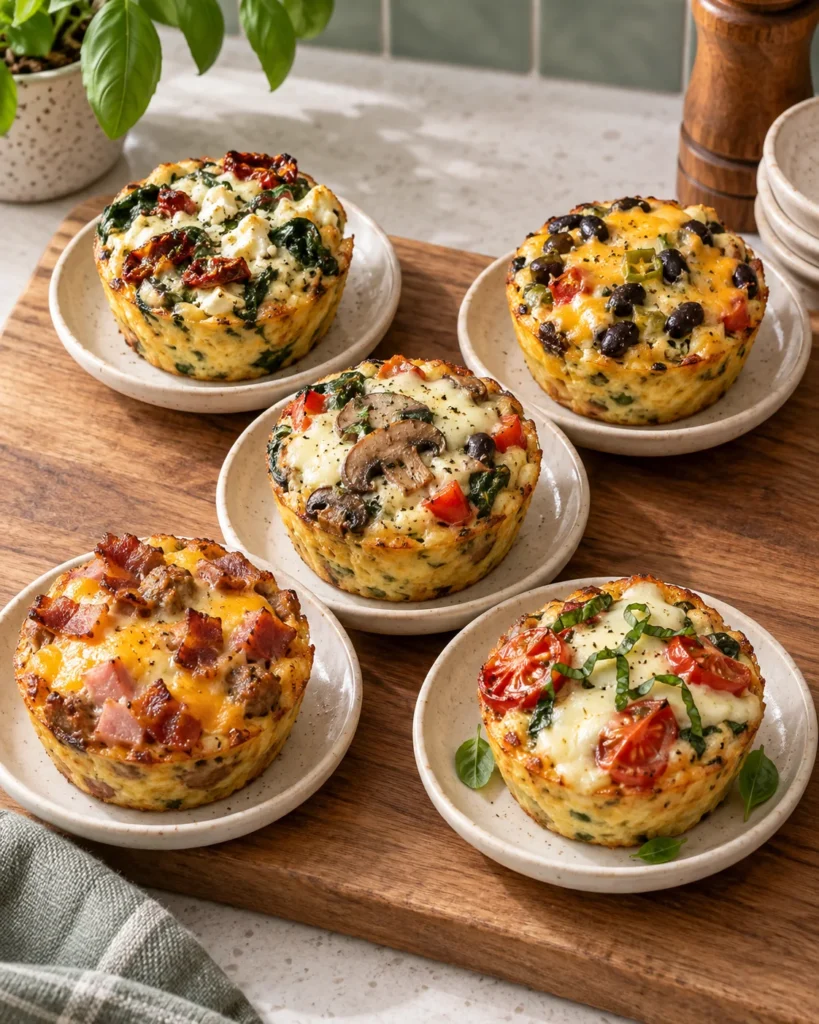
The base recipe is intentionally plain so it can go in almost any direction. A few combinations that work well with the same 10-egg base: Mediterranean — chopped spinach, crumbled feta, and a few chopped sun-dried tomatoes. Southwest — diced bell pepper, black beans, a pinch of cumin, and shredded pepper jack. Classic breakfast — diced ham, cheddar, and a bit of chopped green onion. Because every combination uses the same egg-to-milk ratio, you can even split one batch of egg mixture across the muffin tin and fill different cups with different mix-ins — a practical way to make a variety pack for a household where not everyone wants the same thing.
Scaling up for a bigger batch
If 12 muffins isn’t enough for your week, the recipe doubles cleanly across two muffin tins baked at the same time, provided your oven has room for both without crowding the airflow. Keep the fill level and bake time the same — doubling the egg mixture doesn’t mean the individual muffins need longer in the oven, since each cup is still the same size. What changes is simply how many cups you’re filling.
Common mistakes
Overfilling the cups. Eggs puff substantially in the oven, and a cup filled all the way to the top will overflow and stick to the rest of the tin. Three-quarters full, as the recipe says, leaves the right amount of headroom.
Pulling them before they’re fully set. The centre of each muffin should look matte, not glossy, when done. A glossy centre means more time is needed — check at 16 minutes and again every 2 minutes rather than guessing.
Not letting them rest before unmoulding. Pulling a muffin straight from the oven and trying to pop it out of the tin immediately is the most common reason they tear. The 5-minute rest the recipe calls for lets them firm up just enough to release in one piece.
How to make them cheaper
- Skip the meat — the vegetables and cheese alone still make a flavourful muffin, and meat is the priciest optional add-in here.
- Use frozen chopped spinach instead of fresh — thaw and squeeze dry first, and it’s typically cheaper per cup.
- Buy a cheese block instead of pre-shredded. Reliably cheaper per 100g, as with most recipes on this site.
- Buy eggs by the flat (30-count) if you make these regularly. The per-egg price usually drops noticeably at that volume compared to a standard dozen.
Because the vegetables and meat are flexible by design, this is also a good use for small amounts of leftover cooked vegetables that would otherwise go to waste — a few spoonfuls of last night’s roasted vegetables, diced small, work just as well as anything bought specifically for this recipe.
Equipment notes
A standard 12-cup muffin tin is the only specialized equipment this recipe needs, and a darker non-stick tin bakes slightly faster than a light-coloured or glass one — start checking at 14 minutes if that’s what you’re using. If you don’t own a muffin tin at all, a mini loaf pan or small oven-safe ramekins work in a pinch, though bake time will run longer for a bigger single portion and you’ll lose the exact grab-and-go format that makes these convenient in the first place. Silicone muffin tins, mentioned above for easy release, also have the advantage of being flexible enough to pop muffins out by hand without a knife, which matters if you’re doing this every week and want to save a step.
What to pair them with
Two or three muffins alone is a light breakfast; pairing with a slice of toast, a piece of fruit, or a small bowl of oatmeal rounds it out into a fuller meal without much added cost. For a post-workout version, two muffins plus a glass of milk gets you a reasonable amount of protein with very little prep at all. They also work well cold straight from the fridge if reheating isn’t convenient — unlike scrambled eggs, which are unpleasant cold, baked egg muffins hold their texture reasonably well either way.
Cost per gram of protein vs. the egg and potato cups
These muffins and the egg and potato breakfast cups both start from the same core ingredient, but the potato cups stretch further on a pure cost-per-serving basis because potato is one of the cheapest bulk ingredients in a typical grocery store. Gram for gram of protein, though, these egg muffins usually come out slightly ahead, since there’s less low-protein filler diluting the eggs. If stretching a grocery budget as far as possible is the priority, the potato version wins; if portability and protein density per bite matter more, these muffins are the better pick.
Storage and freezing
- Fridge: cool and refrigerate within 2 hours, then use within 3–4 days.
- Freezer: freeze in a single layer, then move to a labelled bag for up to 2 months. This prevents them from sticking together.
- Microwave: cover with a damp paper towel and heat 30–45 seconds from the fridge. From frozen, use 50–70% power for 60 seconds, then continue in 20-second intervals until the centre reaches 165°F / 74°C.
- Air fryer: reheat at 300°F / 150°C for 3–5 minutes from the fridge or 7–9 minutes from frozen.

Frequently asked questions
Why did my muffins deflate after baking?
This is normal, not a mistake. Eggs puff up from trapped air and steam in the oven, then settle as they cool — the finished muffins will always look a bit smaller than they did straight out of the oven. The amount of deflation varies a bit with how much air got whisked into the egg mixture to begin with; a more vigorous whisk means a taller rise in the oven and, correspondingly, more visible settling once they’re out.
Can I use egg whites instead of whole eggs?
Yes — use about 2 cups liquid egg whites for the 10 whole eggs. They are less rich and more prone to a rubbery texture, so keep the cheese or add 1 teaspoon of oil and start checking 2 minutes early.
What mix-ins work best?
Anything that’s already cooked or doesn’t need much cooking works well — diced cooked vegetables, cooked meat, and cheese. Raw, watery vegetables like fresh tomato can make the muffins soggy; cook them down first or skip them.
Can I make these dairy-free?
Yes — swap the milk for an unsweetened plant milk and skip or substitute the cheese with a dairy-free alternative. The texture is very slightly less rich without dairy milk, but the eggs still set the same way, since milk here is mostly for a softer texture rather than being essential to how the eggs cook.
How many should I eat for a full breakfast?
Three muffins is a reasonable full-breakfast portion for most people, landing around 15–18g of protein. Two works as a lighter option paired with toast or fruit, and four or five is more appropriate if this is your main meal before a workout or a physically demanding morning.
My muffins stuck to the tin even after greasing — what went wrong?
Eggs are stickier than batter, and a quick spray often isn’t enough on an older, worn non-stick tin. Use a generous amount of oil or spray and make sure it coats all the way up the sides of each cup, not just the bottom. If an older tin keeps giving you trouble no matter how well you grease it, that’s the clearest sign to switch to silicone liners rather than fighting the pan.
Related reading: Egg and Potato Breakfast Meal Prep, Egg White Breakfast Scramble Bowls, and Cheap High-Protein Breakfasts.