
Cottage Cheese Protein Pancakes
Blended cottage cheese disappears into the batter and gives these pancakes more protein without leaving noticeable curds. They cook much like regular pancakes, with a slightly richer, tender centre.
| Estimated cost per serving | Cheap |
| Protein per serving | ~18-22g* |
| Prep time | 5 minutes |
| Cook time | 10 minutes |
| Servings | 2 (about 8 pancakes) |
| Freezer-friendly | Yes |
*Protein is an estimate. Actual values depend on your exact ingredients and portions.
Ingredients
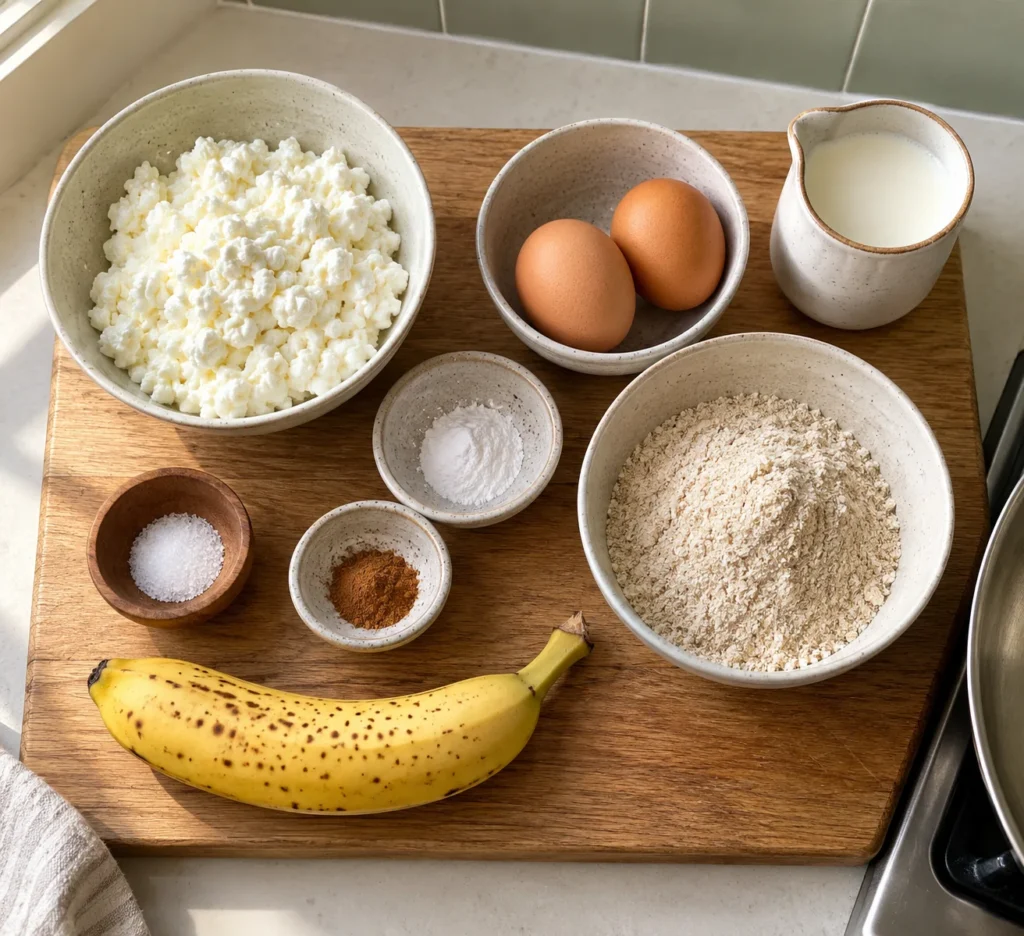
- 1 cup cottage cheese
- 4 eggs
- 1 cup flour
- 1 tbsp sugar
- 1 tsp baking powder
- 1/2 tsp vanilla extract
- Pinch of salt
- Butter or oil, for the pan
How to make them

- Blend the cottage cheese and eggs together in a blender until completely smooth, about 45-60 seconds. A smooth blend is what keeps curds out of the finished pancakes.
- Add the flour, sugar, baking powder, vanilla, and salt to the blender. Pulse a few times just until combined. Too much blending after the flour goes in can make the pancakes tough.
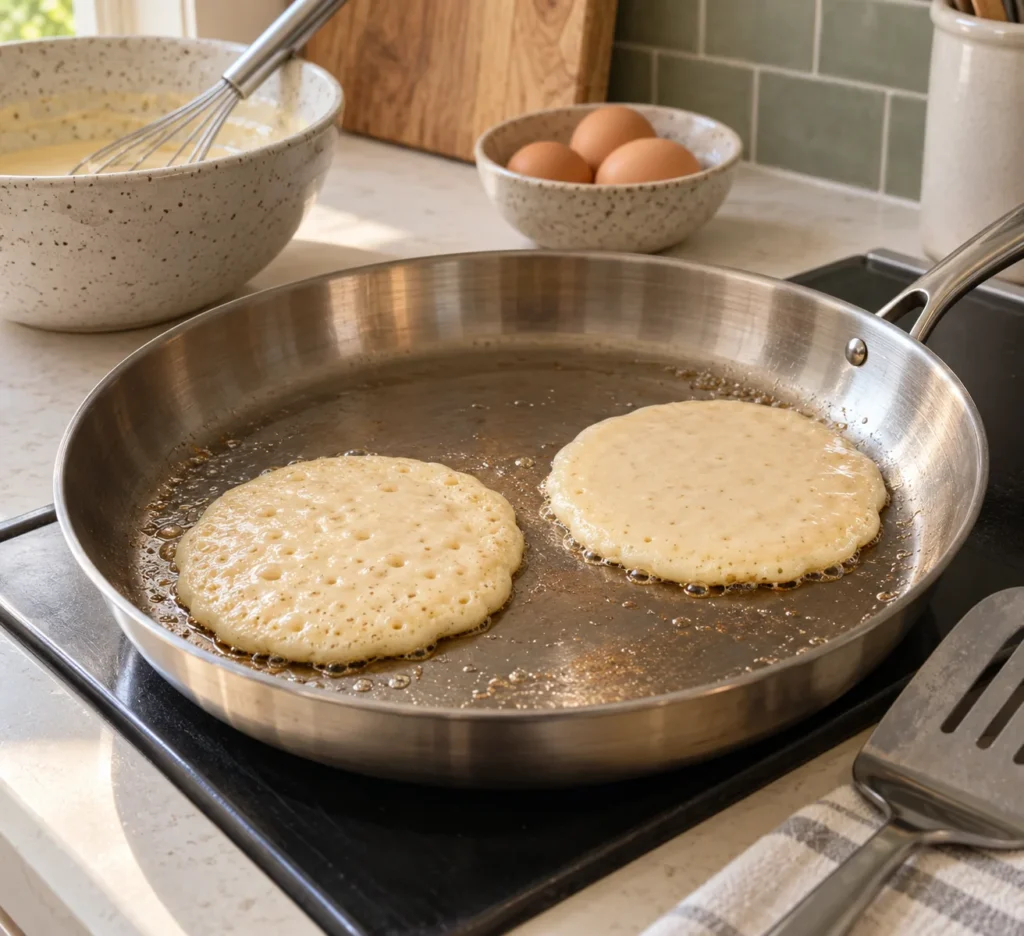
- Heat a lightly greased skillet or griddle over medium heat. Pour about 1/4 cup of batter per pancake.
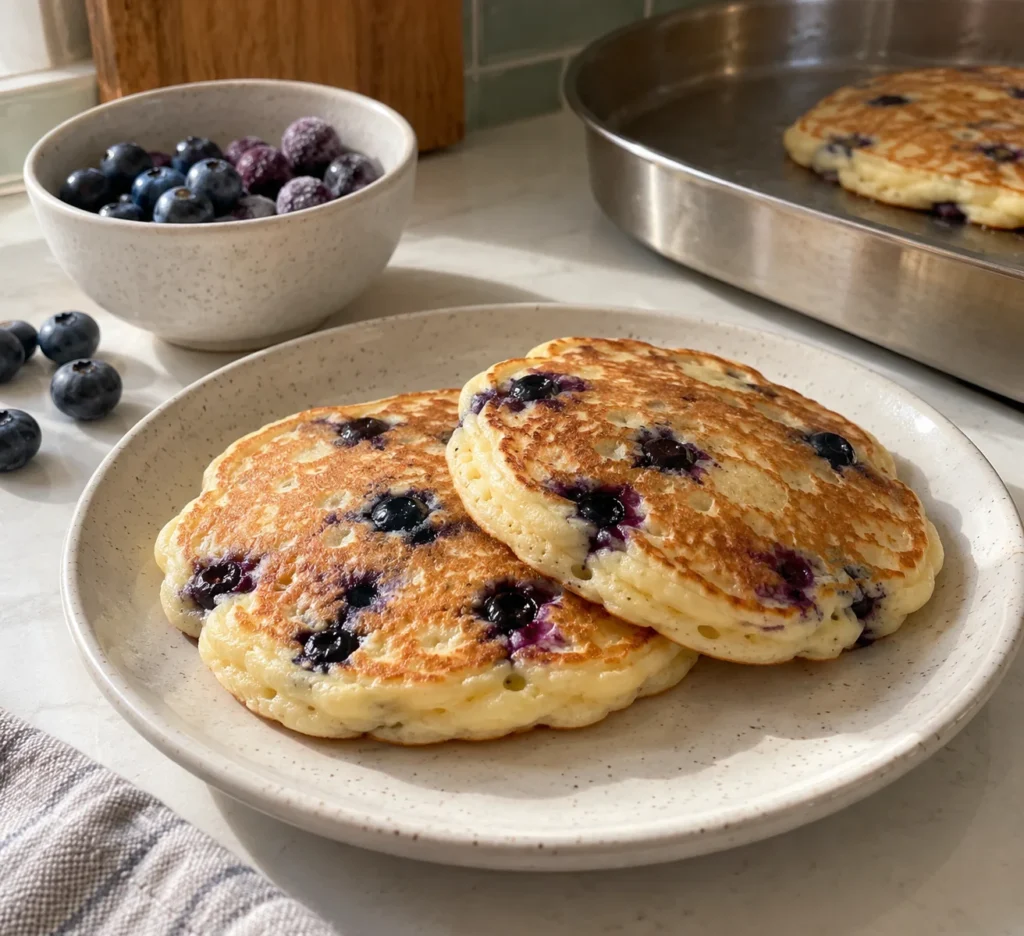
- Cook 2-3 minutes, until bubbles form on the surface and the edges look set, then flip and cook 1-2 minutes more.
- Repeat with the remaining batter, adding more butter or oil to the pan as needed.
Sheet-pan method for a full batch
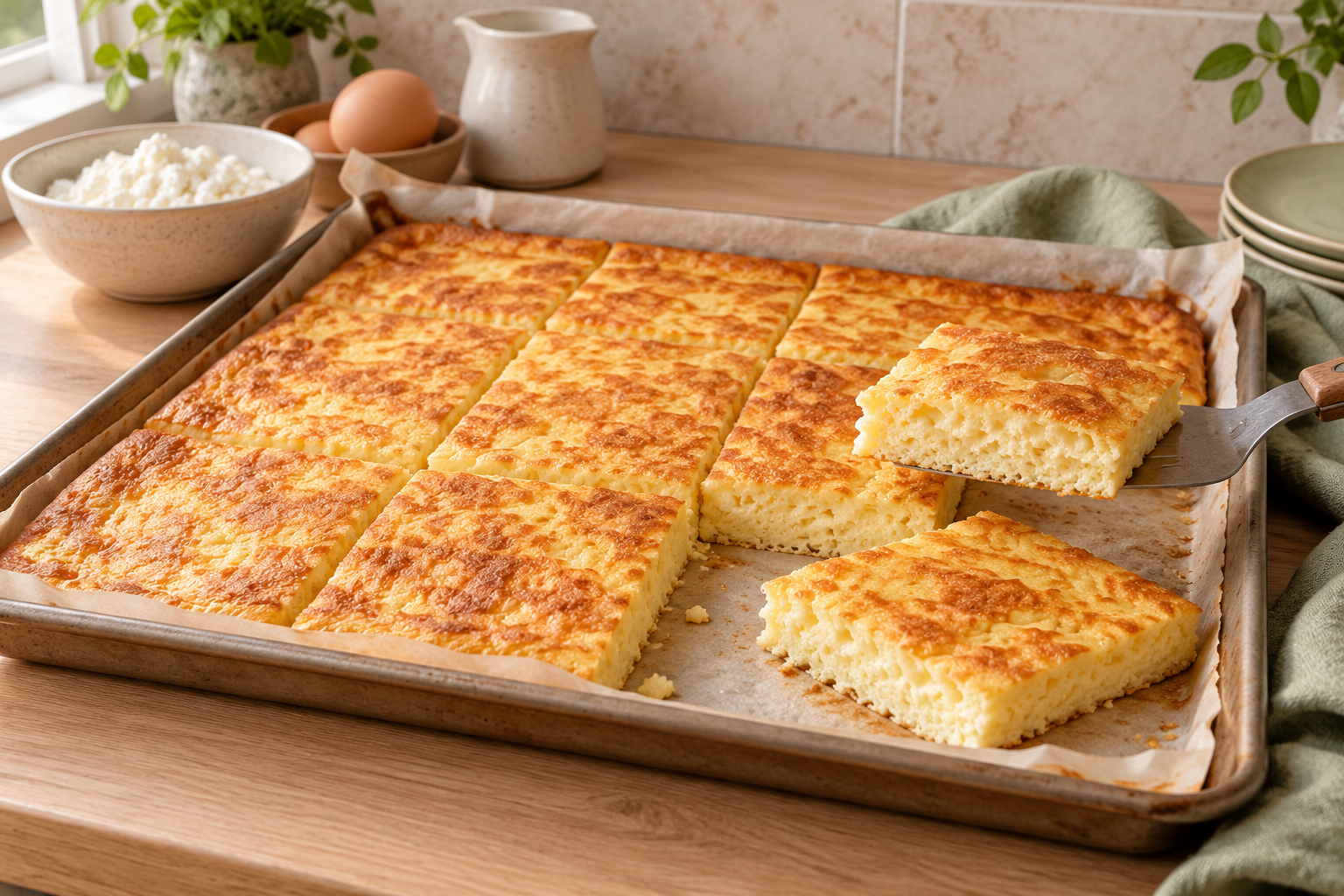
Heat the oven to 400°F / 200°C and grease a 9 x 13-inch pan. Pour in the batter and spread it evenly. Bake for 12-16 minutes, until the centre looks set and springs back lightly when pressed. Let it rest for 5 minutes, then cut into squares. The squares will be softer than griddle pancakes but are much faster when you want the whole batch ready at once.
Get the batter consistency right
Cottage cheese brands vary in moisture, so use the first pancake as a test. If the batter barely spreads, stir in milk one tablespoon at a time. If it runs across the pan and makes very thin pancakes, add flour one tablespoon at a time. Let the adjusted batter sit for 2 minutes before testing again.

Which method is better?
Use the skillet or griddle when texture matters most. You get browned edges and a taller pancake. Use the sheet pan for meal prep because it cooks the entire batch at once, portions neatly, and needs almost no hands-on time.

Cost and protein breakdown
- 1 cup cottage cheese and 4 eggs: the main protein contributors, both inexpensive per gram of protein
- Flour, sugar, baking powder: standard pantry staples
- Total estimate — cheap per serving based on typical prices
Protein lands around 18-22g per serving (about 4 pancakes), several times more than a standard pancake recipe, which typically carries closer to 6-8g per serving from the eggs and milk alone.
Why blend the eggs with the cottage cheese first
Blending the wet ingredients together before the flour goes in fully liquefies the cottage cheese curds, so you get a smooth batter rather than a lumpy one. Adding flour afterward and only pulsing briefly keeps the gluten from overdeveloping, which is what keeps these pancakes tender instead of chewy.
How to make them cheaper
- Use store-brand cottage cheese. Once blended, there’s no texture difference between brands.
- Skip the vanilla if you don’t have it, a nice-to-have, not essential.
- Buy eggs by the flat if you make this regularly, brings the per-egg cost down.
Storage and freezing
- Fridge: 3-4 days at 40°F / 4°C or below.
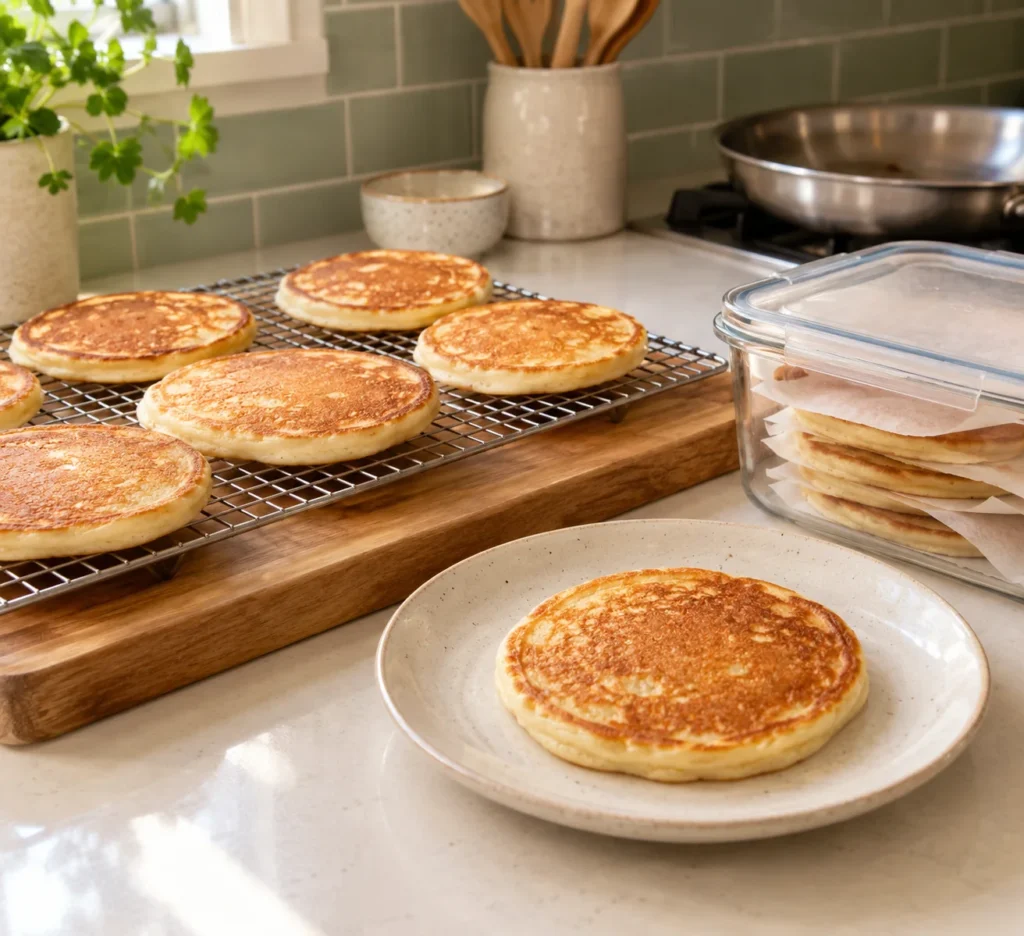
- Freezer: up to 2 months, lay flat to freeze individually first, then stack in a bag so they don’t fuse together.
- Reheating: toaster or microwave from frozen, about 60-90 seconds in the microwave or a couple of toaster cycles for a crispier edge.
Frequently asked questions
Will these taste like cottage cheese?
No, as long as it’s fully blended with the eggs first. They taste like a slightly richer, more tender pancake. The cottage cheese adds protein and moisture rather than a strong flavour.
Can I make these without a blender?
A blender gives the smoothest result. An immersion blender also works. With only a fork, mash the cottage cheese thoroughly and expect a few small curd flecks in the pancakes.
Why are my pancakes browning too fast on the outside?
The pan is likely too hot. These have more egg and dairy than a standard pancake, which browns faster at high heat before the inside sets. Keep the heat at medium and lower it slightly if the first pancake darkens before bubbles appear.
Related reading: Cottage Cheese Mac and Cheese, High-Protein Overnight Oats, and Cheap High-Protein Breakfasts.