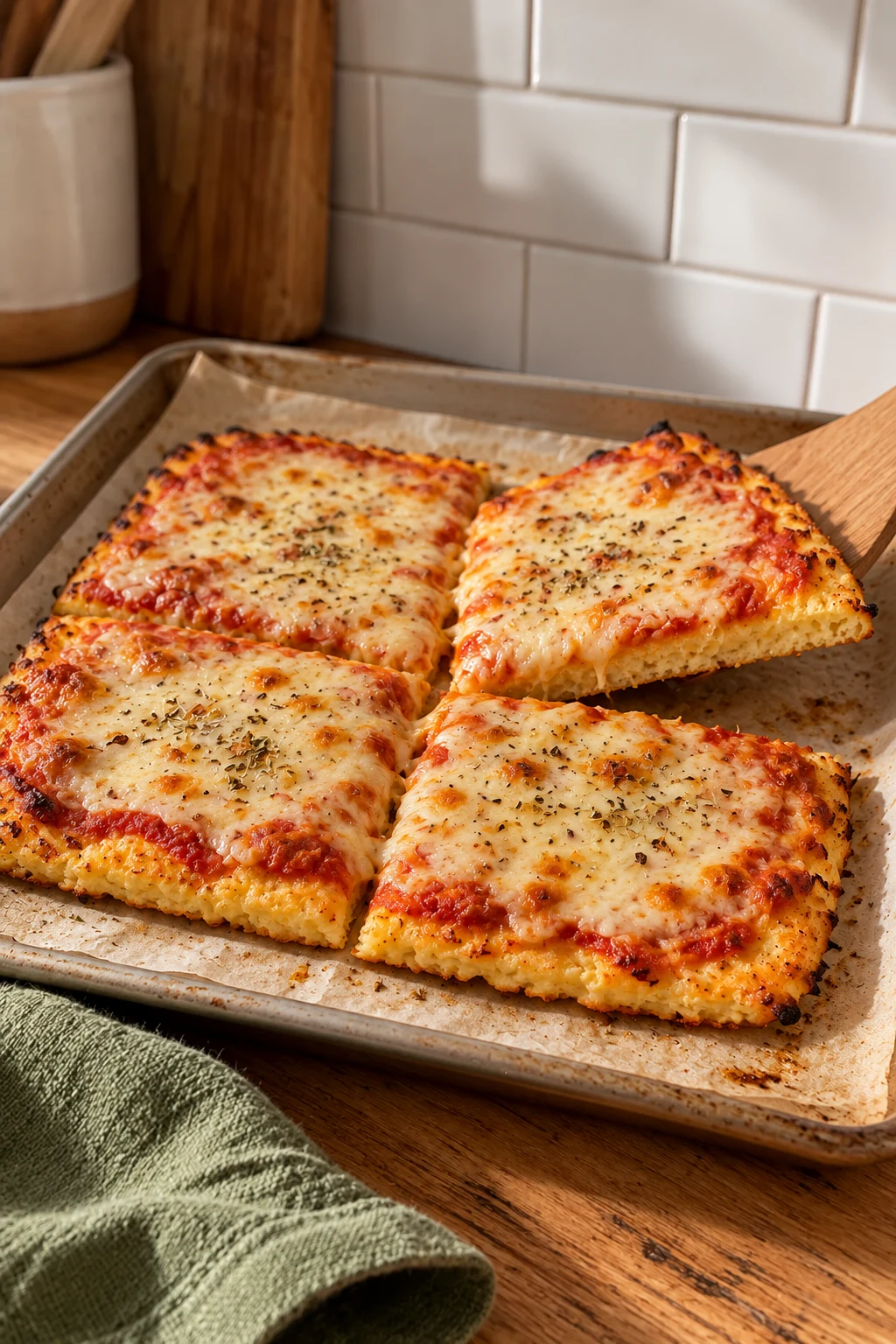
High-Protein Cottage Cheese Flatbread
Two ingredients, a blender, and twenty minutes in the oven turns into something that slices like a pizza base and holds up like real bread. No flour at all. This is the same blended-cottage-cheese trick already doing work in the mac and cheese and the pancakes on this site, just baked flat instead of stirred into a sauce or poured onto a griddle.
| Estimated cost per serving | Cheap |
| Protein per serving | ~20–24g* |
| Prep time | 5 minutes |
| Cook time | 20–25 minutes |
| Servings | 2 (cut into 4 pieces) |
| Freezer-friendly | Yes |
*Protein is an estimate. Actual values depend on your exact ingredients and portions.
High-Protein Cottage Cheese Flatbread
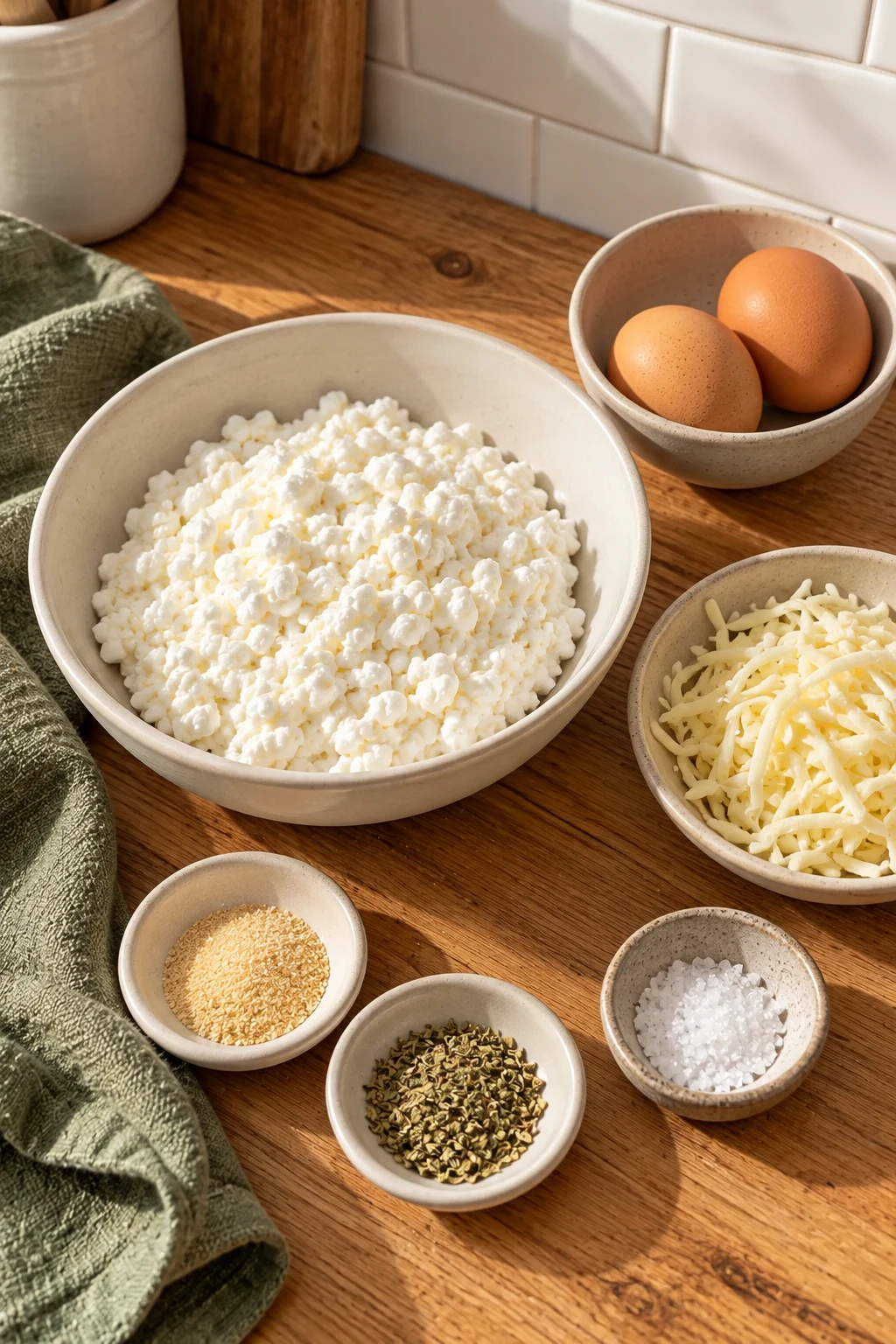
- 2 cups (about 480g) cottage cheese, small or large curd
- 2 large eggs
- 1/2 tsp garlic powder
- 1/2 tsp dried oregano or Italian seasoning
- Pinch of salt
- Optional: 1/4 cup shredded mozzarella or parmesan, mixed into the batter
- Preheat the oven to 400°F / 200°C. Line a baking sheet with parchment paper. This batter sticks hard to a bare pan, so don’t skip it.
- Blend the cottage cheese and eggs together until completely smooth, 45–60 seconds. No curds should be visible.

- Stir in the garlic powder, oregano, salt, and the extra cheese if using.
- Pour the batter onto the parchment and spread it into an even oval or rectangle, about 1/4 inch (6mm) thick.

- Bake 20–25 minutes, until the top is set, lightly golden at the edges, and no longer wet-looking in the centre.
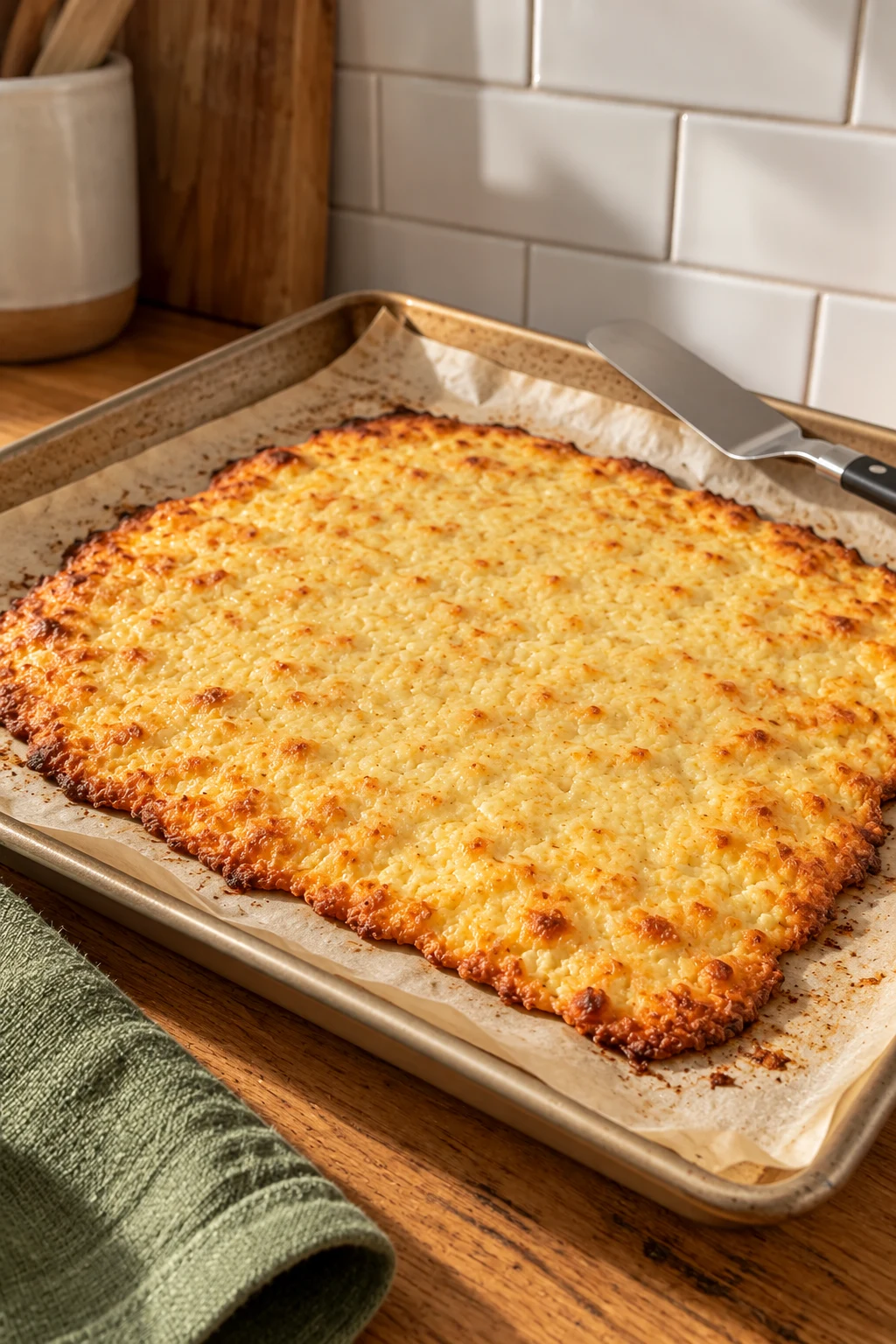
- Let it cool for 5 minutes before lifting off the parchment. It firms up as it cools and is much easier to handle once it’s not straight out of the oven.
Cost estimate: Cheap per serving based on typical grocery pricing; cottage cheese and eggs are both inexpensive per gram of protein.
Protein estimate: Approximately 20–24g per serving (half the flatbread), depending on exact portions. Use a nutrition calculator with your specific ingredient weights for accurate values.
Picking your cottage cheese
Small curd and large curd both blend completely smooth, so either works, but large curd takes a few extra seconds in the blender to fully break down, which is worth knowing if you’re judging “done blending” by time instead of by checking for lumps. Fat percentage affects flavor more than it affects the bake: a 4% or higher cottage cheese gives a noticeably more tender result than a fat-free version, which can bake slightly drier and more rubbery at the edges.
Whole egg or egg whites only
Two whole eggs is the default here because the yolks add richness and help the batter set evenly. Swapping in egg whites only (use about 3–4 whites in place of the 2 whole eggs) makes a leaner-tasting, slightly paler flatbread that’s a bit more prone to drying out at the edges if it’s left in the oven even a minute or two past done. Worth watching closer if you make that swap.
Stovetop method for a single wrap
For one portion without heating the whole oven, pour a thinner layer of batter into a greased nonstick skillet over medium-low heat, cover, and cook 6–8 minutes per side until set all the way through. It works fine as a wrap you’re using right away, but it doesn’t hold together as cleanly as the sheet-pan version if you’re trying to slice it into pizza-style pieces later.
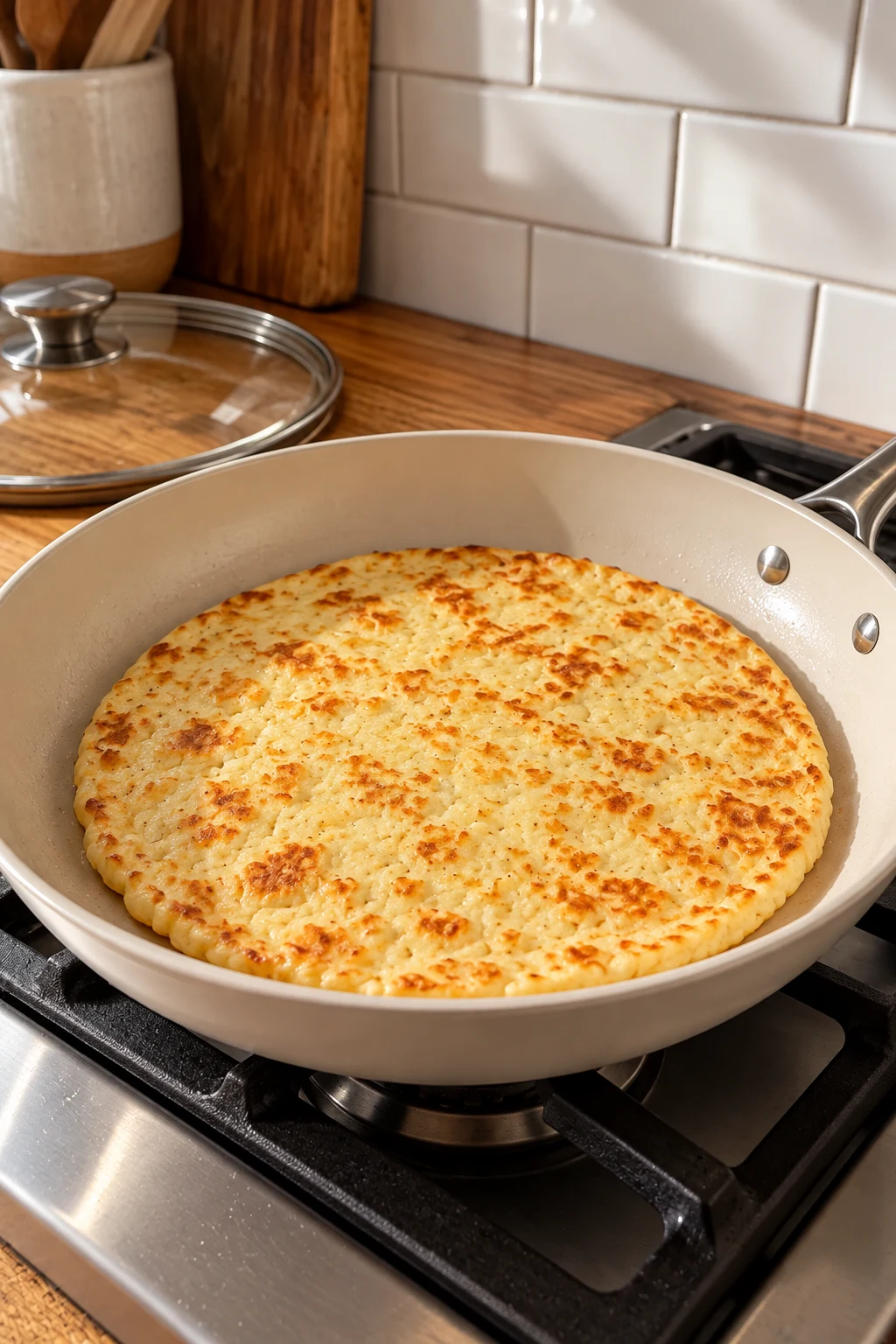
Which method is best?
- Best for a sliceable pizza base: oven. Even, hands-off cooking across the whole sheet, and it’s sturdy enough to top and cut into pieces.
- Best for one quick wrap: stovetop. No need to heat the oven for a single portion, though it takes a steadier hand to flip without tearing.
Getting it to set instead of staying wet in the middle
Cottage cheese holds a lot of water, and spreading the batter too thick is the most common reason this comes out gummy in the centre while the edges look done. Aim for about 1/4 inch and resist the urge to pile it up for a thicker flatbread. It bakes more evenly thin, and a second thinner batch is faster than trying to rescue one that’s too thick.
Why parchment paper isn’t optional
There’s no flour or oil layer in this batter to keep it from bonding directly to a metal pan the way a traditional flatbread dough would. Once the egg proteins set against bare metal, they grip it tightly enough that even a well-greased pan often isn’t enough. Parchment gives the batter a surface to release from cleanly instead of tearing apart as you try to lift it. A silicone baking mat works the same way if that’s what you have; foil does not, since the batter can stick to foil almost as readily as it does to the pan itself.
Fixing it after the fact
- Top cracked while baking: usually means the oven ran a little hot or the batter was spread unevenly. It won’t affect how it eats; just press it back together while it’s still warm and pliable if the look bothers you.
- Tore when lifting off the parchment: it was likely still warm. Let it cool the full 5 minutes. It firms up noticeably in that window, and lifting too early is the single most common cause of tearing.
- Stuck to the parchment anyway: rare, but it happens with older or thinner parchment. Let it cool completely first, then peel from one corner slowly rather than flipping it over all at once.
- Edges look burnt but the centre’s still wet: the batter wasn’t spread to an even thickness. Next time, use a spatula or the back of a spoon to level it out fully before it goes in the oven, and check a few minutes earlier than the full bake time.
Turning it into a meal
- Pizza-style: top the baked flatbread with a thin layer of sauce and shredded cheese, then broil for 2–3 minutes until it’s melted and starting to brown.

- Everything-bagel style: swap the oregano for everything-bagel seasoning and eat it plain or with a spread.
- As a wrap base: skip the broil step, let it cool, and fold it around fillings the way you would a tortilla.
- Breakfast sandwich fold: cut the cooled flatbread into quarters, fold each piece around scrambled eggs and a slice of cheese, and warm it briefly in a skillet to seal.
- Sweet version: leave out the garlic powder and oregano, stir a pinch of cinnamon into the batter instead, and finish the baked flatbread with a light dusting of cinnamon-sugar.
Make it ahead
This scales easily if you want a few days’ worth at once: double or triple the batter and bake multiple flatbreads on separate sheet pans, rotating racks halfway through if you’re using more than one pan at a time. Let each one cool completely before stacking, with a piece of parchment between layers so they don’t stick to each other in the fridge or freezer.
Cost and protein breakdown
- 2 cups cottage cheese and 2 eggs: the main cost and the main protein source, both inexpensive per gram of protein
- Seasoning: a small fraction of the total cost
- Total estimate: cheap per serving, and considerably less than a store-bought low-carb flatbread
How to make it cheaper
- Use store-brand cottage cheese. Once blended, there’s no texture difference between brands.
- Skip the mix-in cheese. It adds flavour, not much protein, and the eggs and cottage cheese already carry the dish.
- Buy eggs by the flat if this becomes a regular batch-cook item. The per-egg cost drops noticeably.
Storage and reheating
- Fridge: 3–4 days at 40°F / 4°C or below, wrapped or in a sealed container.
- Freezer: up to 2 months, with parchment between pieces so they don’t stick together.
- Reheating: a toaster oven or regular oven re-crisps it; the microwave works but leaves it noticeably softer and a little soggy.

Frequently asked questions
Will this taste like cottage cheese?
Not much, once it’s fully blended and baked. The eggs and seasoning carry most of the flavour. It reads closer to a plain, slightly eggy flatbread than to cottage cheese on its own.
Can I make this without a blender?
A blender or food processor gives the smoothest batter and the most even bake. With just a fork, expect some small curd flecks and a slightly less uniform texture. Still edible, just not as smooth.
Why did mine come out rubbery?
Usually overbaking. Pull it as soon as the centre stops looking wet and the edges turn lightly golden. A few extra minutes past that point turns it rubbery instead of tender.
Can I make it bigger for more servings?
Yes. Double the batter and either spread it thicker on one larger sheet pan (adding a few extra minutes to the bake) or use two pans so it stays at the same 1/4-inch thickness. The thickness matters for an even bake more than the total size does.
Does the shape matter?
Not for how it cooks. An oval, rectangle, or rough circle all bake the same as long as the thickness is even. A rectangle is just the easiest to cut into neat pieces afterward.
Can I add herbs or spices directly into the batter instead of after?
Yes, that’s what the garlic powder and oregano in the base recipe already are: mixed into the batter before baking rather than sprinkled on top. Dried herbs and spices work better mixed in than fresh ones, since fresh herbs can turn bitter under direct oven heat for 20+ minutes.
Is this sturdy enough to pick up like a slice of pizza?
Once fully cooled, yes. It firms up considerably and holds its shape well. Straight out of the oven it’s much softer and more likely to bend or fold, so give it the full cooling time before deciding it needs more bake time.
Related reading: Cottage Cheese Mac and Cheese, Cottage Cheese Protein Pancakes, and High-Protein Cottage Cheese Ice Cream.