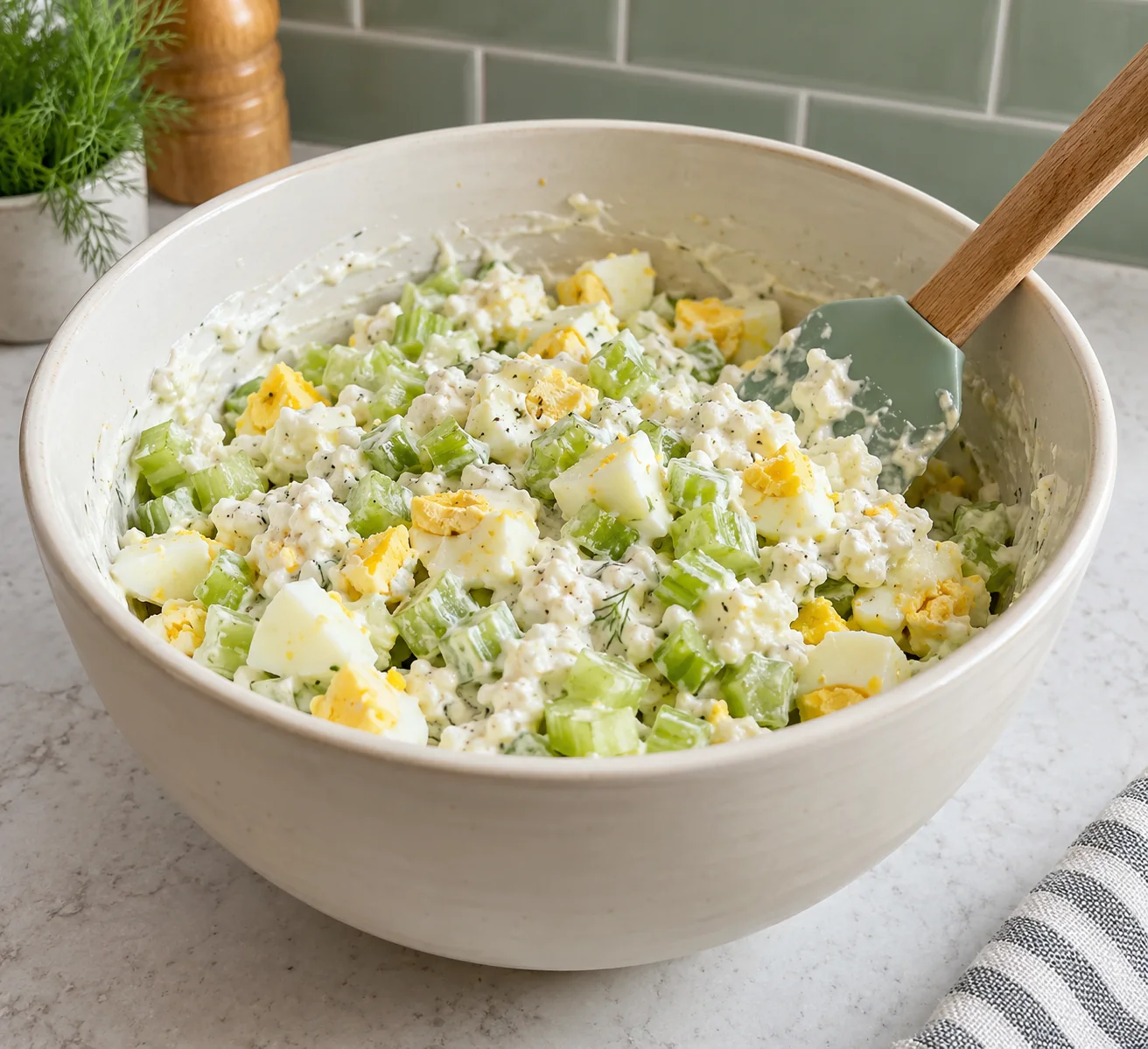
Budget High-Protein Egg Salad
Cook a batch of eggs on Sunday, then mix only 3–4 days’ worth of salad at a time and this takes five minutes to put together. A cold, mayo-or-yogurt-based salad like this fills a different gap than anything else on the site: it’s a sandwich filling and a cracker topper, not a standalone bowl meal.
| Estimated cost per serving | Cheap |
| Protein per serving | ~14–17g* |
| Prep time | 15 minutes |
| Cook time | None (eggs pre-boiled) |
| Servings | 4 |
| Freezer-friendly | No |
*Protein is an estimate. Actual values depend on your exact ingredients and portions.
Why half yogurt, half mayo instead of all one or the other
All-mayo egg salad is the traditional version, and it’s genuinely fine, but mayo brings almost no protein of its own — it’s there purely for richness and binding. Swapping half of it for plain Greek yogurt keeps most of that same creamy texture while adding real protein instead of just fat. Going to all yogurt (also covered in the FAQ below) pushes the protein a bit higher still and the flavour noticeably tangier — closer to a yogurt-ranch flavour than classic egg salad. The 50/50 split in this recipe is a middle point: still reads as “egg salad” to anyone eating it, but quietly carries more protein than the all-mayo version it’s standing in for.
Ingredients

- 8 large eggs, hard-boiled and peeled
- 1/4 cup plain Greek yogurt
- 2 tbsp mayo
- 1 tbsp Dijon mustard
- 2 tbsp diced celery
- 2 tbsp diced red onion
- Salt and pepper to taste
- Paprika, for serving (optional)
How to make it

- Chop the hard-boiled eggs into bite-sized pieces, or mash with a fork if you prefer a smoother texture.
- Combine the Greek yogurt, mayo, and mustard in a bowl, stirring until smooth.
- Add the chopped eggs, celery, and red onion. Fold together gently — overmixing turns the eggs mushy.
- Season with salt and pepper to taste. Chill for at least 15 minutes before serving for the best flavour.


Cost and protein breakdown
- 8 eggs — the main protein source and the main cost, cheaper still from a flat
- Greek yogurt, mayo, mustard — using half Greek yogurt instead of all mayo cuts cost and adds protein compared to a traditional all-mayo version
- Total estimate — cheap to make, per serving
Protein lands around 14–17g per serving, almost entirely from the eggs.
How to hard-boil eggs that peel cleanly
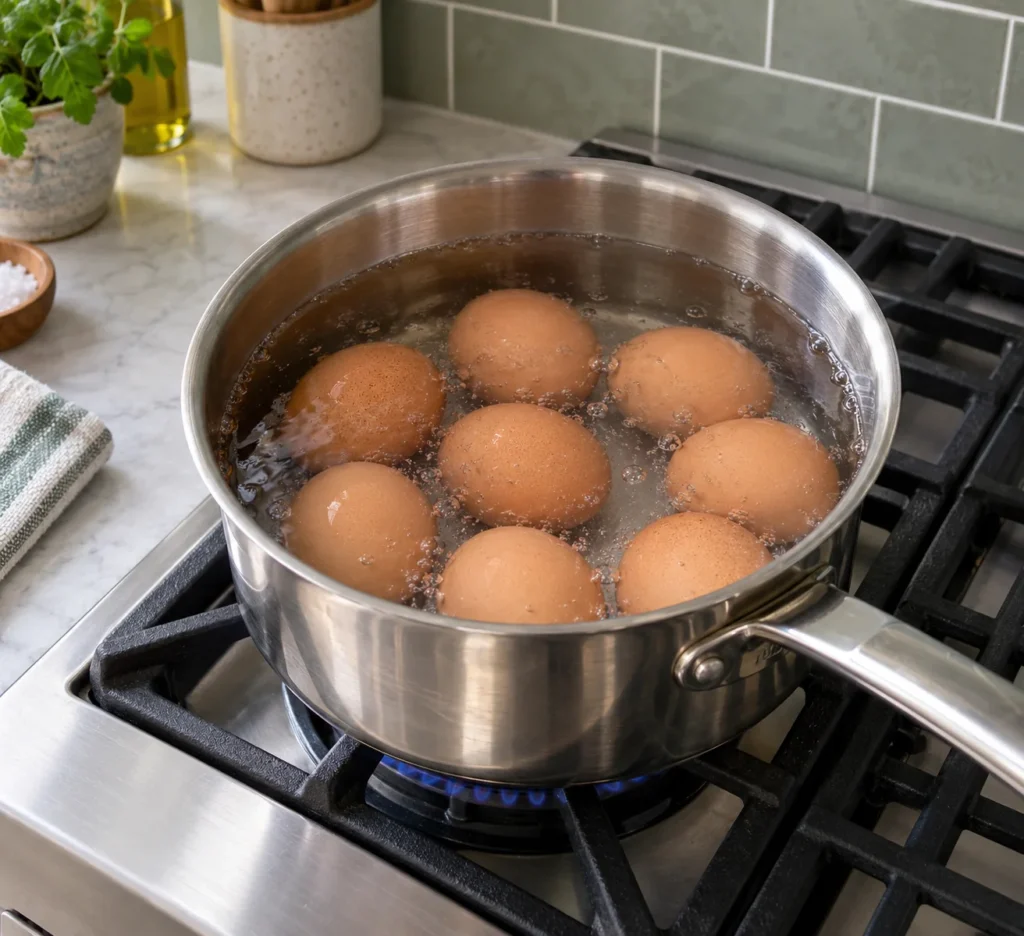
Place eggs in a single layer in a pot, cover with cold water by an inch, and bring to a boil. Once boiling, cover, remove from heat, and let sit 10–11 minutes. Transfer immediately to an ice bath for at least 5 minutes before peeling — the quick temperature shock is what separates the shell from the egg white cleanly, and skipping it is the most common reason peeling turns into a frustrating mess.

Steamer method
Bring 1 inch of water to a boil under a steamer basket. Add the cold eggs, cover, and steam for 12–14 minutes. Move them directly to an ice bath for 5 minutes. This is especially useful for a large batch because you wait for only a small amount of water to boil.
Pressure cooker method
Place the eggs on a trivet over 1 cup of water. Cook on high pressure for 5 minutes, allow a 5-minute natural release, then release the remaining pressure and chill the eggs in an ice bath for 5 minutes.
Which egg method is best?
- Best with no special equipment: stovetop. It works in any pot and is the simplest choice for 8 eggs.
- Best for a larger batch: steaming. The small water volume returns to a boil quickly, even after the eggs go in.
- Best for repeatability: pressure cooker. The 5-5-5 timing is easy to reproduce, though it is not necessarily faster after pressurizing.
Flavour variations
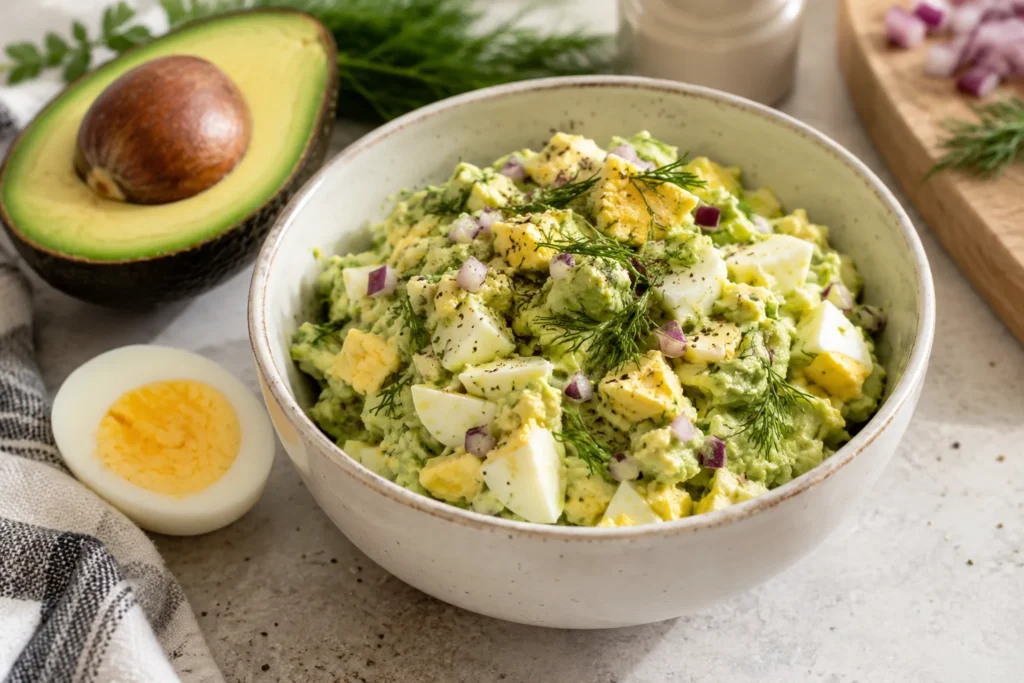
The mustard-and-celery base here is the classic version, but it adapts easily. For a curry egg salad, add 1/2 to 1 tsp curry powder and a small handful of raisins or dried cranberries — the sweetness plays surprisingly well against the curry. For an avocado egg salad, mash in half an avocado and cut the mayo back to 1 tbsp, since the avocado itself adds creaminess. For a bacon and chive version, skip the celery and onion and fold in crumbled cooked bacon and chopped chives instead, finishing with a crack of black pepper. Every variation still uses the same 8 eggs as the protein base, so the core cost and protein numbers don’t move much — only the flavour does.
Scaling it for a week of lunches
Doubling or tripling this recipe works cleanly — just boil more eggs in batches if your pot can’t fit them all in a single layer at once, since crowding the pot leads to uneven cooking. A doubled batch (16 eggs) makes enough for most people to have egg salad for lunch most of the week, especially paired with the shorter 3–4 day fridge window in mind: make a half batch mid-week if you want fresh egg salad the whole time rather than eating day-4 leftovers on day 4.

Common mistakes
Overmixing. As the instructions note, folding too aggressively turns the egg whites mushy and the whole salad starts looking more like a paste than distinct pieces of egg. Fold gently, just until combined.
Not chilling before serving. Warm egg salad, straight after mixing, tastes noticeably flatter than the same salad after 15–30 minutes in the fridge. The chill time lets the mustard and seasoning settle into the dressing properly.
Dicing the celery and onion too large. Big chunks of raw onion in particular can overpower a bite. A fine dice distributes the flavour more evenly without any single bite tasting overly sharp.
How to make it cheaper
- Buy eggs by the flat if you make this and other egg recipes on this site regularly.
- Use all Greek yogurt instead of half mayo — a bit tangier, slightly more protein, and cheaper if yogurt is less expensive than mayo at your store.
- Skip the celery and onion if you’re out — the salad works fine on eggs, yogurt, mayo, and mustard alone.
- Buy a large jar of mustard rather than individual packets. A basic yellow or Dijon mustard keeps for months in the fridge, so a larger jar is rarely wasted even if egg salad isn’t a weekly habit.
Storage
- Dressed egg salad: refrigerate promptly in a sealed container and use within 3–4 days.
- Cooked eggs for a split batch: keep them unpeeled in the fridge for up to 1 week, then mix the second half of the salad mid-week.
- Packed sandwiches: assemble the night before at most, using a lettuce leaf between the bread and filling to slow sogginess.
- Freezer: not recommended; the egg whites and yogurt-mayo dressing turn watery after thawing.
Why fresher eggs peel worse
This sounds backward, but it’s a well-documented quirk of how eggs age. A very fresh egg has a lower internal pH and the membrane underneath the shell clings to the egg white more tightly. Over a week or two in the fridge, the egg’s pH rises slightly as it loses a small amount of carbon dioxide through the shell, and that shift loosens the membrane’s grip. It’s part of why recipes calling for hard-boiled eggs, including this one, often turn out better with eggs that have sat in the fridge for a week or more rather than ones bought the same day. If you only have very fresh eggs on hand, adding a half-teaspoon of baking soda to the boiling water helps raise the water’s pH and can partially compensate for the issue.
What to eat it with
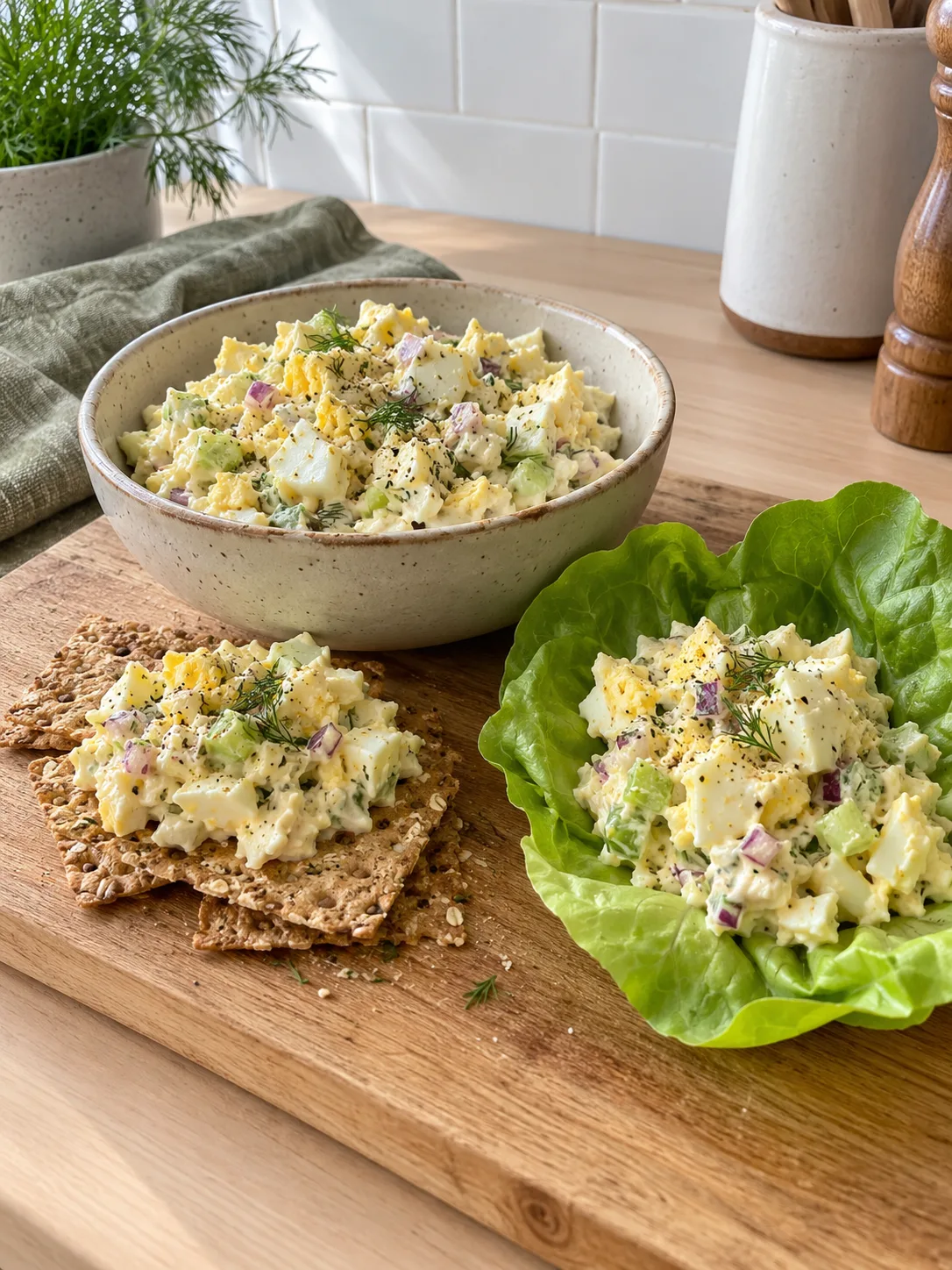
On bread or in a wrap for a quick sandwich, on crackers for a snack, or scooped over a bed of greens for a light lunch. It’s one of the few things on this site that needs no reheating or further prep — straight from the fridge to the plate.

For a more substantial sandwich, a thick slice of toasted whole-grain bread holds up to the moisture of the filling better than plain sliced white bread, which can get soggy if the sandwich sits for more than an hour before eating. A lettuce leaf between the bread and the egg salad adds a moisture barrier if you’re packing it ahead for a few hours before lunch. For a lower-carb option, it also works well stuffed into a halved avocado or wrapped in a large lettuce leaf instead of bread entirely.
How egg salad compares to chicken or tuna salad
All three are mayo-or-yogurt-based cold salads built the same way — a protein, a binder, some crunch from celery or onion — and they’re largely interchangeable in terms of how you’d eat them. Where they differ is cost and protein density. Eggs are typically the cheapest of the three per gram of protein, canned tuna usually sits in the middle, and cooked chicken breast (especially if you’re cooking it specifically for this, rather than using leftovers) tends to be the priciest once you factor in the cooking time and the cut of meat. If you’re deciding which to make based purely on budget, egg salad is usually the easiest entry point.
Making it ahead for a full week without it going bad
Because this only keeps 3–4 days, a single Sunday batch doesn’t quite cover a full five-day work week. A practical fix is boiling all the eggs you’ll need for the week in one go on Sunday, since boiled eggs on their own keep longer than the dressed salad, then mixing only half the batch into egg salad right away and dressing the second half mid-week with fresh yogurt, mayo, and mustard. This keeps you eating freshly-dressed egg salad all week while only boiling eggs once.
Frequently asked questions
Can I make this entirely without mayo?
Yes — use all Greek yogurt instead. The flavour will be tangier and the texture very slightly less rich, but it works as a complete substitute.
My eggs were hard to peel — what went wrong?
Usually skipping or rushing the ice bath step. Very fresh eggs (less than a week old) also tend to peel less cleanly than eggs that have sat in the fridge for a week or two — if peeling is consistently a problem, try using slightly older eggs next time, and see the note above on why this happens.
Can I add other ingredients, like pickles or hot sauce?
Yes — diced pickles, a dash of hot sauce, or a sprinkle of smoked paprika all work well folded in or added on top. This is a flexible base recipe that takes well to small additions.
Is it safe to leave this out at room temperature for a picnic or potluck?
No longer than about 2 hours, and less than that on a hot day above roughly 90°F / 32°C, where the safe window shortens to about an hour. Egg and dairy-based salads like this one are exactly the kind of dish food safety guidelines are referring to when they warn about picnic food — keep it on ice or in a cooler if it’s going to be out for a while, and don’t rely on “it still looks fine” as a judge of safety.
Related reading: High-Protein Egg Muffins, No-Cook High-Protein Lunch Meal Prep, and Cheap High-Protein Breakfasts.