Budget Ground Turkey Meatloaf
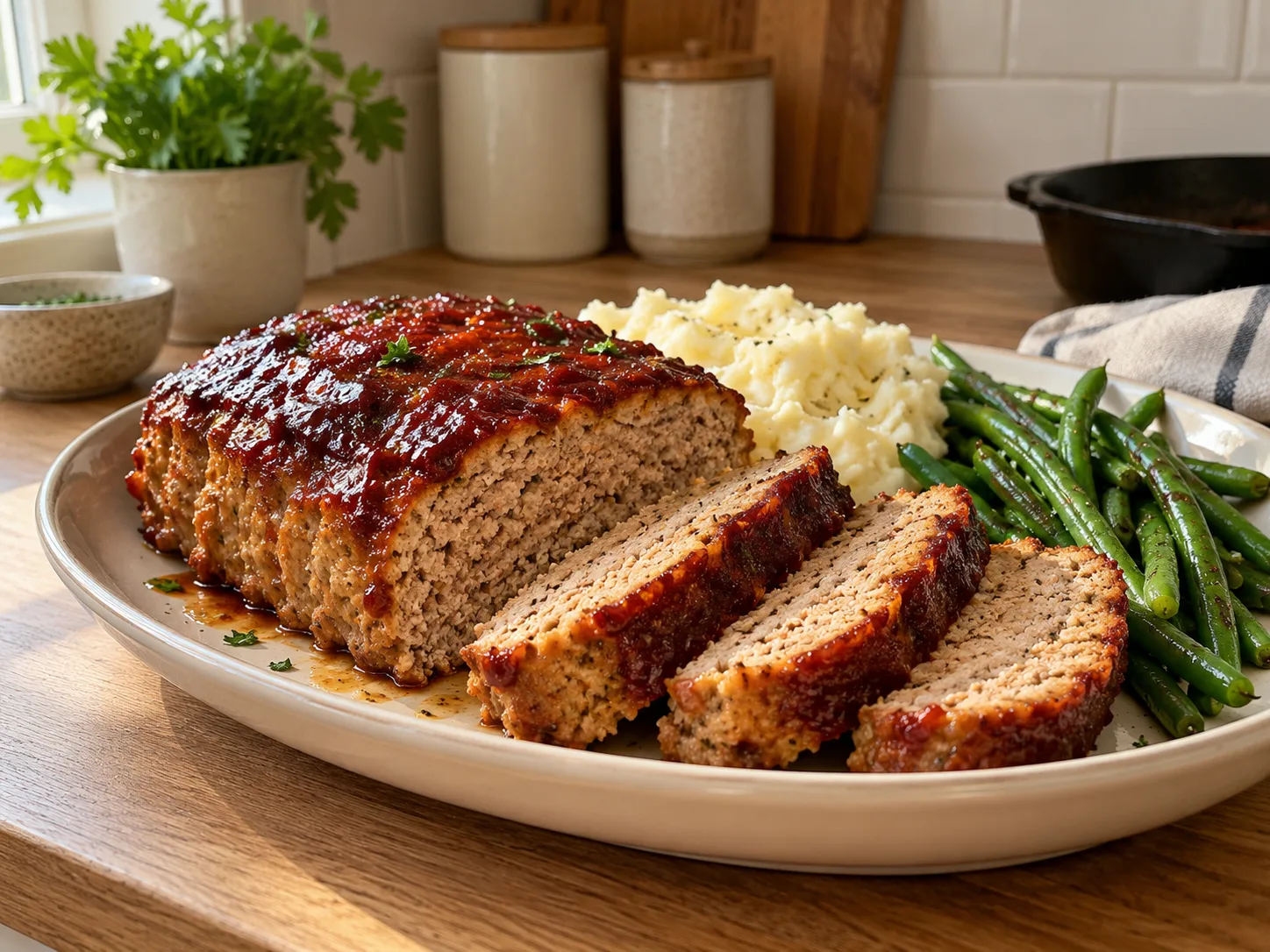
Different from the turkey meatballs already on this site in both format and purpose — meatballs are built for portioning into many small meals across the week, while a meatloaf is one dish, sliced to order, that holds together as a complete dinner with a glaze baked right on top. Same ground turkey, different result.
| Estimated cost per serving | Cheap |
| Protein per serving | ~28–32g* |
| Prep time | 15 minutes |
| Cook time | 50 minutes |
| Servings | 6 |
| Freezer-friendly | Yes |
*Protein is an estimate. Actual values depend on your exact ingredients and portions.
Why soaking the breadcrumbs first actually matters
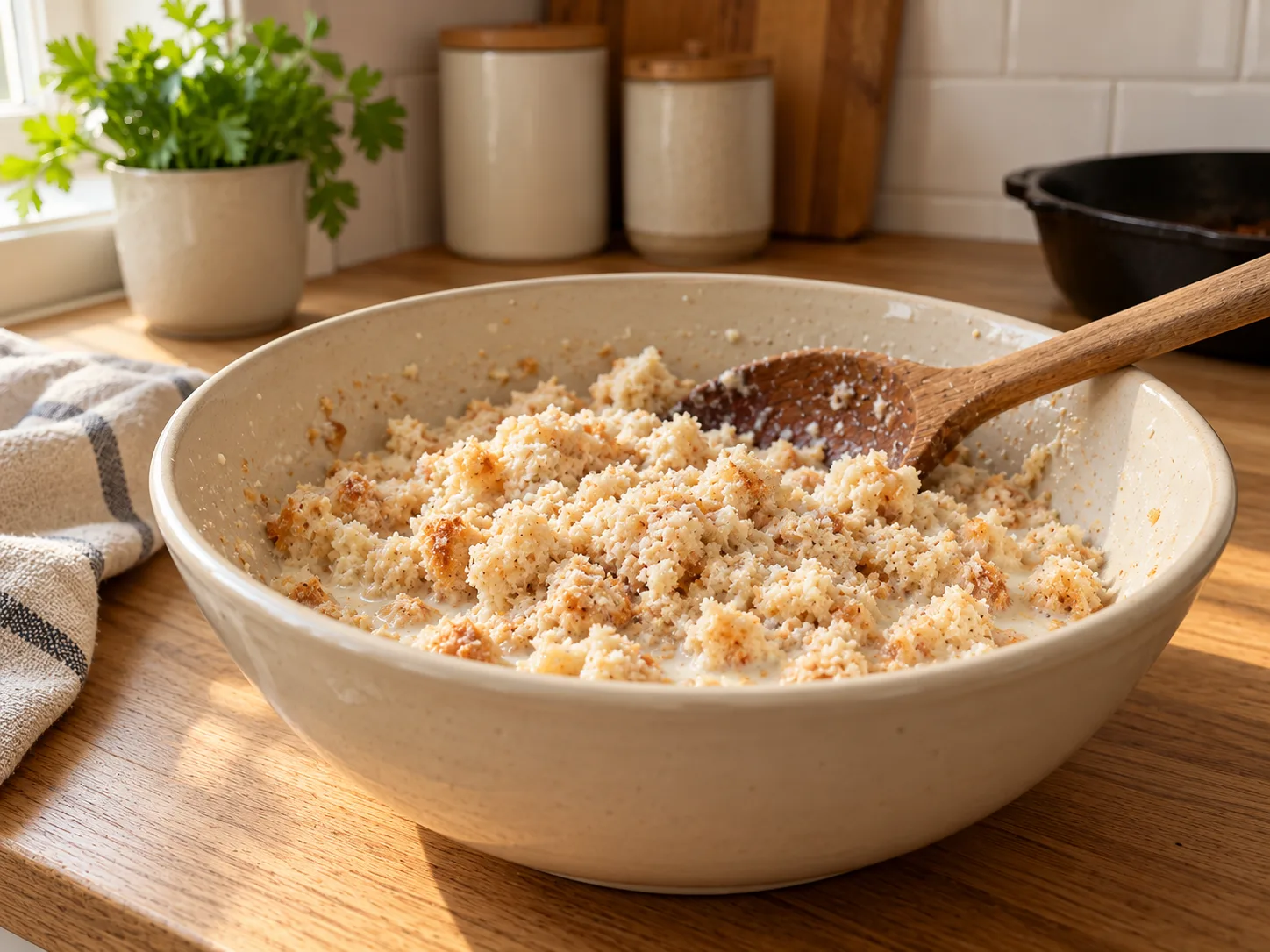
This mix of breadcrumbs and milk, soaked before anything else goes in, is called a panade, and it’s doing real work rather than just adding bulk. Dry breadcrumbs mixed straight into raw ground turkey compete with the meat for moisture as the loaf bakes, pulling liquid out of the meat and leaving a drier result. Pre-soaked in milk, the breadcrumbs arrive already saturated, so they don’t pull moisture away during baking — instead they hold onto the milk they’ve already absorbed and release it slowly as the loaf cooks, keeping the whole thing moister than a bread-crumbs-added-dry version would be. This is especially important with ground turkey specifically, since it’s leaner than ground beef and has less of its own fat to fall back on if the binder isn’t doing its job.
Ingredients
- 900g ground turkey
- 3/4 cup breadcrumbs
- 1/2 cup milk
- 1 egg
- 1/2 onion, finely diced
- 2 cloves garlic, minced
- 1 tsp dried thyme
- 1 tsp salt
- 1/2 tsp black pepper
- Glaze: 1/3 cup ketchup, 1 tbsp brown sugar, 1 tsp Dijon mustard

How to make it

- Preheat the oven to 350°F / 175°C. Combine the breadcrumbs and milk in a large bowl and let sit 5 minutes to soften.
- Add the ground turkey, egg, onion, garlic, thyme, salt, and pepper to the bowl. Mix with your hands just until combined — overmixing makes the loaf dense.
- Shape into a loaf on a parchment-lined baking sheet, or press into a loaf pan.
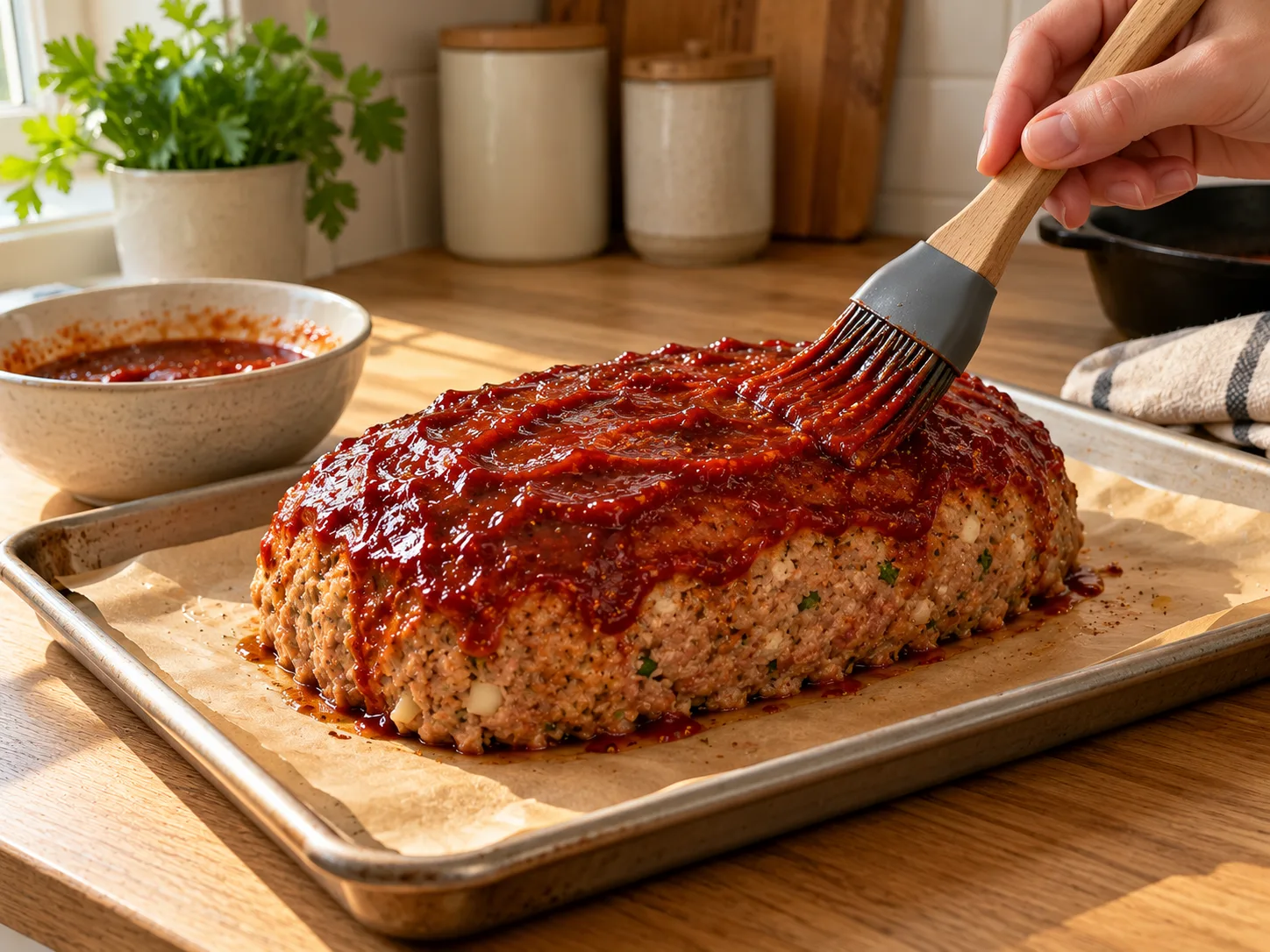
- Whisk together the ketchup, brown sugar, and mustard for the glaze. Brush half over the loaf.
- Bake 35 minutes, then brush on the remaining glaze and bake 15 more minutes, until the internal temperature reaches 165°F / 74°C. Let rest 10 minutes before slicing — cutting too early causes the loaf to fall apart.
Air fryer mini meatloaves
Mix the meatloaf as written, then divide it into 6 equal mini loaves. Preheat the air fryer to 350°F / 175°C. Arrange 3 loaves in the basket with space around them, brush with half the glaze, and cook for 12 minutes. Add the remaining glaze and cook another 6–10 minutes, until each centre reaches 165°F / 74°C. Rest 5 minutes. Keep the second batch refrigerated while the first cooks.
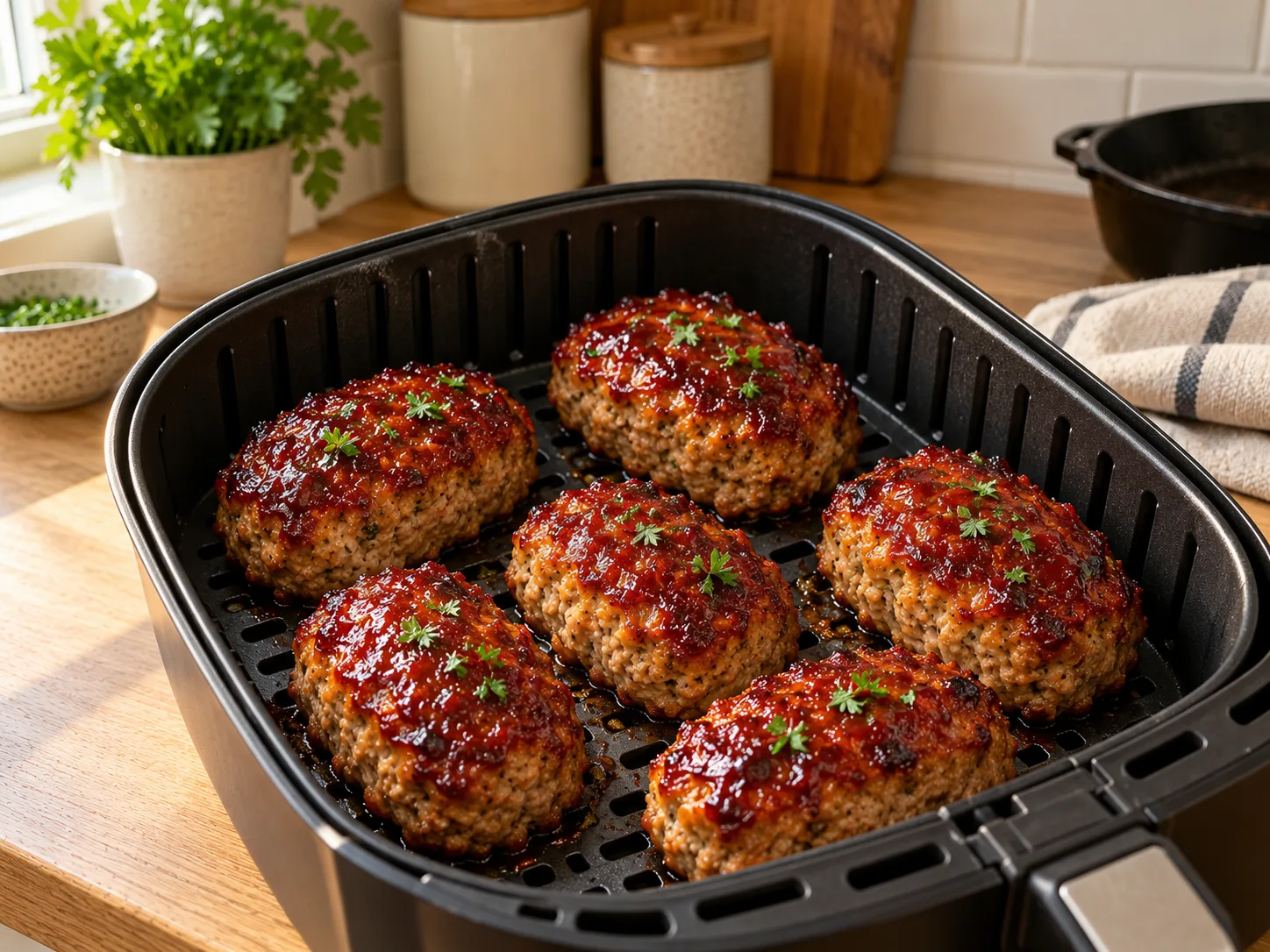
This method is most useful when you want ready-portioned servings and faster cooking. It usually takes two batches in a standard air fryer, so the full-size oven loaf is still more efficient for feeding six people at once.
Which method is best?
- Best overall: free-form oven loaf. It cooks evenly, gives the glaze the most exposed surface, and lets liquid drain away.
- Best for neat slices: loaf pan. The sides stay straight and compact, although the bottom is softer.
- Best for fast meal prep: air fryer mini loaves. They cook sooner, portion themselves, and reheat faster than a thick slice.
Cost and protein breakdown
- 900g ground turkey — the main cost
- Breadcrumbs, milk, egg — inexpensive binders
- Glaze ingredients — a few cents per batch, mostly pantry staples
- Total estimate — cheap to make, per serving
Protein lands around 28–32g per serving, almost entirely from the turkey.
Free-form loaf vs. loaf pan
Shaping the loaf freehand on a baking sheet lets the glaze coat all sides and lets fat drain away as it cooks, giving a slightly firmer crust all around. A loaf pan holds its shape more reliably if you’re worried about it spreading, but the meat sits in its own rendered fat while baking, which can make the bottom a bit greasier. Either works — it’s a texture preference, not a right-or-wrong choice.

If you use a loaf pan, line it with a parchment sling so the cooked loaf lifts out cleanly. A perforated or elevated meatloaf pan lets rendered liquid drain away; with a standard pan, lift the loaf out after its 10-minute rest and leave the liquid behind before slicing.
Glaze variations
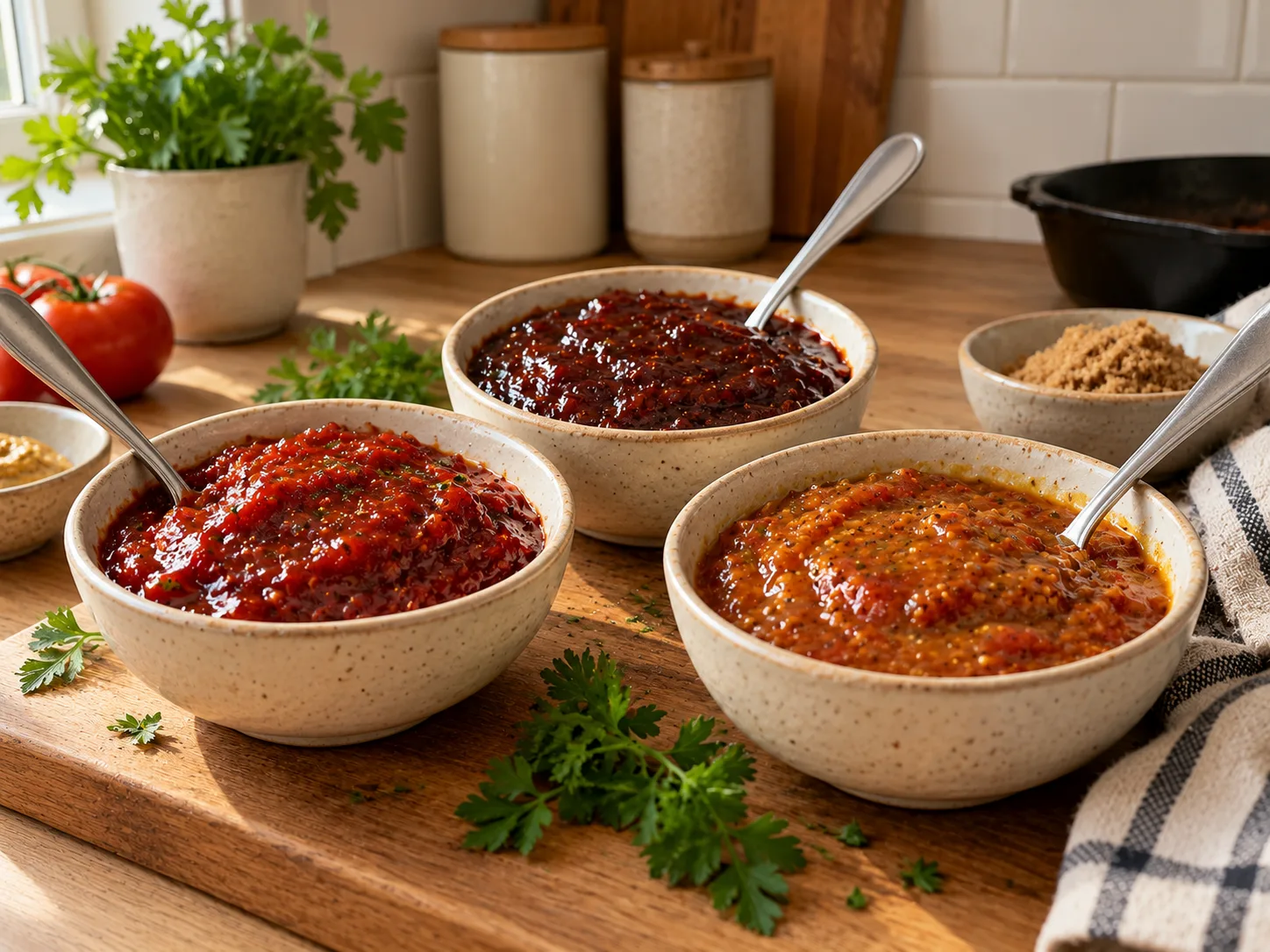
The ketchup-brown sugar-mustard glaze here is the classic diner-style topping, but it’s an easy base to change. For a BBQ-leaning version, swap the ketchup for your favourite BBQ sauce and skip the added brown sugar, since most BBQ sauces are already sweet enough on their own. For a tangier version, increase the Dijon to a full tablespoon and add a teaspoon of apple cider vinegar, which cuts through the richness of the meat more than the sweeter original glaze does. For an Italian-leaning loaf, skip the glaze entirely and top it with a simple tomato sauce and a handful of shredded mozzarella for the last 10 minutes of baking instead.
Getting the binder ratio right if you want to adjust it
The 3/4 cup breadcrumbs to 1/2 cup milk to 1 egg ratio here, against 900g of meat, is a reasonably standard meatloaf ratio — roughly one part binder liquid-and-crumb mixture to every four or five parts meat. If you’re scaling the recipe up or down, keep this general proportion rather than just scaling the meat alone; too little binder and the loaf falls apart on slicing even after resting, too much and it turns dense and bread-like rather than reading as a meat dish with a bit of structure added.
Common mistakes
Overmixing the meat. As the instructions note, this is a real risk with ground turkey specifically — overworking the proteins in any ground meat mixture makes the final texture denser and springier rather than tender, closer to a sausage than a meatloaf.
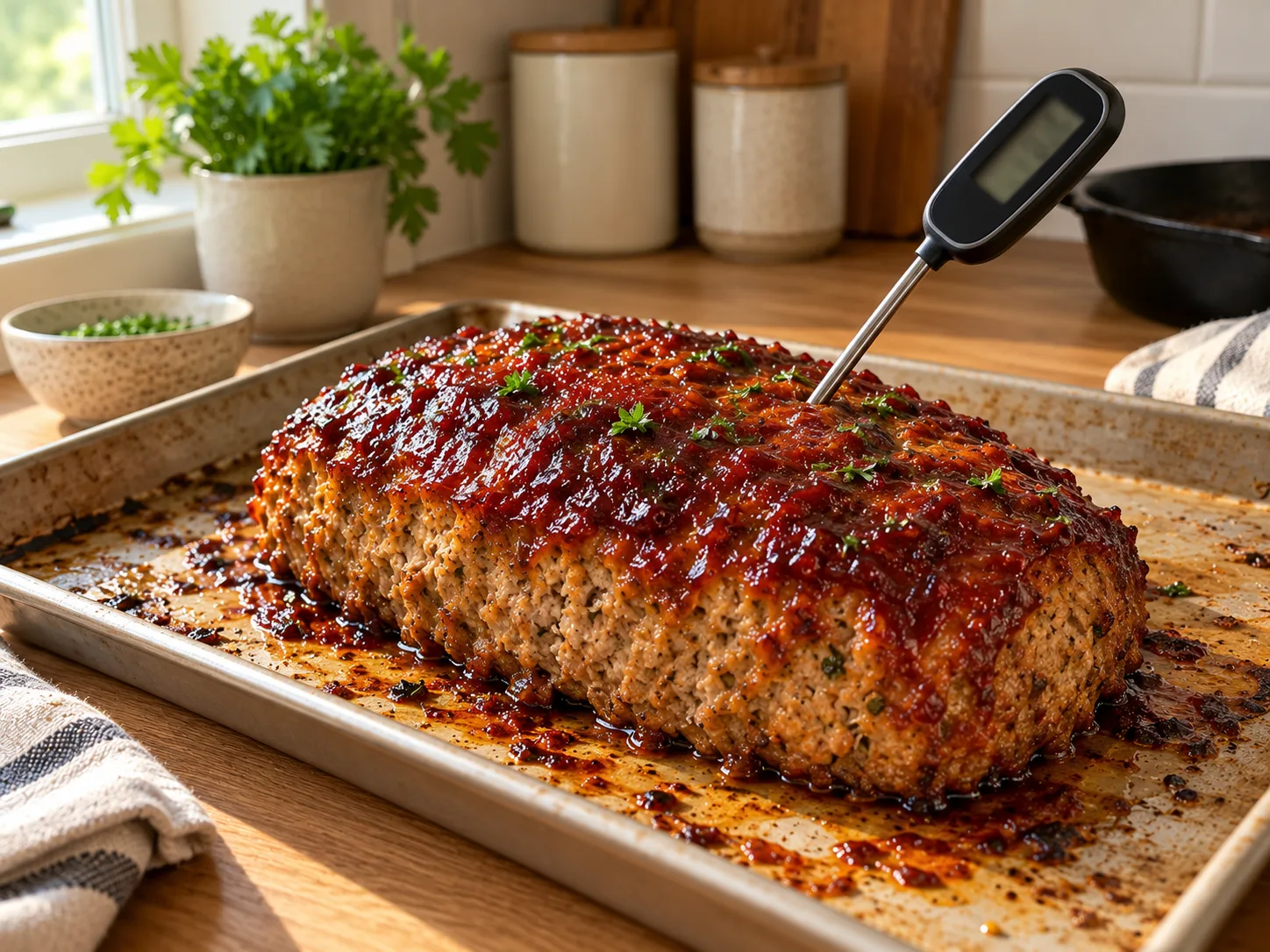
Not using a thermometer. Meatloaf is thick enough that colour and firmness alone are unreliable indicators of doneness, especially with ground turkey, which stays pale even when fully cooked, unlike beef which browns more visibly. A cheap instant-read thermometer checking for 165°F / 74°C at the centre is the only reliable way to know it’s done without over- or under-baking.
Applying all the glaze at once, at the start. Sugar-based glazes can burn over a 50-minute bake if applied all at once early on. Splitting it into two applications, as the recipe does, gives you glaze flavour without a scorched, bitter top layer.
How to make it cheaper
- Buy ground turkey on sale and freeze extra for next time.
- Make your own breadcrumbs from stale bread instead of buying a box.
- Skip the Dijon in the glaze if you don’t have it — ketchup and brown sugar alone still make a decent glaze.
Storage and freezing
- Fridge: cool and refrigerate within 2 hours. Store whole for maximum moisture or slice for grab-and-go portions; use within 3–4 days.
- Freezer (baked): wrap individual slices with a spoonful of glaze and freeze for up to 3 months. Thaw overnight in the fridge.
- Freezer (unbaked): shape, wrap well, label, and freeze for 2–3 months. Thaw completely in the fridge before baking.
- Reheating: cover individual slices and microwave at 70% power in 45-second intervals, or warm a larger portion covered at 325°F / 160°C. Heat the centre to 165°F / 74°C.

For an efficient freezer batch, mix a double recipe and shape two loaves. Bake one and freeze the other tightly wrapped inside a labelled freezer bag. Allow 24–36 hours for the raw loaf to thaw in the fridge, then bake at the original temperature. A very cold loaf may need a few extra minutes, so use 165°F / 74°C at the centre rather than the clock as the finish point.
Frequently asked questions
Can I use ground beef or chicken instead?
Yes. Ground chicken uses the same method and should reach 165°F / 74°C. Ground beef will be richer and may release more fat; an all-beef loaf is ready at 160°F / 71°C. A half-turkey, half-beef loaf should still be cooked to 165°F / 74°C.
Can I use oats or crushed crackers instead of breadcrumbs?
Yes — old-fashioned oats or finely crushed crackers both work as a breadcrumb substitute in roughly the same quantity, and both still benefit from the milk-soak step described above. Oats give a very slightly heartier texture; crackers (especially a plain, salted variety) add a bit more seasoning on their own, so taste and adjust the added salt accordingly if you go that route.
Can I skip the egg?
The egg is doing real binding work alongside the panade, helping hold the structure together as it bakes, so skipping it outright tends to produce a looser, more crumbly loaf. If egg is off the table for an allergy or preference reason, a tablespoon of mayonnaise or a flax egg (a tablespoon of ground flaxseed mixed with 2.5 tablespoons of water, left to thicken for a few minutes) are reasonable substitutes that provide similar binding.
My loaf fell apart when I sliced it — what happened?
Almost always cut too soon. The loaf needs a full 10 minutes to rest after baking so the proteins set and hold together — slicing straight out of the oven, while it’s still structurally loose, is the most common cause of a loaf that crumbles instead of holding a clean slice.
Can I add vegetables into the loaf itself?
Yes — finely grated carrot or zucchini mixed in with the onion works well and adds moisture. Squeeze grated zucchini dry first, since it holds a lot of water that can make the loaf too wet to hold its shape.
What’s the best side dish for this?
Mashed potatoes are the classic pairing, and for good reason — the glaze’s sweetness plays well against a plain, starchy side. Roasted or steamed vegetables (green beans, carrots, broccoli) round the plate out without competing with the meatloaf’s flavour. If you want to keep the whole meal on a budget, rice is a cheaper starch substitute that works almost as well, especially with a bit of the pan drippings or extra glaze spooned over it.
Can I make individual mini meatloaves instead of one big loaf?
Yes. For the oven, divide the mixture among 6 greased muffin cups or shape 6 small loaves on a lined sheet. Bake at 350°F / 175°C for 22–28 minutes, glazing once at the start and again after 15 minutes, until the centres reach 165°F / 74°C. For the faster air fryer version, use the method above.
Why does my meatloaf release a lot of liquid in the pan while baking?
Some liquid is normal — it’s a combination of rendered fat and moisture from the meat and panade. If it seems excessive, the most common cause is a slightly wetter mix than intended, often from not squeezing added vegetables (like zucchini, mentioned above) dry enough before mixing them in. Baking on a rimmed sheet with the loaf shaped free-form, rather than in a loaf pan, lets this liquid drain away from the loaf rather than pooling underneath it.
Related reading: Budget Ground Turkey Meatballs, Easy Shepherd’s Pie, and Easy Freezer Meals on a Budget.