Easy Shepherd’s Pie (Budget High-Protein)
Searches for easy shepherd’s pie have spiked hard this year, and it’s not hard to see why — it’s the kind of comfort food that uses cheap, filling ingredients already in most kitchens, and it reheats better than almost anything else on this site. This version keeps it simple: ground beef, frozen vegetables, and a mashed potato topping, no gravy from scratch required.
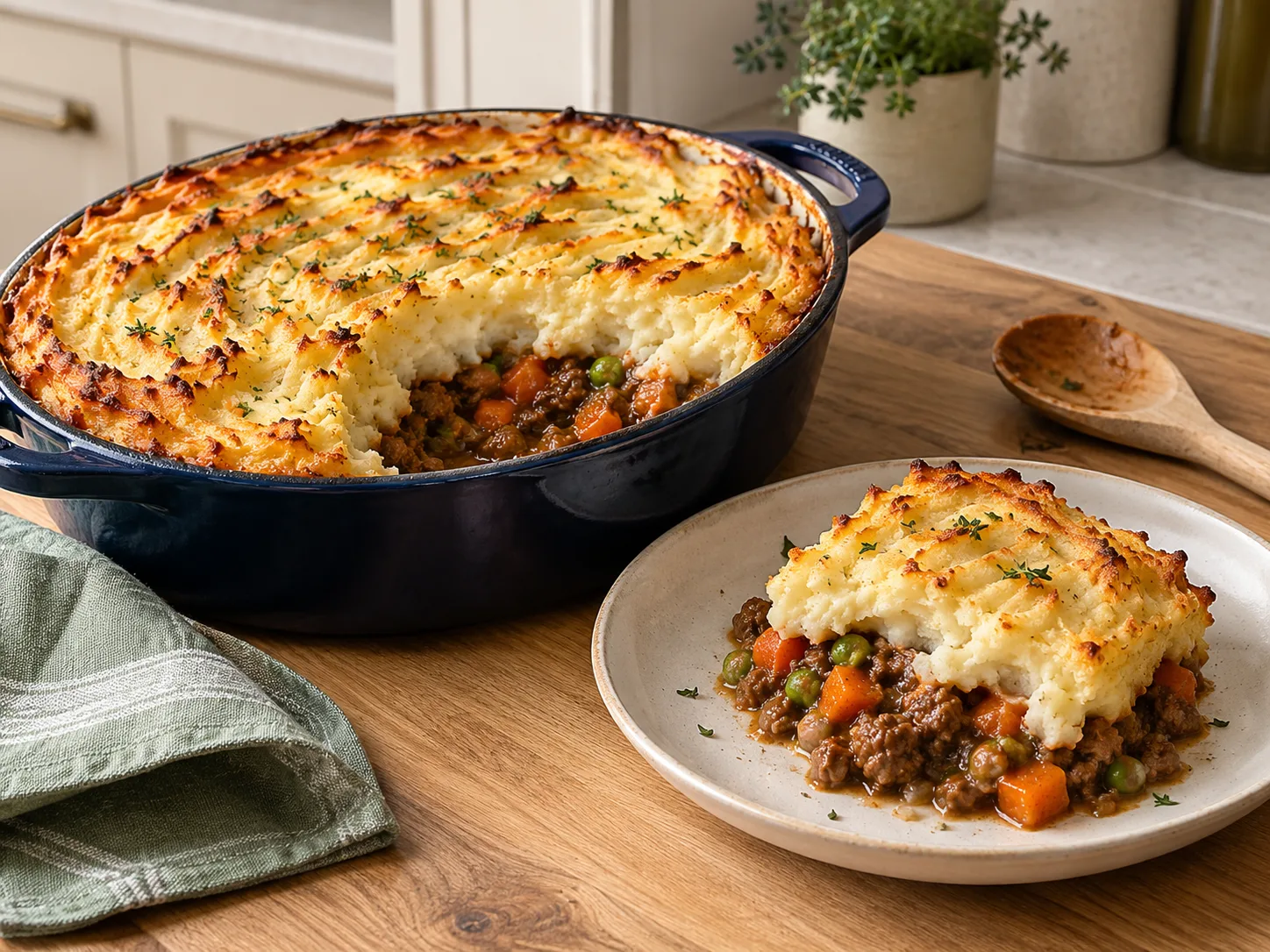
It’s also a genuinely good one-dish answer to the “one protein, one starch, one vegetable” problem that comes up constantly when planning budget dinners — all three show up in a single pan here, which means fewer dishes and less decision-making than plating a meat, a starch, and a vegetable separately.
| Estimated cost per serving | Cheap |
| Protein per serving | ~26–30g* |
| Prep time | 20 minutes |
| Cook time | 25 minutes |
| Servings | 6 |
| Freezer-friendly | Yes |
*Protein is an estimate. Actual values depend on your exact ingredients and portions.
Picking the right potato
Russet potatoes are the standard choice for mashing because their higher starch content breaks down into a fluffier, lighter texture than waxier varieties. Yukon gold potatoes are a close second, with a naturally buttery flavour and a slightly denser, creamier mash that holds together well as a pie topping specifically. Waxy potatoes like red or new potatoes can work in a pinch but mash to a gluier, less fluffy result, and generally aren’t the first choice for a dish where the topping is meant to be light rather than dense.
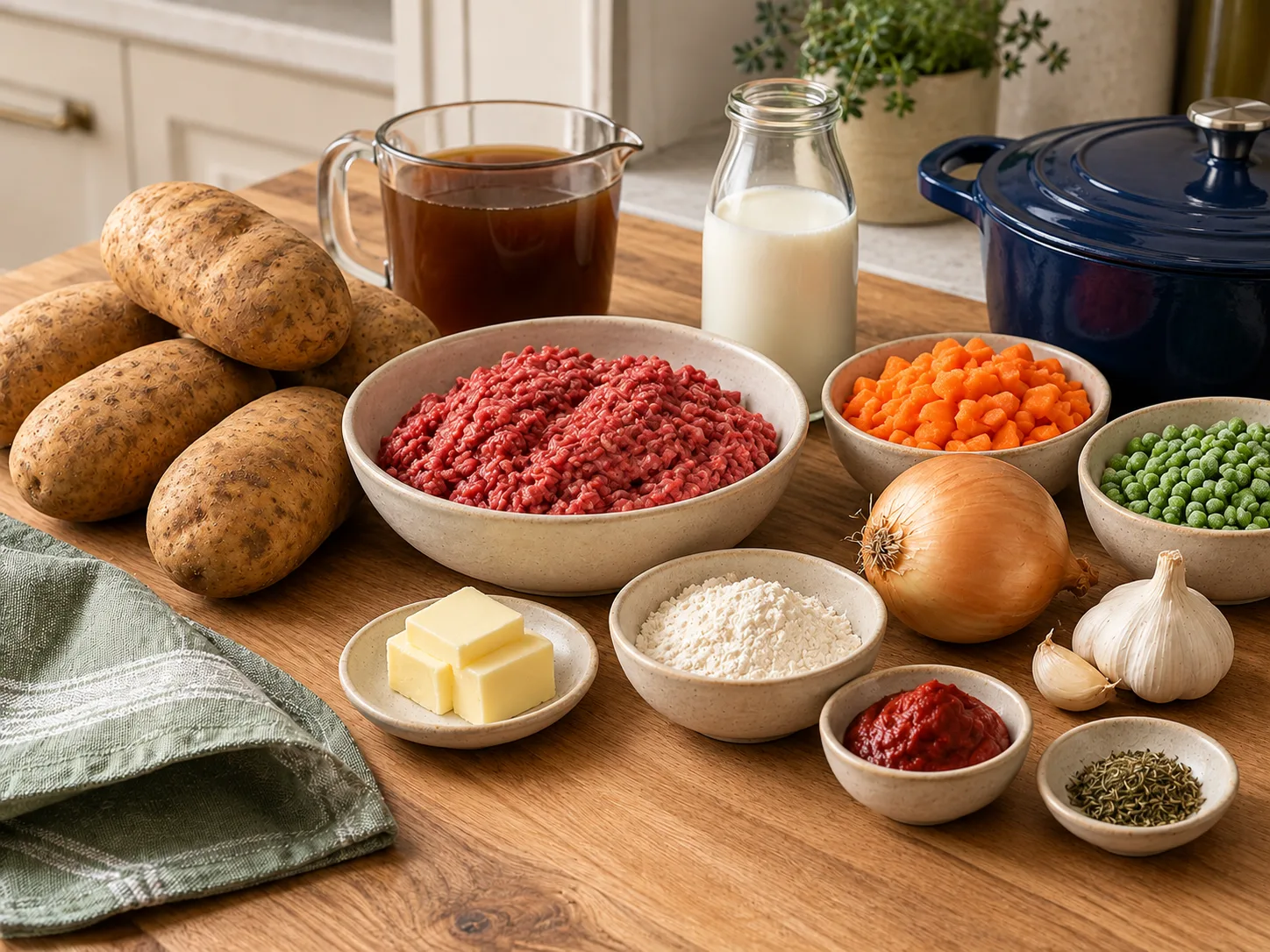
Ingredients
- 700g lean ground beef
- 1 onion, diced
- 2 cloves garlic, minced
- 2 cups frozen mixed vegetables (peas, carrots, corn)
- 2 tbsp flour
- 1.5 cups beef broth
- 1 tbsp Worcestershire sauce (optional)
- 1 tsp dried thyme
- 1kg potatoes, peeled and cubed
- 1/4 cup milk
- 2 tbsp butter
- Salt and pepper to taste
How to make it

- Boil the potatoes in salted water until fork-tender, about 15 minutes. Drain, then mash with the milk and butter. Season with salt and pepper and set aside.

- While the potatoes cook, preheat the oven to 400°F / 200°C. Brown the ground beef in a large oven-safe skillet over medium-high heat, breaking it up as it cooks, about 6–7 minutes, until no pink remains and it reaches 160°F / 71°C.
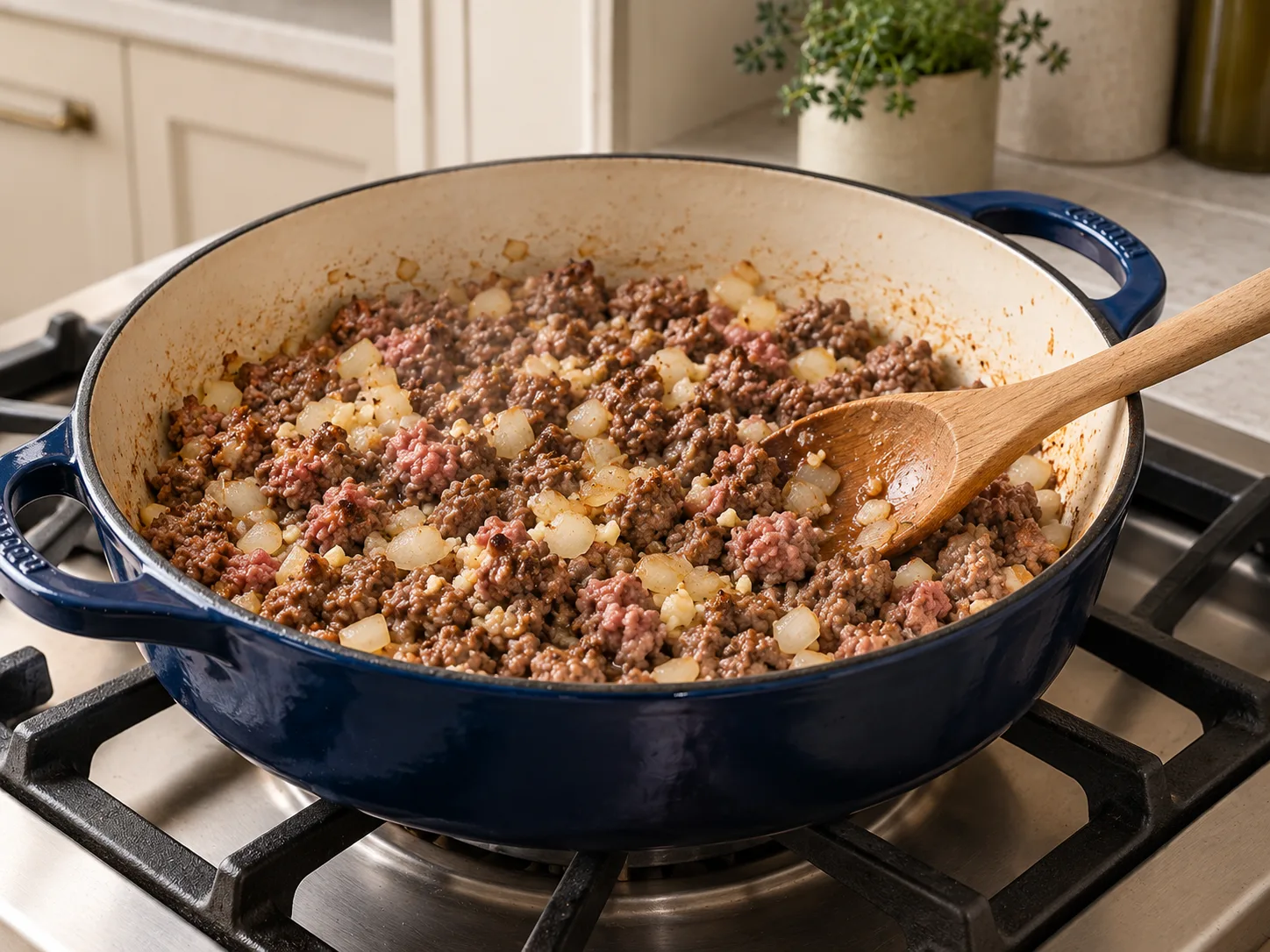
- Add the onion and garlic, cooking 3–4 minutes until softened. Sprinkle the flour over the beef mixture and stir to coat, cooking 1 minute.
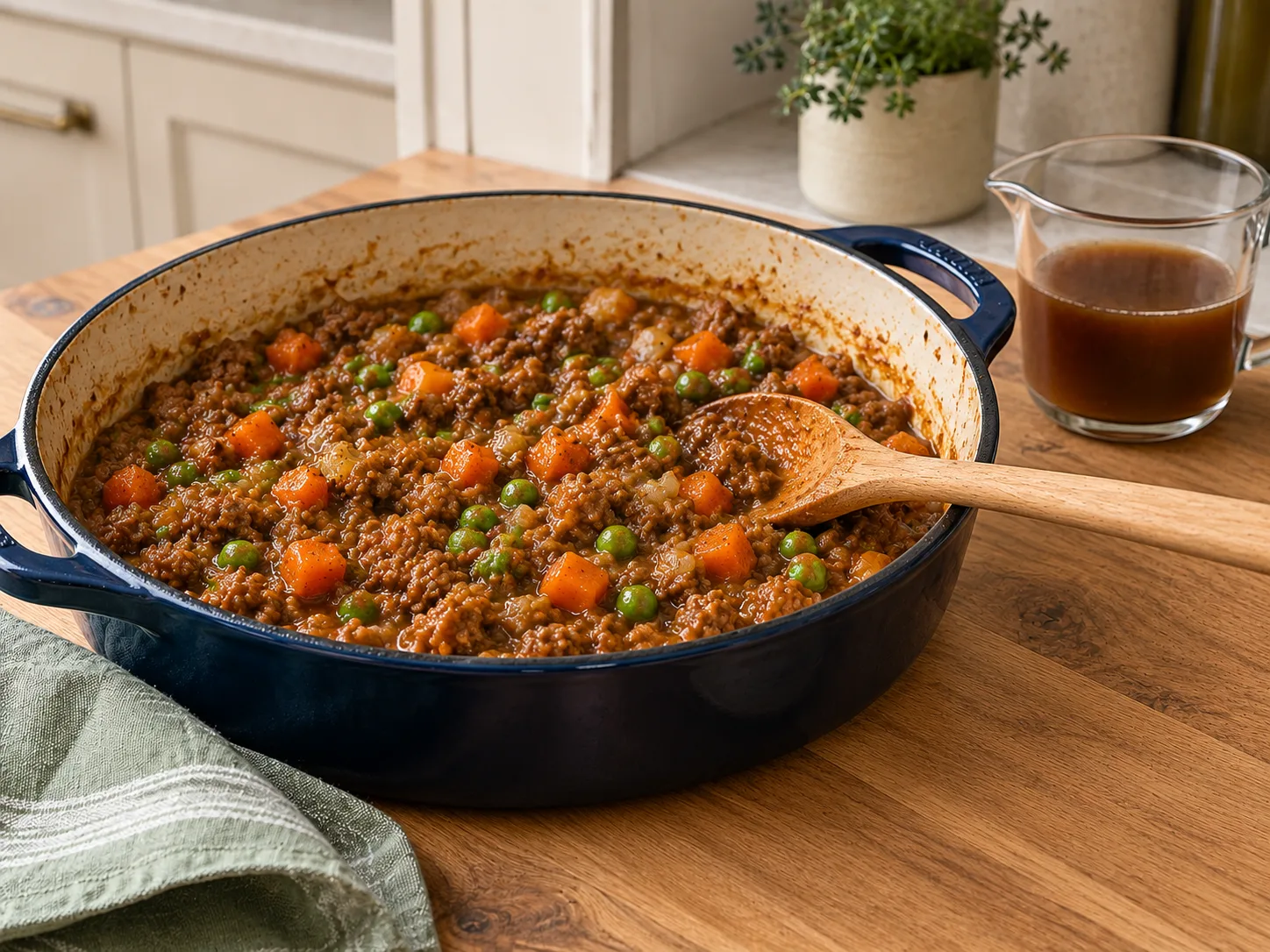
- Add the broth, Worcestershire sauce, and thyme. Simmer 5 minutes until thickened. Stir in the frozen vegetables.
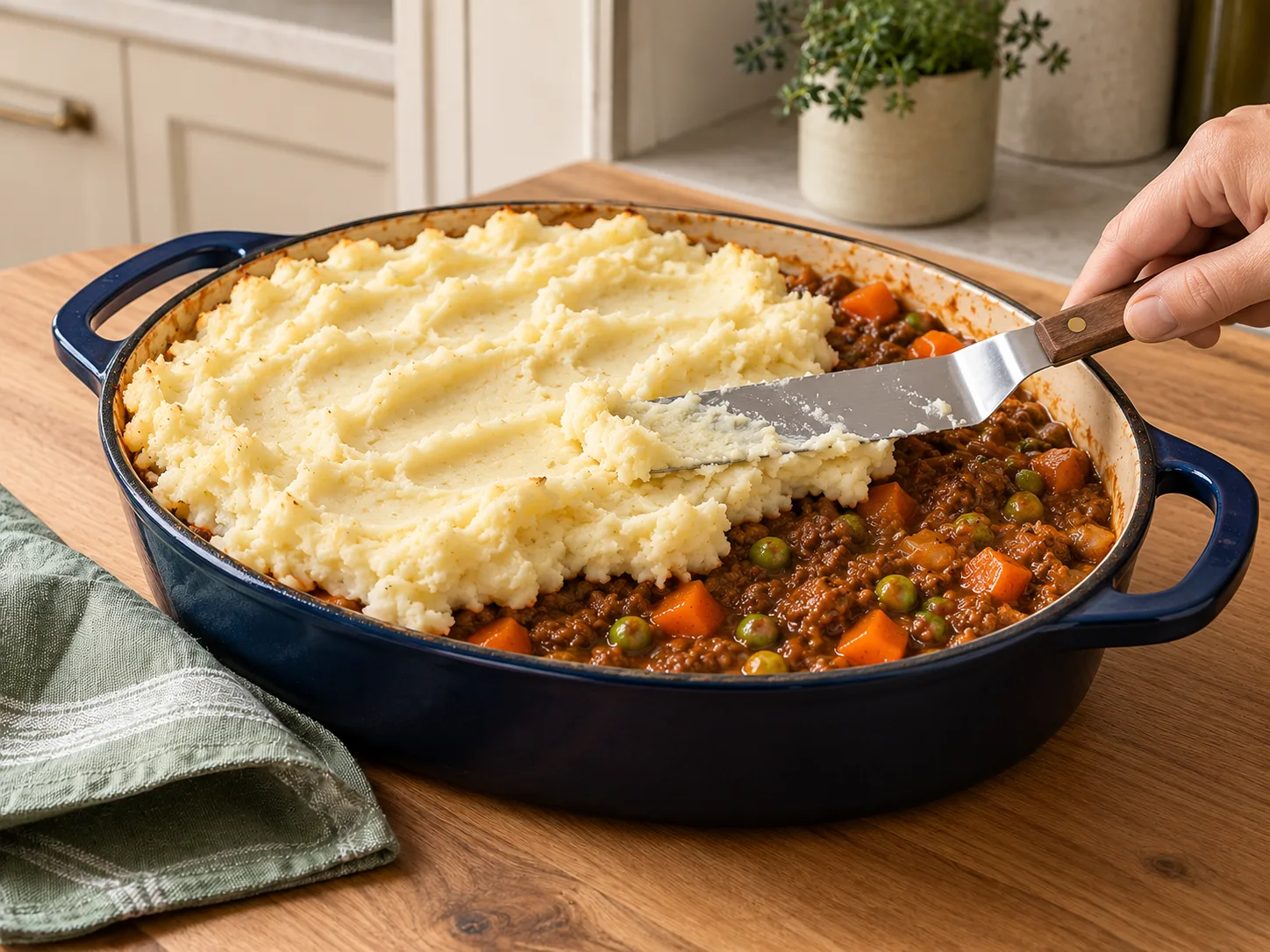
- Spread the mashed potatoes evenly over the beef mixture, right in the same skillet. Bake 20–25 minutes, until the top is lightly golden and the centre reaches 165°F / 74°C.
Fast stovetop shepherd’s pie bowls
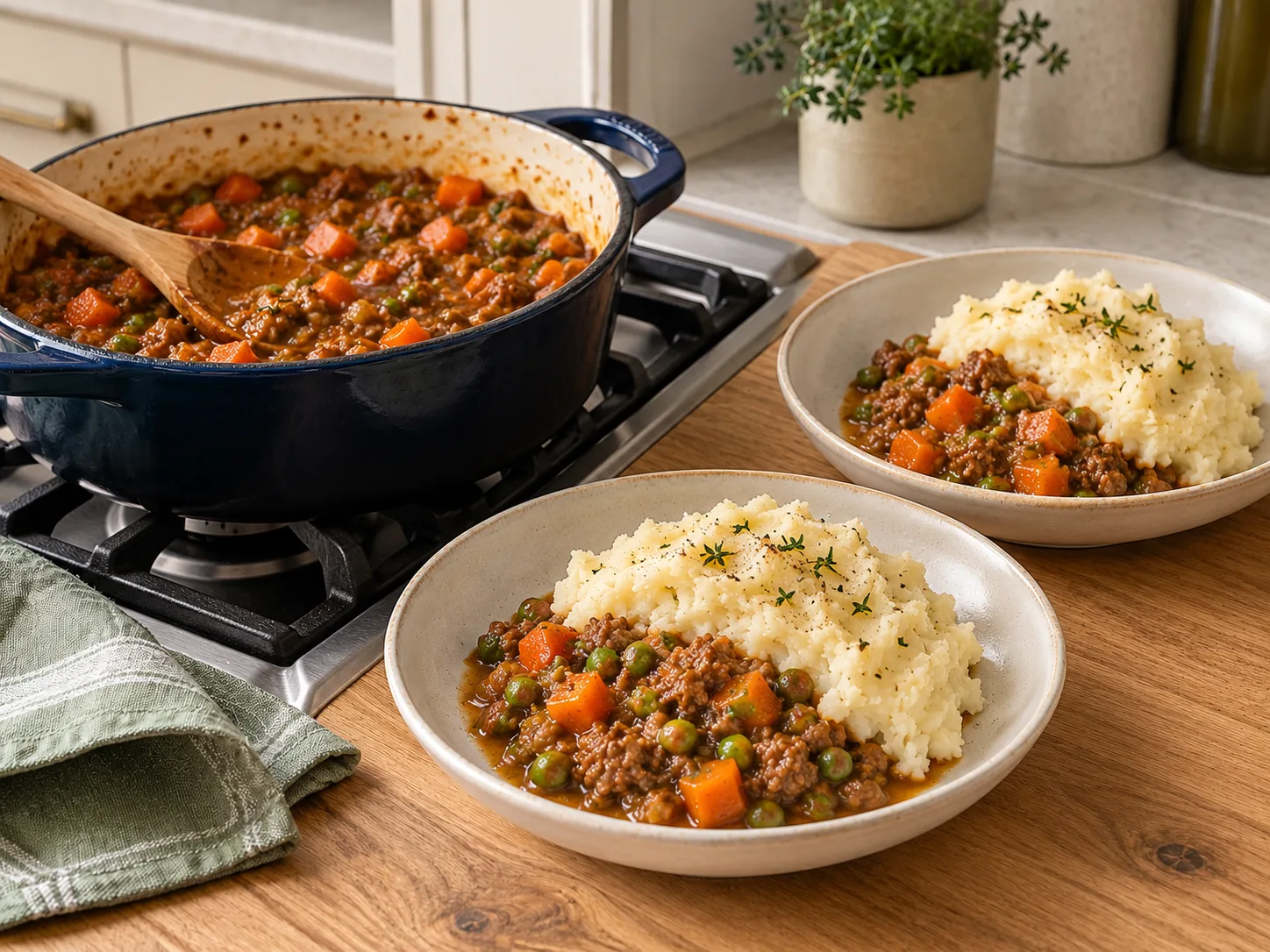
For the same filling and mashed potato combination without the oven time, prepare the potatoes and beef mixture exactly as written through stirring in the frozen vegetables. Let the filling simmer for another 2–3 minutes, until the vegetables are hot and the sauce is thick, then spoon it into bowls and top with the hot mash. This saves the 20–25 minute bake and is the most practical option for a weeknight, but you give up the browned potato crust.
Which method is best?
- Best overall and for meal prep: oven-baked. The potato layer sets neatly, the ridged top browns, and chilled portions hold together well.
- Fastest: stovetop bowls. They have the same flavour and skip the bake, making them about 20 minutes quicker.
- Best for a double batch: two baking dishes. Keeping both dishes at the original depth gives more even heating than using one very deep pan.
A slow cooker or pressure cooker does not add much here: both make it harder to keep the filling and mash distinct, and neither gives the potato topping a browned crust.
Cost and protein breakdown
- 700g ground beef — the main cost; buy on sale and freeze extra when possible
- Potatoes — cheap in bulk, and the mashed topping uses less butter and milk than a side dish would need on its own
- Frozen vegetables, broth, flour — inexpensive pantry and freezer staples
- Total estimate — cheap to make, per serving
Protein lands around 26–30g per serving, almost entirely from the beef, with the milk and butter in the potato topping contributing a small additional amount.
No oven-safe skillet? Use a baking dish instead
Cook the beef mixture in a regular skillet on the stovetop as directed, then transfer it to a greased baking dish before topping with the mashed potatoes and baking. One extra dish to wash, but the result is identical.
If you cook on the stovetop fairly often, it’s worth knowing which of your existing pans are actually oven-safe before you need one mid-recipe — generally, anything with an all-metal handle (cast iron, carbon steel, or stainless steel) can go in the oven, while pans with a plastic, rubber, or wood-wrapped handle usually can’t withstand oven temperatures and will be damaged or release unwanted material into the food.
Getting a golden, slightly crisped top
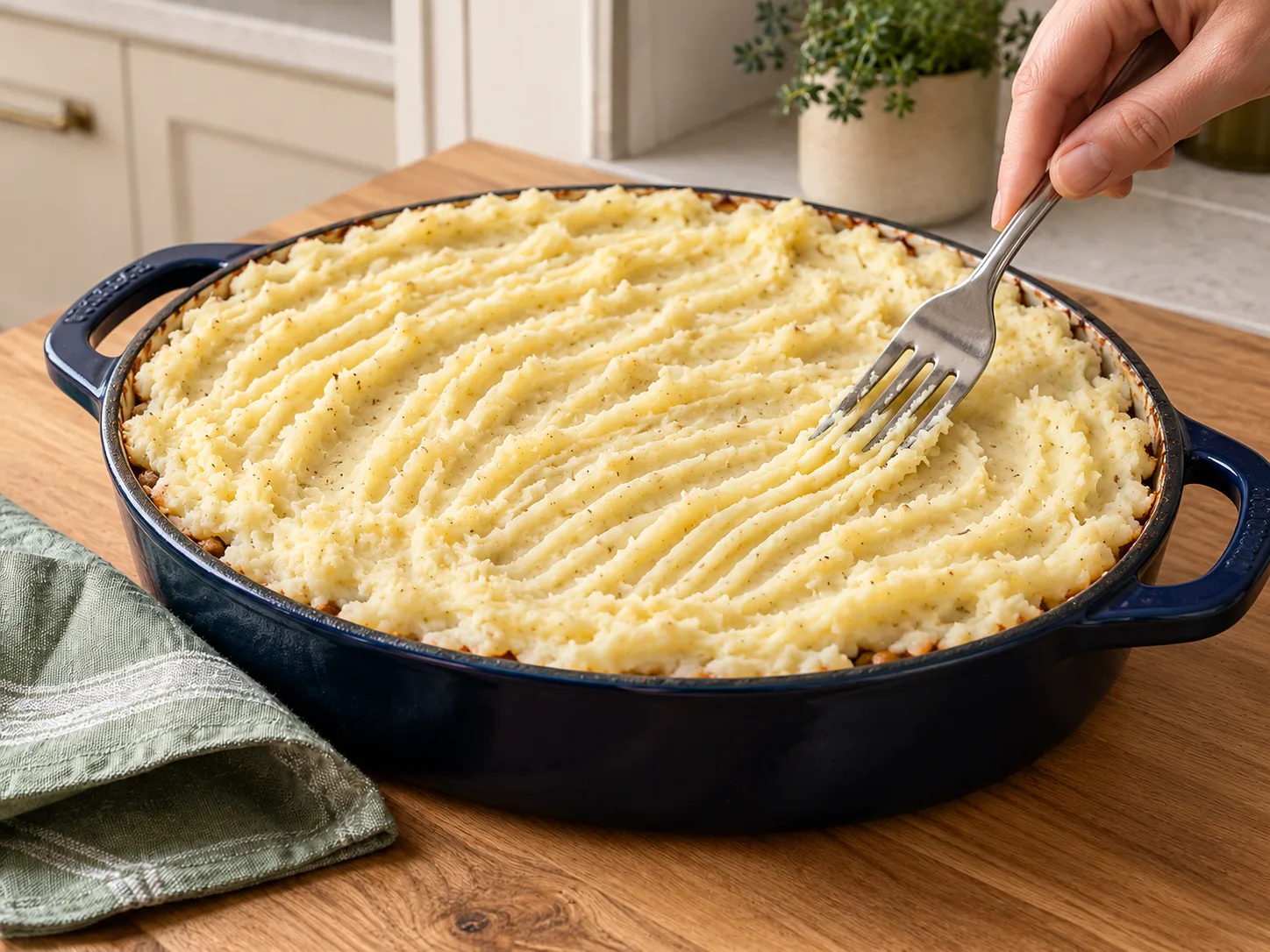
A plain mashed potato topping bakes to a soft, pale finish on its own, which is fine but not especially dramatic-looking. For a more golden, slightly crisped top, run the finished pie under the broiler for 2–3 minutes at the very end, watching closely since broilers go from golden to burnt fast. Dragging a fork across the potato surface before baking, to create ridges and peaks, also helps — the raised points brown faster than a flat surface, giving a more textured, visually appealing finish without any extra ingredients. A light brushing of melted butter or an egg wash over the potatoes before baking speeds up the browning further, for anyone who wants that result without relying on the broiler.
Topping variations
The classic mashed potato topping isn’t the only option here. A layer of shredded cheddar sprinkled over the potatoes for the last 5–10 minutes of baking adds a melted, golden finish that a lot of people find irresistible, at a small added cost. Swapping half the potatoes for sweet potato gives a sweeter, slightly different flavour that pairs surprisingly well with the Worcestershire-thyme filling. For a lower-carb version, a cauliflower mash topping works in roughly the same quantity as the potatoes, though it’s thinner and benefits from an extra few minutes of draining after cooking to avoid a watery topping that won’t hold its shape.
Scaling it up for a crowd
This recipe already serves 6. For a double batch, divide it between two baking dishes instead of making one extra-deep pie. Bake both at 400°F / 200°C, rotating the dishes between the oven racks halfway through. Start checking at 25 minutes and continue only until both centres reach 165°F / 74°C. Keeping the original depth makes the timing more predictable and gives you twice as much browned topping.
Common mistakes
Not thickening the filling enough before topping it. As the FAQ below notes, a too-thin filling is the main reason the potato layer sinks or slides rather than staying put as a distinct top layer. Give the flour-and-broth mixture the full 5 minutes to thicken properly.
Overworking the mashed potatoes. Mashing too aggressively, or using a stand mixer on high speed, breaks down the potato starches too much and can turn the topping gluey rather than fluffy. A hand masher or ricer, used gently, gives a better texture for this specifically.
Skipping the rest time after baking. Like most layered casseroles, this holds together better for serving if it sits for 5 minutes after coming out of the oven, letting the filling settle slightly before the first scoop is cut.
How to make it cheaper
- Buy ground beef on sale and freeze extra. The single biggest lever on cost here.
- Use a bouillon cube and water instead of broth. With the Worcestershire and thyme already in play, the difference is minor.
- Buy potatoes in the largest bag available. The per-kilogram price drops noticeably at bigger sizes.
Storage and freezing
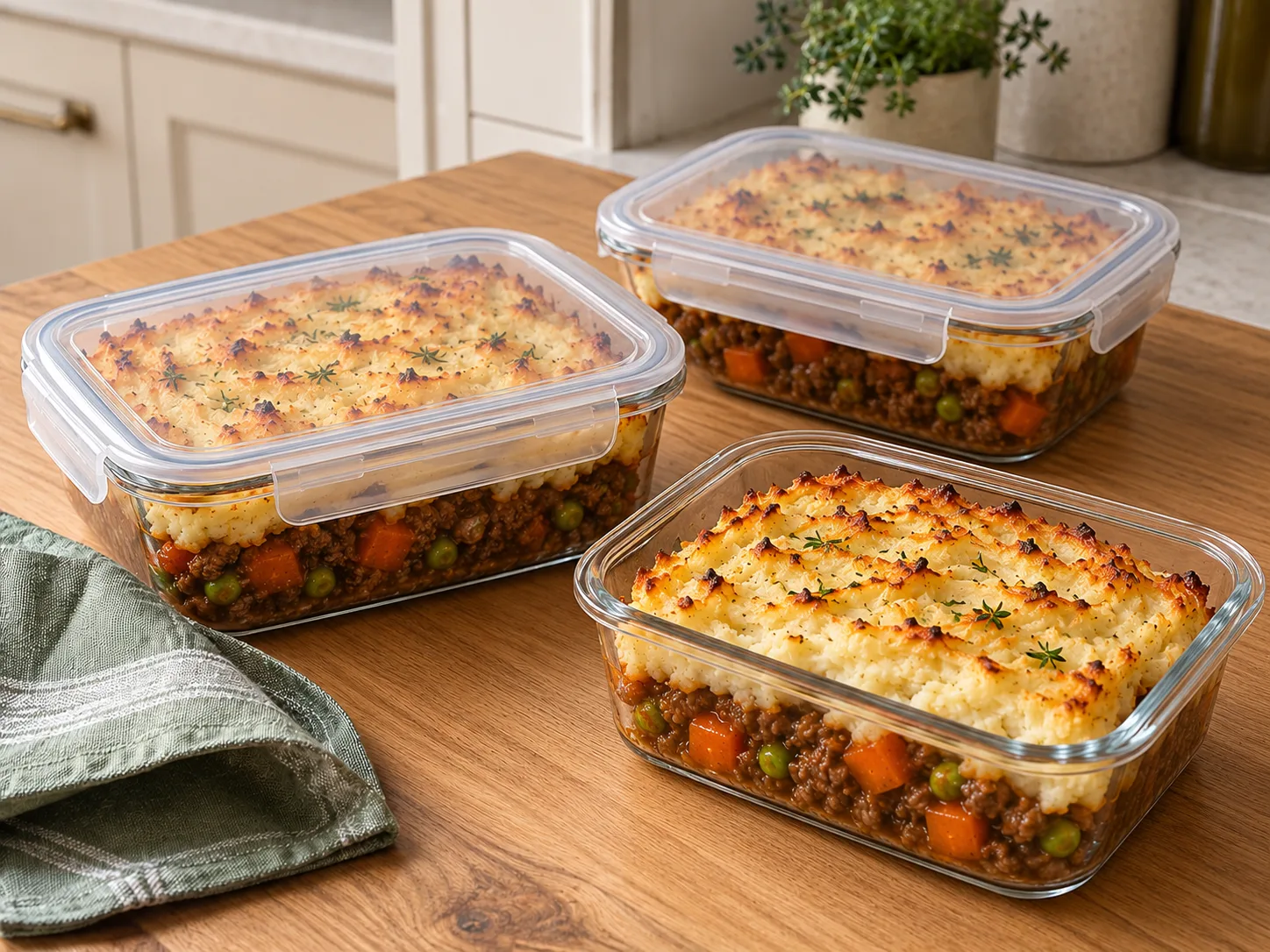
- Fridge: cool and refrigerate within 2 hours, then keep for 3–4 days at 40°F / 4°C or below.
- Freezer: freeze baked or unbaked portions for up to 3 months. Thaw overnight in the fridge so the centre reheats evenly.
- Reheating a full dish: cover and heat at 350°F / 175°C until the centre reaches 165°F / 74°C; uncover for the last few minutes if you want the top dry and lightly crisp.
- Reheating one portion: cover loosely and microwave at 70% power in 60-second intervals, letting it stand for 1 minute once the centre reaches 165°F / 74°C.
Frequently asked questions
Can I use ground turkey instead of beef?
Yes. Use the same quantity and method, adding 1 teaspoon of oil if the turkey is extra lean. Cook the turkey to 165°F / 74°C before assembling the pie; it will be slightly less rich but works well with the same seasoning.
Is this the same as cottage pie?
Traditionally, shepherd’s pie refers to a version made with lamb, while cottage pie uses beef — the names have become interchangeable in a lot of everyday cooking, this recipe included, since beef is the more widely available and affordable option. If you want to make a more traditional version, ground lamb swaps in directly for the beef at the same quantity, with no other changes needed to the method.
Can I use instant or boxed mashed potatoes to save time?
Yes, and it’s a genuinely reasonable shortcut on a busy night — prepare according to the package directions and use it as the topping in the same way. The texture will be a bit more uniform than fresh-mashed potatoes and the flavour slightly flatter, but it saves the better part of 20 minutes and still produces a legitimate shepherd’s pie.
Does this work without the Worcestershire sauce?
Yes, it’s marked optional for exactly that reason. Worcestershire adds a savoury, slightly tangy depth that rounds out the gravy, but the dish is still a complete, flavourful shepherd’s pie without it — a splash of soy sauce is a reasonable substitute if you want a similar umami boost from something you’re more likely to already have.
My potato topping sank into the filling instead of staying on top — why?
Usually the filling was too thin or too hot when the potatoes went on. Make sure the beef mixture has thickened properly in step 4 before adding the topping, and spread the potatoes gently rather than pressing down hard.
Can I make this ahead and bake it later?
Yes — assemble the full pie, filling and potato topping together, cover and refrigerate for up to a day before baking. It will need a few extra minutes in the oven since it’s starting cold rather than hot off the stove, so check for a golden top and a hot centre rather than relying on the original bake time alone.
What’s the difference between this and a casserole with a biscuit or pastry topping?
Shepherd’s pie is specifically defined by the mashed potato topping — swap that for a biscuit, pastry, or pie crust topping and you’ve moved into pot pie territory instead, which is a related but genuinely different dish with its own texture and baking considerations (a pastry crust needs a hotter oven and different timing than a potato layer that’s already cooked).
Can I skip peeling the potatoes?
Yes, if you don’t mind flecks of skin in the mash — this works best with thin-skinned varieties like Yukon gold rather than russets, which have a thicker, more noticeable skin. Scrub them well either way, and mash a bit more thoroughly if the skin texture bothers you.
Related reading: Ground Beef and Rice Skillet, Unstuffed Cabbage Roll Casserole, and Easy Freezer Meals on a Budget.