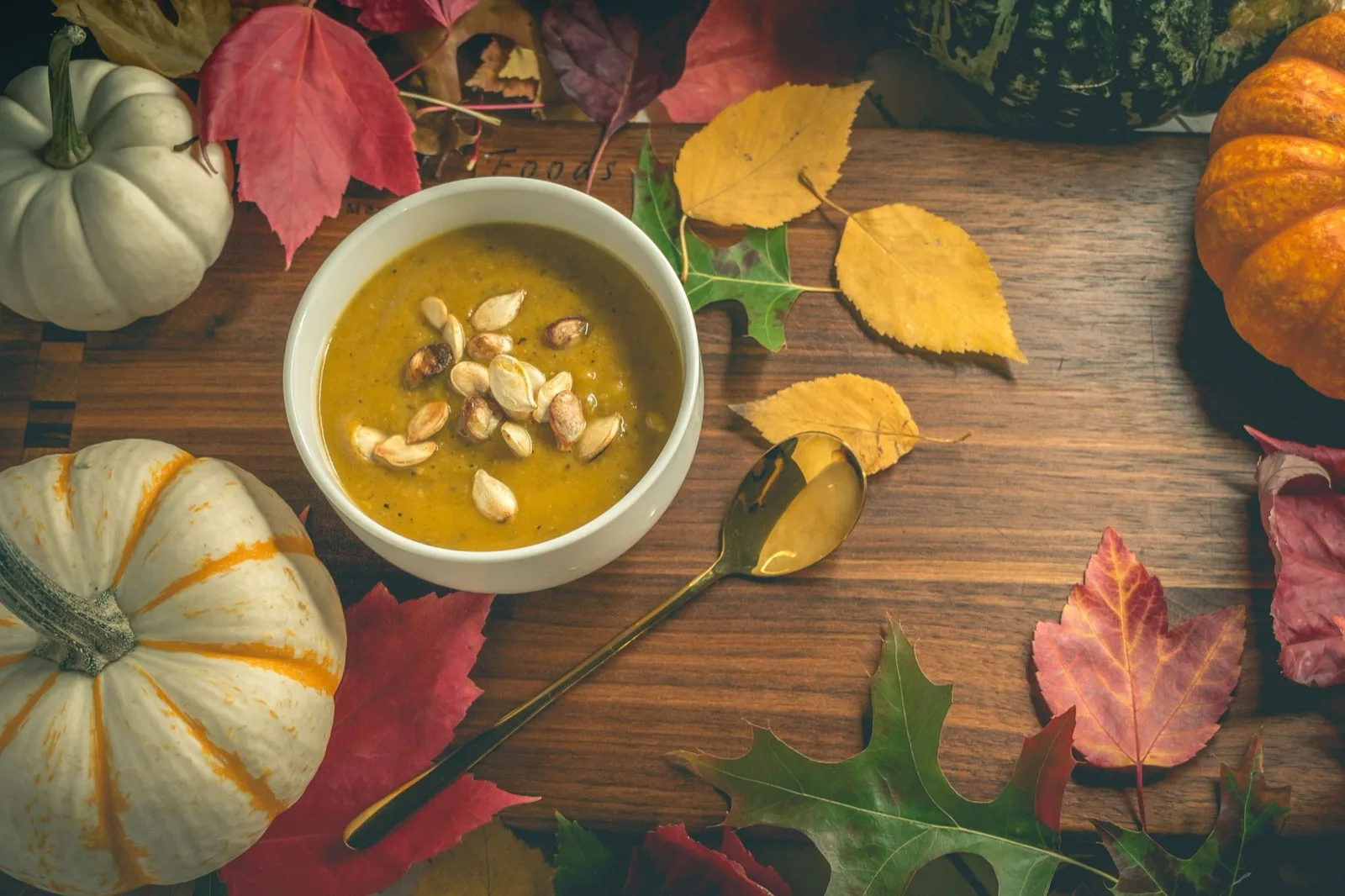
High-Protein Roasted Butternut Squash Soup
Roasted butternut squash soup is one of the most-searched fall recipes on Pinterest right now, and it’s easy to see why: it’s cheap, it’s seasonal, and it tastes like the start of autumn. The problem is that most versions lean entirely on squash, broth, and cream — filling, but barely any protein. This version pushes that further than a typical protein-boosted squash soup: a double dose of white beans plus a full cup of Greek yogurt blended right into the base, not just swirled on top. Same roasted sweetness and velvety texture, built to actually carry a meal instead of just starting one.
| Estimated cost per serving | Cheap |
| Protein per serving | ~18–22g* |
| Prep time | 15 minutes |
| Cook time | 50 minutes |
| Servings | 6 bowls |
| Freezer-friendly | Yes |
*Protein is an estimate. Actual values depend on your exact ingredients and portions.
Why double beans plus yogurt, not just cream
Blended white beans do almost exactly what cream does texturally — they smooth out and thicken a pureed soup — but they bring roughly 7g of protein per half-cup along for the ride, plus fibre, for a fraction of the cost of heavy cream. Using two cans instead of one roughly doubles that contribution. Blending in a full cup of Greek yogurt on top of the beans adds another meaningful protein hit while keeping the soup just as smooth, since yogurt blends in without leaving any trace of itself the way cream cheese or sour cream sometimes can. Once everything is blended with the roasted squash, none of it is detectable on its own. Nobody tastes “beans” or “yogurt” in this soup — they taste squash soup that happens to be far more filling than usual.
Picking a good squash

Look for a butternut squash that feels heavy for its size, with matte (not shiny) skin and no soft spots, especially near the stem. A squash with a bit of a dull, almost chalky finish has usually cured longer in storage, which tends to mean sweeter flesh. Avoid any squash with a green tinge near the stem end — that’s a sign it was picked before it was fully mature and it won’t roast as sweet.
Ingredients
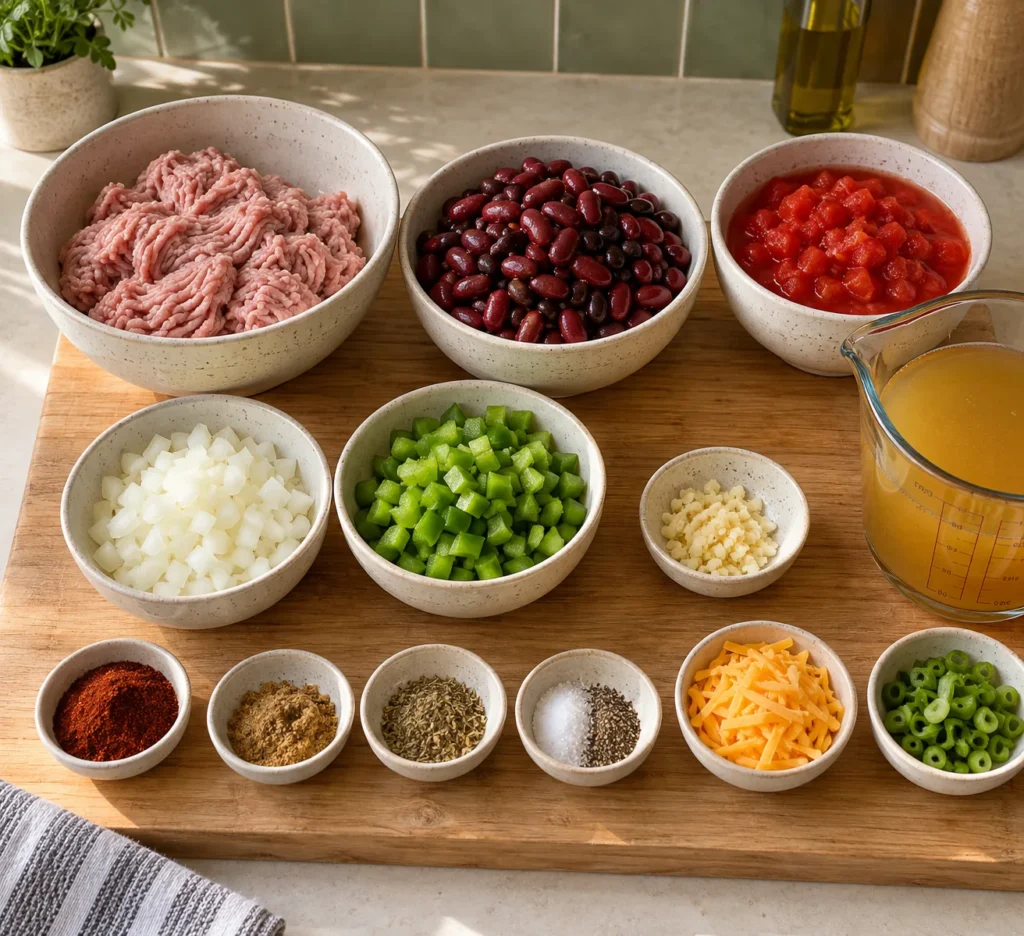
- 1 large butternut squash (about 1.5kg), peeled and cubed
- 2 tbsp olive oil, divided
- 1 onion, chopped
- 2 cloves garlic, minced
- 2 cans (540mL each) white beans (cannellini or navy), drained and rinsed
- 4 cups vegetable or chicken broth
- 1 cup plain Greek yogurt
- 1/2 tsp cinnamon
- 1/4 tsp nutmeg
- Salt and pepper to taste
- Optional garnish: toasted pepitas
How to make it
- Preheat the oven to 400°F / 200°C. Toss the cubed squash with 1 tbsp olive oil, salt, and pepper, and spread on a sheet pan. Roast for 30–35 minutes, until fork-tender and starting to caramelize at the edges.
- While the squash roasts, heat the remaining oil in a large pot over medium heat. Add the onion and cook 5 minutes until softened, then add the garlic and cook 1 minute more.
- Add the roasted squash, both cans of white beans, broth, cinnamon, and nutmeg to the pot. Bring to a simmer and cook 10 minutes.
- Blend until completely smooth, either with an immersion blender directly in the pot or in batches in a stand blender. Be careful with hot liquid in a stand blender — blend in small batches and vent the lid.
- Off the heat (or at the lowest possible simmer), stir in the Greek yogurt until fully incorporated. Don’t add it to a hard-boiling pot — it can separate and turn grainy over direct high heat.
- Season with salt and pepper to taste. Thin with extra broth if it’s thicker than you’d like. Scatter with toasted pepitas if using.
Slow cooker method

Add the raw cubed squash, onion, garlic, both cans of beans, spices, and only 3 cups broth to a 5–6 quart slow cooker. Cook on low for 6–7 hours or high for 3–4 hours, until the squash is very soft. Blend, turn off the heat, and stir in the Greek yogurt. This is the most hands-off version, but it does not have the caramelized flavour of roasted squash.
Pressure cooker method

- Use Sauté mode to cook the onion in 1 tablespoon oil for 5 minutes. Add the garlic for 30 seconds.
- Add the squash, beans, spices, and 3 cups broth. Cook on high pressure for 8 minutes, then release the pressure promptly.
- Blend until smooth. Let the bubbling stop, then stir in the Greek yogurt and adjust the thickness with extra broth.
Which method is best?
- Best flavour: roast, then simmer. Caramelized squash gives the soup more depth and sweetness.
- Fastest: pressure cooker. It softens the squash quickly and keeps the whole recipe to one pot.
- Most hands-off: slow cooker. It is useful when the soup can cook unattended for most of the day.
Cost and protein breakdown
- Butternut squash — one of the better-value fall vegetables by weight, especially bought whole rather than pre-cut
- 2 cans white beans — a few dollars total, and the biggest single protein source in this recipe
- 1 cup Greek yogurt — the second protein source, cheaper per gram of protein than cream and blended fully into the base
- Broth, onion, garlic, spices — pantry staples, a small fraction of total cost
- Total estimate — cheap to make, per serving
Protein lands around 18–22g per serving, split between the white beans and the Greek yogurt — a real jump from the original single-can version, and well past what a traditional cream-based squash soup carries, which is close to none.
Why protein in a soup actually matters
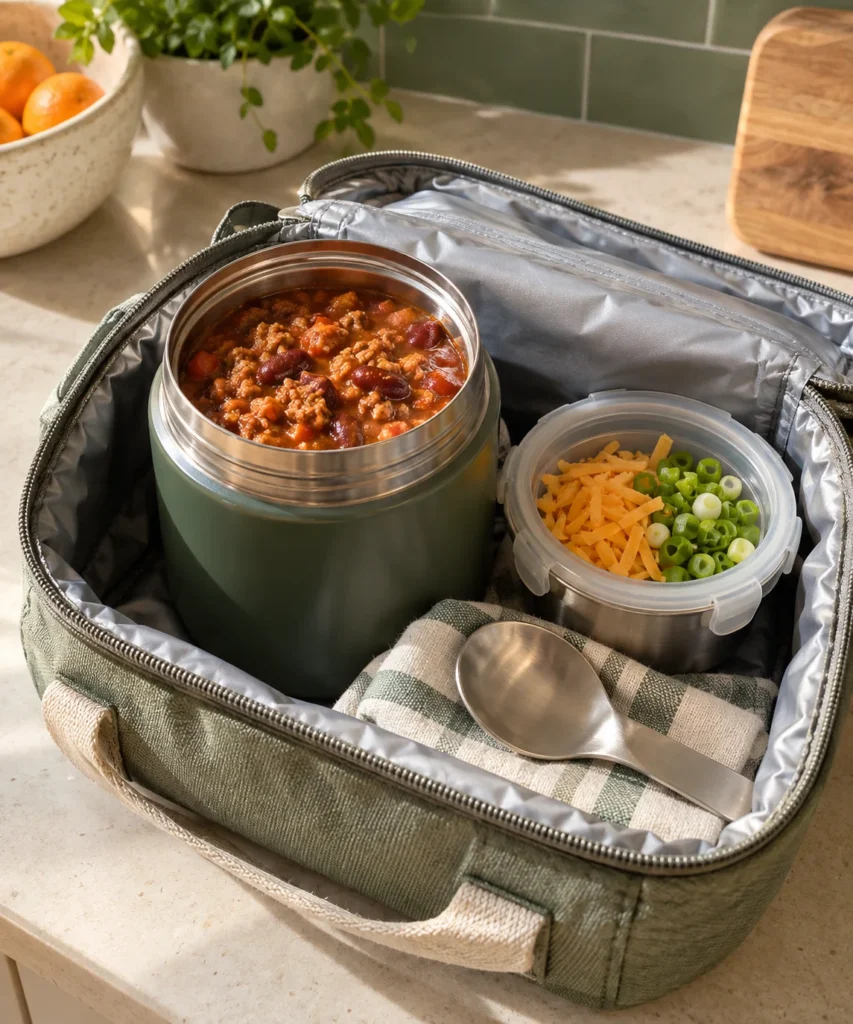
A soup built from mostly vegetables and broth fills your stomach briefly but tends to leave you hungry again sooner than a meal with real protein in it — the volume is there, but there’s not much for your body to actually work on digesting. Protein and fibre together (which is exactly what the white beans bring) are two of the most reliable levers for feeling satisfied for longer after eating, which is the actual difference between “a nice starter” and “that was dinner.”
Common mistakes with pureed squash soup
- Not roasting the squash first. Boiling squash instead of roasting it is faster but loses the caramelized sweetness that makes this soup taste like more than “blended vegetables.” The extra 30 minutes in the oven is doing real work.
- Blending hot liquid in a sealed stand blender. Steam builds pressure and can blow the lid off, which is a genuine mess and a genuine burn risk. Blend in small batches, remove the centre cap of the lid, and cover loosely with a kitchen towel instead.
- Adding all the broth at once before blending. It’s easier to thin a thick soup than to thicken a too-thin one. Start with less broth than you think you need and add more after blending if it’s thicker than you’d like.
- Underseasoning. Squash and beans are both fairly mild on their own. Taste and adjust salt after blending, not before — the flavour concentrates differently once everything is combined.
How to push it even higher
- Add shredded chicken or turkey — stir 2 cups of shredded cooked chicken or leftover turkey in after blending, and simmer 5 minutes to heat through. Pushes a single bowl well past 30g of protein.
- Add red lentils on top of the beans — a half cup of dry red lentils simmered in with the broth before blending adds another 10g or so of protein across the batch, with a slightly different texture.
- Top with extra pepitas — a quarter cup of toasted pepitas adds roughly 5g of protein across the batch along with the crunch.
Toasted pepitas, if you want a real topping
Raw pepitas (shelled pumpkin seeds) work fine scattered straight from the bag, but a quick dry toast makes a real difference for very little effort. Toast 1/4 cup pepitas in a dry skillet over medium heat for 3–4 minutes, shaking the pan occasionally, until they start to pop and smell nutty. A pinch of salt and a tiny pinch of cayenne or smoked paprika on top, tossed while they’re still warm, turns a garnish into something worth asking about.
What to serve alongside
As written, this soup has a reasonable amount of protein for a soup but is still lighter than a full dinner on its own for most appetites. A side of crusty bread with a hard-boiled egg, a half sandwich, or a few ground turkey meatballs on the side turns it into a complete meal rather than a starter.
Scaling up for a crowd
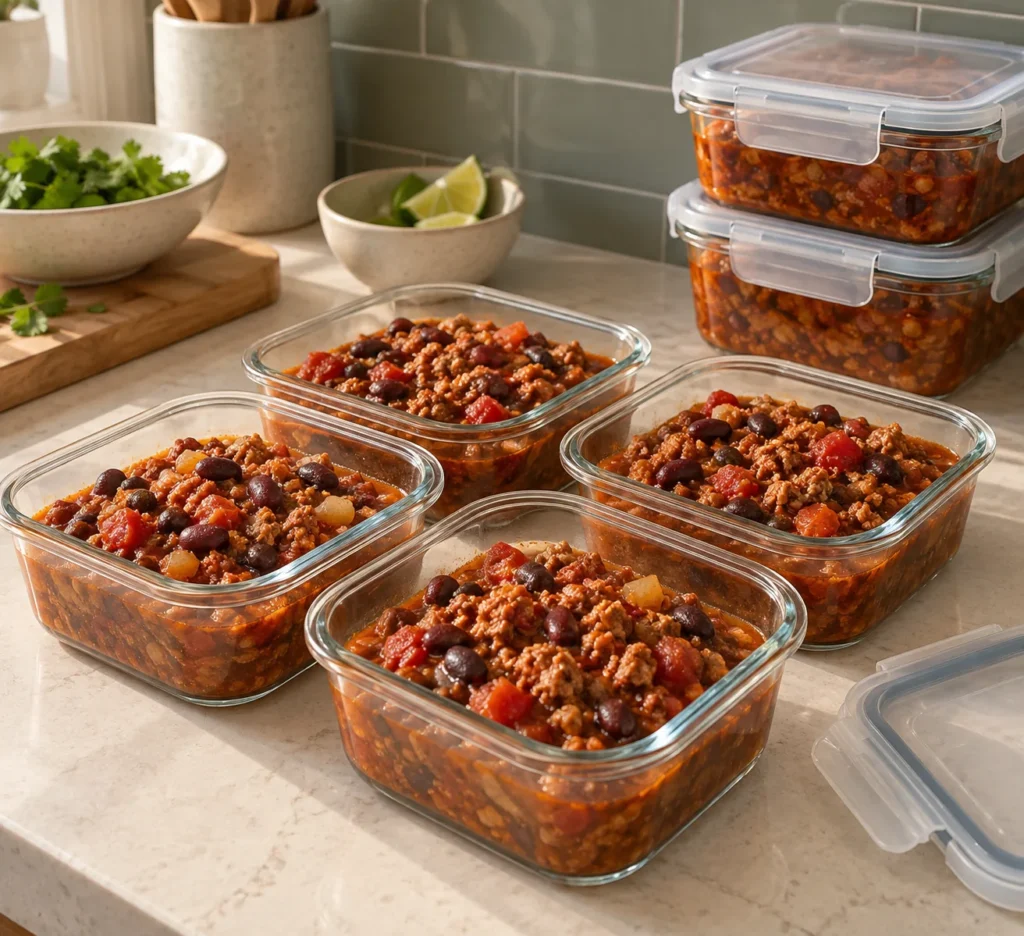
This recipe doubles cleanly if you’re serving a bigger table — use two squash, double every other ingredient, and roast the squash in two batches or on two sheet pans if one won’t fit in a single layer (crowding the pan steams the squash instead of roasting it, and you’ll lose the caramelized edges that make this soup worth making). Blending in batches becomes more important at double quantity; don’t try to force it all into one blender jar at once.
Storage and reheating
- Fridge: cool promptly, refrigerate within 2 hours, and use within 2–3 days.
- Freezer: for the smoothest texture, freeze meal-size portions before adding yogurt for up to 3 months. Thaw overnight, reheat, then stir in fresh yogurt.
- Stovetop reheating: add a splash of broth and heat gently, stirring often, until the soup reaches a rolling boil. Remove from the heat before adding fresh yogurt.
- Microwave reheating: cover loosely and heat in 60–90 second intervals, stirring between each, until the centre reaches 165°F / 74°C.
Frequently asked questions
Can I use pre-cut or frozen squash?
Yes. Pre-cut fresh squash roasts the same way. Frozen squash cubes can be roasted from frozen with a few extra minutes, though they release more moisture and won’t caramelize quite as deeply at the edges.
Do I need to peel the squash before roasting?
Yes, for this recipe — the skin doesn’t break down enough during roasting to blend smoothly into the soup. A vegetable peeler or a sharp knife both work; cutting the squash in half first makes it easier to stabilize while peeling.
Why add beans instead of just more broth for thickness?
More broth would thin the soup, not thicken it. The beans add body and protein at the same time — broth alone can’t do either.
My soup tastes a little flat — what’s missing?
Usually salt, or acid, or both. Pureed vegetable soups mute seasoning more than you’d expect, so taste after blending and add salt in small increments. A small squeeze of lemon juice or a splash of apple cider vinegar at the end brightens the sweetness of the squash noticeably if the soup tastes one-note.
Related reading: Budget High-Protein Lentil Chili, Budget High-Protein Thanksgiving Sides, Thanksgiving Turkey Leftovers Meal Prep, and High-Protein Chicken Broccoli Cheddar Soup.