
Budget High-Protein Thanksgiving Sides
Thanksgiving dinner is usually a plate of carbohydrates with a slice of turkey balanced on top — mashed potatoes, stuffing, a casserole, a dinner roll, and somewhere in there, protein that got crowded out. These five sides fix that without turning the table into a diet plate. Same comfort-food textures and flavours your family expects, quietly rebuilt with more protein and a lower grocery bill than the versions they’re replacing.
None of these require specialty ingredients or a trip to more than one store. They’re built from the same base ingredients as the classic versions, with one or two swaps that do the actual work.
| Mashed potatoes | +12–15g per batch |
| Creamed corn | +25g per batch |
| Green bean casserole | +20g per batch |
| Turkey sausage stuffing | +35–40g per batch |
| Cottage cheese dinner rolls | +22g per batch |
Estimates for the full batch of each recipe, as written below — divide by your serving count for a per-person figure.
If you only have time to make one
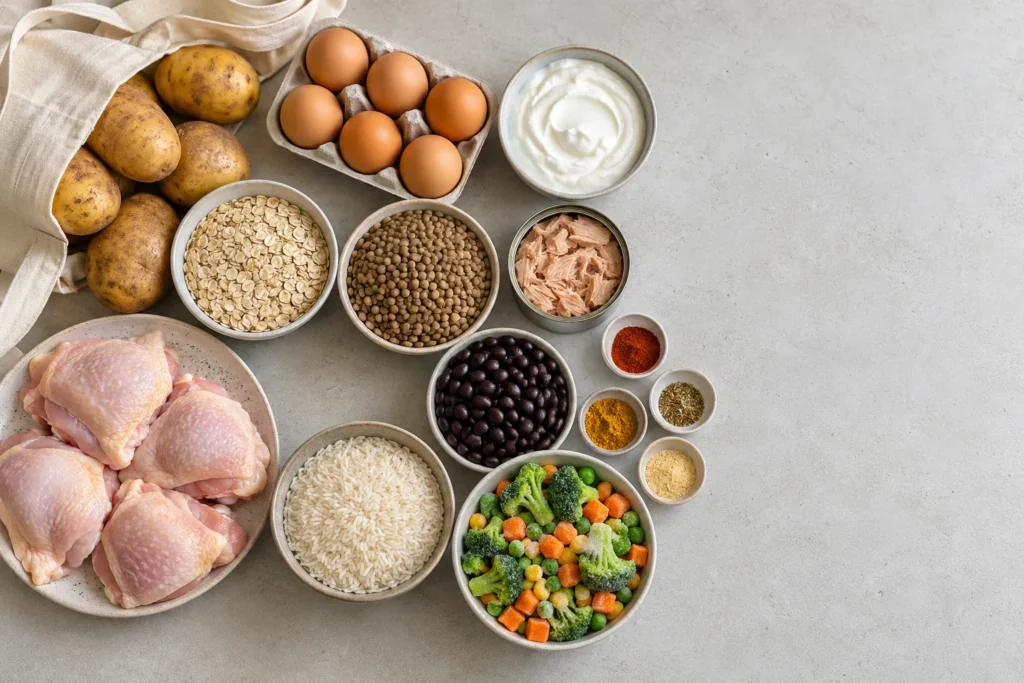
The turkey sausage stuffing adds the most protein of the five and is substantial enough to function almost like a side dish and a protein source in one, which matters most if the turkey itself ends up smaller than planned or there isn’t much white meat left once everyone’s served. The Greek yogurt mashed potatoes are the easiest starting point if this is your first time trying any of these — there’s no flavour trade-off and almost no risk of anyone noticing.
1. Greek yogurt mashed potatoes
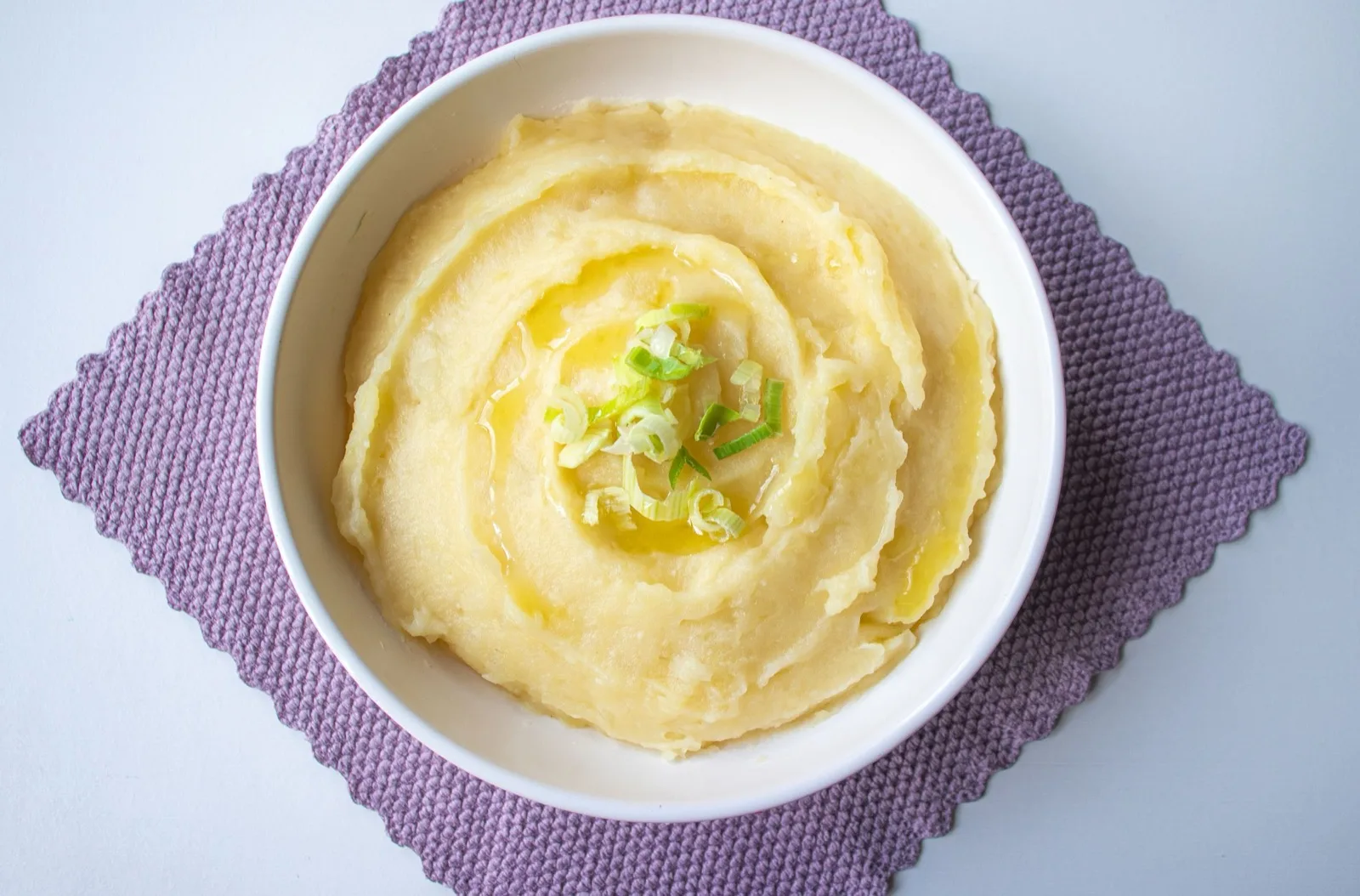
The easiest swap on this list and the one with zero flavour trade-off. Replace some or all of the butter and cream in your usual mashed potato recipe with plain Greek yogurt, added once the potatoes are off the heat and no longer boiling (yogurt can split if it hits a very hot pan directly).
- 2.5 kg potatoes, peeled and cubed
- 3/4 cup plain Greek yogurt
- 3 tbsp butter
- 1/4–1/2 cup milk, as needed for texture
- Salt and pepper to taste
Boil the potatoes until fork-tender, drain well, and mash with butter first. Let the mash cool for a minute off the heat, then fold in the Greek yogurt and milk until smooth. A half cup of Greek yogurt adds roughly 12–15g of protein across the whole batch at a fraction of the cost of adding the same protein from meat or cheese.
2. Cottage cheese creamed corn
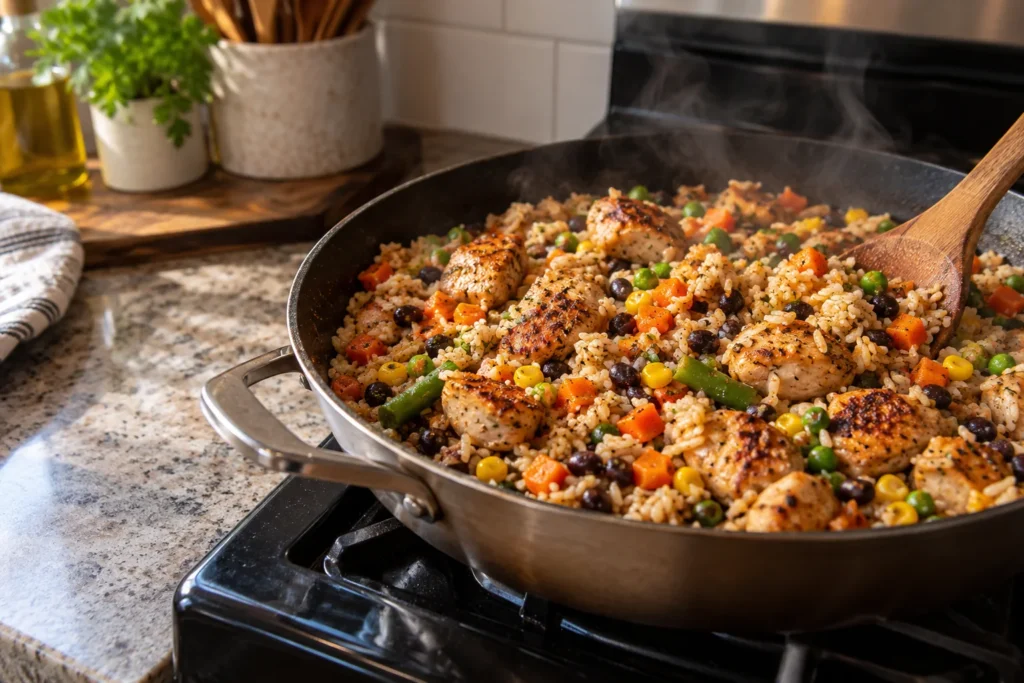
Blended cottage cheese becomes smooth and creamy — this is the same trick behind the cottage cheese mac and cheese recipe, applied here to classic creamed corn.
- 4 cups corn (frozen, thawed, or canned and drained)
- 1 cup cottage cheese, blended smooth
- 2 tbsp butter
- 1 tbsp flour
- 1/4 cup milk
- Salt and pepper to taste
Blend the cottage cheese in a blender or with an immersion blender until completely smooth — this takes about 60 seconds and removes any trace of curd texture. Melt the butter in a saucepan, whisk in the flour, cook 1 minute, then add the milk and blended cottage cheese. Stir in the corn and cook over low heat for 5–7 minutes until thickened. The full cup of cottage cheese adds roughly 25g of protein to the batch, for less than the price of adding an equivalent amount of cheese.
3. White bean green bean casserole
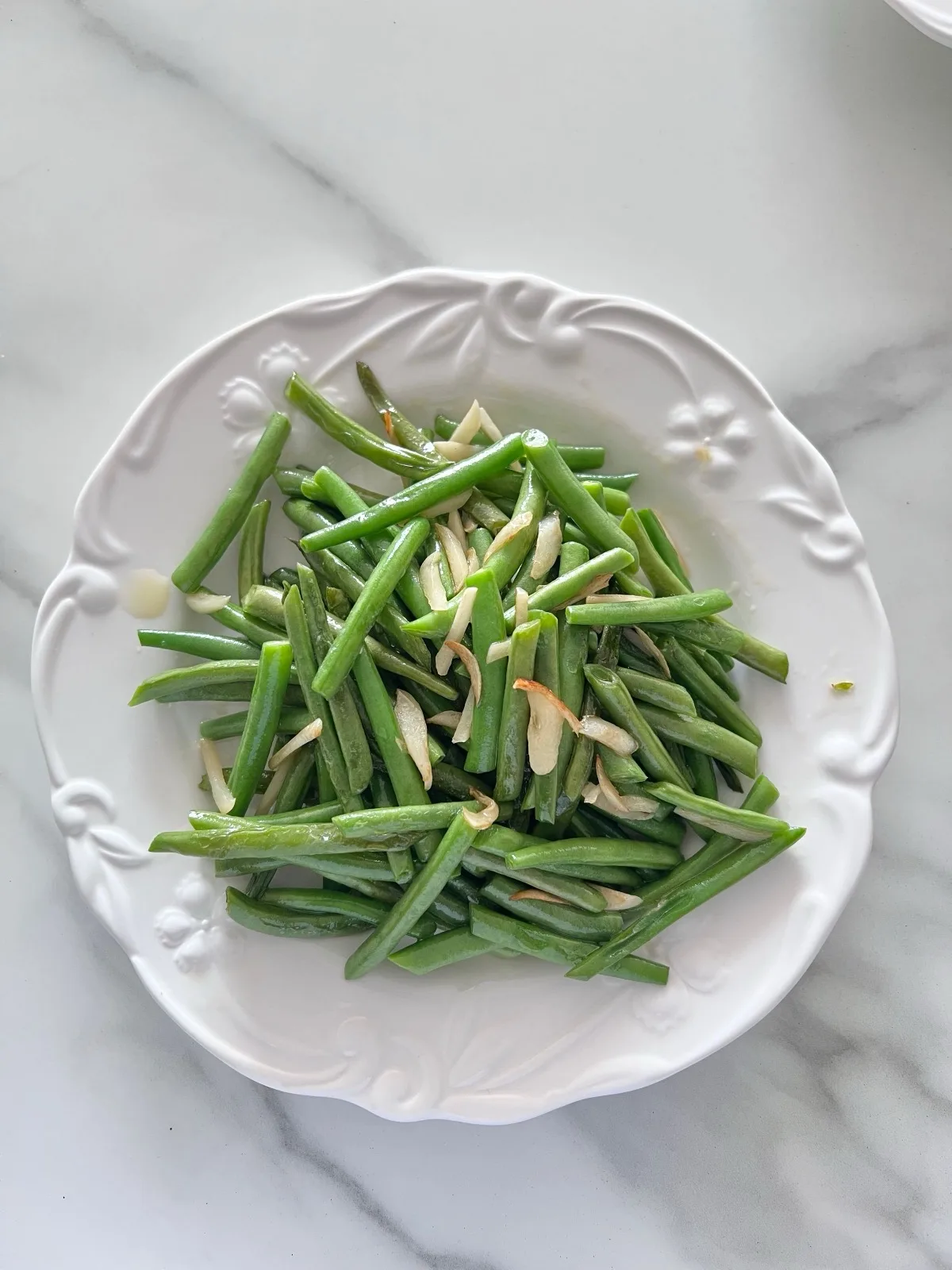
Keeps the crispy onion topping everyone actually shows up for, with a protein-boosted base underneath.
- 900g green beans, trimmed
- 1 can white beans, drained and rinsed
- 1 can cream of mushroom soup (or a homemade white sauce)
- 1/2 cup milk
- 1 1/3 cups crispy fried onions
Blanch or steam the green beans until just tender. Combine with the white beans, soup, and milk in a casserole dish, top with half the onions, bake at 350°F / 175°C for 25 minutes, then add the remaining onions and bake 5–10 minutes more, until golden and 165°F / 74°C in the centre. The white beans blend into the dish visually — most people won’t notice they’re there, they’ll just notice there’s more to the casserole than usual.
4. Turkey sausage stuffing
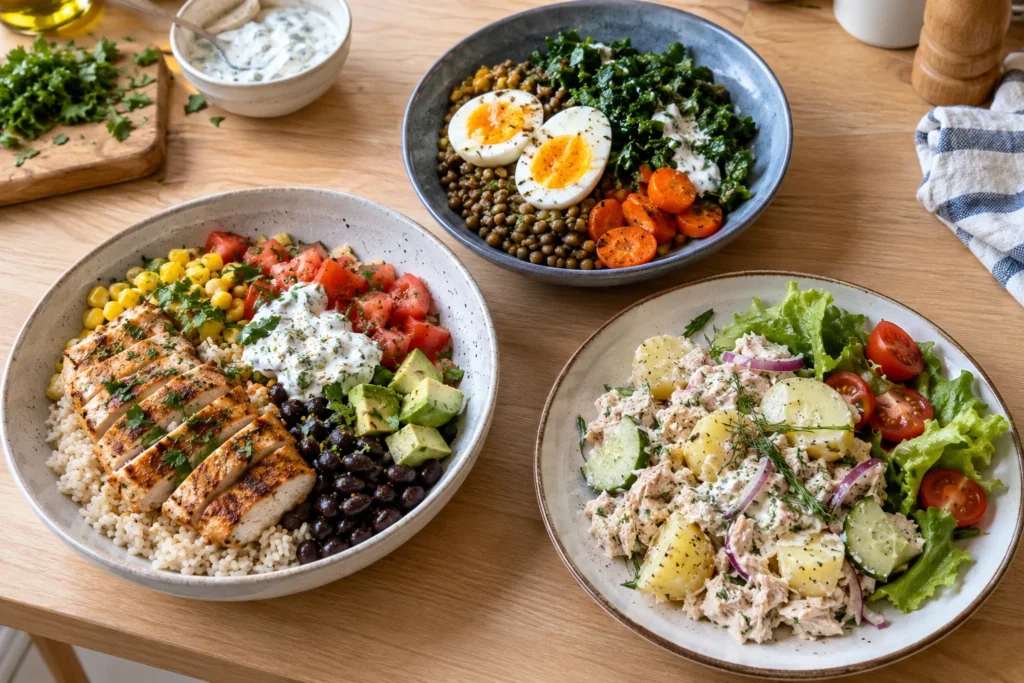
Stuffing is traditionally mostly bread. Adding ground turkey sausage turns it into something closer to a full side dish on its own.
- 450g ground turkey sausage (or regular ground turkey plus Italian seasoning)
- 8 cups cubed, dried bread
- 1 onion, diced
- 2 celery stalks, diced
- 2 cups turkey or chicken stock
- 2 eggs
- Salt, pepper, and poultry seasoning to taste
Brown the turkey sausage with the onion and celery until the turkey reaches 165°F / 74°C. Combine with the bread cubes in a large bowl. Whisk the eggs into the stock, pour over the bread mixture, and toss to combine — it should be moist but not soggy. Transfer to a greased baking dish and bake at 350°F / 175°C for 35–40 minutes until golden on top. The sausage alone adds roughly 35–40g of protein across the whole dish.
5. Cottage cheese dinner rolls
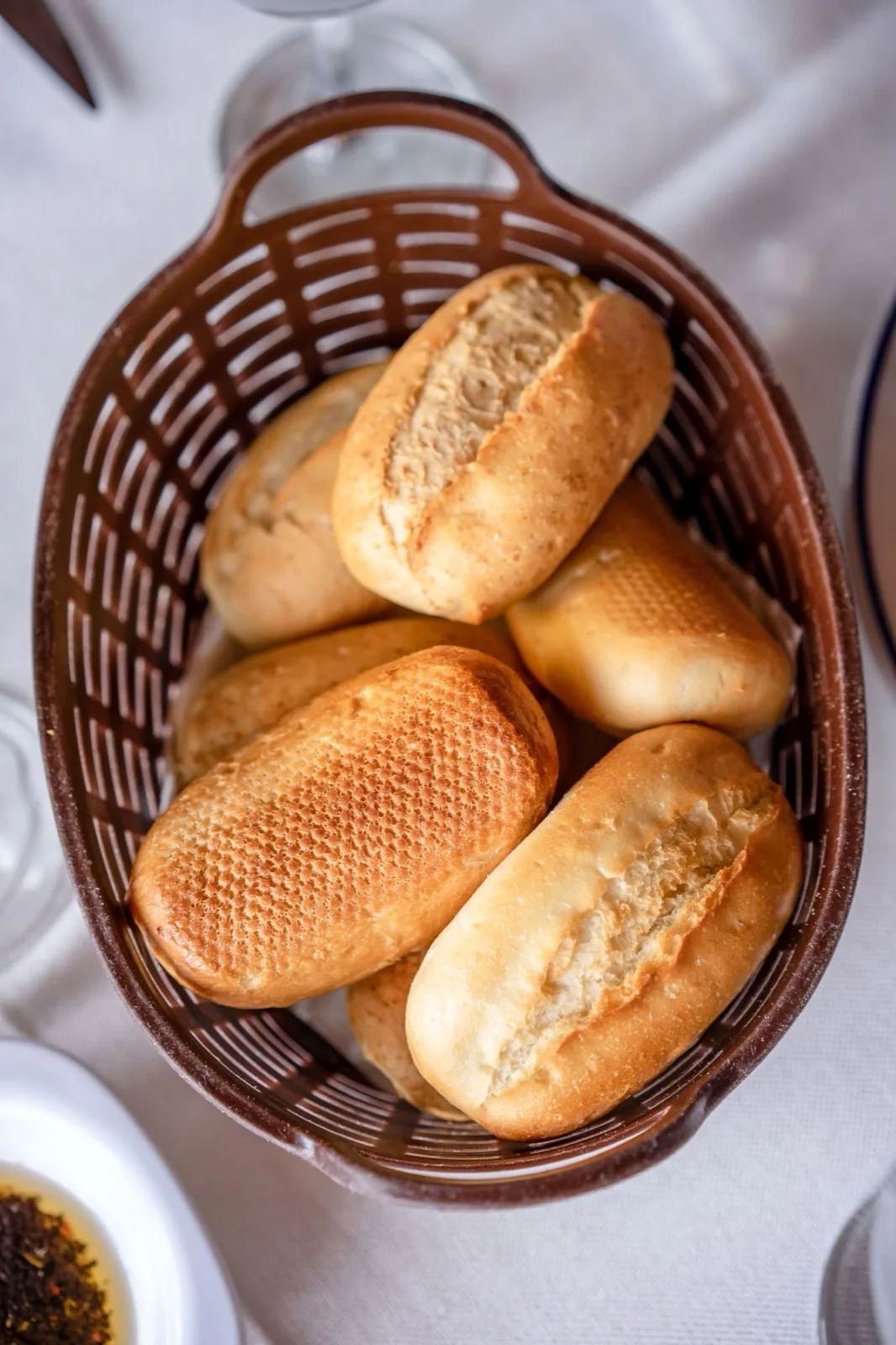
A simpler swap than it sounds: cottage cheese blended smooth and worked into a standard dinner roll dough adds moisture, protein, and a very slightly tangy flavour that reads as “homemade,” not “different.”
- 3 cups flour
- 1 cup cottage cheese, blended smooth
- 1 packet (2 1/4 tsp) instant yeast
- 1/4 cup warm milk
- 2 tbsp sugar
- 1 egg
- 1/4 cup melted butter, divided
- 1 tsp salt
Dissolve the yeast and sugar in the warm milk and let sit 5 minutes until foamy. Combine with the blended cottage cheese, egg, half the melted butter, flour, and salt. Knead 6–8 minutes until smooth, then let rise 1 hour until doubled. Shape into rolls, let rise 30 minutes more, brush with the remaining butter, and bake at 375°F / 190°C for 18–20 minutes until golden.
Don’t have an ingredient? Here’s what to use instead
- No Greek yogurt: plain regular yogurt works, though it’s slightly thinner and lower in protein — strain it through a paper towel-lined sieve for 15 minutes first to thicken it closer to Greek yogurt’s consistency.
- No cottage cheese: ricotta blends just as smooth and works as a near-direct substitute in both the creamed corn and the dinner rolls, though it’s slightly lower in protein per cup.
- No white beans on hand: chickpeas blend smooth with a bit more effort and work fine in the green bean casserole; the colour will be a touch more golden than white.
- No turkey sausage: any ground meat plus 1–2 tsp Italian seasoning and a pinch of fennel seed gets close to the same flavour profile in the stuffing.
A make-ahead timeline for Thanksgiving day
Trying to cook five sides and a turkey at the same time is how Thanksgiving turns stressful. Here’s what can realistically be done ahead:
- 1–2 days ahead: dinner rolls can be fully baked, cooled, and stored at room temperature in a sealed bag; warm briefly before serving. The green bean casserole can be assembled (without the crispy onions) and refrigerated unbaked.
- The morning of: peel and cube potatoes, submerge in cold water in the fridge so they don’t brown. Brown the turkey sausage for the stuffing and refrigerate.
- 1–2 hours before dinner: bake the green bean casserole (adding the onions partway through), assemble and bake the stuffing, make the mashed potatoes and creamed corn.
The easiest oven-space plan
- Bake the rolls first at 375°F / 190°C, then cool and cover them.
- Lower the oven to 350°F / 175°C and bake the stuffing and green bean casserole together. Rotate the dishes between racks halfway through; add the final crispy onions after 25 minutes.
- Use the stovetop at the same time for mashed potatoes and creamed corn.
- Warm the rolls last for 5 minutes, wrapped in foil, after the casseroles come out to rest.
Storage and next-day reheating
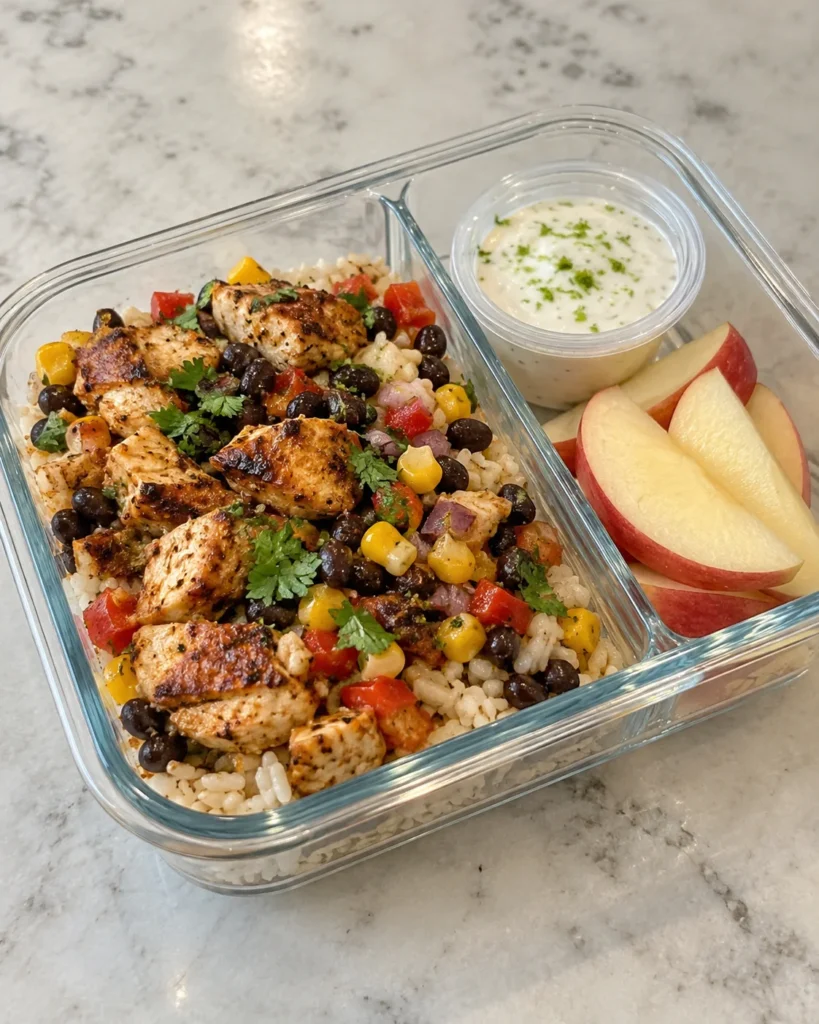
- Mashed potatoes and creamed corn: refrigerate within 2 hours and use within 3–4 days. Reheat gently with a splash of milk.
- Stuffing and green bean casserole: refrigerate for 3–4 days. Reheat covered at 350°F / 175°C until the centre reaches 165°F / 74°C; uncover for the last few minutes.
- Dinner rolls: keep sealed at room temperature for 1–2 days, refrigerate for up to 4 days, or freeze individually for up to 2 months.
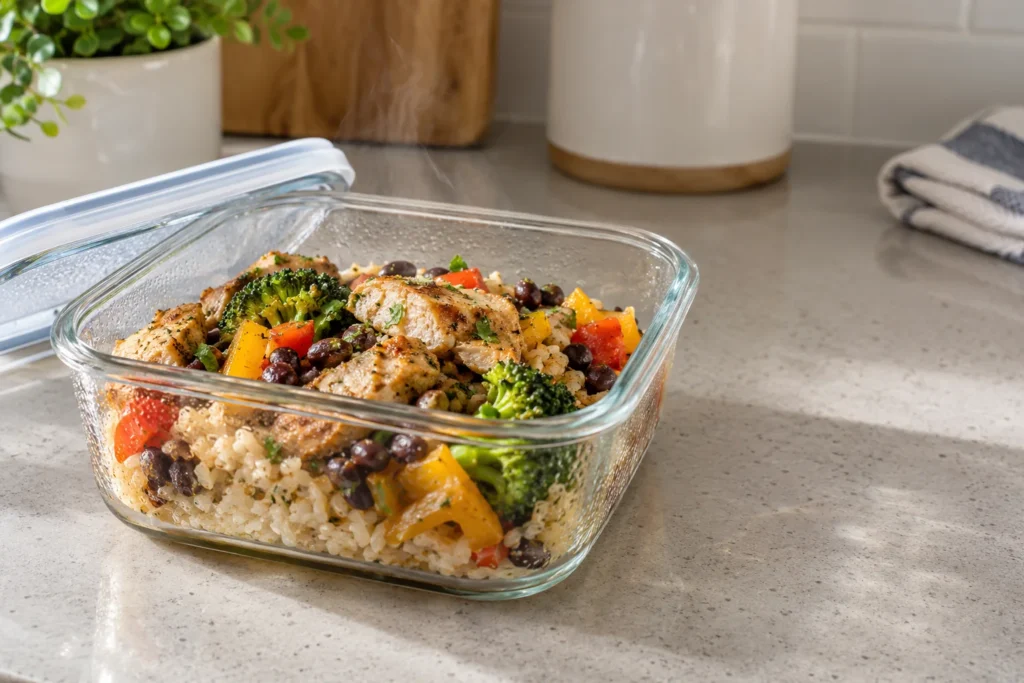
- Pack leftovers by dish: separate containers preserve texture and let each side reheat for the right amount of time.
Which combination is best?
For the best balance of effort, protein, and familiar flavour, make the turkey sausage stuffing plus Greek yogurt mashed potatoes. Add the green bean casserole when you need a third side for a larger table. The rolls are the most work for the smallest protein gain, so they are the easiest item to skip when time or oven space is tight.
Frequently asked questions
Will people be able to taste the cottage cheese or Greek yogurt?
Not if the cottage cheese is blended fully smooth first — an unblended cottage cheese texture is the giveaway, not the flavour itself. Greek yogurt has a very mild tang that reads as “a bit richer,” not “different.” Both are chosen here specifically because they disappear into the dish.
Can I make all five sides for one dinner, or is that too much?
Five full sides plus a turkey is a lot even for a big table. Most households will get more value picking two or three that fit their usual spread rather than replacing everything at once.
Do these cost more than the regular versions?
Generally no — cottage cheese, Greek yogurt, and canned beans are all inexpensive per gram of protein, and in most cases they’re replacing cream, extra cheese, or doing nothing, rather than adding a specialty ingredient on top.
Can I use low-fat or regular cottage cheese and Greek yogurt interchangeably?
Yes. Fat percentage changes richness slightly but not the technique or the protein content meaningfully. Use whichever you’d normally buy — there’s no need to seek out a specific fat percentage for these recipes to work.
What if someone at the table has a dairy allergy?
The turkey sausage stuffing is naturally dairy-free as written (check your bread and stock for hidden dairy). The green bean casserole can be made with a dairy-free cream of mushroom substitute and the beans still add protein either way. The other three rely on dairy for their protein boost and don’t have a simple swap within this guide.
Can I scale these recipes up for a bigger table?
Yes, all five scale up cleanly — just multiply every ingredient by the same factor. The one exception is the dinner rolls, where doubling the yeast dough works better split into two separate batches rather than one very large one, since a bigger dough mass takes longer to rise evenly.
Which of these reheats best as next-day leftovers?
The stuffing and the green bean casserole both reheat well covered in the oven or microwave. The mashed potatoes reheat fine with a splash of milk stirred in to loosen them back up. The dinner rolls are best eaten within a day or two, warmed briefly, before they start to dry out.
Related reading: Cottage Cheese Mac and Cheese, Thanksgiving Turkey Leftovers Meal Prep, and High-Protein Roasted Butternut Squash Soup for another fall-table option.