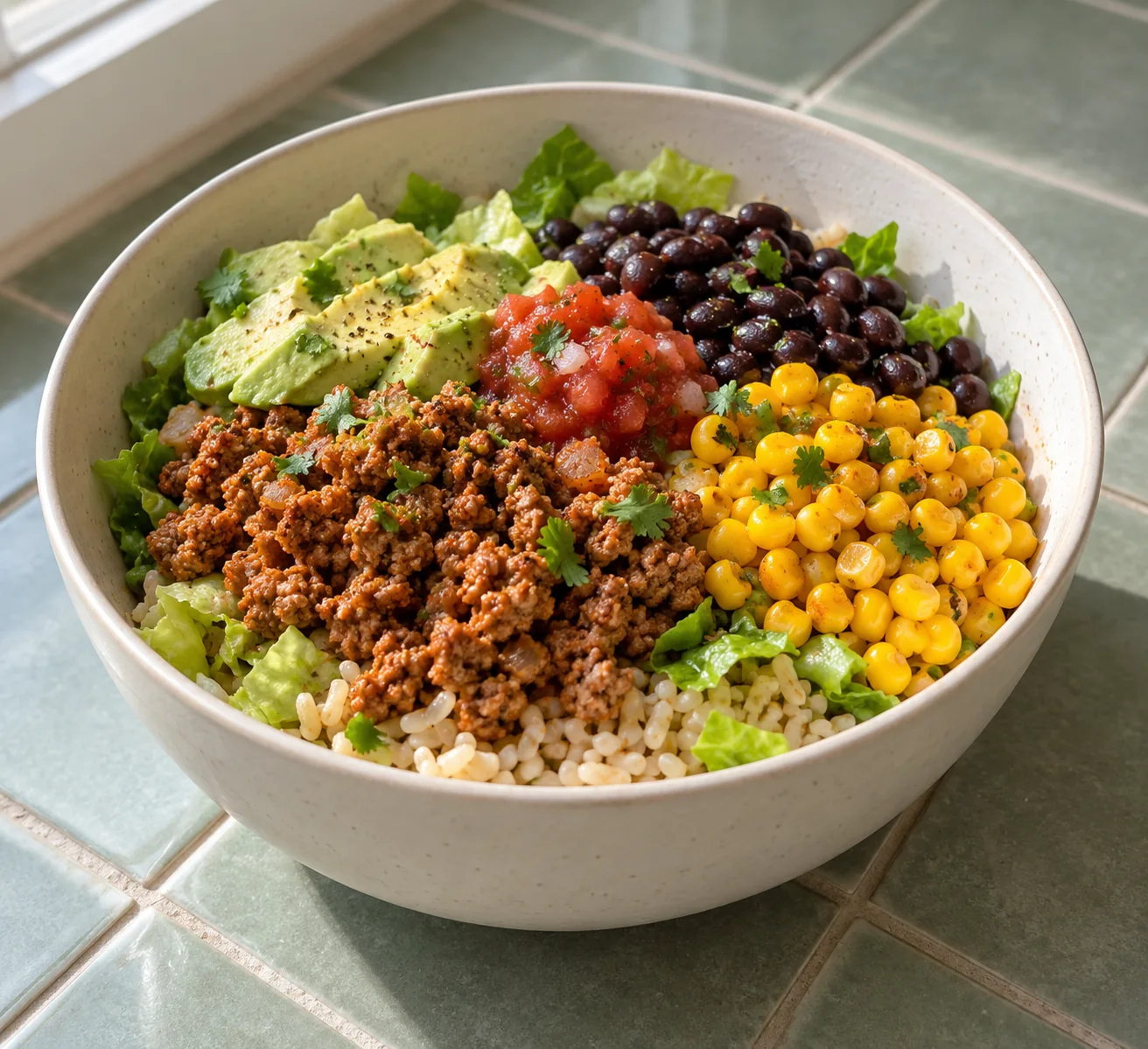
Budget High-Protein Burger Bowls
Burger bowls are one of the rising recipe searches on Pinterest and Google right now — all the flavour of a loaded burger, none of the bun, built in a bowl instead. Skipping the bun also skips its cost, which makes this a cheaper plate than it looks, not a more expensive one.
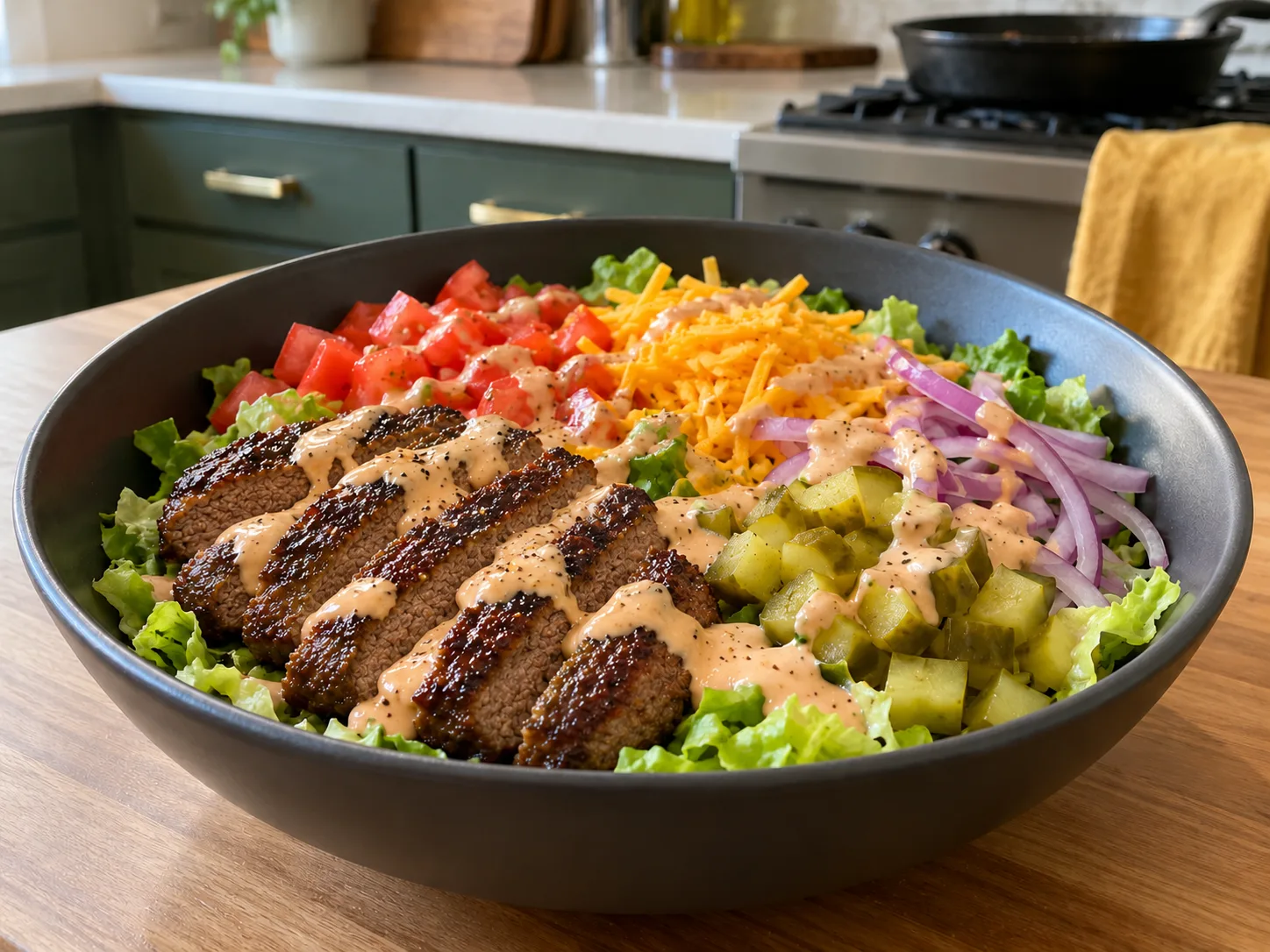
It also solves a real problem with meal-prepping a traditional burger: buns go stale or soggy fast once stored with any moisture nearby, which makes a classic burger a poor fit for make-ahead eating in the first place. A bowl sidesteps that issue entirely, since there’s no bread component to degrade while the rest of the meal waits in the fridge.
| Estimated cost per serving | Budget-friendly |
| Protein per serving | ~30–35g* |
| Prep time | 15 minutes |
| Cook time | 15 minutes |
| Servings | 4 |
| Freezer-friendly | Patties only |
*Protein is an estimate. Actual values depend on your exact ingredients and portions.
Why this sauce tastes like a familiar fast-food special sauce
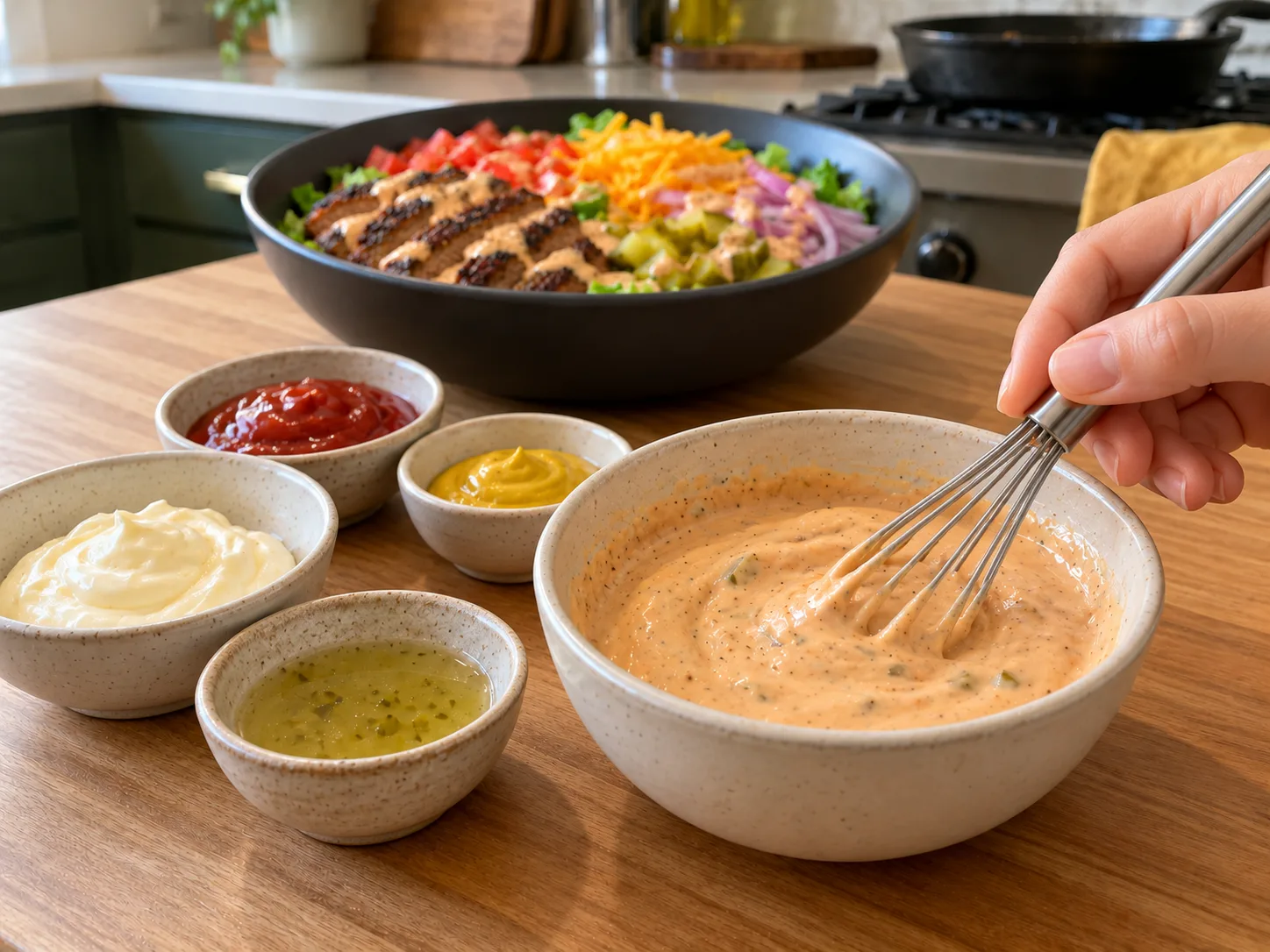
Mayo, ketchup, mustard, and pickle juice in roughly these proportions is the basic formula behind most “special sauce” style burger sauces you’d recognize from a drive-through menu — the mayo provides richness, the ketchup sweetness and colour, the mustard a sharp background note, and the pickle juice a tangy, slightly sour lift that ties the other three together. Once you know that combination, you can nudge it in either direction: more ketchup for a sweeter result, more mustard and pickle juice for something tangier and sharper. This four-ingredient version costs a fraction of a bottled copycat sauce and takes under a minute to mix.
Ingredients
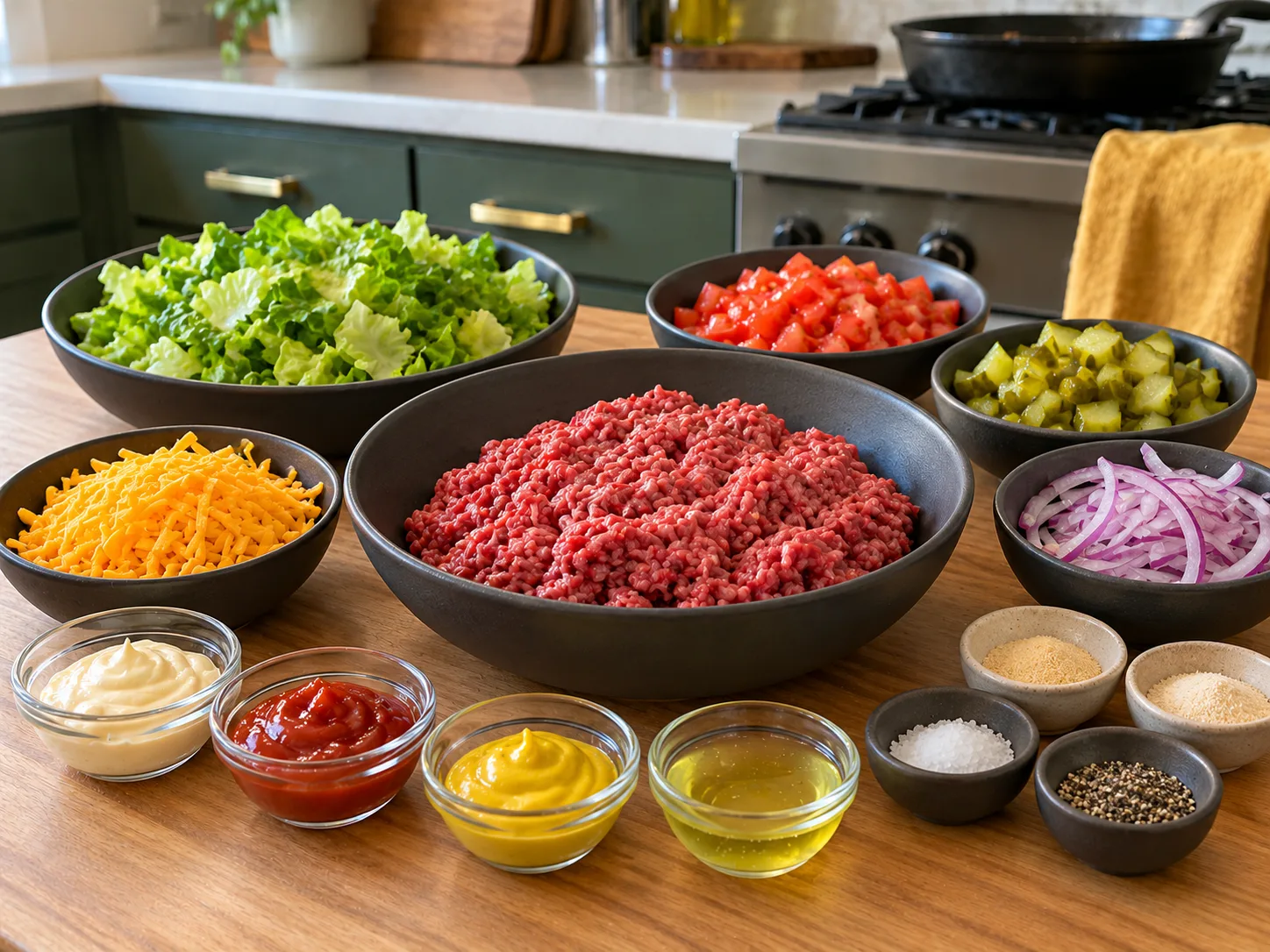
- 500g lean ground beef
- 1 tsp garlic powder
- 1 tsp onion powder
- 1/2 tsp salt
- 1/4 tsp black pepper
- 4 cups chopped lettuce
- 1 cup diced tomato
- 1/2 cup diced pickles
- 1/2 red onion, thinly sliced
- 1/2 cup shredded cheddar
- Sauce: 3 tbsp mayo, 1 tbsp ketchup, 1 tsp mustard, 1 tsp pickle juice
How to make it
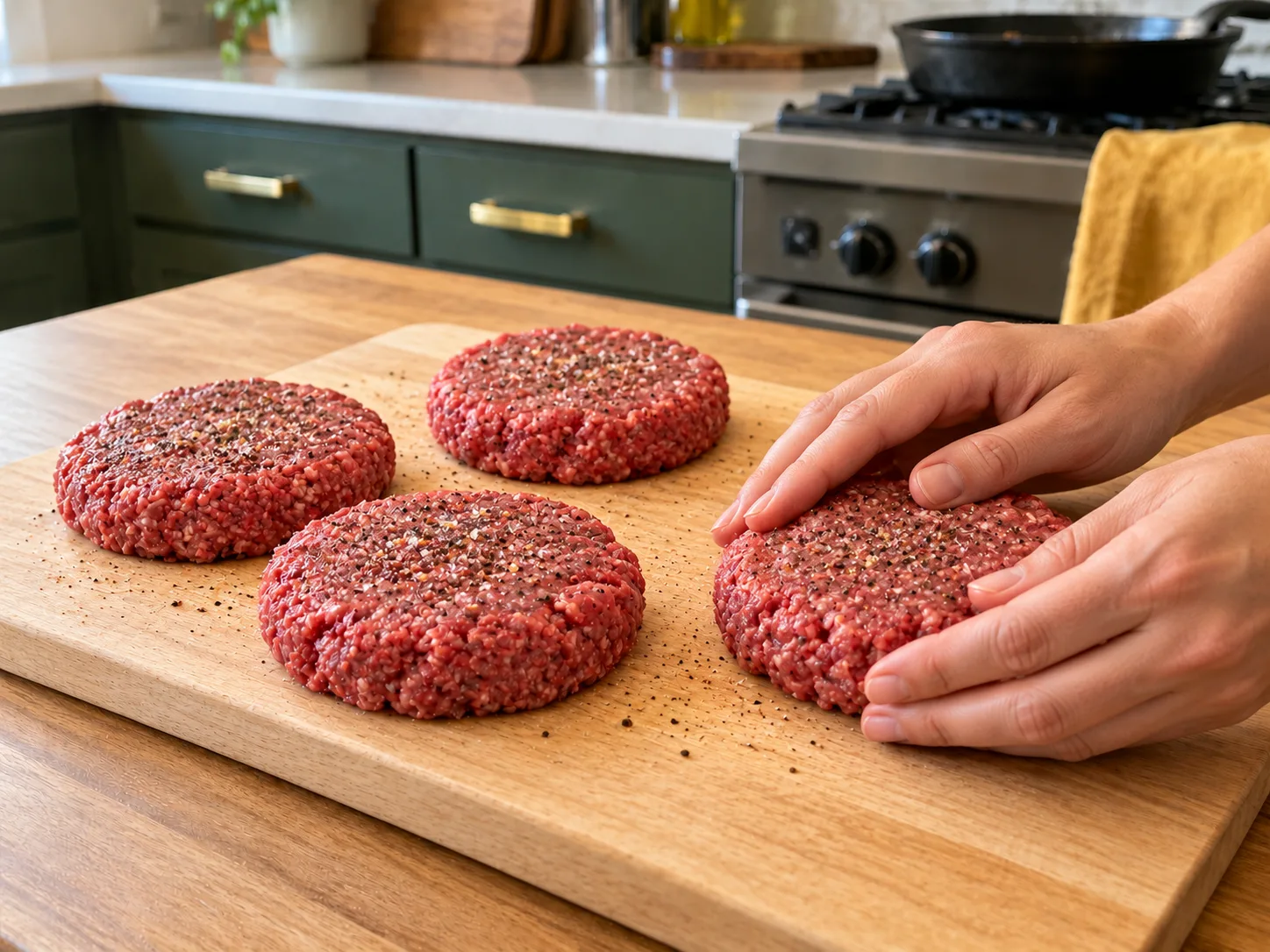
- Mix the ground beef with garlic powder, onion powder, salt, and pepper. Shape into 4 patties, or leave loose and cook as crumbles — both work for a bowl.
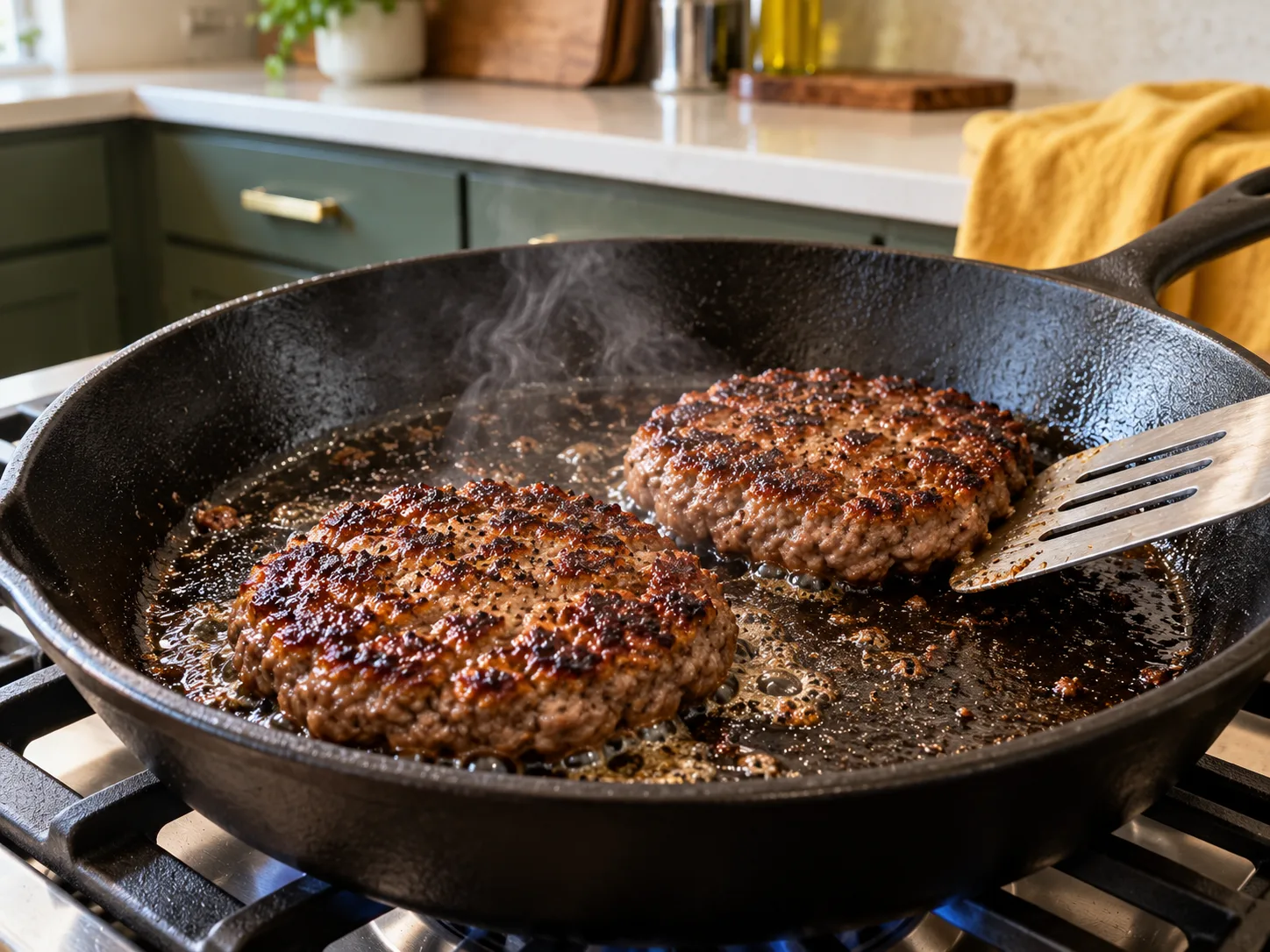
- Cook the beef in a skillet over medium-high heat, about 4–5 minutes per side for patties (to 160°F / 71°C internal), or 6–7 minutes total if cooking as crumbles.
- While the beef cooks, whisk together the mayo, ketchup, mustard, and pickle juice for the sauce.
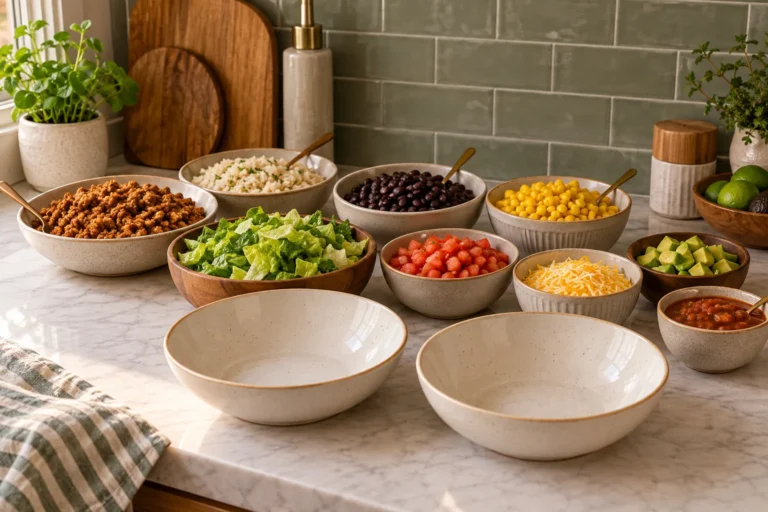
- Divide the lettuce between 4 bowls. Top with the cooked beef, tomato, pickles, red onion, and cheddar.
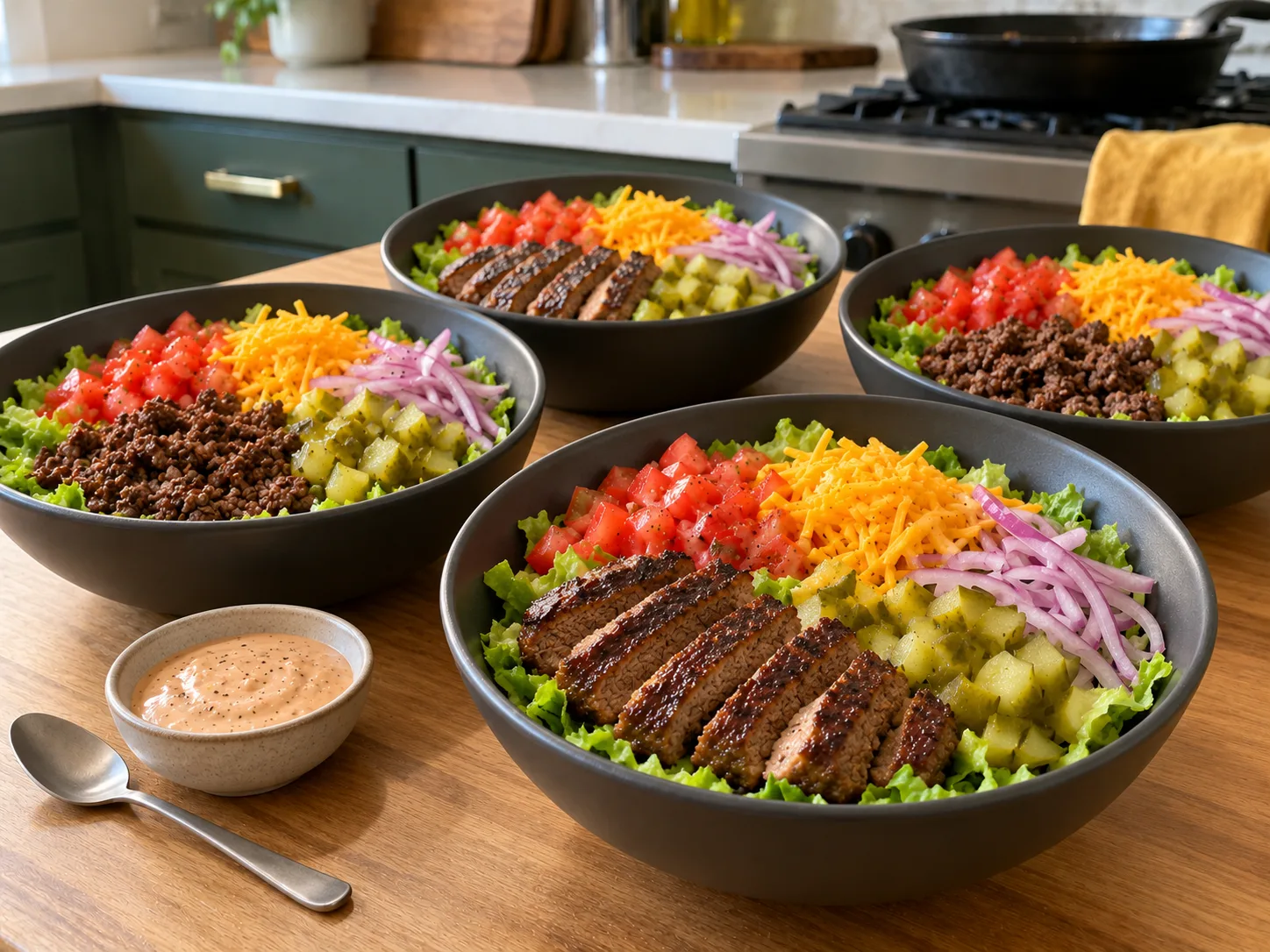
- Drizzle with the sauce just before serving.
Air fryer method
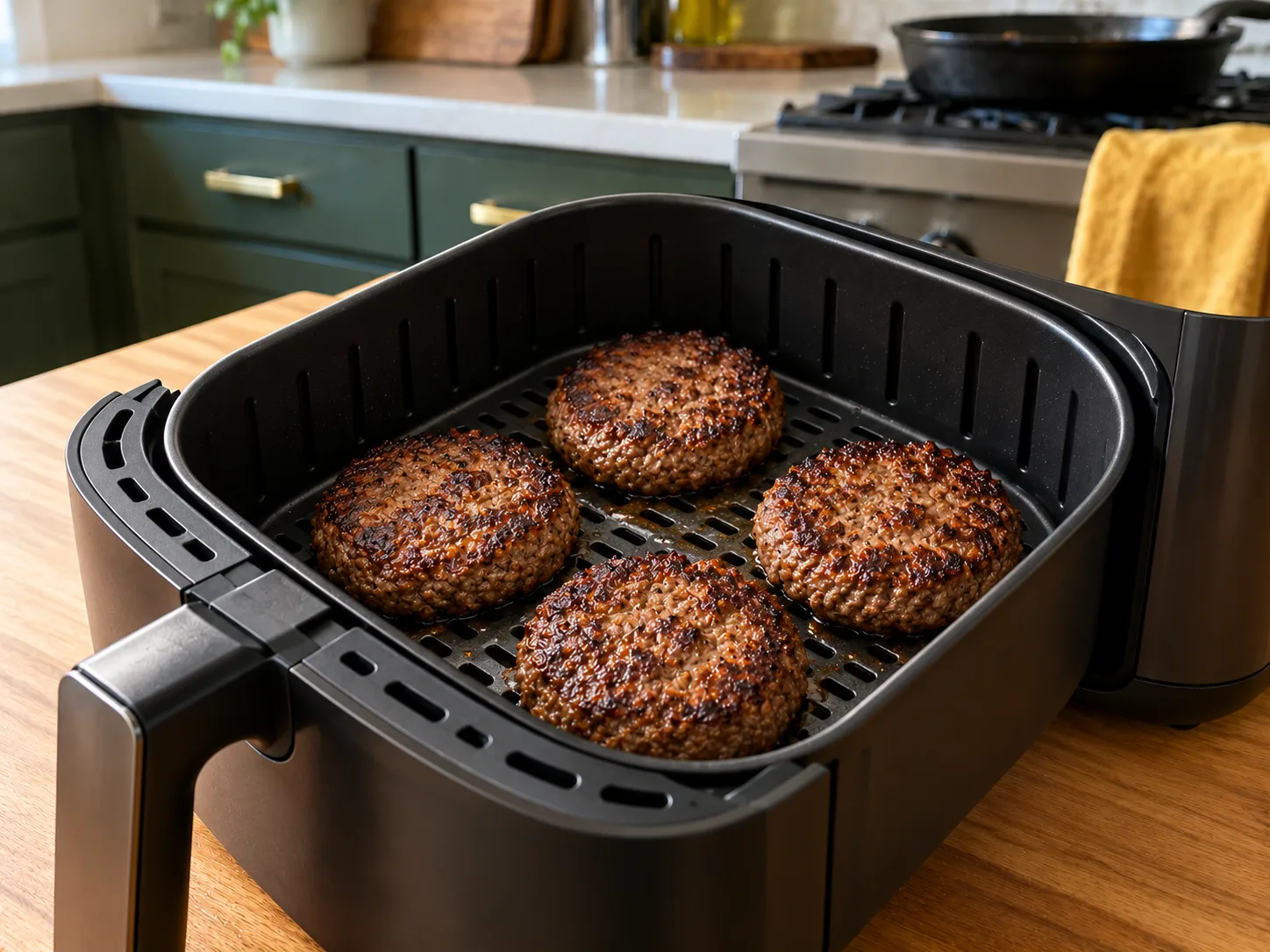
This works for patties, not loose crumbles. Preheat the air fryer to 390°F / 200°C. Arrange the four 125g patties in a single layer without overlap; if the basket is small, cook two at a time. Air-fry for 10 minutes, flipping after 5 minutes. Check the centre of each patty and add 1–2 minutes if needed until it reaches 160°F / 71°C. Rest for 3 minutes before adding to the bowls.
Which method is best?
- Best browned crust: Skillet patties, especially in cast iron or stainless steel.
- Fastest for meal prep: Skillet crumbles — no shaping, easy to portion, and even reheating.
- Least splatter: Air fryer patties — useful when cooking one or two bowls at a time.
An oven adds preheating time without improving a four-patty batch, and a microwave should be used only to reheat cooked beef. Keep the cold vegetables and sauce out of any hot cooking method.
Meal-prep assembly that stays crisp
Pack each component separately: beef in a microwave-safe container, lettuce and tomato in a cold container, and sauce in a small leakproof cup. Pickles and onion can share the vegetable container. Reheat only the beef, let it stand for a minute so it stops steaming, then build the bowl. That one-minute pause keeps the lettuce from wilting on contact.
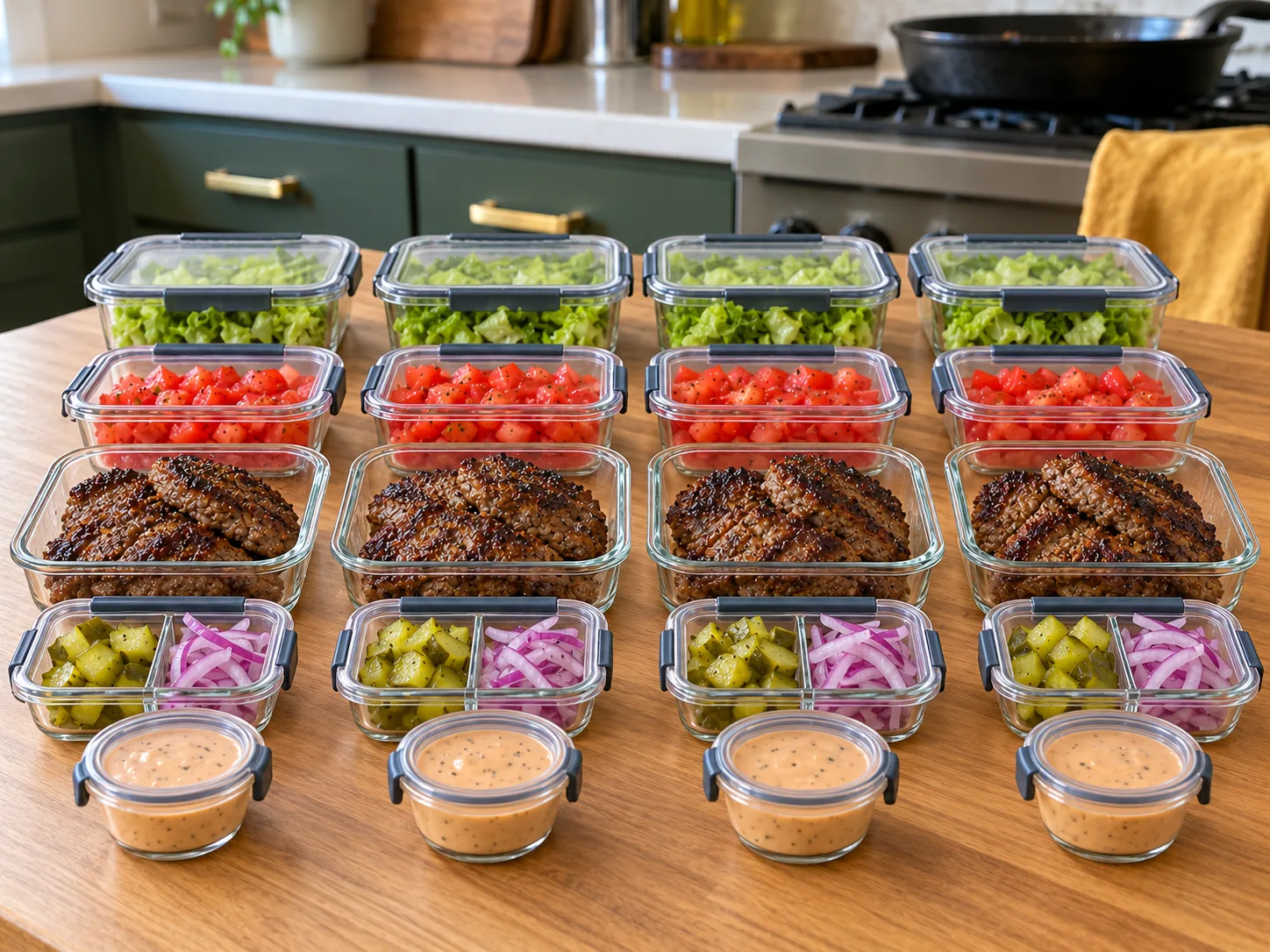
Cost and protein breakdown
- 500g ground beef — the main cost; buying it on sale is the biggest lever here
- Lettuce, tomato, pickles, onion — inexpensive fresh vegetables, and cheaper overall than a pack of burger buns
- Cheese and sauce — a small added cost for real flavour payoff
- Total estimate — budget-friendly to make, per serving
Protein lands around 30–35g per serving, almost entirely from the beef and cheese combined.
Patties or crumbles?
Patties give a more classic burger look and hold together better if you want to build the bowl in neat sections. Crumbles are faster — no shaping, no flipping — and distribute more evenly through the bowl so every bite has some. Neither is more “correct”; it’s purely about how much time you want to spend and how you prefer to eat it.
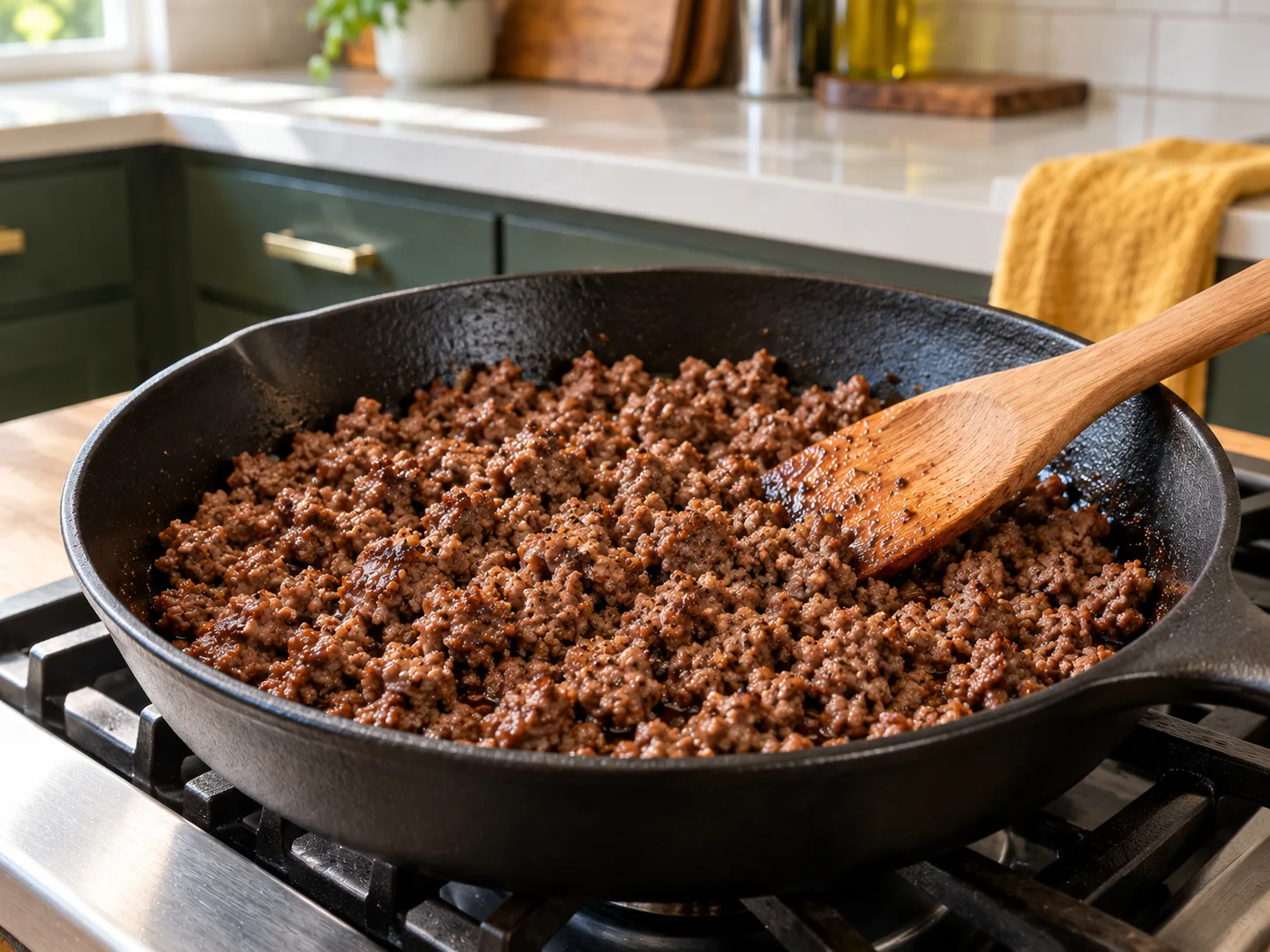
If you’re meal-prepping ahead, crumbles also have a practical edge: broken-up beef reheats more evenly in a microwave than a thick patty does, since there’s less mass concentrated in one spot for the microwave’s uneven heating to struggle with. A patty can come out with a scalding-hot edge and a still-cool centre after the same reheat time a crumble batch heats through evenly.
Getting a good sear on patties
If you go the patty route, a hot, dry pan (cast iron or stainless steel sear better than non-stick, which has a lower practical heat ceiling) and resisting the urge to move or flip the patty too early both matter. Pressing down on a patty while it’s still searing pushes out juices that would otherwise stay in the meat, and flipping before a proper crust has formed means you lose the browning that gives a burger patty its best flavour. Let it sit undisturbed for the first 3–4 minutes before checking if it releases cleanly and is ready to flip.
Variations
The classic build here takes well to a few common burger directions. For a bacon cheeseburger bowl, add crumbled cooked bacon on top along with the cheddar. For an animal-style direction (inspired by the well-known In-N-Out secret menu item), grill the onions in the same pan after the beef instead of using them raw, and add a few extra pickles. For a protein-boosted version, top each bowl with a fried or soft-boiled egg — a classic burger add-on in some regions, and an easy way to push the protein count even higher without changing anything else about the recipe.
A genuinely good option if you’re watching carbs
Because the bun is the main carb source in a traditional burger, this bowl format lands naturally low-carb without any substitutions needed — the lettuce base, vegetables, and sauce (made with mayo rather than a sweetened bottled sauce) keep the carb count well below what the same burger would carry with a bun and fries. This isn’t marketed as a “keto” or “low-carb” recipe specifically, but it’s worth knowing if that’s a goal, since it means this bowl doesn’t require any special substitutions to fit that kind of eating pattern — it already does by default.
Common mistakes
Overworking the beef when shaping patties. Like with meatloaf, handling ground beef too much before cooking makes the final texture denser and tougher. Shape patties gently and just until they hold together.
Building the bowl too far ahead of eating. Lettuce and tomato in particular go limp and watery fast once dressed or sitting next to warm beef. Assemble just before eating, especially if the beef is freshly cooked and still warm when it’s added.
Skipping a thermometer check on patties. Ground beef patties should reach 160°F / 71°C at the centre. Visual cues (colour, firmness) are less reliable than an actual reading, especially with thicker patties that can look done on the outside while remaining undercooked in the middle.
How to make it cheaper
- Buy ground beef on sale and freeze extra. It’s the single largest cost in this recipe and the most price-variable week to week.
- Make your own sauce rather than buying a bottled burger sauce — the four-ingredient version above costs a fraction of a specialty sauce.
- Use whatever vegetables are on hand — shredded cabbage, cucumber, or bell pepper all work as substitutes or additions to the lettuce base.
Storage
Cool the cooked beef in shallow containers and refrigerate within 2 hours. Keep it separate from the fresh vegetables for 3–4 days; lettuce and tomato wilt and go watery if stored beside warm or dressed ingredients. Freeze patties or crumbles in meal-size portions for up to 3 months, but do not freeze the fresh toppings.
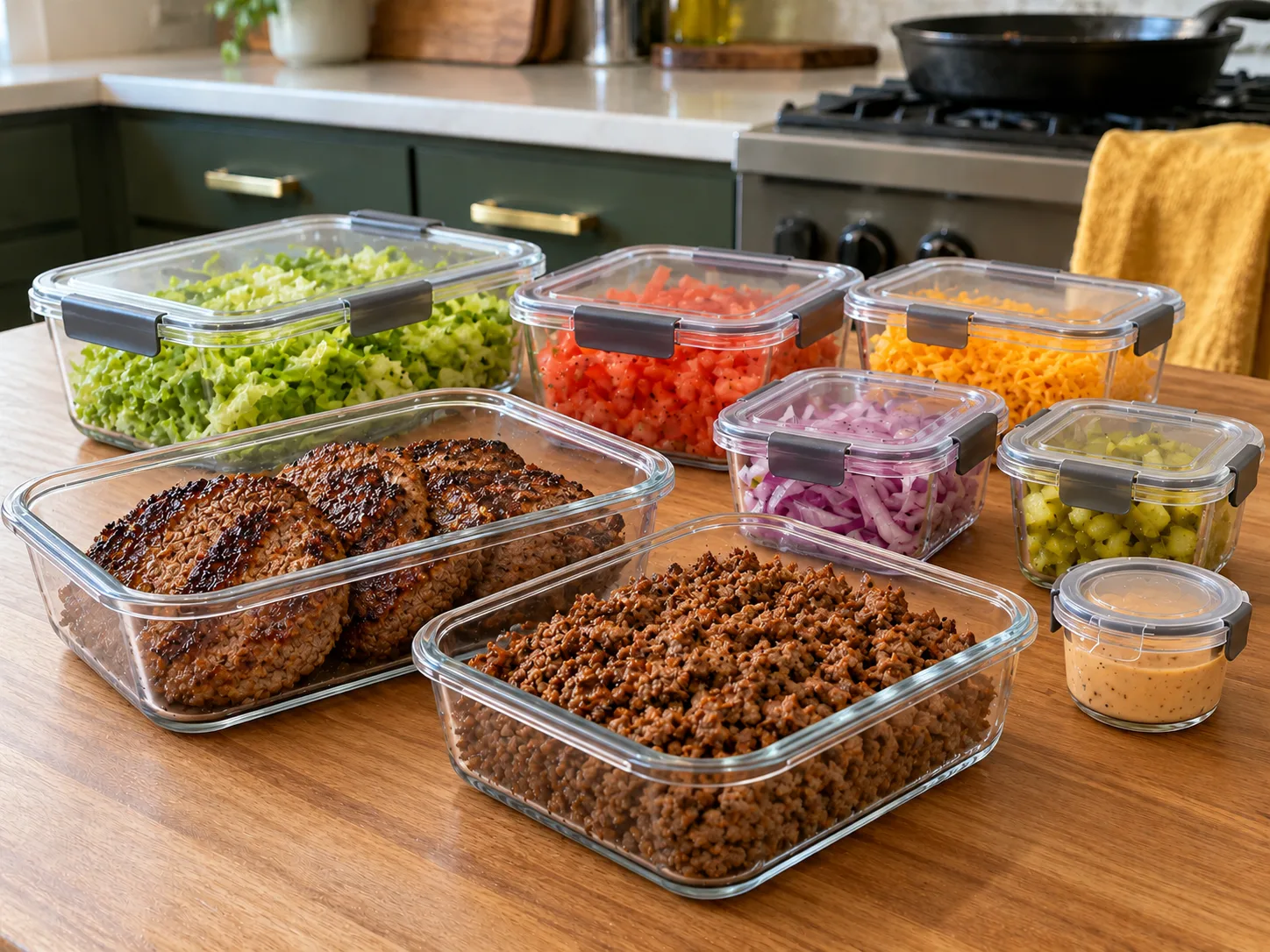
Keep the sauce sealed in the refrigerator and use it within the same 4-day meal-prep window as the beef. Reheat beef to 165°F / 74°C, using a covered skillet with a splash of water or 70% microwave power, then add it to the cold bowl only when you are ready to eat.
Frequently asked questions
Can I use ground turkey or chicken instead of beef?
Yes. Use the same seasoning and shaping method, but cook ground turkey or chicken to 165°F / 74°C rather than the beef temperature. The flavour will be less burger-like; a dash of Worcestershire sauce adds savoury depth, and 1 teaspoon of oil mixed into very lean poultry helps it stay moist.
Can I use a store-bought burger sauce instead of making my own?
Sure, if you have one on hand already, but making your own as described above costs a fraction of the price and takes under a minute — there’s rarely a strong reason to buy a bottled version specifically for this recipe when the homemade version is this quick and this close to the flavour it’s imitating.
What can I use instead of mayo in the sauce?
Plain Greek yogurt works as a substitute for some or all of the mayo, with a slight tang and a protein bump as a bonus. Start with half mayo, half yogurt if you’re unsure about the flavour change.
Is this basically just a salad with burger toppings?
Functionally, yes — and that’s the appeal. It’s a way to get the flavours of a burger without the bun, at a lower cost and with more vegetables in the mix than a typical burger meal would include.
Can I meal prep this for the week?
The beef component preps well ahead, as the storage section explains, but the fresh vegetables are better chopped fresh or stored separately and assembled daily rather than fully built ahead — lettuce specifically doesn’t hold up well pre-chopped for more than a day or so. A practical system: cook a big batch of beef on Sunday, pre-chop the sturdier vegetables (pickles, red onion) that don’t wilt quickly, and chop the lettuce and tomato fresh each morning or the night before you’ll eat.
What’s the best way to reheat the beef without drying it out?
A quick reheat in a covered skillet with a splash of water, rather than the microwave on full power, keeps ground beef from turning dry and crumbly. If you’re short on time and the microwave is the only option, a lower power setting for a slightly longer time, with a damp paper towel loosely over the container, helps retain more moisture than a quick full-power blast.
Can I make this dairy-free by skipping the cheese and mayo?
Yes — the cheese is easy to simply omit, and most dairy-free mayo alternatives work as a direct swap in the sauce with no other changes needed. The overall flavour profile holds up fine without dairy; cheese and mayo add richness here rather than being load-bearing for the core burger flavour, which comes mostly from the beef, mustard, and pickle.
Related reading: Ground Beef and Rice Skillet, Ground Chicken Taco Bowls, and Best Cheap Protein Sources by Cost Per Gram.