Lentil Chili Meal Prep
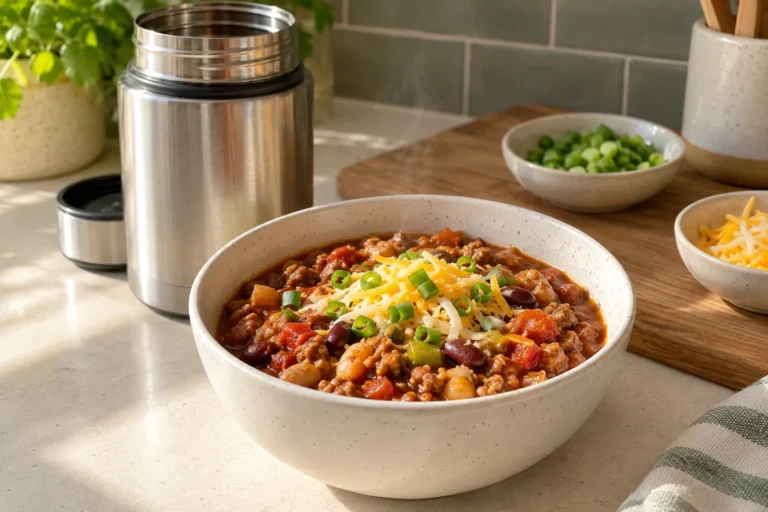
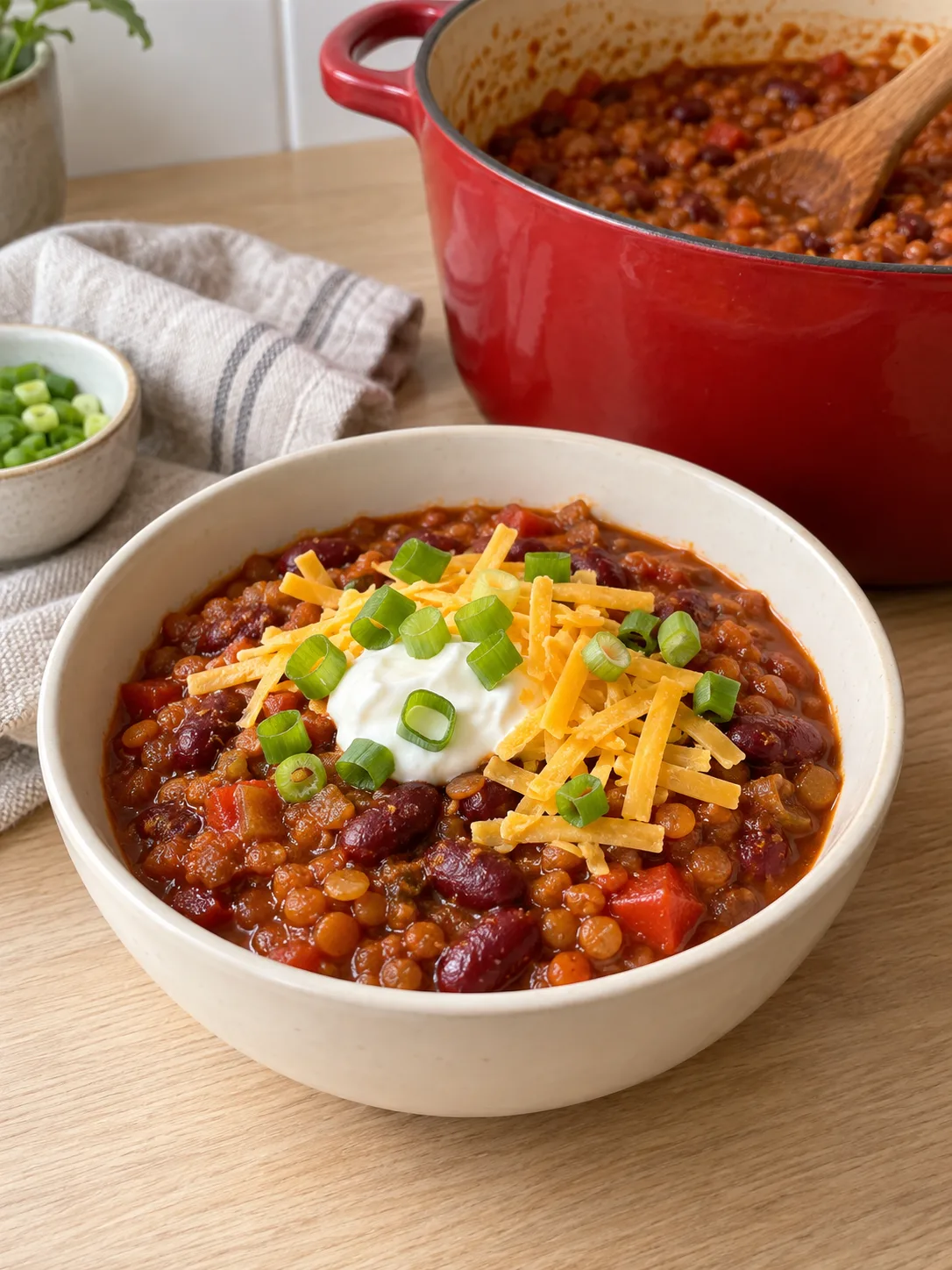
Dried lentils are one of the cheapest sources of protein by weight you can buy, full stop. No meat required, no soaking required if you use red lentils, and a single batch of this chili makes enough to freeze half of it for a week you don’t want to cook at all.
There’s no trick to this recipe. It’s a cheap, filling chili built around one of the best-value proteins in the store. For more on where lentils rank against other protein sources, see the cheap protein sources guide.
| Estimated cost per serving | Cheap |
| Protein per serving | ~16-20g* |
| Prep time | 10 minutes |
| Cook time | 30 minutes |
| Servings | 6 bowls |
| Meal prep rating | ★★★★★ Batch-friendly |
| Freezer-friendly | Yes |
*Protein is an estimate. Actual values depend on your exact ingredients and portions.
Why red lentils are the easy entry point
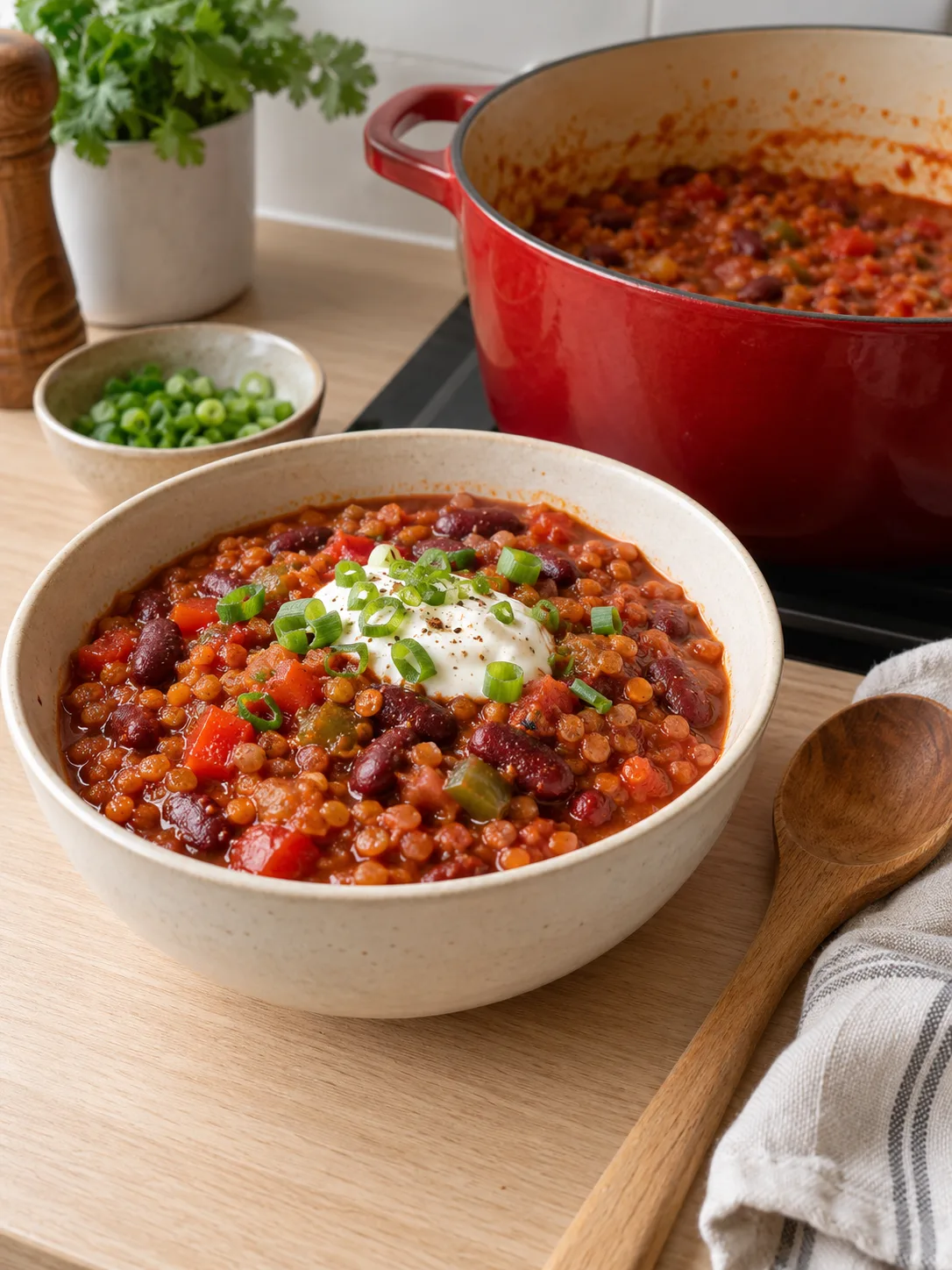
Red lentils cook in about 20 minutes with no soaking, unlike most dried beans. They also break down slightly as they cook, which thickens the chili naturally instead of needing a separate thickening step. Green or brown lentils also work, but they take longer and hold their shape. Red lentils are the easiest place to start.
What you need

- 1.5 cups dry red lentils, rinsed
- 1 can (796mL) diced tomatoes
- 1 onion, diced
- 2 cloves garlic, minced
- 1 can kidney beans, drained and rinsed (optional but recommended)
- 2 tsp cumin
- 2 tsp chili powder
- 1 tbsp oil
- 4 cups water or broth
- Salt to taste
Equipment: a large pot or Dutch oven, a wooden spoon. Nothing else required.
How to make it

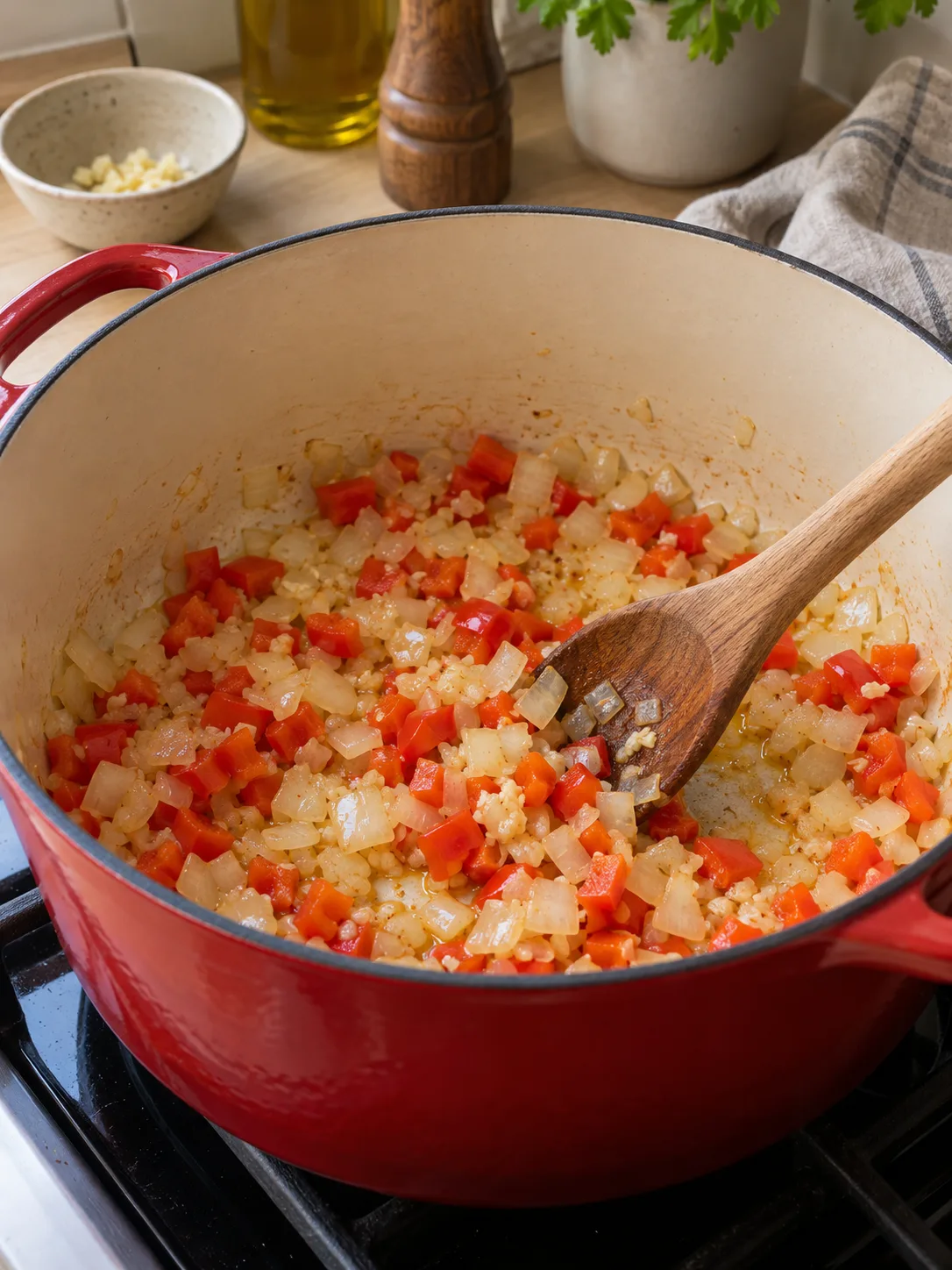
- Heat the oil in the pot over medium heat. Add the onion and cook for 4-5 minutes until softened. Add the garlic and cook for 30 seconds more.
- Add the cumin and chili powder and stir for about 30 seconds. Toasting the spices briefly in the oil brings out more flavour before the liquid goes in.
- Add the rinsed lentils, diced tomatoes, and water or broth. Bring to a boil, then reduce to a simmer.
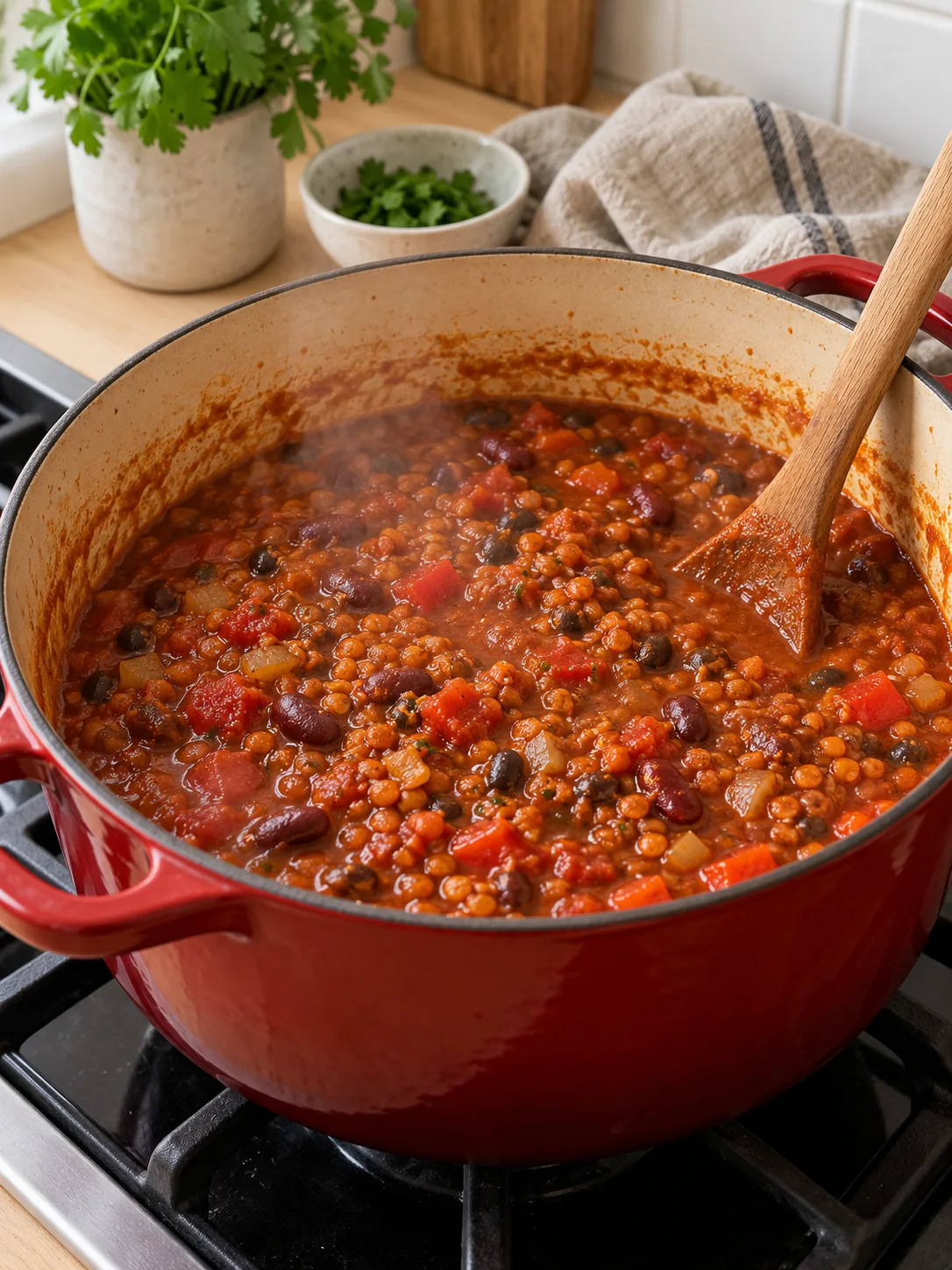
- Simmer uncovered for 20-25 minutes, stirring occasionally, until the lentils are fully soft and the chili has thickened. Add the kidney beans in the last 5 minutes if using.
- Season with salt to taste. The chili will continue thickening as it cools, so don’t worry if it looks slightly thin at the end of cooking.
Cost and protein breakdown
- 1.5 cups dry lentils: one of the lowest costs per gram of protein of any food in the store; buying the largest bag available lowers it further
- Canned tomatoes and kidney beans: inexpensive pantry staples
- Onion, garlic, spices: a small fraction of total cost, especially if bought from a bulk spice section
- Total estimate — cheap per serving, among the cheapest recipes on this site
Protein runs around 16-20g per serving, split between the lentils and the kidney beans if you include them. This is plant-based protein, so it’s worth pairing with a grain like rice for a more complete amino acid profile over the day. The swaps below give a few easy options.
How to make it cheaper
- Use water instead of broth: the long simmer and toasted spices carry enough flavour on their own.
- Buy dried lentils in the largest bag sold: the per-kilogram price usually drops noticeably above 1kg.
- Check bulk bins or ethnic grocery sections for spices: cumin and chili powder are often dramatically cheaper there than in small jars at a mainstream store.
Storage and reheating
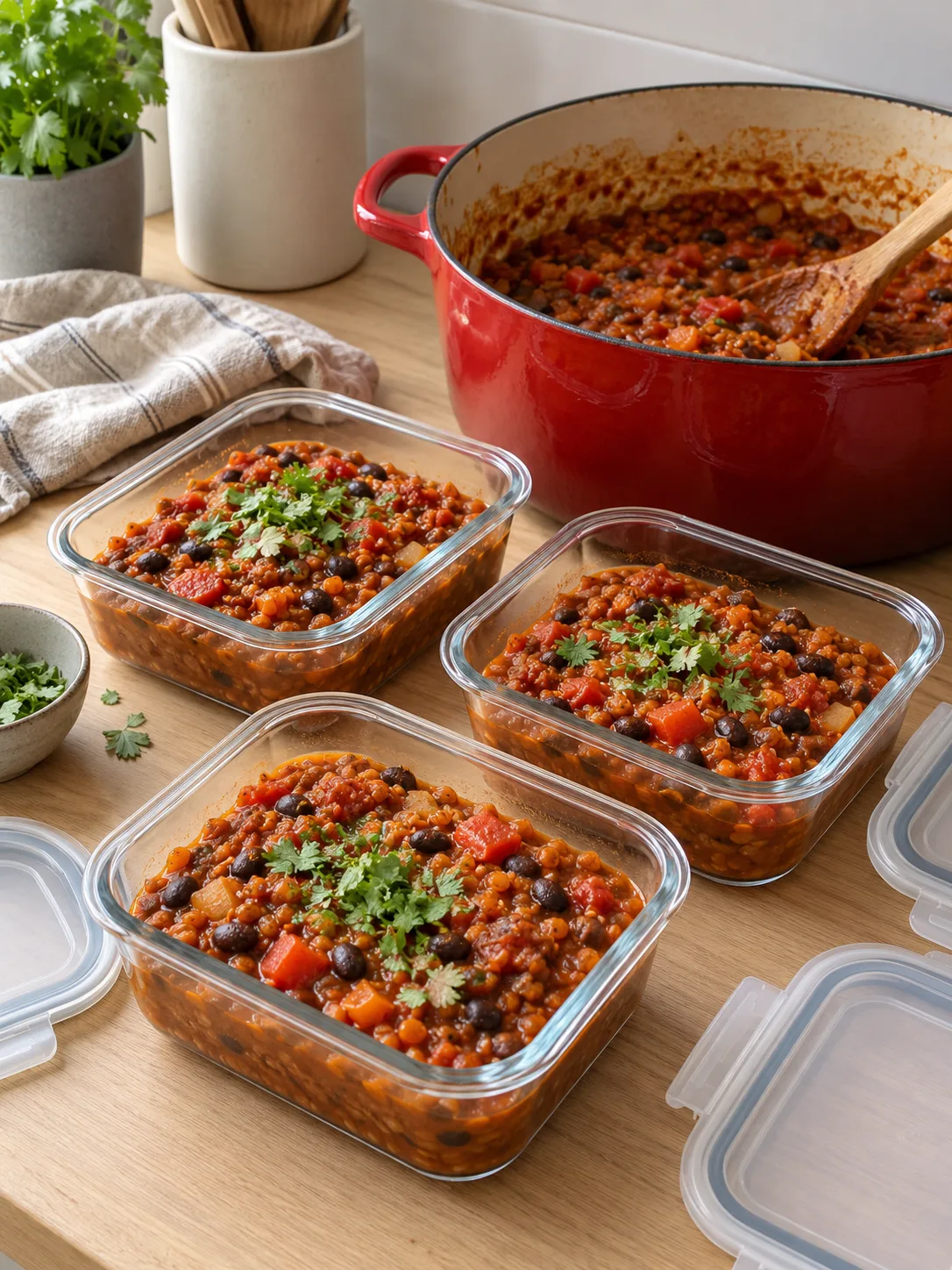
- Fridge: 4-5 days at 40°F / 4°C or below.
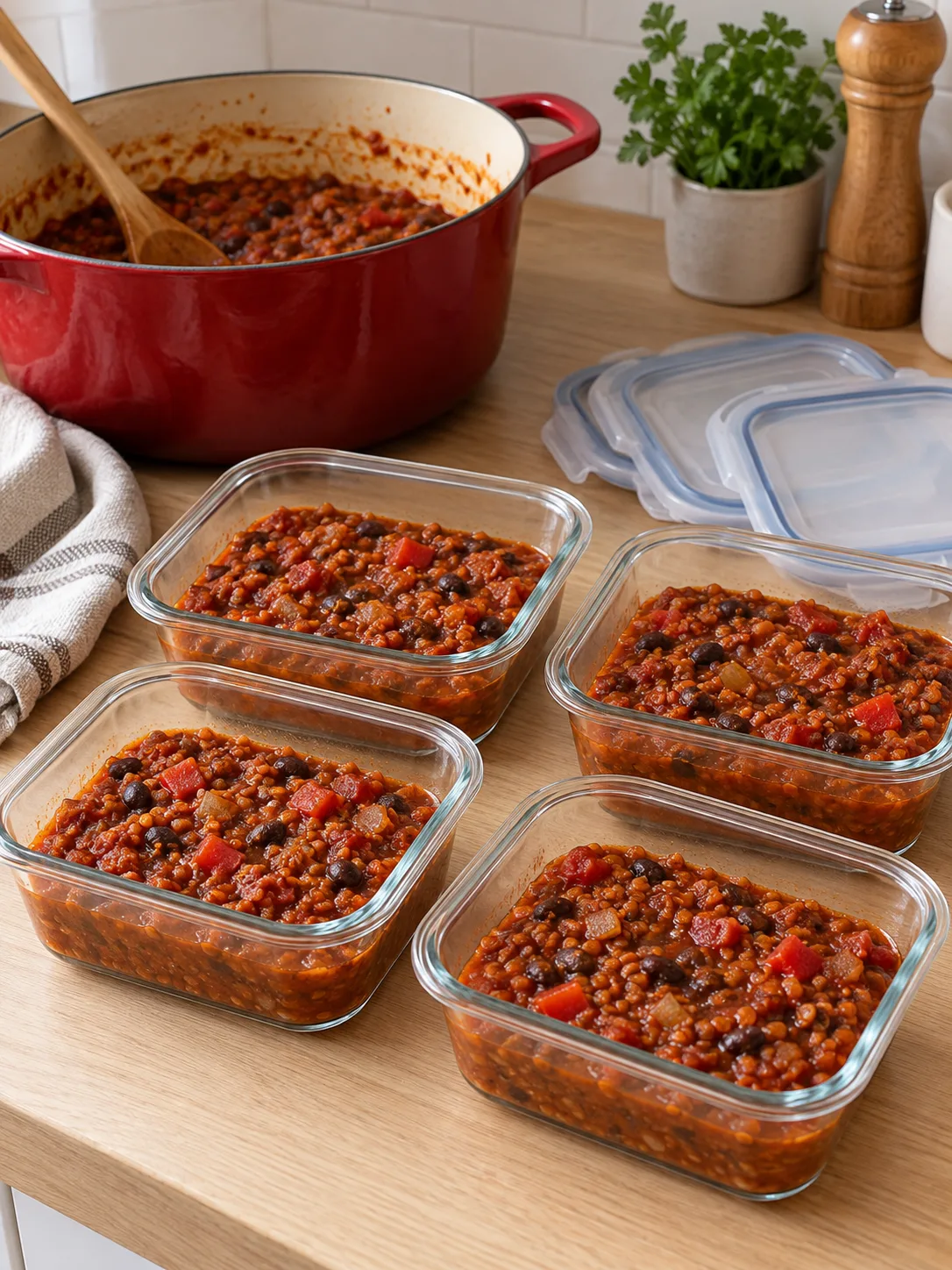
- Freezer: Up to 3 months in portioned containers. This chili keeps its texture well after freezing.
- Reheating: Microwave with a small splash of water, since the chili thickens significantly once cold. Stir halfway through and make sure it’s steaming throughout before eating.
Simple swaps and add-ins
- Add ground turkey or beef: brown it with the onion for a meat version; see the chicken rice bowls recipe for a comparable meat-based option.
- Swap kidney beans for chickpeas: different texture, same method.
- Add diced sweet potato: stir in with the lentils at the start; adds bulk and a bit of natural sweetness, cooks in the same timeframe.
- Serve over rice: stretches the batch further and adds a complete source of carbohydrate energy alongside the plant protein.
Pressure cooker method
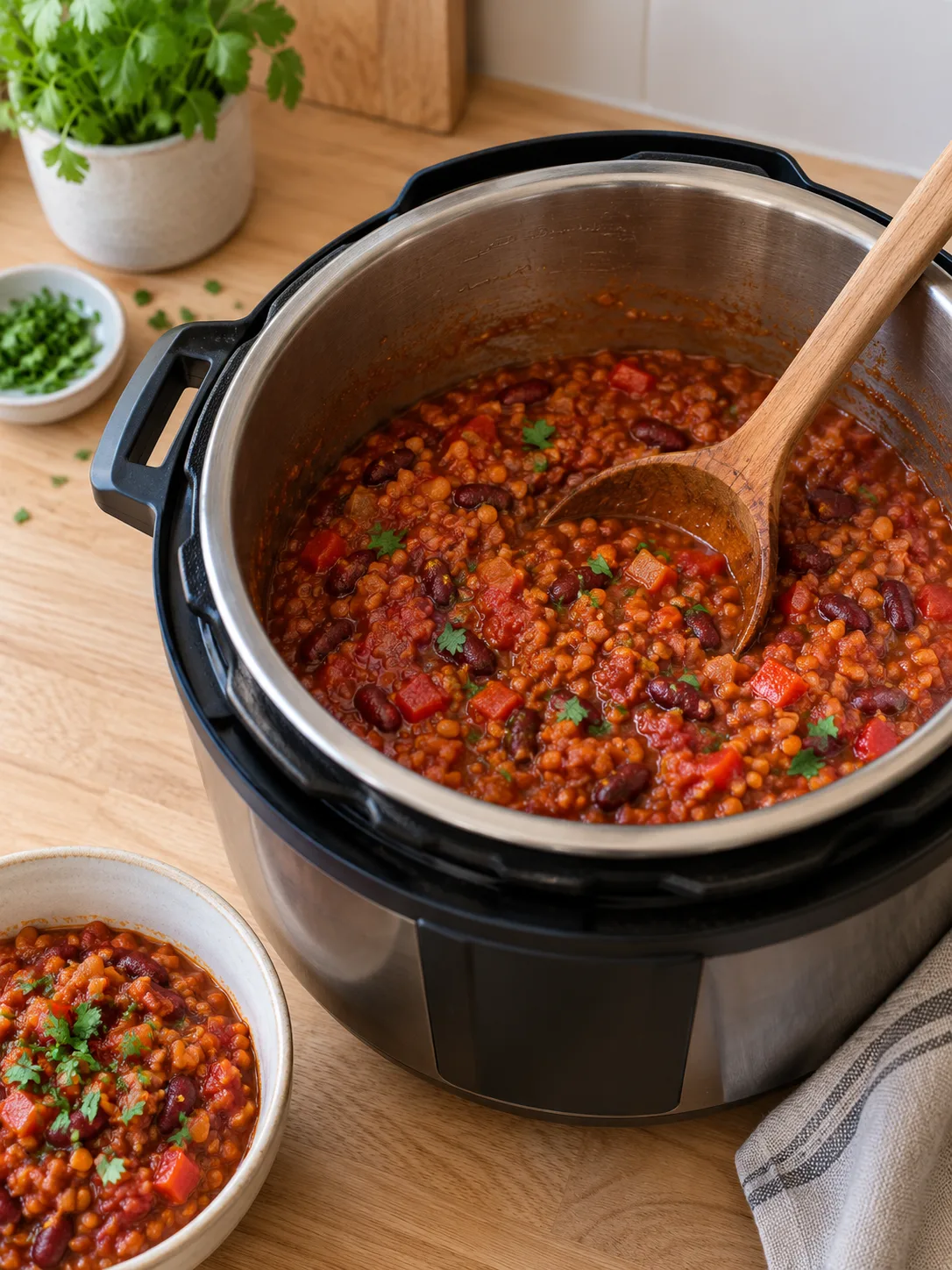
Use the sauté setting for the onion, garlic, and spices. Add the lentils and 3 cups of water or broth, then pour the tomatoes over the top without stirring. Cook on high pressure for 8 minutes and let the pressure release naturally for 10 minutes. Stir in the kidney beans after opening the lid. The chili will look loose at first and thicken as it rests.
Fix the texture before serving
- Too thick: stir in hot water or broth, 1/4 cup at a time.
- Too thin: simmer uncovered for another 5 minutes, or mash a scoop of lentils against the side of the pot and stir them back in.
- Needs more flavour: add salt first. If the salt is right but the chili still tastes flat, add a small squeeze of lemon or lime.
Double it without creating extra work
The stovetop recipe doubles cleanly in a large pot. Keep the heat at a gentle simmer and allow a little extra time for the larger volume to heat through. Cool the extra batch, portion it into meal-size containers or freezer bags, and freeze the bags flat. Thaw one portion at a time and loosen it with a splash of water while reheating.

Frequently asked questions
Do I need to soak the lentils first?
No. Unlike most dried beans, lentils do not need presoaking. Rinse them to remove any dust or debris, then cook them directly in the chili.
Can I use green or brown lentils instead of red?
Yes, but they take longer to soften (closer to 35-40 minutes) and hold their shape instead of breaking down, so the chili will be less thick unless you mash some of them near the end.
Is the protein in this recipe as good as meat-based protein?
Lentils provide plenty of protein, though their amino acid mix differs from animal protein. Pairing lentils with rice or another grain over the course of a day covers that gap at essentially no extra cost.
Related reading: Best Cheap Protein Sources by Cost Per Gram, Cheap High-Protein Meal Prep, and High-Protein Chicken Rice Meal Prep Bowls for a meat-based comparison.