Cottage Cheese Mac and Cheese (High Protein)
Cottage cheese mac and cheese has been everywhere on Pinterest, and once you’ve made it once, it’s obvious why: blended cottage cheese makes a sauce just as creamy as a traditional roux-based one, quietly carrying a real dose of protein that a normal mac and cheese doesn’t have anywhere near. Same comfort food, same five minutes of nostalgia in a bowl — just built on a base that actually does something nutritionally.

| Estimated cost per serving | Cheap |
| Protein per serving | ~28–32g* |
| Prep time | 10 minutes |
| Cook time | 20 minutes |
| Servings | 5 |
| Freezer-friendly | Not recommended |
*Protein is an estimate. Actual values depend on your exact ingredients and portions.
Why blended cottage cheese works here
Cottage cheese curds are held together by casein protein that hasn’t been broken down into a smooth texture the way it has in cream or cream cheese. Blending does that mechanically — a full 60–90 seconds in a blender turns it into something that pours like heavy cream, with zero trace of curd texture left. That blended cottage cheese then does the same job a béchamel or processed cheese sauce would do, except it’s carrying roughly 25g of protein per cup instead of almost none.
Ingredients
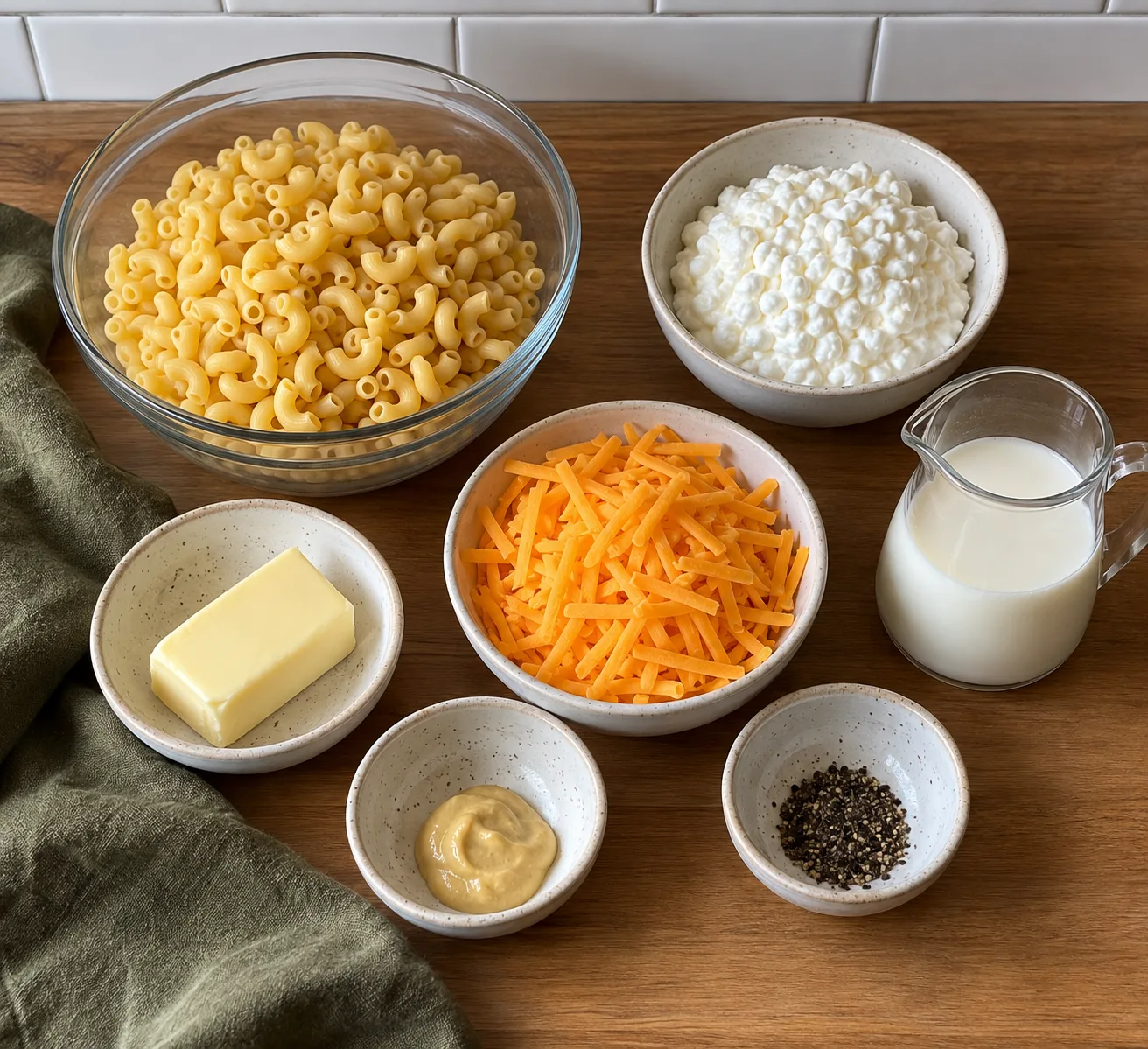
- 340g (12oz) elbow macaroni, dry
- 1.5 cups cottage cheese
- 2 cups shredded cheddar
- 1/2 cup milk
- 1 tbsp butter
- 1 tsp mustard powder (or 1 tbsp Dijon mustard)
- Salt and pepper to taste
How to make it
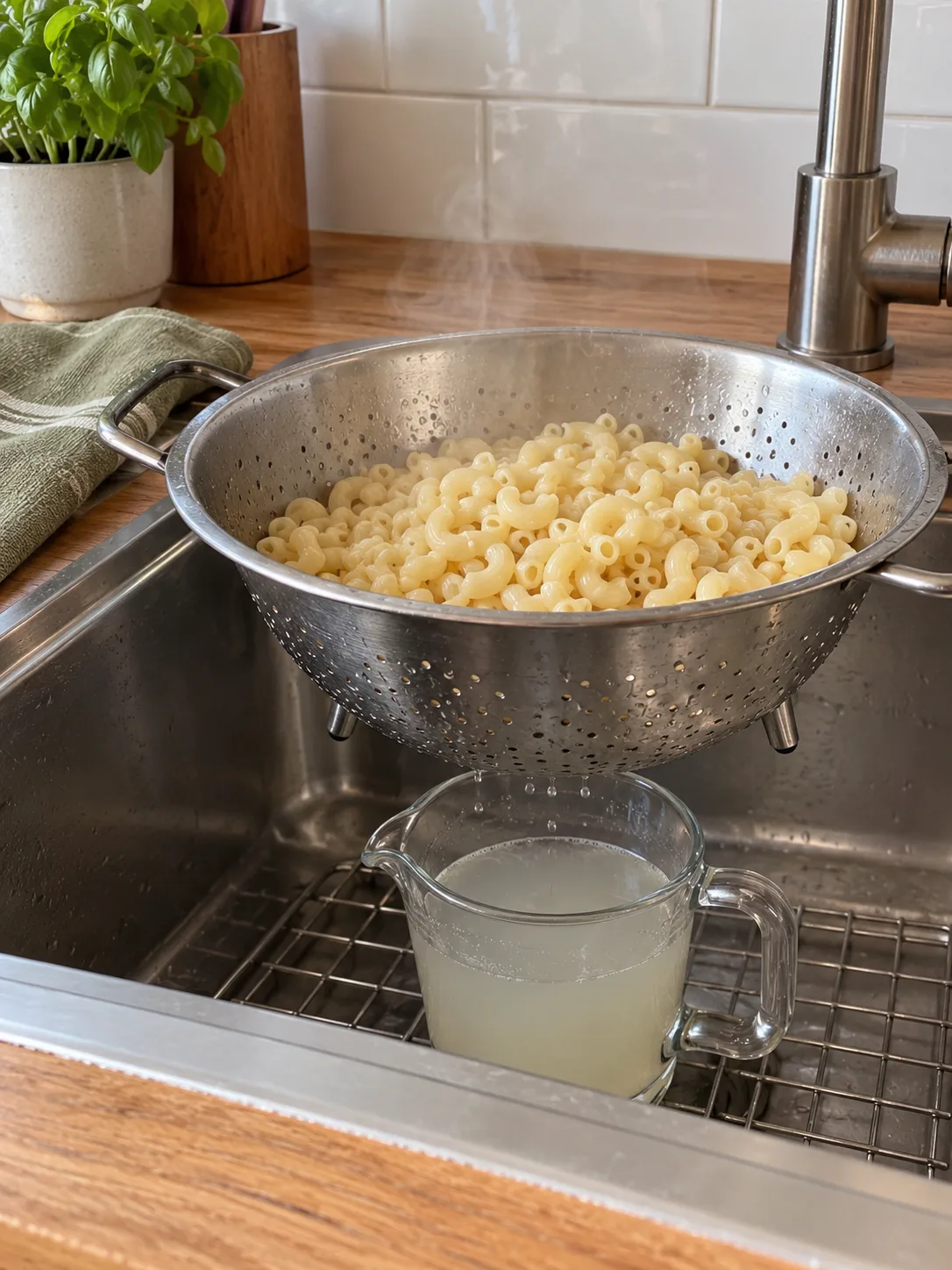
- Cook the macaroni according to package directions until just tender. Drain and set aside, reserving a splash of the pasta water.
- While the pasta cooks, blend the cottage cheese in a blender or food processor until completely smooth — no visible curds, about 60–90 seconds.

- In the same pot the pasta was cooked in, melt the butter over low heat. Add the milk, blended cottage cheese, and mustard powder, stirring to combine.
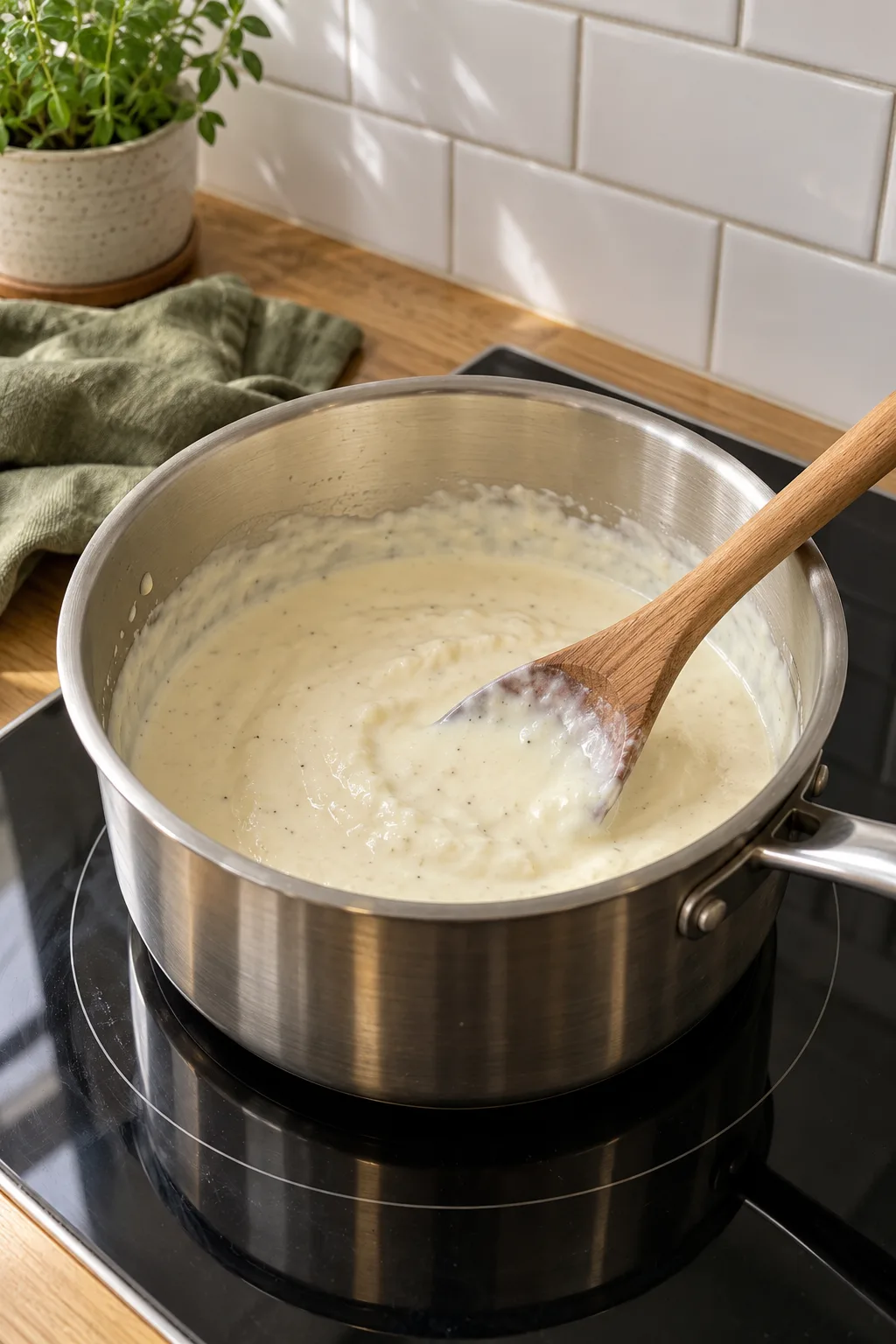
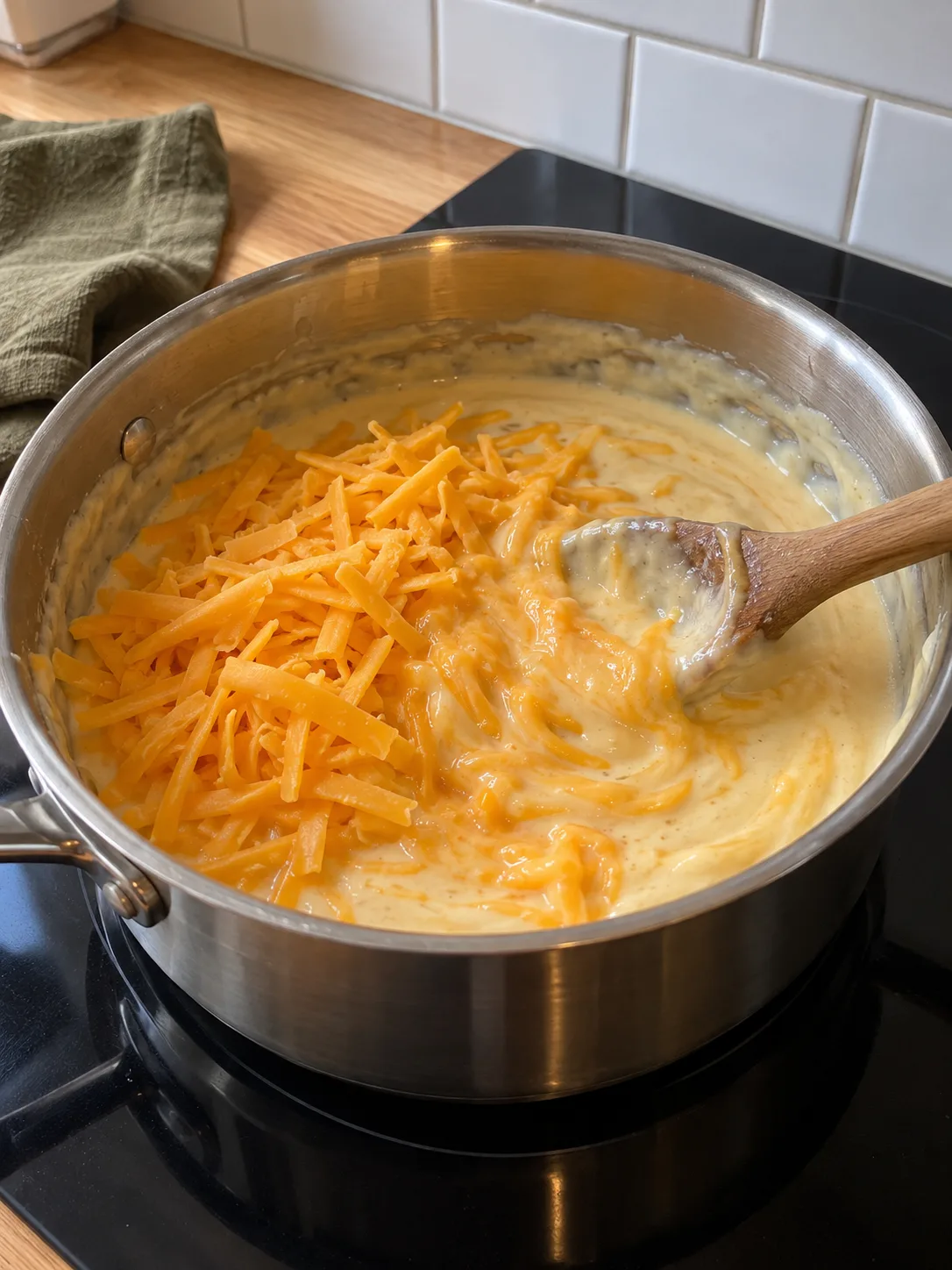
- Add the shredded cheddar a handful at a time, stirring until fully melted between additions. Keep the heat low — cheese sauce that gets too hot can turn grainy.
- Fold the cooked macaroni into the sauce. If it looks thicker than you’d like, loosen it with a splash of the reserved pasta water. Season with salt and pepper.

Pressure cooker method
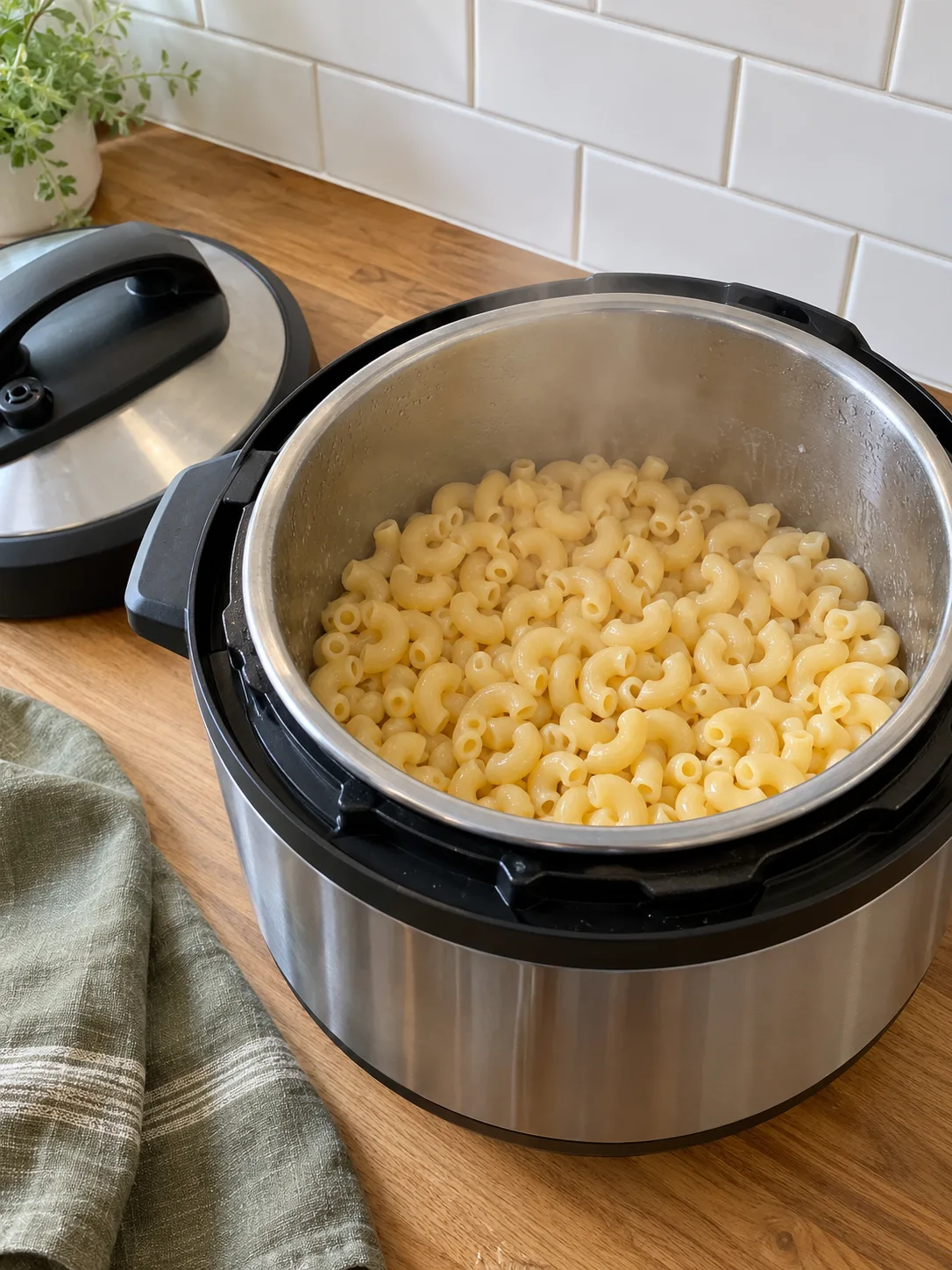
- Add the macaroni, 3 cups water, and a pinch of salt to the pressure cooker. Cook on high pressure for 4 minutes, then release the pressure promptly. Drain any obvious excess water.
- Turn off the heat. Stir in the butter, milk, blended cottage cheese, and mustard.
- Add the cheddar a handful at a time, stirring until smooth. Use Sauté on low only if the pasta needs another minute; do not boil the finished cheese sauce.
Which method is best?
- Best overall: stovetop. It gives the most control over pasta texture and keeps the sauce smooth.
- Most hands-off pasta cooking: pressure cooker. It frees you from watching a boiling pot, though the sauce still gets mixed in after cooking.
- Best for a crisp top: baked. Use the breadcrumb finish below when texture matters more than speed.
Cost and protein breakdown
- 1.5 cups cottage cheese — the main protein source, a fraction of the cost of the same protein from extra cheese
- 2 cups shredded cheddar — the largest single cost in this recipe; buying a block and shredding it yourself is usually cheaper than pre-shredded bags
- Macaroni, milk, butter — inexpensive pantry and dairy staples
- Total estimate — cheap to make, per serving
Protein lands around 28–32g per serving, which is high for a mac and cheese — a traditional version built on butter, flour, and cheese alone typically lands closer to 12–15g per serving. The gap is almost entirely the cottage cheese.
Will it taste like cottage cheese?
Once fully blended, the cottage cheese curds disappear and the cheddar and mustard become the main flavours. A mild dairy tang can remain, especially with a lower-salt cottage cheese; sharp cheddar or an extra teaspoon of Dijon covers it most effectively.
How to make it cheaper
- Buy a cheese block instead of pre-shredded. Shredding it yourself takes two minutes and is reliably cheaper per 100g.
- Use store-brand cottage cheese. The blending step erases any texture difference between brands, so there’s little reason to pay more for a name brand here.
- Skip the mustard powder if you don’t have it. It adds a background tang, not a defining flavour — the dish works fine without it.
Storage and reheating
- Fridge: cool and refrigerate within 2 hours, then use within 3–4 days.
- Freezer: not recommended; the cottage-cheese and cheddar sauce can turn grainy after thawing.
- Microwave reheating: add 1 tablespoon milk per portion, cover loosely, and heat at 50–70% power in 45-second intervals, stirring between each, until the centre reaches 165°F / 74°C.
- Stovetop reheating: add a splash of milk and warm over low heat, stirring constantly. Remove from the heat as soon as it is hot through.
Baked version, if you want a crust
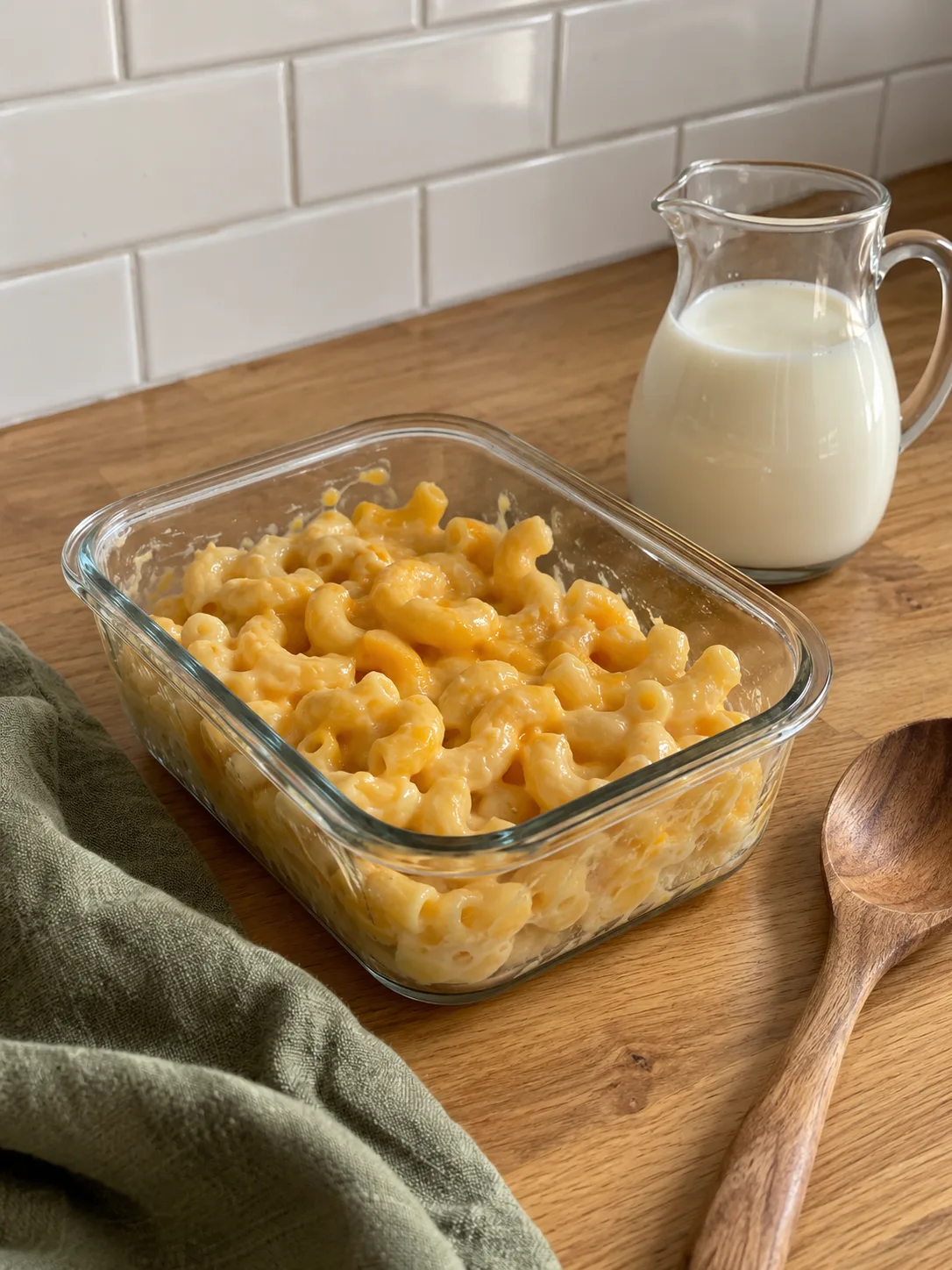
Transfer the hot finished mac and cheese to a greased baking dish. Mix 1/2 cup breadcrumbs with 1 tablespoon melted butter and scatter over the top. Bake at 375°F / 190°C for 15–20 minutes, until the crumbs are golden and the centre reaches 165°F / 74°C. Broil for 1–2 minutes only if the crumbs need more colour.

Frequently asked questions
My sauce turned grainy — what happened?
Almost always heat that was too high when the cheese went in. Cheese sauce breaks when it gets too hot too fast; keep the heat low and add the cheese gradually, stirring between additions, rather than dumping it all in at once over high heat.
Can I use a different pasta shape?
Yes — shells, cavatappi, and penne all hold the sauce well. Avoid very thin shapes like spaghetti, which don’t carry a thick sauce as effectively.
Is low-fat cottage cheese okay to use?
Yes, it blends just as smooth as full-fat. The sauce will be very slightly less rich, but the difference is minor once it’s mixed with the cheddar and butter.
Related reading: High-Protein No-Bake Pumpkin Cheesecake, Budget High-Protein Thanksgiving Sides, and Best Cheap Protein Sources by Cost Per Gram.