Budget Chicken Curry
A flavour direction nothing else on this site touches — warm spices, a tomato-and-yogurt base instead of a heavy cream sauce, and chicken thighs doing what they do best across this whole site: staying moist through a longer simmer and reheating well days later.
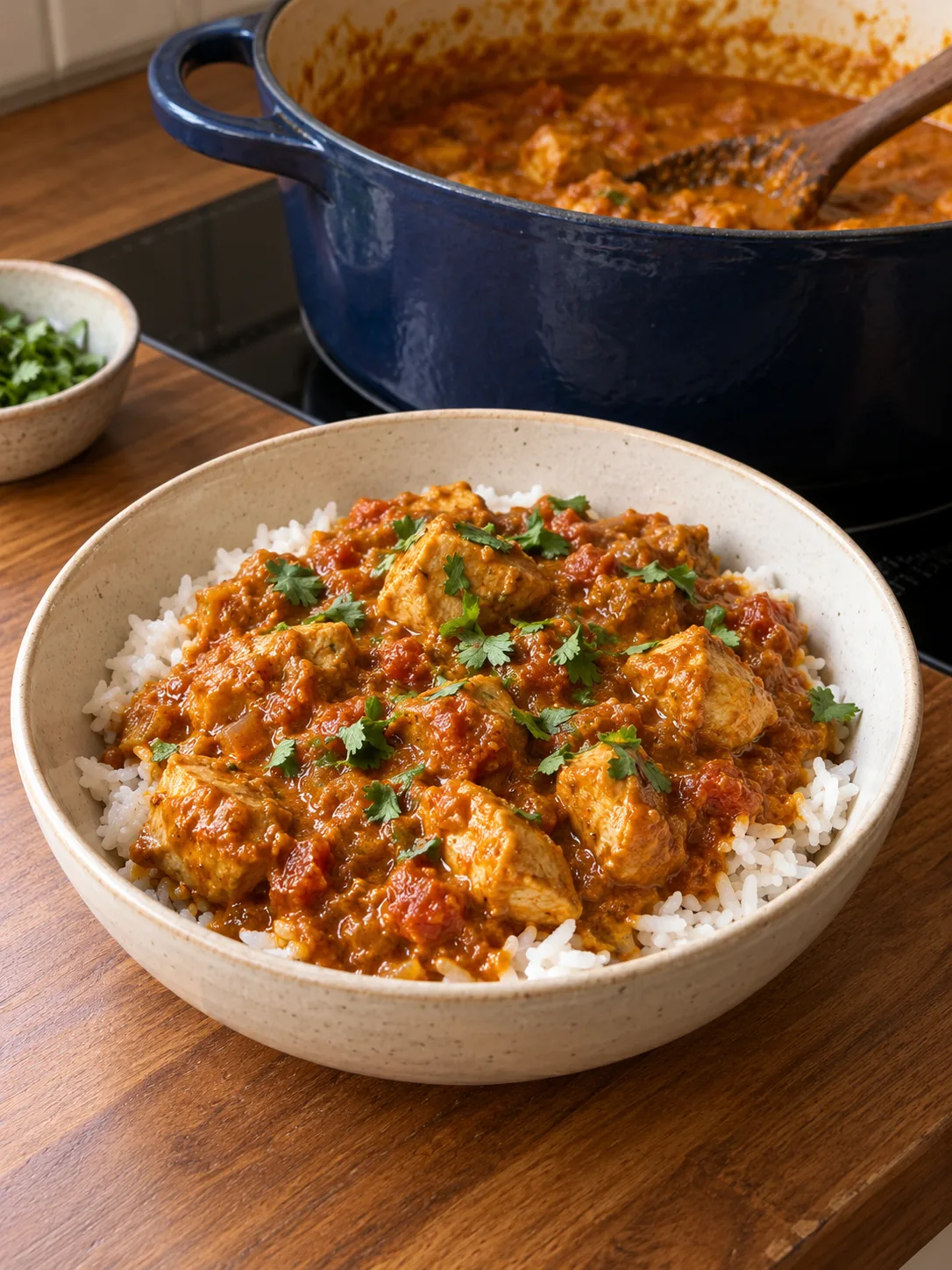
It’s also a useful recipe for anyone who finds the other chicken dishes on this site a bit repetitive after a few weeks of rotation. Same budget cut of meat, same basic one-pot method, but a genuinely different flavour world — proof that sticking to cheap chicken thighs doesn’t mean sticking to one flavour profile indefinitely.
| Estimated cost per serving | Cheap |
| Protein per serving | ~32–38g* |
| Prep time | 15 minutes |
| Cook time | 30 minutes |
| Servings | 5 |
| Freezer-friendly | Yes |
*Protein is an estimate. Actual values depend on your exact ingredients and portions.
What’s actually in curry powder
“Curry powder” is a Western retail blend, not a single traditional spice — it’s typically built around turmeric (for colour and earthiness), coriander, cumin, and fenugreek, with varying amounts of chili for heat and sometimes cinnamon or clove for warmth. This recipe adds extra cumin and turmeric on top of a store-bought curry powder specifically because pre-made blends vary a lot in strength from brand to brand, and layering a bit more of the two most foundational flavours helps even out that inconsistency no matter which blend you grabbed off the shelf. If you happen to have garam masala on hand instead, it works similarly here, though it leans sweeter and more floral than a standard curry powder and will shift the final flavour slightly.
Ingredients
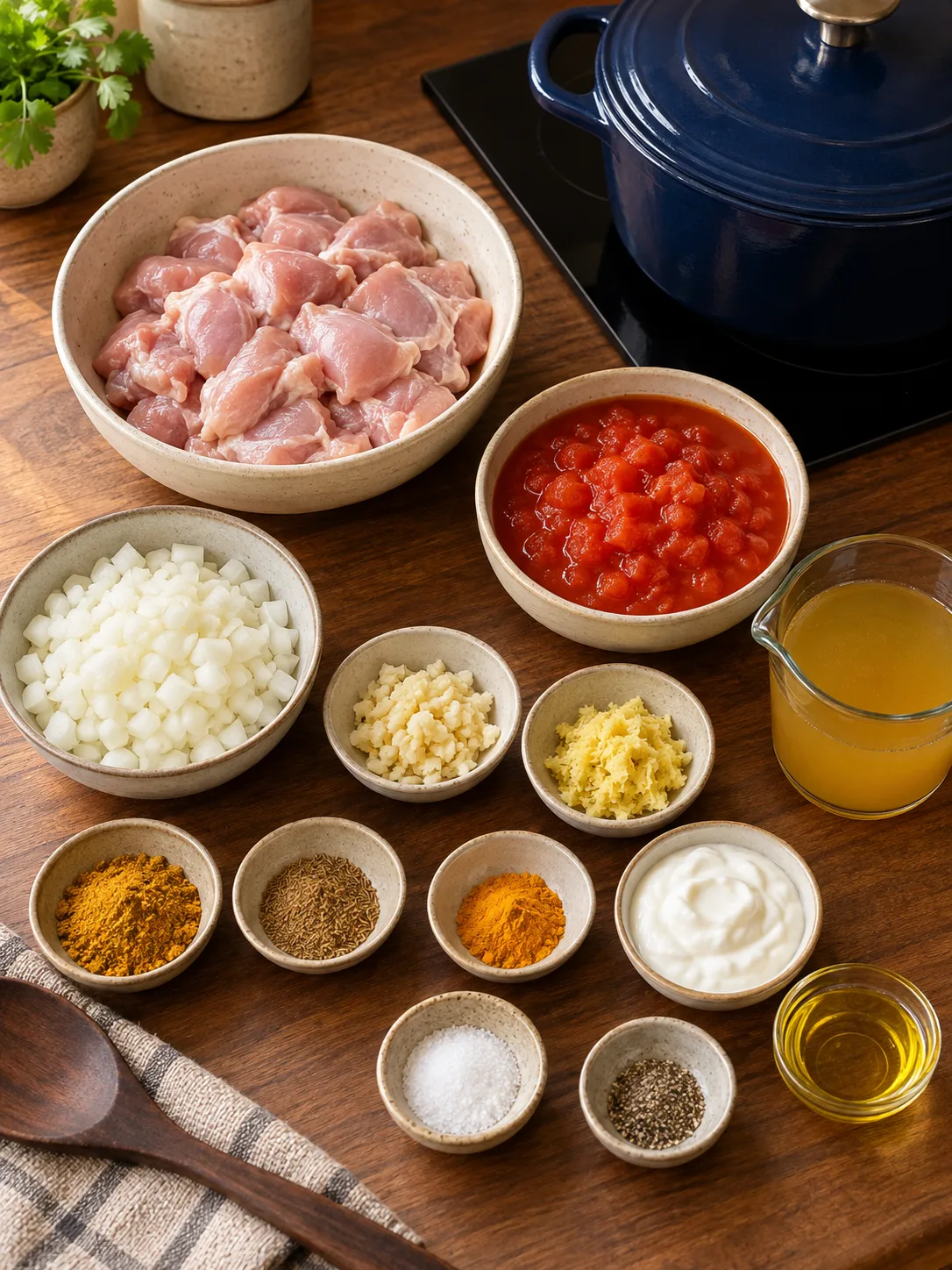
- 900g boneless skinless chicken thighs, cut into chunks
- 1 onion, diced
- 3 cloves garlic, minced
- 1 tbsp fresh ginger, minced (or 1/2 tsp ground)
- 2 tbsp curry powder
- 1 tsp cumin
- 1/2 tsp turmeric
- 1 can (398mL) diced tomatoes
- 1 cup plain yogurt
- 1 cup chicken broth
- 2 tbsp oil
- Salt and pepper to taste
How to make it
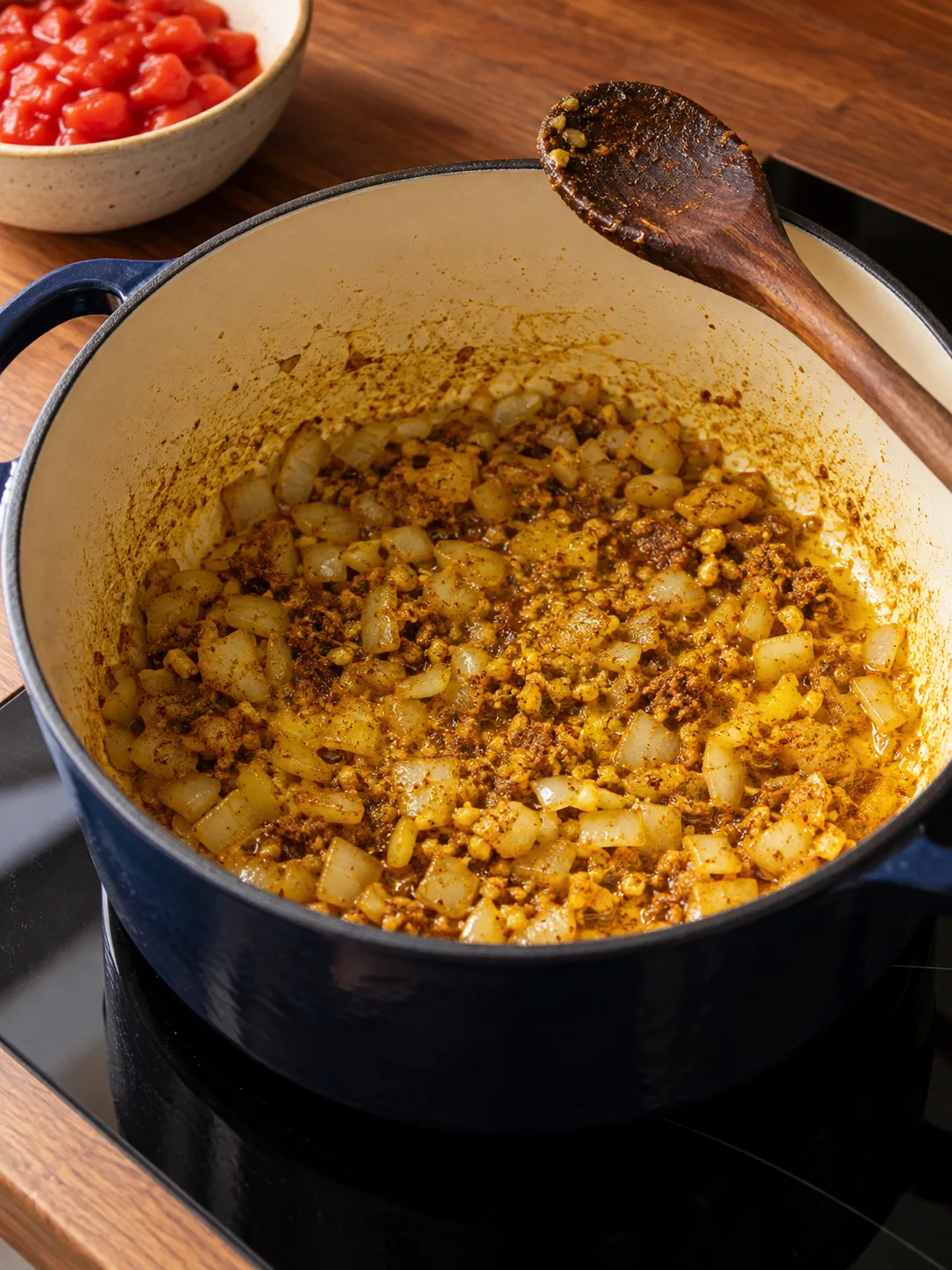
- Heat the oil in a large pot over medium heat. Cook the onion 5–6 minutes until softened. Add the garlic and ginger, cooking 30 seconds.
- Stir in the curry powder, cumin, and turmeric, cooking 30 seconds to bloom the spices in the oil.
- Add the chicken, tossing to coat in the spiced onion mixture. Cook 3–4 minutes, until the outside is no longer pink.
- Add the diced tomatoes and broth. Bring to a simmer, cover, and cook 20 minutes, until the chicken is tender and reaches 165°F / 74°C.
- Remove from heat and stir in the yogurt — don’t add it over direct high heat, or it can curdle. Season with salt and pepper.

Slow cooker method
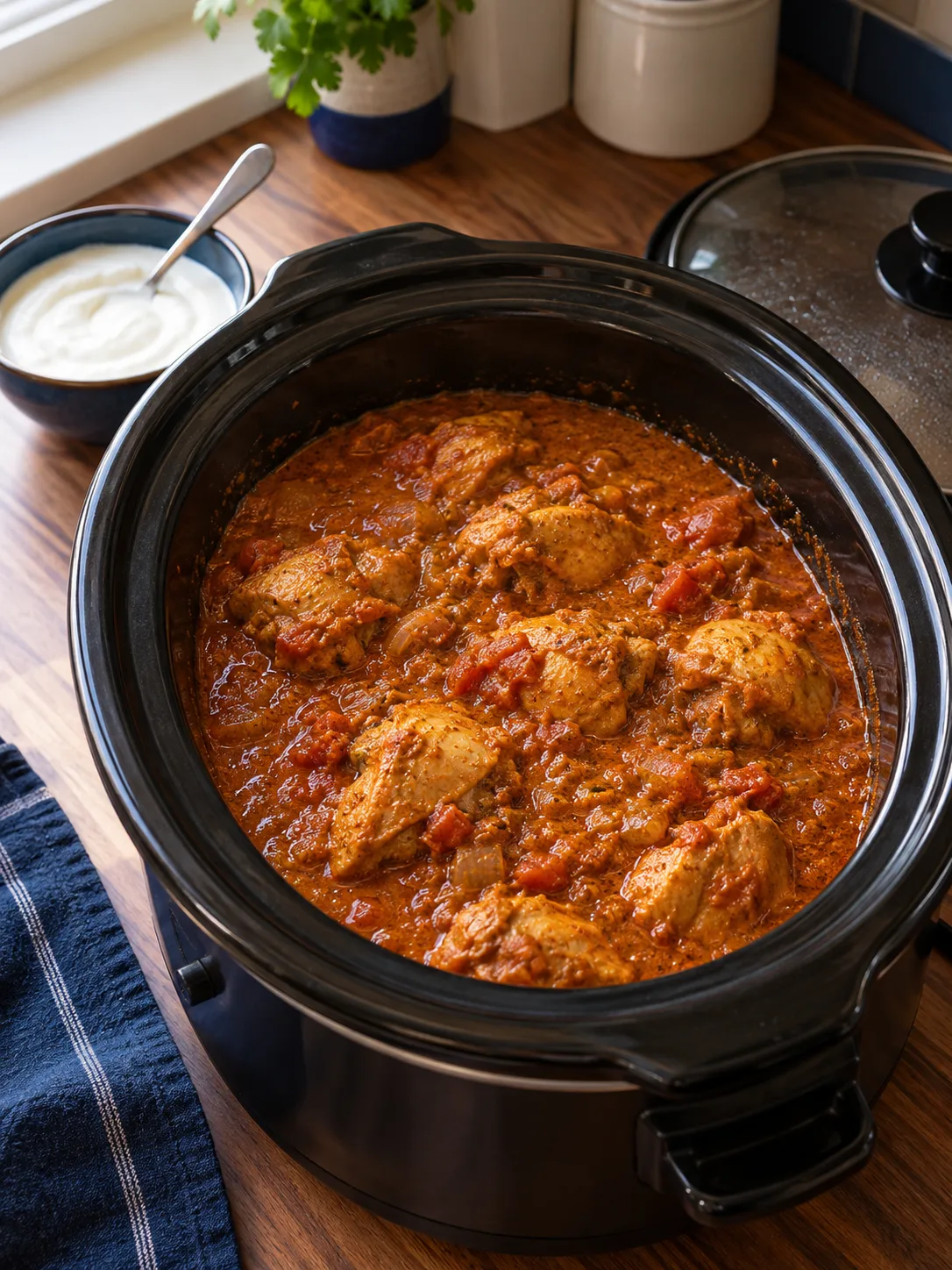
- Cook the onion in the oil in a skillet for 5 minutes. Add the garlic, ginger, curry powder, cumin, and turmeric; stir for 30 seconds.
- Transfer to a 4–6 quart slow cooker. Add the chicken, tomatoes, and only 1/2 cup broth, since very little liquid evaporates in a slow cooker.
- Cook on low for 4–5 hours or high for 2–3 hours, until the chicken is tender and reaches 165°F / 74°C.
- Turn off the heat. Temper the yogurt with a spoonful of hot sauce, then stir it into the curry.
Pressure cooker method

- Use Sauté mode for the onion and oil for about 5 minutes. Add the garlic, ginger, and spices for 30 seconds.
- Pour in 1/2 cup broth and scrape the bottom clean. Add the chicken, then pour the tomatoes over the top.
- Cook on high pressure for 5 minutes, let the pressure release naturally for 5 minutes, then release the rest. Check that the chicken has reached 165°F / 74°C.
- If the sauce is thin, simmer on Sauté for 3–5 minutes. Cancel the heat, temper the yogurt with a spoonful of sauce, and stir it in.
Which method is best?
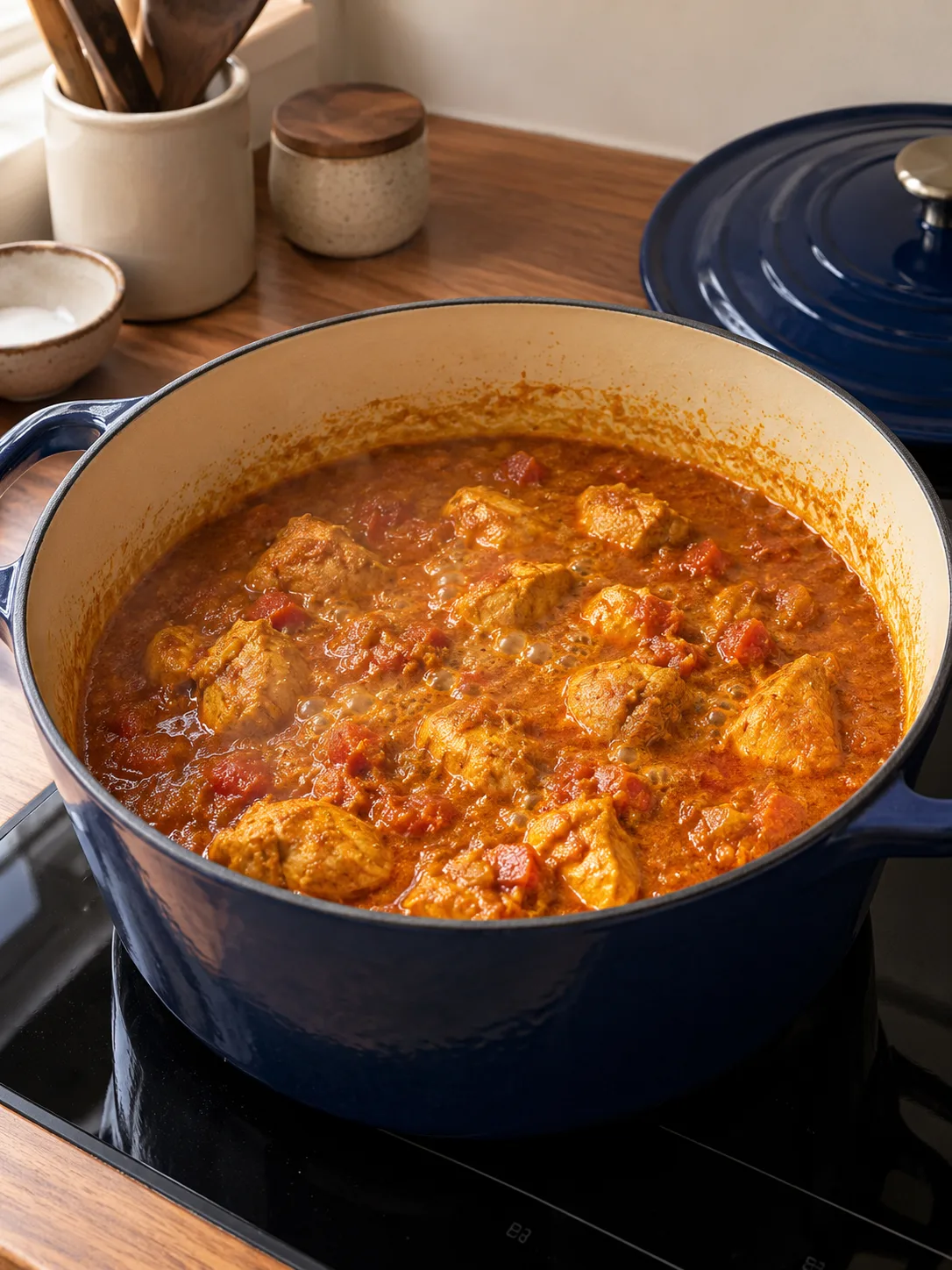
- Best overall: stovetop. It gives the most control over sauce thickness and keeps the full recipe to one pot.
- Best hands-off option: slow cooker. Use it when the curry can cook unattended for a few hours.
- Fastest active cooking: pressure cooker. It is useful for a double batch or when you want tender thighs without a long simmer.
Cost and protein breakdown
- 900g chicken thighs — the main cost, same budget cut used throughout this site
- Curry powder, tomatoes, yogurt — all inexpensive, and a container of curry powder lasts many batches
- Total estimate — cheap to make, per serving
Protein lands around 32–38g per serving, almost entirely from the chicken, with a small contribution from the yogurt.
Why yogurt instead of cream
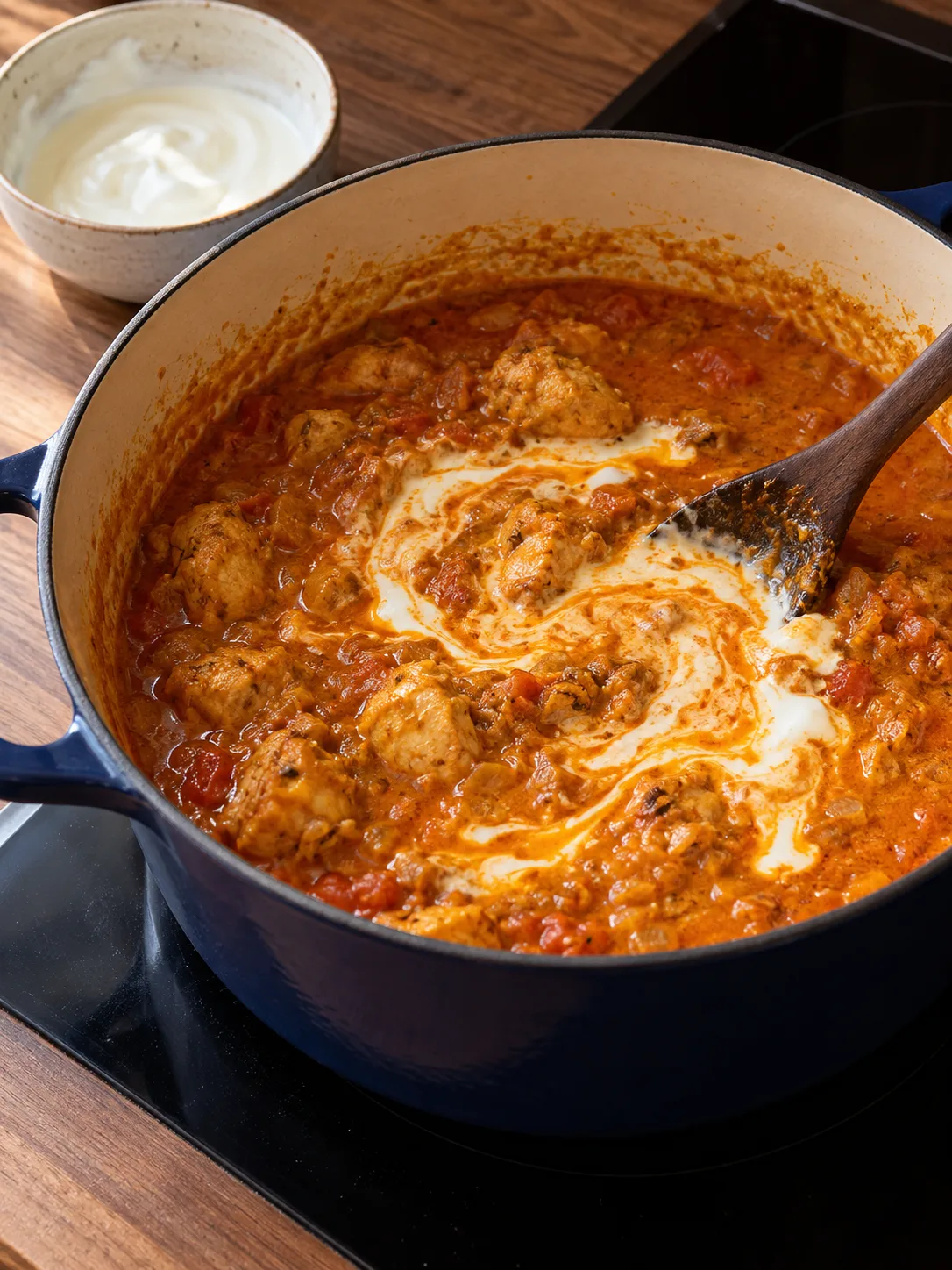
Plain yogurt gives a similar tangy richness to the cream used in some curry styles, at a lower cost and with meaningfully more protein per cup. Stirring it in off the heat (or at the very lowest simmer) rather than boiling it is the key step — dairy proteins break down and separate into a grainy, curdled texture if they hit a hard boil, which cream is more forgiving about than yogurt.
Pushing it toward a butter chicken flavour, or a coconut version
This base is close enough to butter chicken’s flavour profile that it’s an easy jump from one to the other. For a butter chicken-leaning version, add a tablespoon of butter along with the tomatoes and a teaspoon of paprika for colour, and use a touch more yogurt or a splash of cream at the end for extra richness. For a coconut curry direction, swap the chicken broth for canned coconut milk and skip the yogurt entirely, stirring the coconut milk in at the same simmer step as the tomatoes rather than off the heat at the end, since coconut milk doesn’t curdle under heat the way dairy yogurt does. The coconut version trades some protein density for a richer, slightly sweeter result and is a good middle ground if yogurt’s tang isn’t to your taste.
Scaling it for a week of meal prep

Doubling the chicken, spices, and tomatoes works cleanly in a large enough pot, though it’s worth doubling the yogurt stir-in separately for each portion if you’re freezing part of the batch, rather than mixing a double amount of yogurt into the whole pot before splitting it — this keeps the freezer-bound portions yogurt-free as the storage section below recommends, while the portion you’re eating this week still gets its full curried, creamy finish.
Common mistakes
Boiling the yogurt in. As covered above, this is the single most common way this dish goes wrong — a curdled, grainy sauce instead of a smooth one. Pull the pot off the heat, or drop it to the lowest possible simmer, before the yogurt goes in.
Not blooming the spices before adding liquid. As with the chili recipes on this site, dry spices release more of their aroma when they hit hot oil directly than when they’re dumped straight into a pot of liquid. The 30-second bloom step is quick but genuinely changes the final flavour.
Using cold yogurt straight from the fridge. Adding very cold yogurt to a hot pot creates a bigger temperature shock and raises the risk of curdling even off direct heat. Letting it sit at room temperature for 10–15 minutes before stirring it in, or warming it slightly with a spoonful of the hot sauce first, reduces that risk.
How to make it cheaper
- Buy chicken thighs on sale and freeze extra for next time.
- Use a store-brand curry powder rather than a premium blend — the flavour difference is minor once combined with the other spices and tomatoes.
- Use plain regular yogurt instead of Greek if it’s cheaper — slightly thinner result, still works.
- Buy spices from a bulk bin rather than small jars, if your store has one — cumin and turmeric in particular are often dramatically cheaper per gram bought loose.
Because this recipe already leans on a handful of spices you’ll use again in other dishes on this site — cumin shows up in the chilis, turmeric and curry powder show up less often but keep well for months — building out a small spice stock once pays off across several recipes rather than just this one.
Storage and freezing
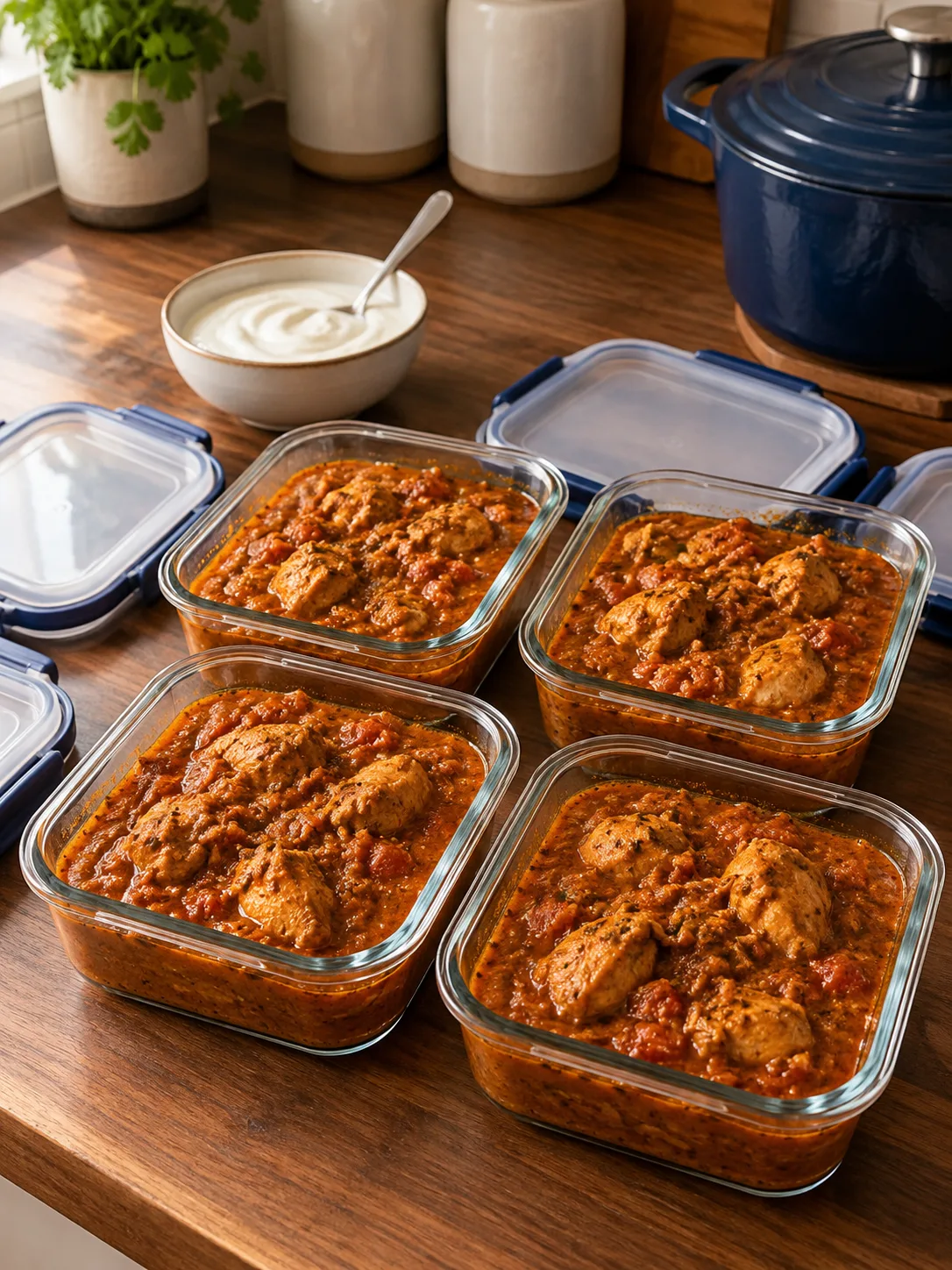
Freeze before adding the yogurt if you’re planning ahead, for the same reason as the white chicken chili — dairy can separate after freezing and thawing. Stir in fresh yogurt after reheating a frozen portion.
- Fridge (with yogurt): cool and refrigerate within 2 hours, then use within 3–4 days.
- Freezer (without yogurt): portion the cooled curry and freeze for up to 3 months. Thaw overnight in the fridge.
- Stovetop reheating: add a splash of broth and heat gently, stirring, until the chicken reaches 165°F / 74°C. Let it stop bubbling before adding fresh yogurt.
- Microwave reheating: cover loosely and heat at 70% power in 60-second intervals, stirring between each interval, until the centre reaches 165°F / 74°C.
Frequently asked questions
Is this very spicy?
Most curry powder blends are mild to medium, leaning more toward warm and aromatic than hot. Add a pinch of cayenne or a diced chili with the onion if you want real heat.
Can I add vegetables to this?
Yes — diced potato or cauliflower both work well added at the same step as the chicken, since they need roughly the same 20 minutes to cook through at a simmer. Frozen peas are an easy addition stirred in during the last 2–3 minutes, needing barely any time to cook since they’re already blanched before freezing.
Does this reheat well for meal prep?
Very well, within the yogurt-related caveats already covered — reheat gently rather than at a hard boil, since the yogurt that’s already mixed in can still curdle slightly on reheating if blasted with high heat, even though it’s already been incorporated once. A gentle reheat on the stovetop or a lower-power microwave setting keeps the sauce smooth.
Can I use chicken breast instead of thighs?
Yes, though it’s more prone to drying out over the 20-minute simmer — check it a few minutes early and pull the pot off heat as soon as it’s cooked through rather than leaving it at a hard simmer the full time.
Why do chicken thighs work better than breast in a dish like this?
Thighs carry more fat and connective tissue than breast, which means they stay moist and tender through a longer simmer instead of drying out and turning stringy the way lean breast meat can. Since this recipe simmers the chicken for a full 20 minutes to let the sauce develop, thighs are more forgiving of that time than breast is — this is the same reason thighs show up across most of the longer-simmered dishes on this site rather than just this one.
My sauce is too thin — how do I thicken it?
Simmer it uncovered for an extra 5–10 minutes before adding the yogurt, which lets more liquid evaporate. If it’s still thinner than you’d like after that, a teaspoon of cornstarch mixed with a tablespoon of cold water, stirred in during the last few minutes of simmering before the yogurt goes in, thickens it without needing much extra time.
What should I serve this with?
Rice is the simplest, cheapest base and the traditional pairing. Naan or any flatbread works well too if you want something to scoop with instead of a fork.
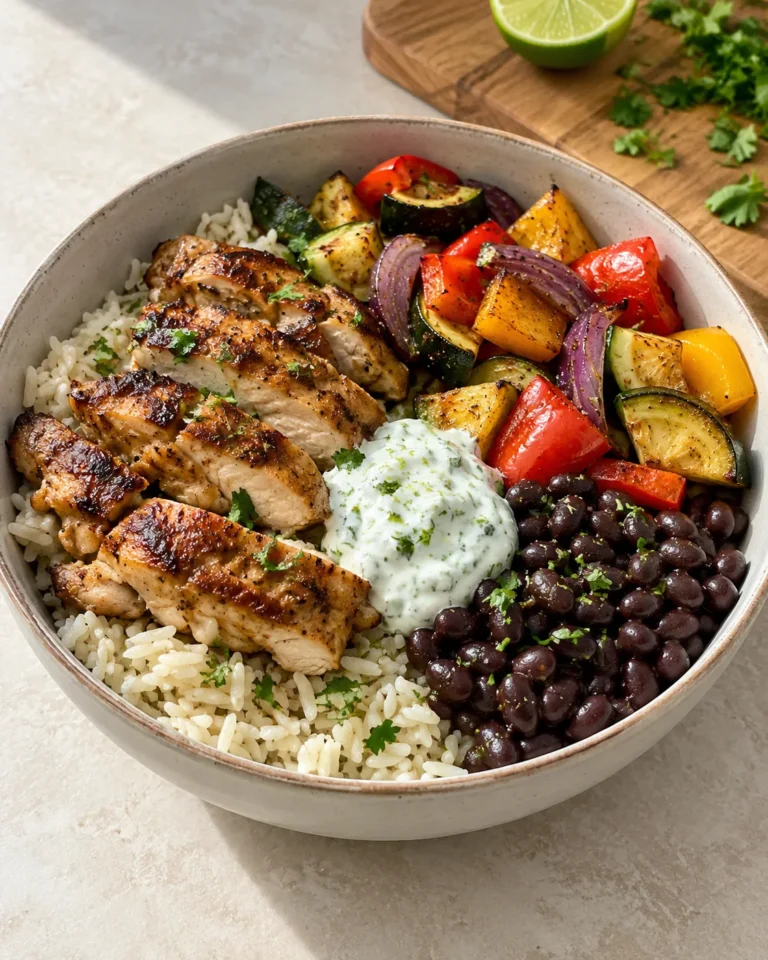
A side of plain yogurt (beyond what’s in the sauce) or a simple cucumber salad helps if the curry powder you used runs hotter than expected — both cool the palate between bites the same way a side of sour cream works with a spicy chili. Basmati rice specifically holds up a bit better than regular long-grain against a sauce this flavourful, since its slightly firmer texture doesn’t turn mushy as quickly once the sauce is spooned over it.
Related reading: Budget White Chicken Chili, Greek Chicken Bowls with Tzatziki, and Easy Baked Chicken Thighs for Meal Prep.