Budget Shrimp Scampi
The first shrimp recipe on this site, and worth a quick cost note upfront: frozen shrimp is the move here, not fresh — it’s reliably cheaper, already cleaned, and honestly just as good once cooked, since almost all “fresh” shrimp at a regular grocery counter was previously frozen anyway.

| Estimated cost per serving | Budget-friendly |
| Protein per serving | ~25–28g* |
| Prep time | 10 minutes |
| Cook time | 15 minutes |
| Servings | 4 |
| Freezer-friendly | No (cook from frozen raw shrimp instead) |
*Protein is an estimate. Actual values depend on your exact ingredients and portions.
Ingredients
- 500g frozen shrimp, peeled and deveined, thawed
- 340g (12oz) spaghetti or linguine
- 4 tbsp butter, divided
- 2 tbsp olive oil
- 5 cloves garlic, minced
- 1/4 tsp red pepper flakes, optional
- 1/3 cup white wine or chicken broth
- 2 tbsp lemon juice
- Salt and pepper to taste
- Fresh parsley, chopped, for serving

How to make it
- Cook the pasta according to package directions. Drain, reserving 1/2 cup of the pasta water.
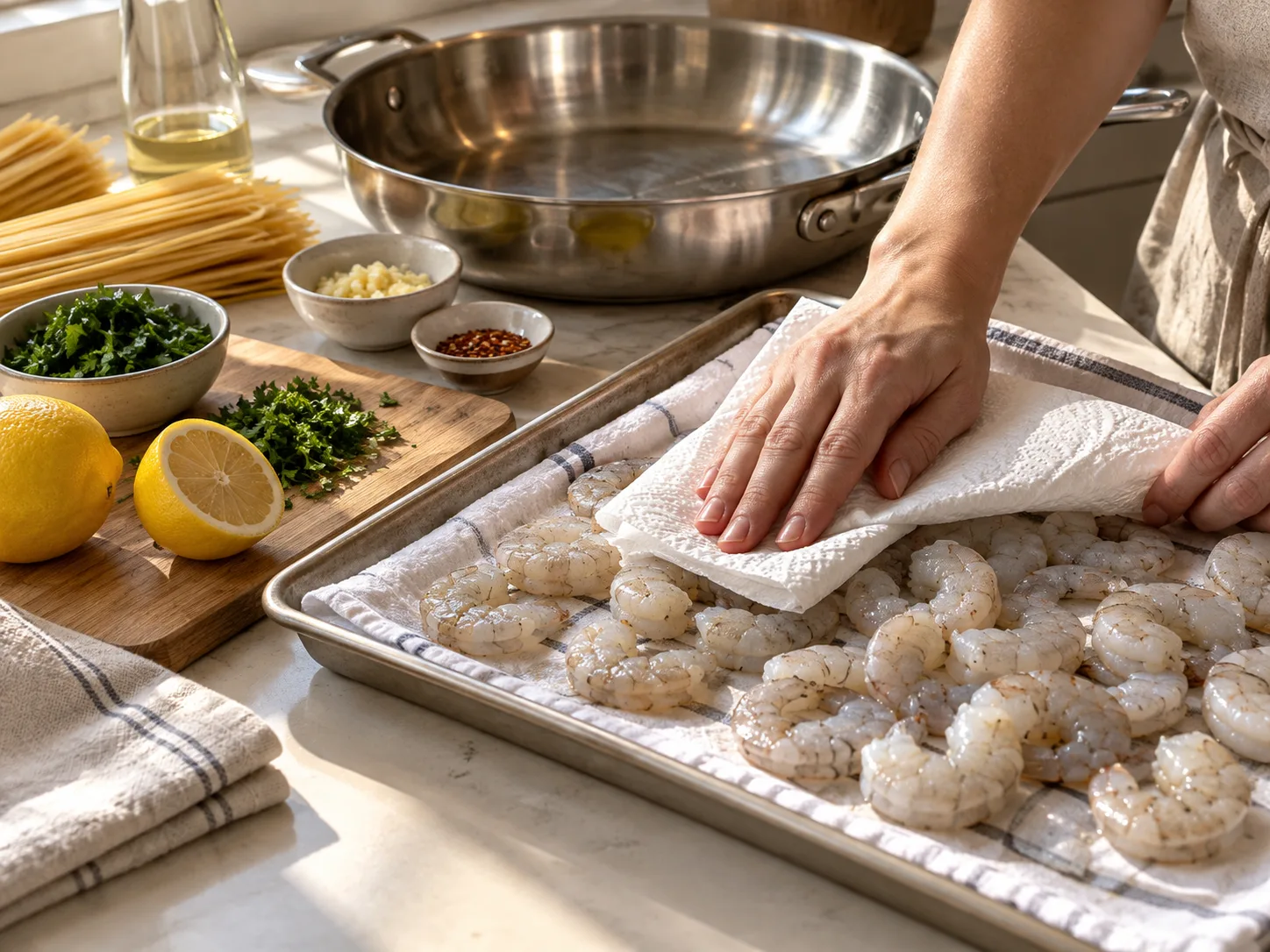
- Pat the thawed shrimp dry and season lightly with salt and pepper. Heat the olive oil and 1 tbsp butter in a large skillet over medium-high heat.
- Cook the shrimp 1–2 minutes per side, until opaque, loosely curled, and 165°F / 74°C at the thickest point. Remove them immediately and set aside.
- Lower the heat to medium. Add the garlic and red pepper flakes to the same pan, cooking 30 seconds. Add the wine or broth and lemon juice, simmering 1–2 minutes.
- Stir in the remaining butter until melted, then return the shrimp and add the cooked pasta. Toss together, adding reserved pasta water as needed to loosen the sauce. Top with fresh parsley.

Air fryer shrimp method
Toss the dried shrimp with the olive oil, salt, pepper, and red pepper flakes. Air fry at 400°F / 205°C for 6–8 minutes, shaking once, until opaque and 165°F / 74°C. Meanwhile, make the garlic, broth, lemon, and butter sauce in the pasta pot, then toss with the cooked pasta and shrimp.

Sheet-pan method for a double batch
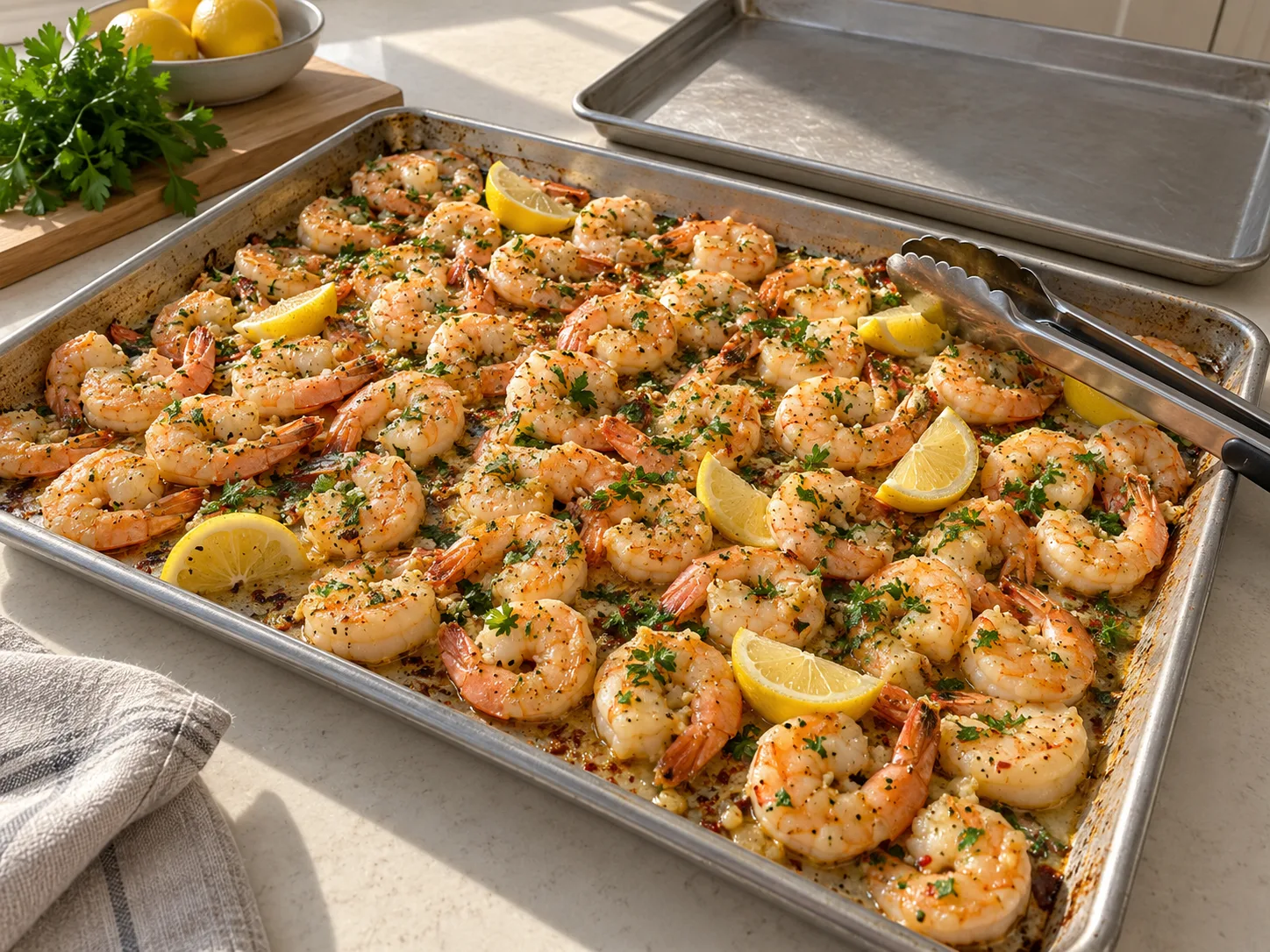
Arrange oiled, seasoned shrimp in one layer on two lined sheet pans. Roast at 425°F / 220°C for 6–9 minutes, rotating the pans once, until the shrimp reach 165°F / 74°C. Make a double batch of sauce in the pasta pot and combine just before serving.
Which method is best?
- Best overall: skillet. The shrimp fond builds directly into the garlic-butter sauce.
- Best small batch: air fryer. It cooks quickly and keeps the shrimp separate from the sauce until the last moment.
- Best double batch: sheet pans. The shrimp cook in one layer instead of crowding a skillet.

Cost and protein breakdown
- 500g frozen shrimp — the main cost on this site’s pricier end, but still reasonable in a large frozen bag versus fresh from a seafood counter
- Pasta, butter, garlic — inexpensive, and the pasta stretches the shrimp across more servings
- Total estimate — budget-friendly to make, per serving
Protein lands around 25–28g per serving, combining the shrimp with a smaller contribution from the pasta.

Why shrimp overcooks so easily
Shrimp are small and have very little connective tissue holding them together, which means the window between “just cooked” and “rubbery” is measured in seconds, not minutes. The visual cue to watch for: shrimp curl into a loose “C” shape when done right, and curl into a tight “O” when overcooked. Pull them at the loose C, every time.

How to make it cheaper
- Buy the largest bag of frozen shrimp available rather than a small portion — the per-kilogram price usually drops at bigger sizes, and shrimp keeps well in the freezer.
- Use chicken broth instead of wine. A reasonable swap that keeps the cost down without losing much of the dish’s character.
- Buy a smaller or medium shrimp size instead of jumbo — smaller shrimp are typically cheaper per gram of protein and work just as well chopped into a pasta dish.
Storage
- Fridge: cool and refrigerate within 2 hours; use within 2 days for the best shrimp texture.
- Best leftover setup: store the shrimp separately from the pasta and sauce so it is not repeatedly heated.
- Reheating: warm the pasta and sauce first over low heat with a splash of broth. Add the shrimp only for the final minute, until it reaches 165°F / 74°C.
- Freezer: not recommended for the assembled dish; thawed cooked shrimp and buttered pasta both lose texture.

Frequently asked questions
Do I need to thaw the shrimp first?
Yes, for even cooking — thaw in the fridge overnight, or faster under cold running water for about 10–15 minutes if you’re short on time. Never thaw shrimp (or any seafood) at room temperature.
Can I skip the wine?
Yes, chicken broth is a fine direct substitute — the dish loses a bit of acidity and depth but still works well, especially with the lemon juice already in the recipe doing similar work.
Is frozen shrimp as good as fresh?
For almost all home cooking, yes — shrimp is typically frozen within hours of being caught, and most “fresh” shrimp at a grocery counter has simply been thawed from frozen before display. Buying it still frozen and thawing it yourself is usually cheaper with no real quality trade-off.
Related reading: Budget High-Protein Tuna Casserole, Canned Salmon Patties, and Best Cheap Protein Sources by Cost Per Gram.