Budget High-Protein Minestrone Soup
A vegetable-forward soup that’s different from everything else in the soup lineup on this site — no blending, no cream, no single dominant bean. Minestrone is a kitchen-sink soup by tradition, built from whatever vegetables, beans, and pasta are on hand, which makes it one of the more forgiving recipes here to adapt to what’s actually cheap that week.

It’s also a genuinely good way to use up vegetables that are starting to look a little tired in the crisper drawer — a slightly soft carrot or the last of a head of cabbage that isn’t quite crisp enough for a salad anymore still cooks down perfectly well in a long-simmered soup like this one.
| Estimated cost per serving | Cheap |
| Protein per serving | ~12–15g* |
| Prep time | 15 minutes |
| Cook time | 35 minutes |
| Servings | 6 |
| Freezer-friendly | Yes (without pasta) |
*Protein is an estimate. Actual values depend on your exact ingredients and portions.
Why minestrone doesn’t really have one fixed recipe
Minestrone comes from Italian home cooking traditions built specifically around using up whatever vegetables were on hand at the end of the week, which is why you’ll find wildly different versions depending on the region, the season, and the household making it — some lean heavily on cabbage, others on zucchini, some skip pasta for rice instead. This recipe is a solid, widely-recognizable base version, but it’s worth knowing upfront that there’s no single “correct” minestrone to compare it against. That’s good news for a budget-focused kitchen: the dish was never meant to follow a strict ingredient list, so substituting based on what’s actually cheap in your store that week isn’t cutting corners, it’s actually closer to how the dish has always been made.
Ingredients

- 2 tbsp olive oil
- 1 onion, diced
- 2 carrots, diced
- 2 celery stalks, diced
- 3 cloves garlic, minced
- 1 can (796mL) diced tomatoes
- 6 cups vegetable or chicken broth
- 1 can (540mL) kidney beans, drained and rinsed
- 2 cups chopped cabbage or kale
- 1 cup small dry pasta (elbow or ditalini)
- 1 tsp dried oregano
- 1 tsp dried basil
- Salt and pepper to taste
- Grated parmesan, for serving
How to make it

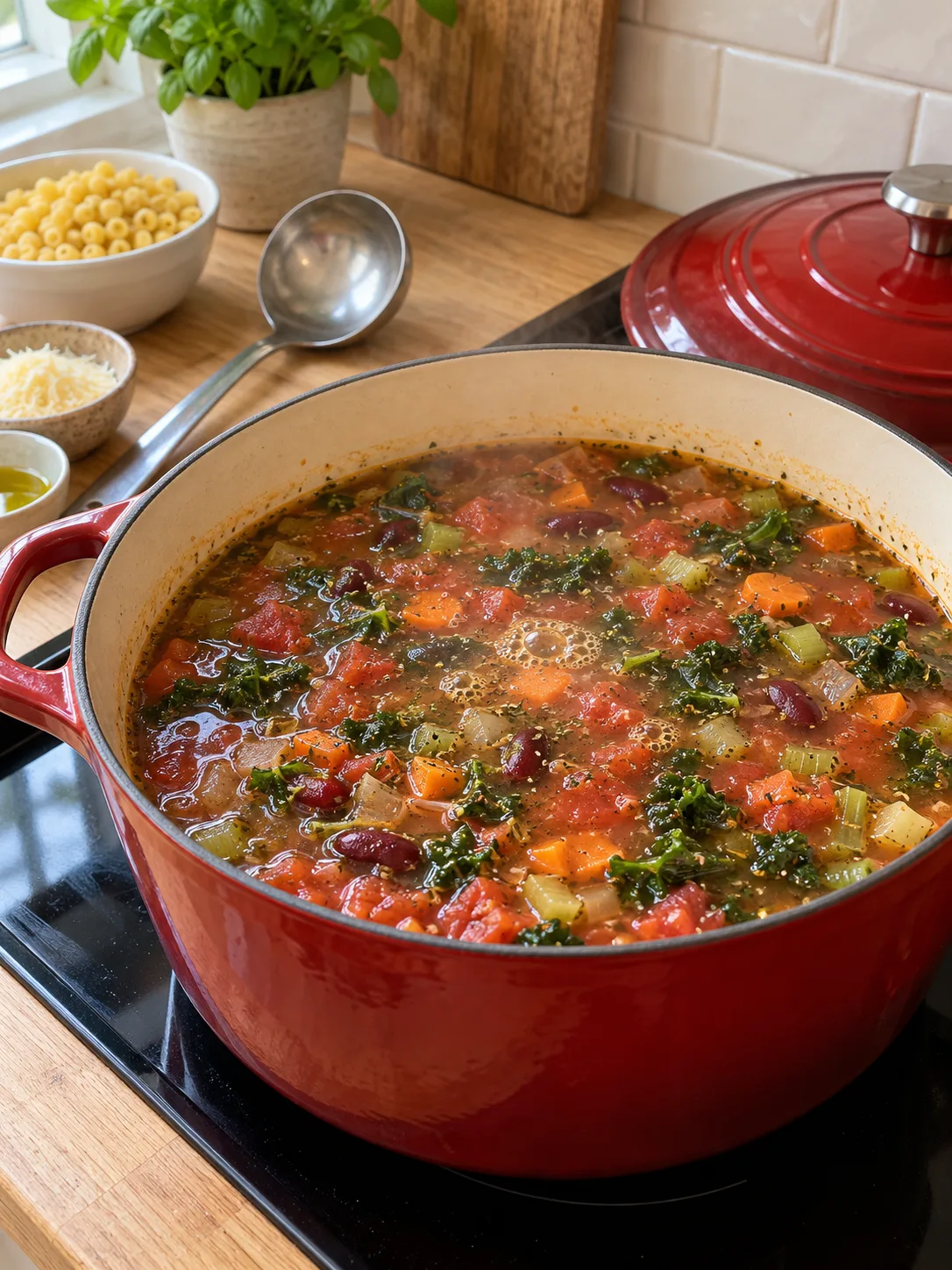
- Heat the oil in a large pot over medium heat. Cook the onion, carrots, and celery 6–7 minutes, until softened.
- Add the garlic, oregano, and basil, cooking 30 seconds.
- Add the diced tomatoes and broth. Bring to a simmer and cook 15 minutes.
- Add the kidney beans and cabbage or kale, simmering 10 more minutes until the greens are tender.
- Add the pasta and cook until just tender, about 8–10 minutes depending on the shape. Season with salt and pepper, and top with parmesan to serve.

Pressure cooker method
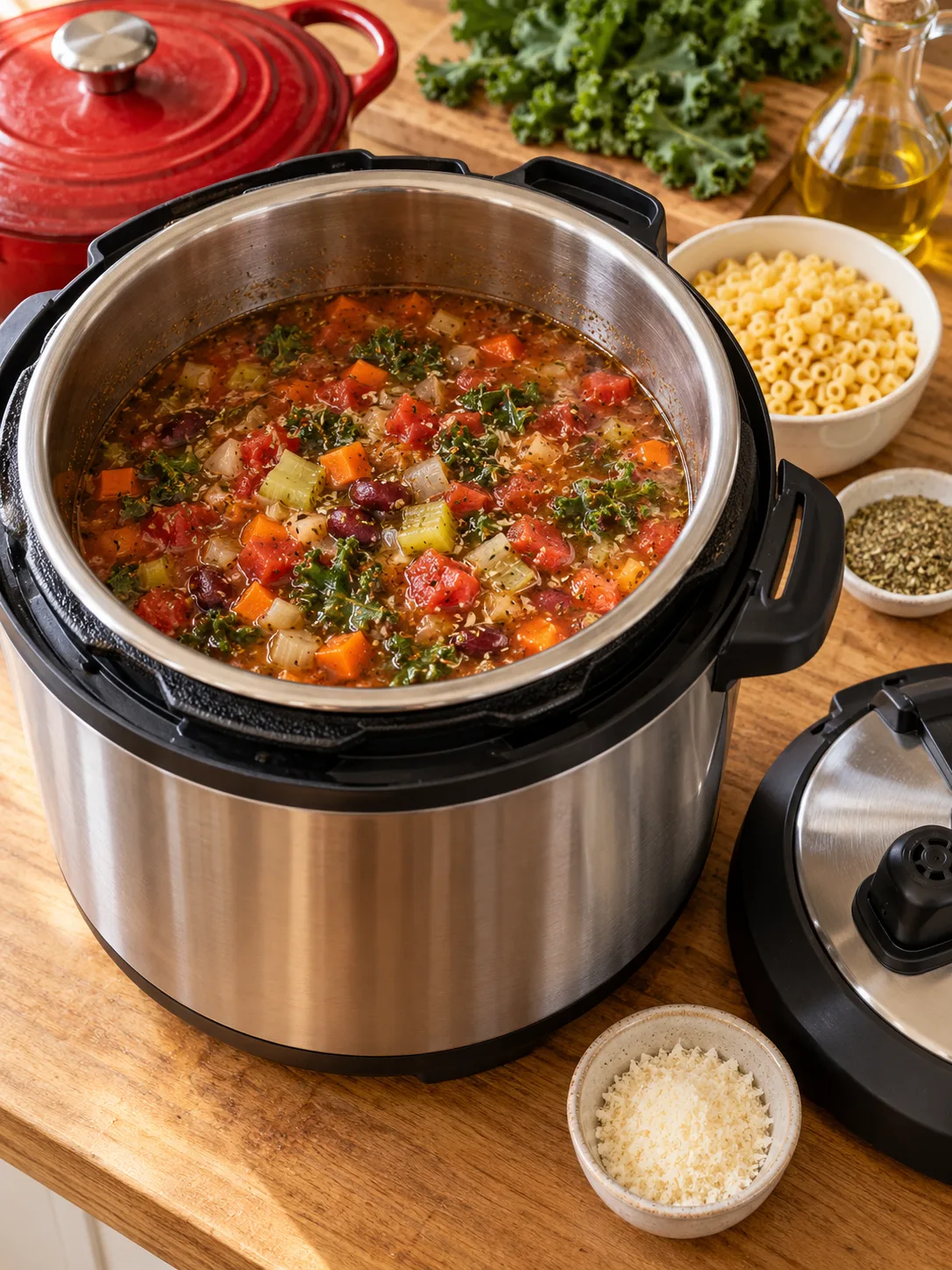
Use a 6-quart electric pressure cooker and reduce the broth to 5 cups because very little evaporates under pressure. On Sauté, cook the onion, carrots, and celery in the oil for 5 minutes, then add the garlic and herbs for 30 seconds. Add the tomatoes, broth, beans, and cabbage or kale. Cook on High Pressure for 5 minutes, then release the pressure promptly so the vegetables do not continue softening.
Switch back to Sauté, add the pasta, and simmer according to the package timing, adding the reserved sixth cup of broth only if the soup needs loosening. For meal prep or freezing, cook the pasta separately and add it to each bowl instead.
Slow cooker method

For better flavour, sauté the onion, carrots, and celery for 6–7 minutes and the garlic for 30 seconds before transferring them to a 6-quart slow cooker. Add the tomatoes, 6 cups broth, beans, greens, and herbs. Cook on Low for 6–7 hours or High for 3–4 hours. Cook pasta separately and add it to each bowl; adding it for the final 15–20 minutes can work, but separate pasta is much more reliable for leftovers.
Which method is best?
- Best vegetable texture: Stovetop — easiest to check each stage and stop before anything gets too soft.
- Fastest hands-off option: Pressure cooker — short cook time, though pressurizing and release still add time.
- Least hands-on: Slow cooker — best when the soup should be ready later without supervision.
- Best for freezing: Any method, as long as pasta is kept out of the frozen soup base.
Cost and protein breakdown
- Kidney beans — the main protein source, cheap even at full price
- Vegetables, tomatoes, broth, pasta — all inexpensive, and flexible to substitute based on what’s cheapest
- Total estimate — cheap to make, per serving
Protein lands around 12–15g per serving, mostly from the kidney beans with a smaller contribution from the pasta. Lower than the meat-based soups on this site, but this one leans on volume and fibre rather than a high protein count.
Why pasta goes in last, not with the broth

Pasta simmered the whole cook time turns to mush by the time everything else is ready, and it keeps absorbing broth even after the soup is done, leaving less liquid than you started with. Adding it in the last 8–10 minutes keeps it at the right texture and keeps the soup from turning into more of a stew than intended.
This absorption effect keeps happening even after the pot is off the heat, which is part of why leftover minestrone often looks noticeably thicker and more stew-like the next day than it did fresh. If that bothers you, holding back a portion of the pasta and adding it fresh to reheated leftovers, rather than storing it already mixed in, keeps the texture closer to day one throughout the week.
Boosting the protein count
At 12–15g per serving, this is intentionally one of the lower-protein recipes on the site, closer to a vegetable-forward side soup than a standalone high-protein meal. A few ways to push it higher without changing the basic character of the dish: add a second can of beans (the easiest, cheapest option), stir in cooked shredded chicken or Italian sausage as the FAQ below suggests, or top each bowl with a generous spoonful of ricotta or a sprinkle of extra parmesan beyond the usual garnish amount. Any one of these can realistically add another 8–15g per serving depending on how much you add, without needing to change the simmering method at all.
The parmesan rind trick

If you buy block parmesan rather than pre-grated, don’t throw away the hard rind end once you’ve grated down to it. Simmered in the broth from the start (add it with the tomatoes and broth, then fish it out before serving), a parmesan rind slowly releases a savoury, salty depth into the soup that the grated garnish alone doesn’t fully replicate. It’s a classic Italian kitchen trick for exactly this kind of vegetable soup, and it turns a piece of cheese most people throw away into real, free flavour.
Seasonal variations
Minestrone adapts naturally across seasons depending on what’s cheap and in good shape at the store. In summer, zucchini, green beans, and fresh tomatoes (instead of canned) lighten it up. In winter, heartier additions like potato, extra cabbage, or butternut squash make it more filling, closer to a stew than a light soup. There’s no need to stick to one version year-round — letting the vegetable mix shift with the season is, again, closer to how the dish is traditionally made than following one fixed ingredient list every time.
Common mistakes
Adding the pasta too early, as covered above. This is the single most common way minestrone turns into an overly thick, mushy stew instead of the lighter soup it’s meant to be.
Cutting the vegetables unevenly. Carrot and celery cut much larger than the onion cook at different rates, leaving some pieces underdone while others turn to mush. A consistent, moderate dice across all the vegetables in step 1 cooks more evenly.
Under-seasoning and relying on the parmesan to fix it at the end. Parmesan adds a salty, savoury finish, but it can’t fully make up for a broth that wasn’t seasoned properly during cooking. Taste and adjust salt before serving, not just at the table.
How to make it cheaper
- Use whatever vegetables are cheapest that week. Zucchini, green beans, and potato all work as substitutes or additions to the base recipe.
- Use water with bouillon instead of broth. With this much seasoning already in play, the difference is minor.
- Skip the parmesan if the budget is tight — a nice finishing touch, not essential.
Storage and freezing

Freeze the soup before adding the pasta — pasta turns soft and bloated after freezing and thawing, the same issue covered in the chicken noodle soup recipe. Cook fresh pasta and stir it in after reheating a frozen batch instead.
A practical way to handle this for weekly meal prep: cook the full pot through the bean-and-greens step, then split it into portions before adding any pasta. Freeze what you won’t eat within 3–4 days, and for the portions going in the fridge for this week, cook pasta separately in smaller batches and stir it into each bowl at serving time rather than cooking a week’s worth of pasta directly in the pot all at once.
- Fridge: Cool in shallow containers, refrigerate within 2 hours, and use within 2–3 days at 40°F / 4°C or below. Keep pasta separate for the best texture.
- Freezer: Freeze the soup base without pasta for up to 3 months, leaving room for expansion.
- Reheating: Bring the soup base to a full rolling boil on the stovetop, or stir a microwave portion halfway through and heat to 165°F / 74°C. Add cooked pasta after the soup is hot.
Frequently asked questions
Can I add meat to this for more protein?
Yes — cooked Italian sausage or shredded chicken both stir in well after the beans, adding a meaningful protein boost without changing the overall character of the soup. See the dedicated protein-boosting section above for more options and roughly how much each adds.
What vegetables can I swap in or add?
Almost anything works — zucchini, green beans, bell pepper, peas, and potato are all traditional minestrone additions. This is one of the most flexible recipes on the site specifically because the format tolerates substitution well. See the seasonal variations section above for a sense of which additions suit which time of year.
Why does my soup taste flat even with all the herbs listed?
Dried herbs lose potency the longer they sit in the pantry, and a jar of oregano or basil that’s a year or two old can contribute far less flavour than the recipe assumes. If your soup consistently tastes underwhelming despite following the recipe, it’s worth smelling your dried herbs before using them — if there’s barely any aroma when you open the jar, it’s time to replace them rather than assuming the recipe itself is the problem.
Can I use a different bean?
Yes, cannellini or chickpeas both work as a direct swap for kidney beans with no change to the method.
Can I use a gluten-free pasta?
Yes, though gluten-free pasta tends to break down faster and get mushier than wheat pasta if it sits in hot broth too long, including after the soup is served and sitting in a bowl. Check it a minute or two earlier than the time stated on the package, and if you’re making this ahead, consider cooking the gluten-free pasta completely separately and adding it fresh to each bowl rather than simmering it directly in the pot.
Is this vegetarian or vegan?
As written with vegetable broth and without meat, it’s vegetarian. For a fully vegan version, use vegetable broth and skip the parmesan garnish, or substitute a plant-based parmesan alternative if you want to keep that finishing touch.
Related reading: High-Protein Chicken Noodle Soup, High-Protein Dense Bean Salad, and Easy Freezer Meals on a Budget.