High-Protein Overnight Oats (Budget)
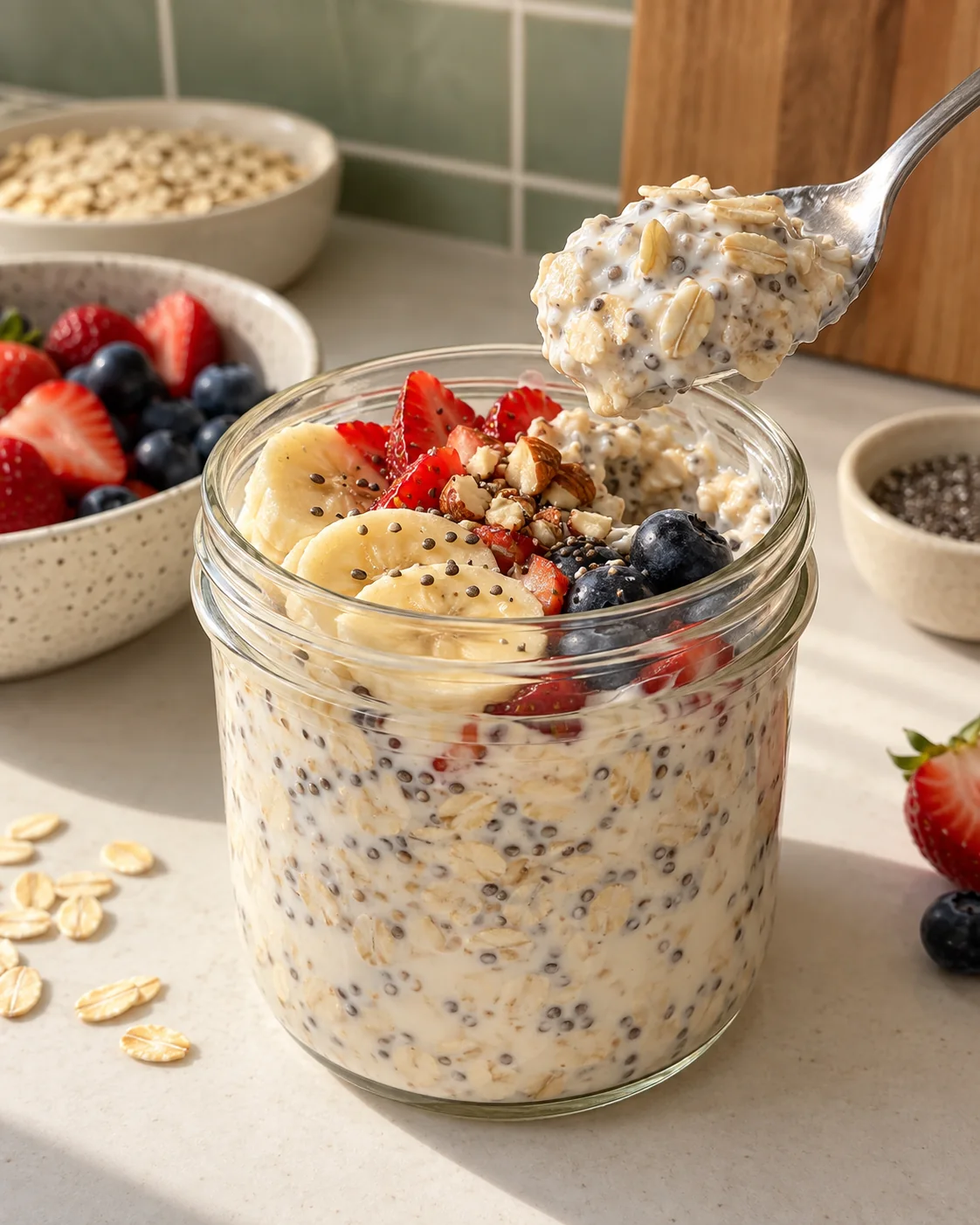
Overnight oats solve the same problem the egg-and-potato breakfast does — nothing to cook at 7am — but with zero stovetop or oven involved at any point. Mix it in a jar before bed, and breakfast is just opening the fridge. This version leans on Greek yogurt and a scoop of dry milk powder to push the protein well past what a typical oats-and-milk version provides.
| Estimated cost per serving | Cheap |
| Protein per serving | ~20–24g* |
| Prep time | 5 minutes |
| Chill time | Overnight (or 4 hours min.) |
| Servings | 1 jar |
| Oven required | No |
*Protein is an estimate. Actual values depend on your exact ingredients and portions.
Why rolled oats, not quick or steel-cut, for this one
Oats come in a few different cuts, and they don’t all soften the same way without heat. Rolled (old-fashioned) oats are steamed and flattened during processing, which already partially softens them — that head start is exactly what lets them turn tender after just a few hours in cold liquid, no cooking required. Quick oats are cut even thinner and work too, softening slightly faster and giving a smoother, less distinctly textured result. Steel-cut oats, by contrast, are barely processed at all and stay firm and chewy even after a full night soaking in milk — they’re the right choice for a stovetop-cooked porridge, but a poor fit for overnight oats specifically, since they never fully soften without actual heat.
Ingredients
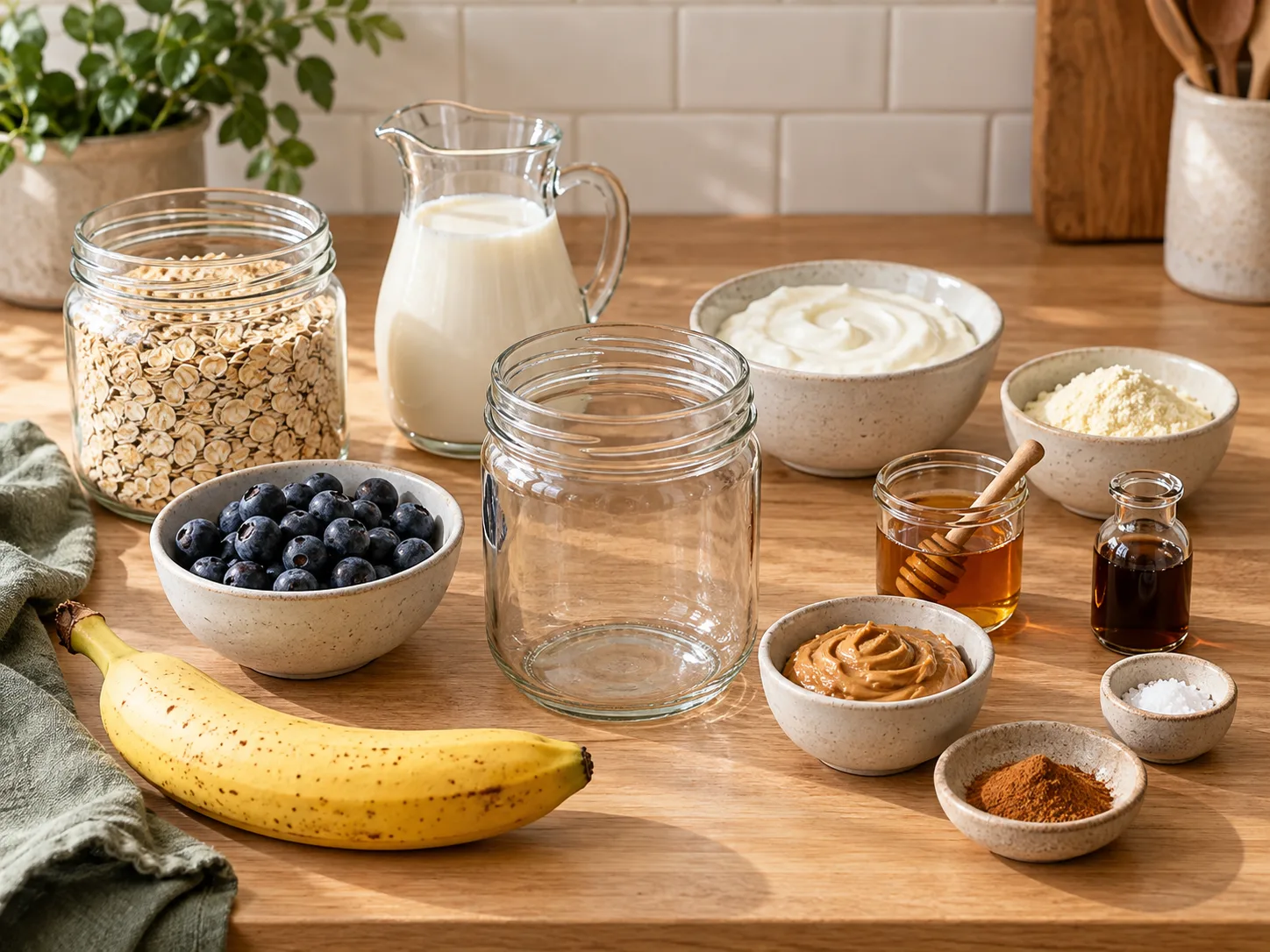
- 1/2 cup rolled oats
- 1/2 cup milk
- 1/2 cup plain Greek yogurt
- 1 tbsp non-fat dry milk powder
- 1 tsp honey or maple syrup
- 1/2 tsp vanilla extract
- Pinch of salt
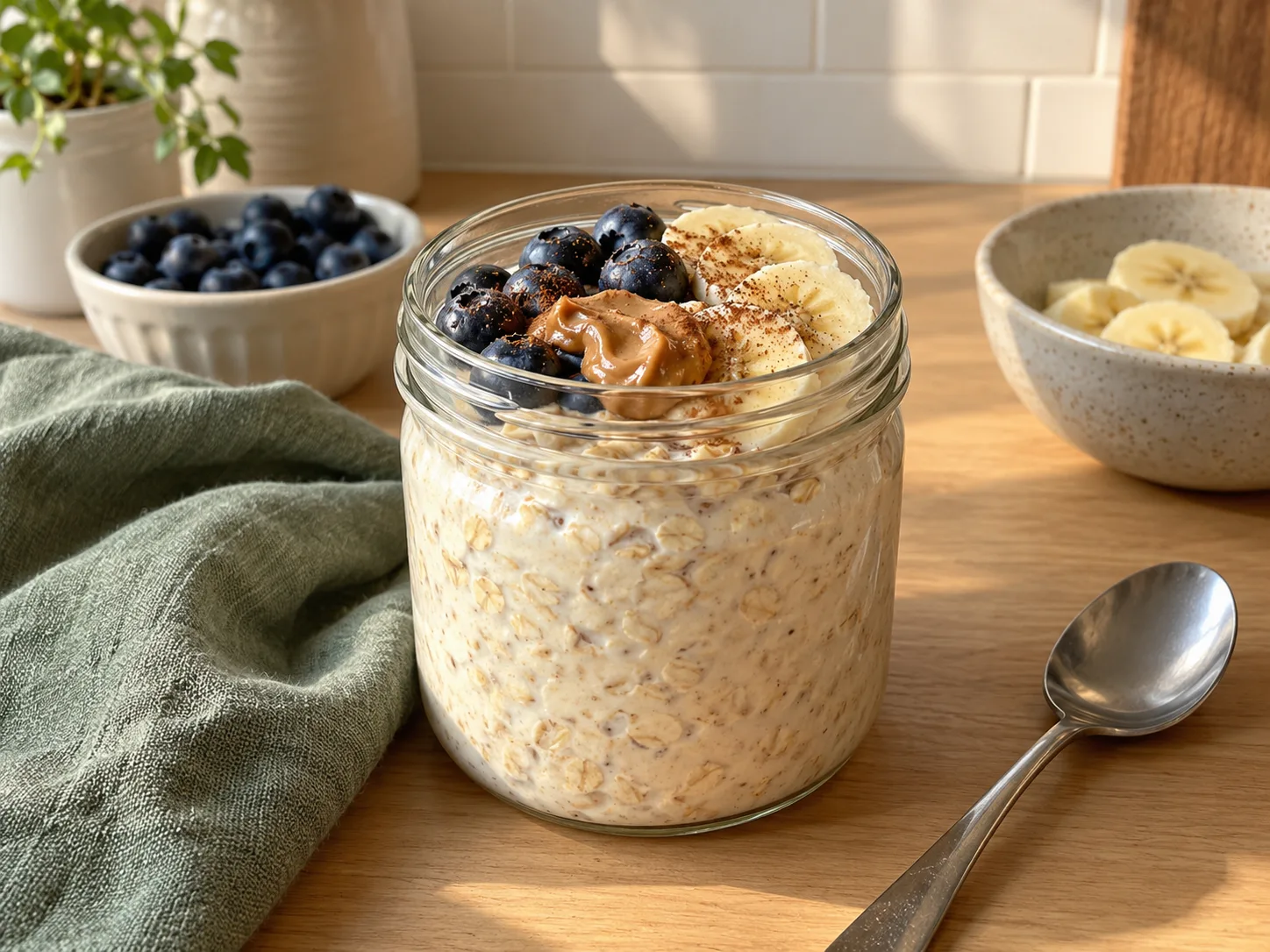
- Toppings: fruit, a spoonful of peanut butter, cinnamon
How to make it
- Combine the oats, milk, Greek yogurt, dry milk powder, honey, vanilla, and salt in a jar or container with a lid. Stir well — the dry milk powder can clump slightly if not mixed thoroughly.
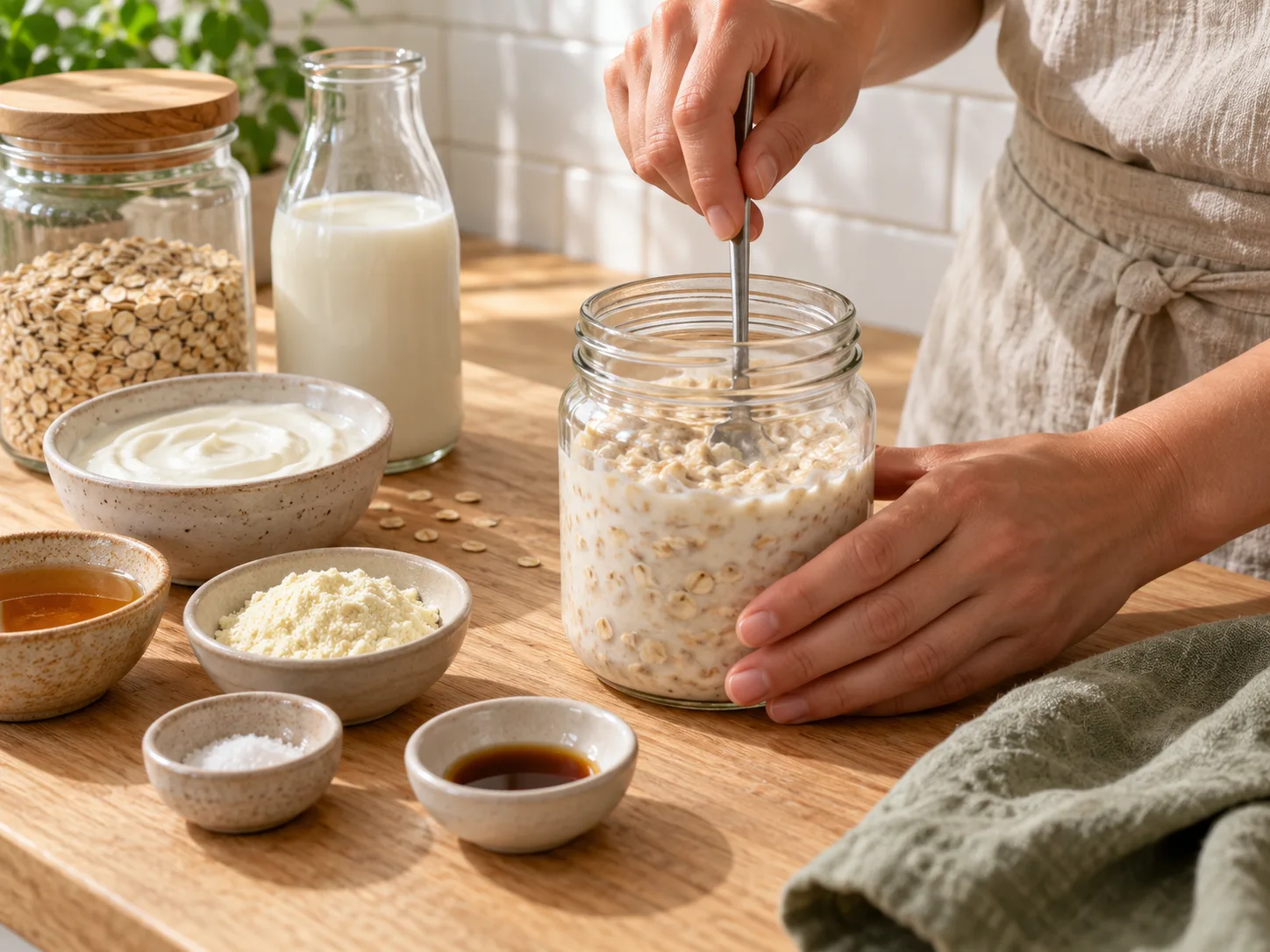
- Seal and refrigerate for at least 4 hours, ideally overnight.
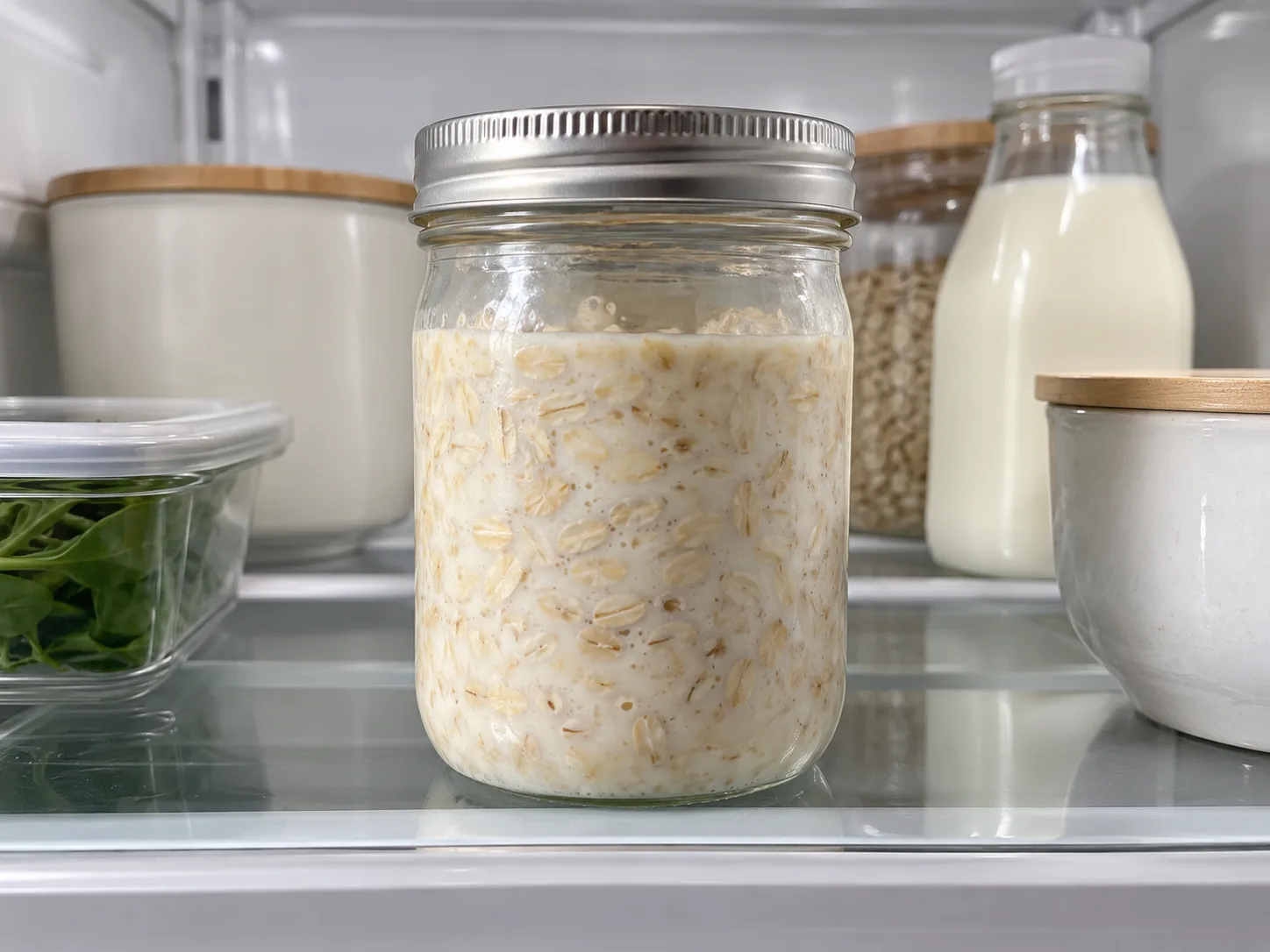
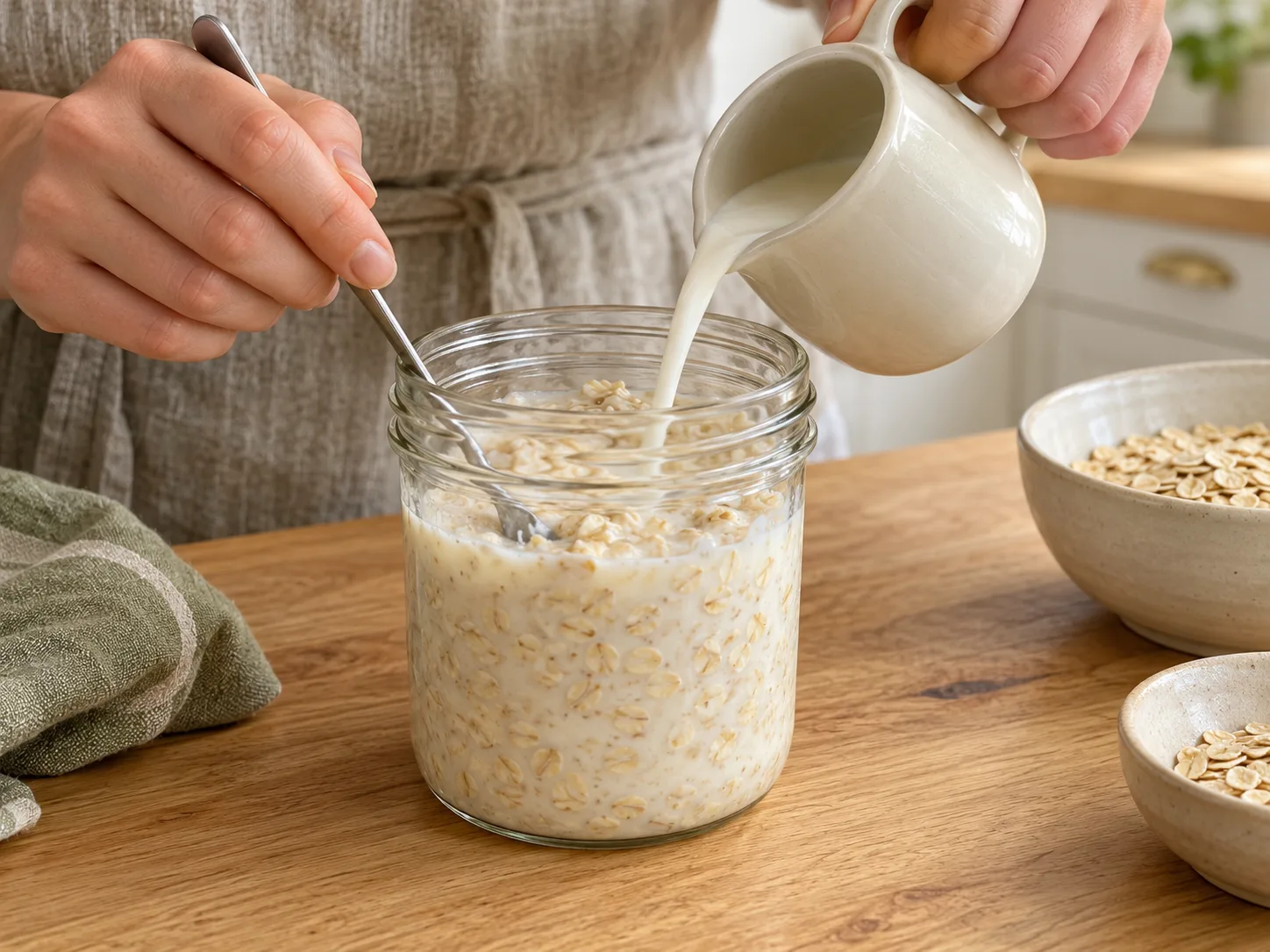
- In the morning, stir once more — the mixture thickens as it sits and may need a splash more milk to loosen it to your preferred consistency.
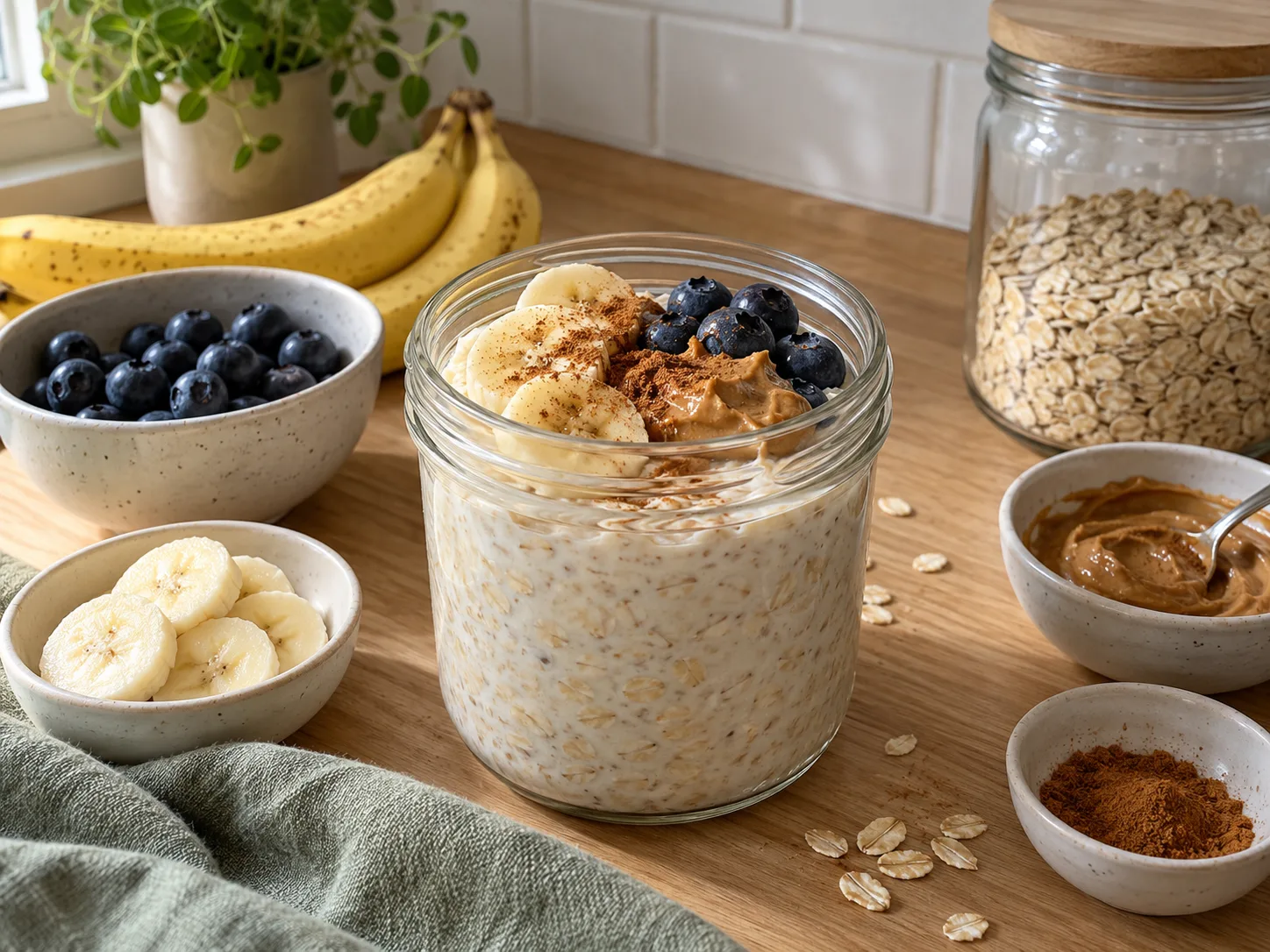
- Add toppings just before eating, not the night before, so anything like fruit or granola keeps its texture.
Warm microwave method
Prepare and chill the oats exactly as written. In the morning, remove the lid and transfer them to a microwave-safe bowl if your jar is not labelled microwave-safe. Stir in 1–2 tablespoons of milk, microwave at 70% power for 45 seconds, stir, then continue in 20-second intervals until warm. Lower power and stirring keep the yogurt from separating around the edges.
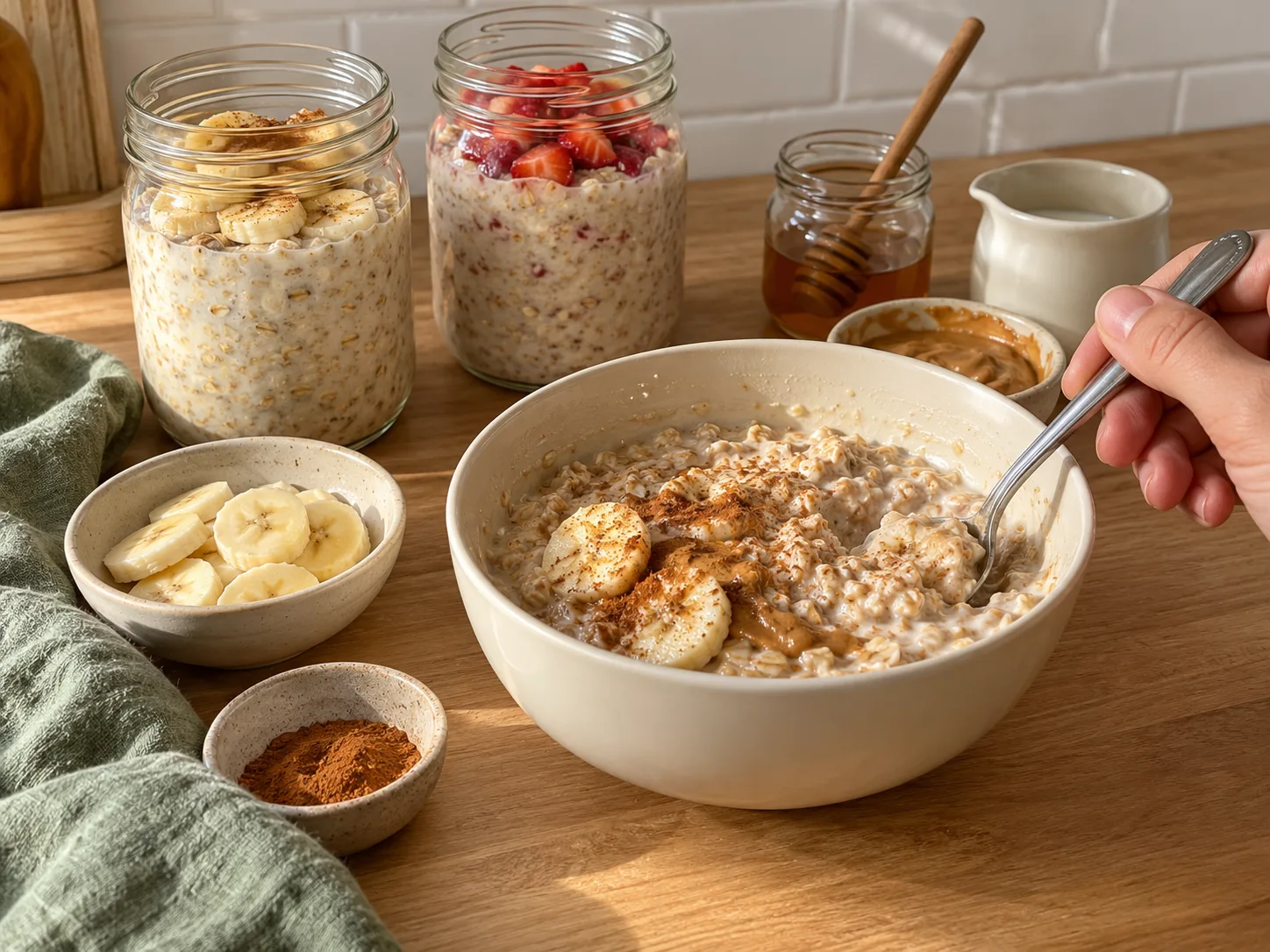
The warm version is softer and looser, closer to porridge, and it will not have the cool pudding-like texture of the original. Add fruit, nut butter, or granola after heating. Never microwave a sealed jar.
Which method is best?
- Best texture and easiest meal prep: Cold overnight method.
- Best when you want a warm breakfast: Microwave after soaking.
- Not recommended: Stovetop cooking with the yogurt already mixed in, because direct heat can make the dairy split and the oats turn gluey.
Packed-lunch setup
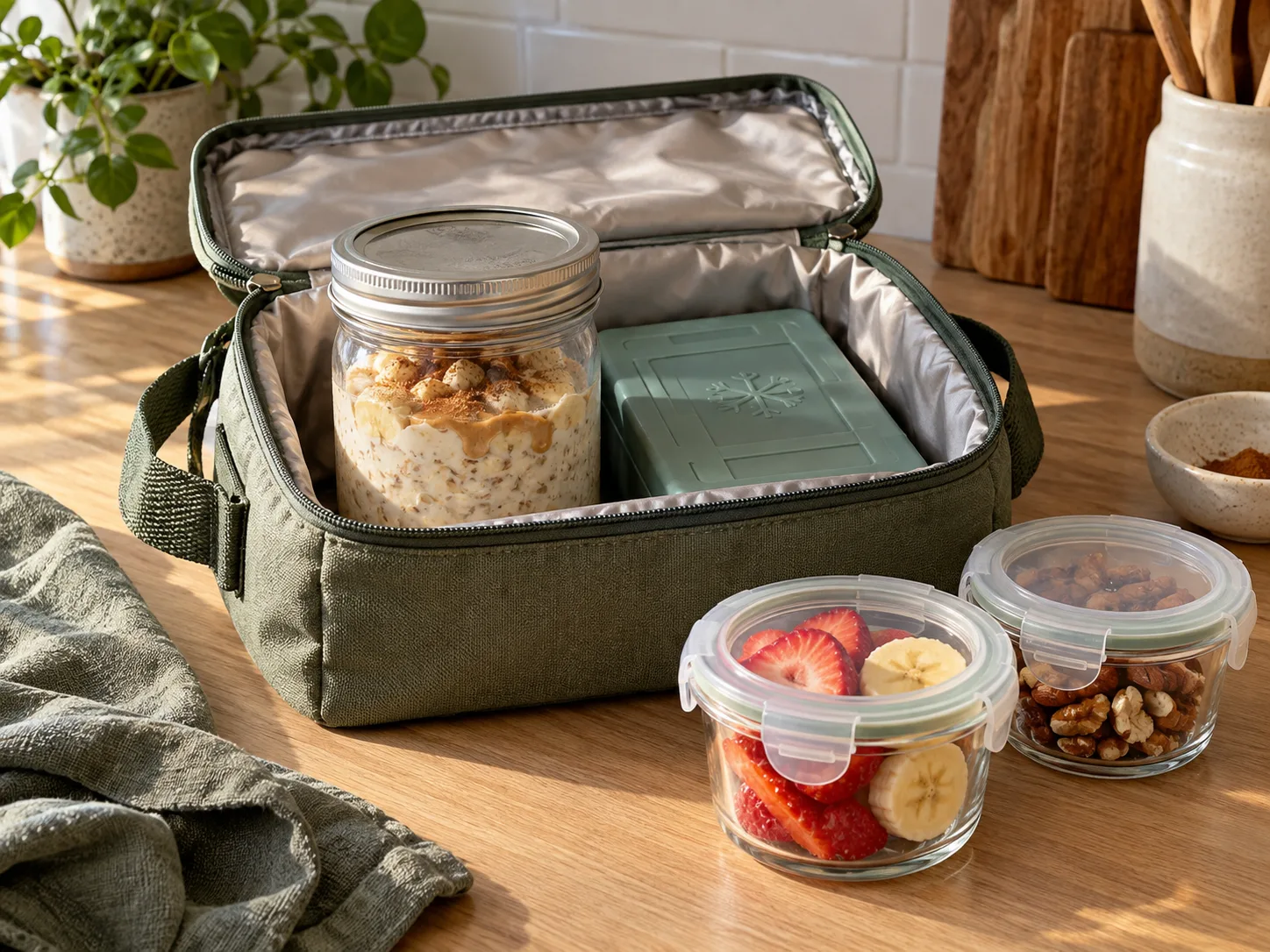
Keep the oat jar in an insulated lunch bag with an ice pack until breakfast or lunch. Pack crunchy toppings and cut fruit in a separate small container, then add them just before eating. This keeps granola crisp and stops berries from leaking juice into jars prepared several days ahead.
Cost and protein breakdown
- Rolled oats — one of the cheapest breakfast bases available, especially from a large bag
- Greek yogurt and dry milk powder — together, the main protein contributors; both inexpensive relative to the protein they add
- Total estimate — cheap to make, per serving
Protein lands around 20–24g per serving — noticeably higher than a standard oats-and-milk version, which typically sits closer to 8–10g. The Greek yogurt and dry milk powder together are doing almost all of that extra work.
Roughly 12–14g of that comes from the Greek yogurt alone, with the dry milk powder adding another 3–4g and the milk itself contributing the rest. The oats add roughly 5g of protein per half-cup dry serving, so they are a meaningful part of the total alongside the Greek yogurt, milk, and dry milk powder. Exact numbers vary by brand; use the labels on your yogurt and milk powder if you need a precise count.
Batching it for the whole week
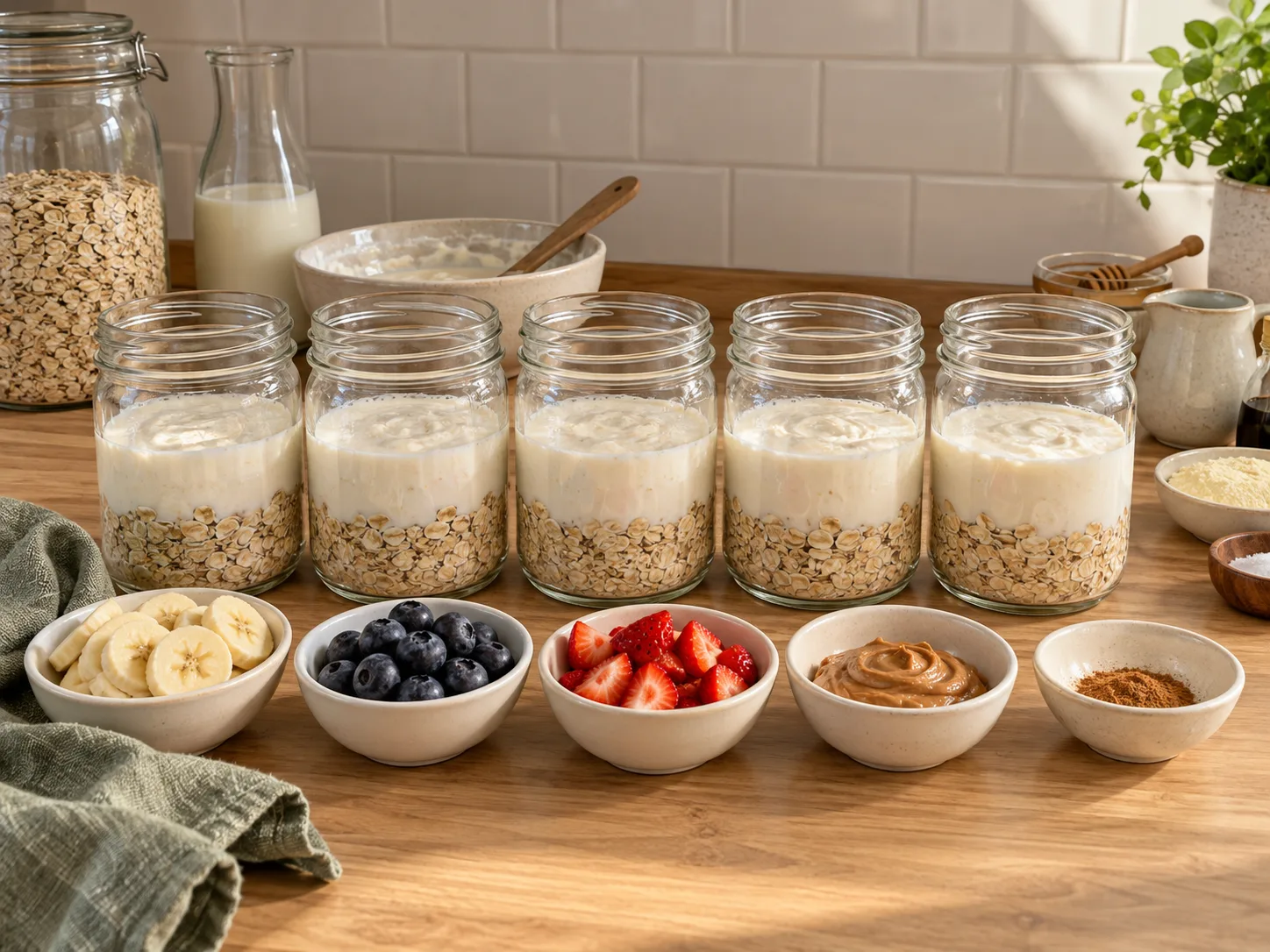
This recipe scales cleanly — multiply every ingredient by five and portion into five jars on a Sunday for grab-and-go breakfasts all week. Hold off on toppings until the morning you’re eating each one; fruit in particular gets watery and unappealing after sitting in the oats mixture for several days.
An assembly-line approach speeds this up considerably: measure the dry oats and milk powder into all five jars first, then the wet ingredients across all five, rather than fully mixing one jar completely before starting the next. It’s a small change, but it turns a repetitive five-times-over task into something closer to a single five-minute batch job, which matters if you’re trying to make this a habit you’ll actually keep up rather than something you do once and abandon.
How this differs from the baked oatmeal on this site
Both this and the baked oatmeal recipe start from the same basic idea — oats plus dairy, boosted with eggs or milk powder for protein — but they land in very different places. This version needs zero oven time, stays cold and pudding-like, and is built for a single-serving jar you grab straight from the fridge. The baked version is cake-like, sliceable, and made in a bigger batch meant to be portioned across the week. If mornings are rushed and you want something ready with literally no prep beyond opening the fridge, this is the better fit; if you’d rather have something warm, or you want a format that reheats easily rather than being eaten cold by design, the baked version is the one to make instead.
Flavour variations
The vanilla base here takes well to almost any direction. For a peanut butter version, stir in a tablespoon of peanut butter with the other ingredients before chilling. For a chocolate version, add a tablespoon of cocoa powder and a touch more honey to balance its bitterness. For an apple cinnamon version, stir in a few tablespoons of unsweetened applesauce and a half-teaspoon of cinnamon. For a tropical version, swap the milk for part coconut milk and top with mango or pineapple in the morning. Every variation still uses the same oats-yogurt-milk-powder base for protein, so the core numbers barely shift — only the flavour does.
Jar and container notes
Any sealed container works, but a wide-mouth mason jar is a popular choice for a reason — it’s easy to stir with a spoon reaching all the way to the bottom, which a narrow-necked jar makes awkward, and it’s just as easy to eat straight from if you’re taking it to go. A reusable container also means skipping the cost of individual disposable cups that some “overnight oats” marketing pushes, which is an unnecessary expense for something this simple to batch yourself.
How to make it cheaper
- Buy oats in bulk. A large bag of rolled oats brings the per-serving cost down significantly compared to small individual containers.
- Use plain, unsweetened yogurt. Flavoured Greek yogurt costs more and has less protein density for the same price — add your own sweetness with honey instead.
- Skip fresh fruit toppings when they’re expensive or out of season. A sprinkle of cinnamon and a spoonful of peanut butter make a reasonable stand-in at a fraction of the cost.
Storage
Keeps well in the fridge for up to 4 days, sealed. The texture continues to soften slightly the longer it sits — still perfectly good to eat, just slightly less chewy than the first day. Does not freeze well; the yogurt base separates after freezing and thawing.
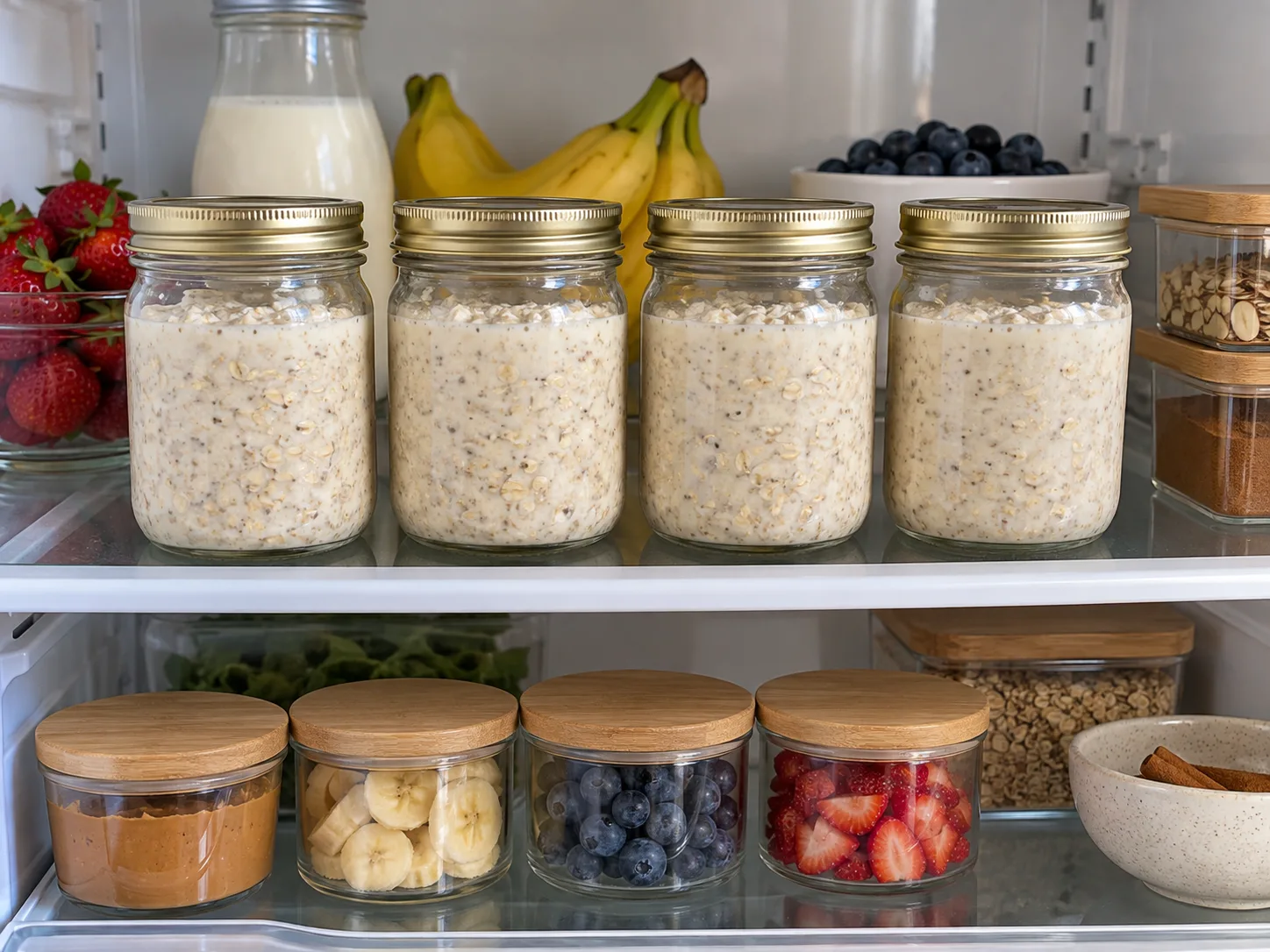
If 4 days doesn’t quite cover your work week and you don’t want to split a batch mid-week as suggested above, consider rotating this with one other no-cook option (the chickpea salad, for instance, which keeps a similar few days) so you’re never stuck eating day-5 oats that have gone past their best texture window.
Frequently asked questions
Do I have to use dry milk powder?
No — leaving it out still produces a solid high-protein breakfast from the Greek yogurt alone, just a few grams lighter on protein. It’s an easy, cheap add if you already have a bag in the pantry from the no-bake protein balls recipe.
Can I add chia seeds or flaxseed?
Yes — a tablespoon of either works well stirred in with the other ingredients. Chia seeds in particular absorb a notable amount of liquid as they sit, similar to the oats themselves, so you may need a touch more milk than usual if you add them, or the texture can end up thicker than expected by morning.
My oats taste bland even with vanilla and honey — what am I missing?
A pinch of salt, which the recipe calls for, matters more here than it might seem — without it, even a sweetened dish can taste strangely flat. If it’s still underwhelming after checking that, the honey or maple syrup amount may need a slight bump, or the toppings added in the morning (fresh fruit, a swirl of peanut butter) are doing more of the flavour work than the base itself was ever meant to provide alone.
Why does the mixture get so thick overnight?
Oats absorb liquid as they sit, which is exactly what turns them from a crunchy, dry texture into a soft, pudding-like one by morning. If it’s thicker than you like, just stir in a splash more milk until it loosens to where you want it.
Can I use a plant-based milk and yogurt?
Yes, though the protein count will drop somewhat since most plant-based yogurts carry less protein per cup than dairy Greek yogurt, and dry milk powder is specifically a dairy product that won’t dissolve into a plant-based base the same way. A soy-based yogurt comes closest to matching dairy Greek yogurt’s protein density if that’s a priority; coconut or almond-based yogurts generally carry much less.
How long can I keep a batch of 5 jars in the fridge?
The same 4-day window applies regardless of how many jars you make at once — it’s a function of how long the yogurt-and-milk base stays good, not the batch size. If you want oats ready for a full 5-day week, make 3 jars on Sunday and the remaining 2 mid-week, rather than trying to stretch one big batch past the 4-day mark.
Is it safe to eat cold oats that have been sitting in the fridge overnight?
Yes — this is specifically what overnight oats are designed for, and it’s no different food-safety-wise than any other dairy-based prepared food kept properly refrigerated at 40°F / 4°C or below. There’s no raw meat, egg, or other higher-risk ingredient involved, which is part of why this recipe is as low-effort and forgiving as it is.
Related reading: No-Bake High-Protein Protein Balls, Cheap High-Protein Breakfasts, and Egg and Potato Breakfast Meal Prep.