Budget Egg White Breakfast Scramble Bowls
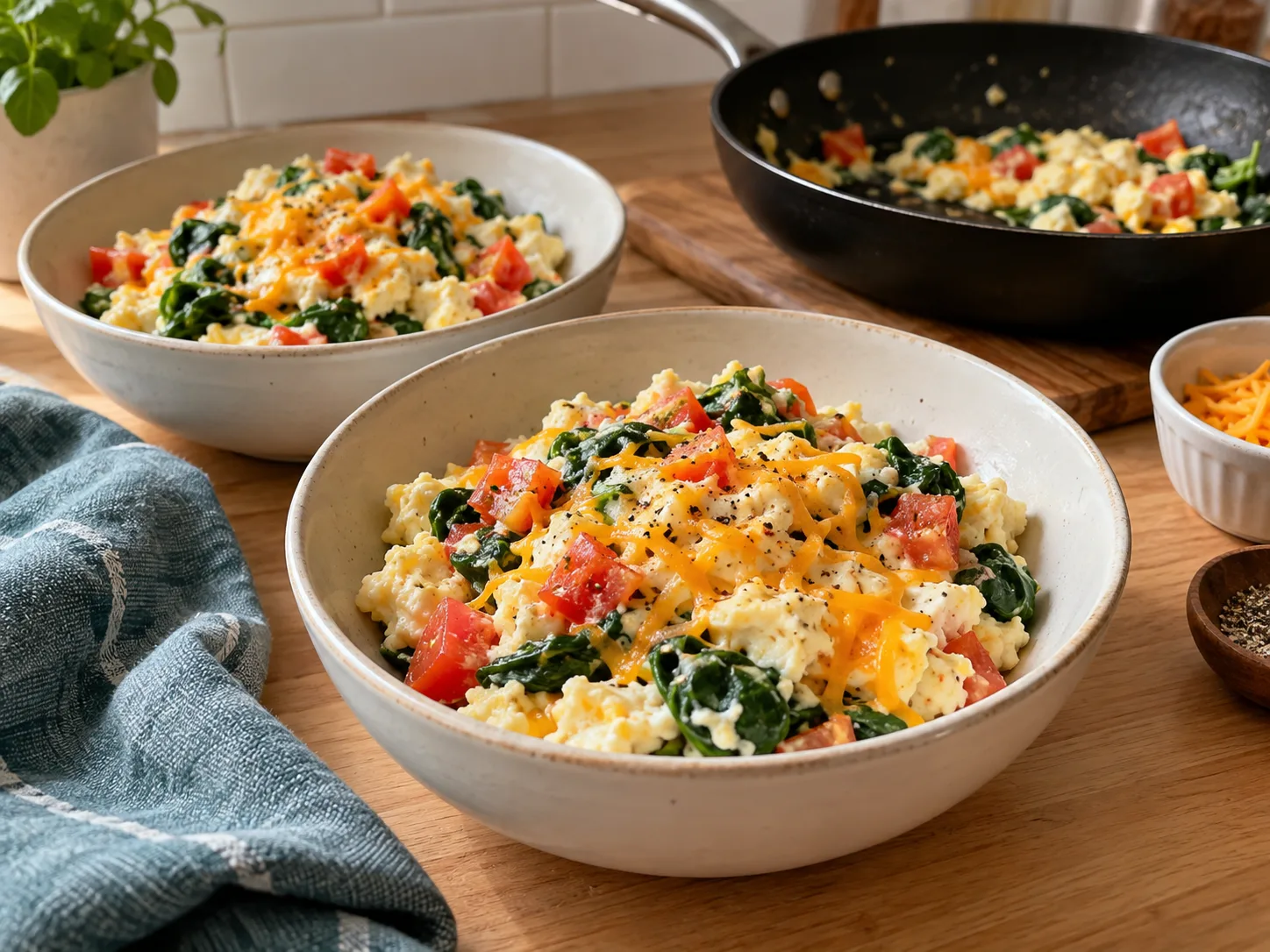
Egg whites are about as close to pure protein as a grocery store sells — no fat, minimal calories, and a high amount of protein for the price. This scramble bowl uses them as the base for a filling breakfast that doesn’t feel like a diet plate, with enough real flavour from the vegetables and cheese that you won’t miss the yolks.
| Estimated cost per serving | Cheap |
| Protein per serving | ~22–26g* |
| Prep time | 5 minutes |
| Cook time | 8 minutes |
| Servings | 2 |
| Meal prep rating | Best fresh |
*Protein is an estimate. Actual values depend on your exact ingredients and portions.
Carton or separated — either works
Pre-separated liquid egg whites in a carton are the most convenient option and pour straight into the pan with no waste. Separating whole eggs yourself is cheaper per gram of protein, but means finding a use for the yolks — scrambled into a separate small portion for someone else in the house, saved for baking, or added back in partially if you don’t want the dish fully fat-free. Either approach works identically for this recipe.

Ingredients
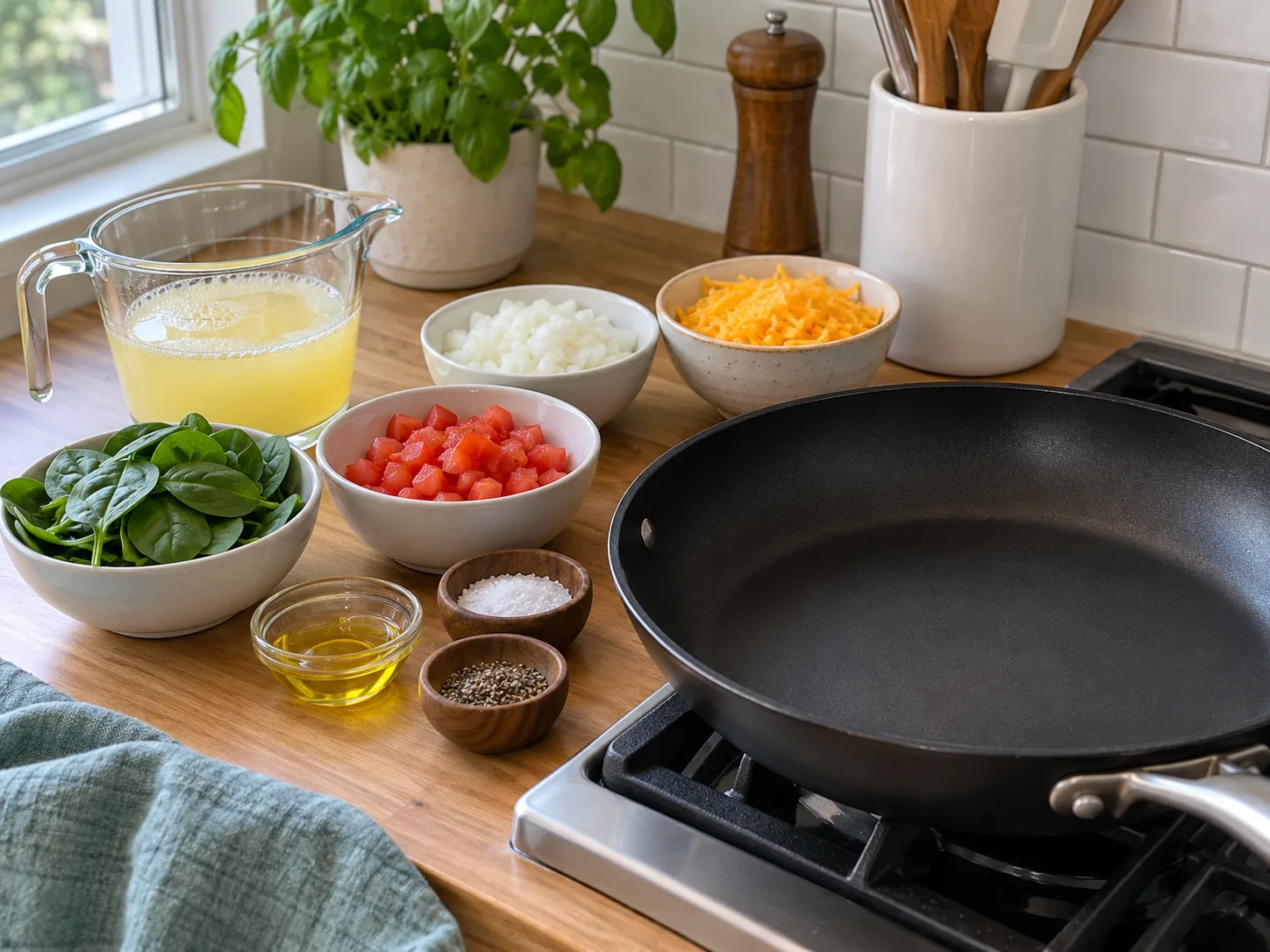
- 1.5 cups egg whites (about 12 large eggs’ worth, or measured from a carton)
- 1 cup baby spinach, roughly chopped
- 1/2 cup diced tomato
- 1/4 cup diced onion
- 1/3 cup shredded cheese (cheddar or mozzarella)
- 1 tsp oil
- Salt and pepper to taste
- Optional: salsa, hot sauce, or diced cooked turkey bacon for serving
How to make it
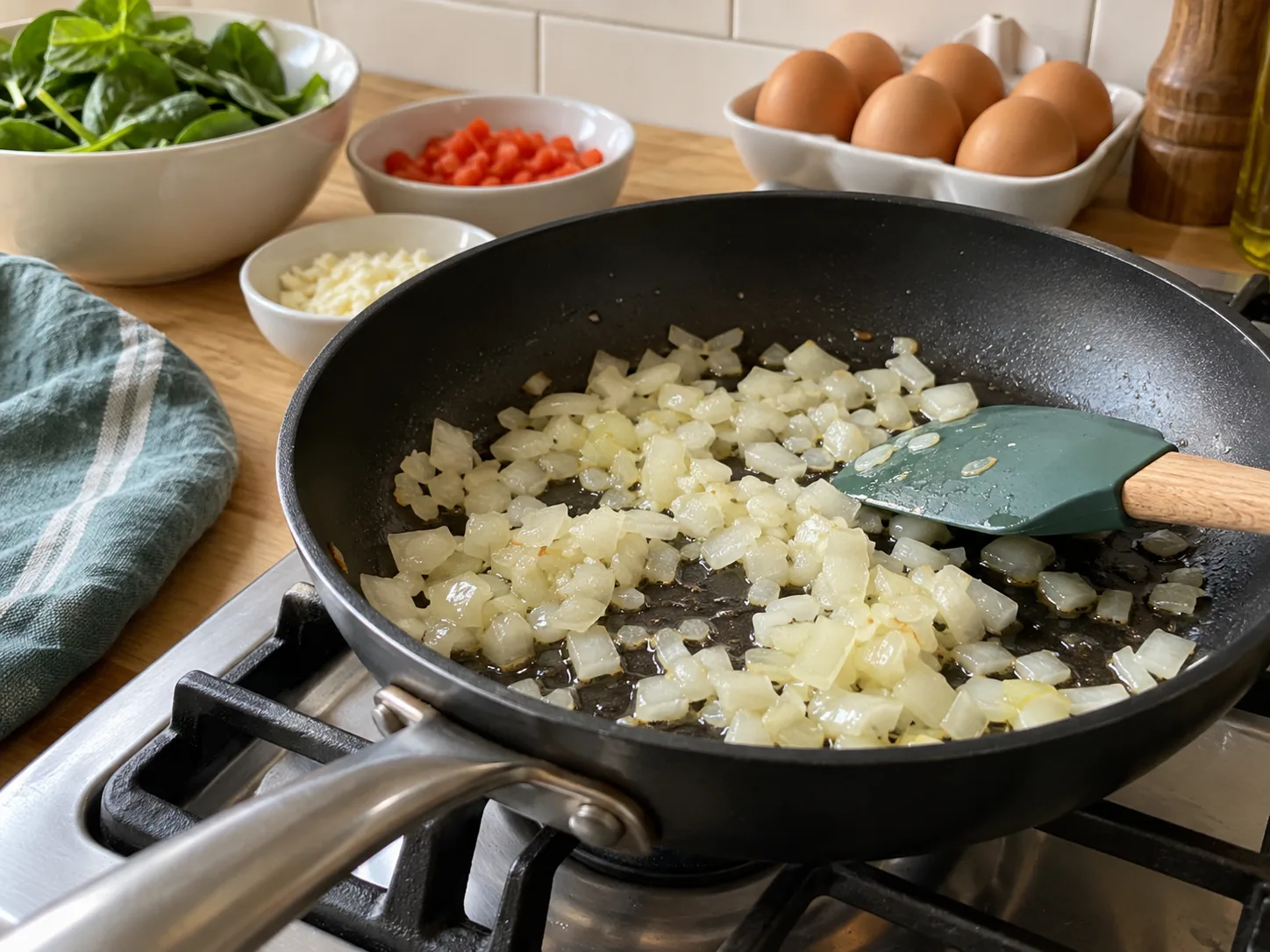
- Heat the oil in a nonstick skillet over medium heat. Add the onion and cook 2–3 minutes until softened.
- Add the tomato and spinach, cooking 1–2 minutes until the spinach wilts.

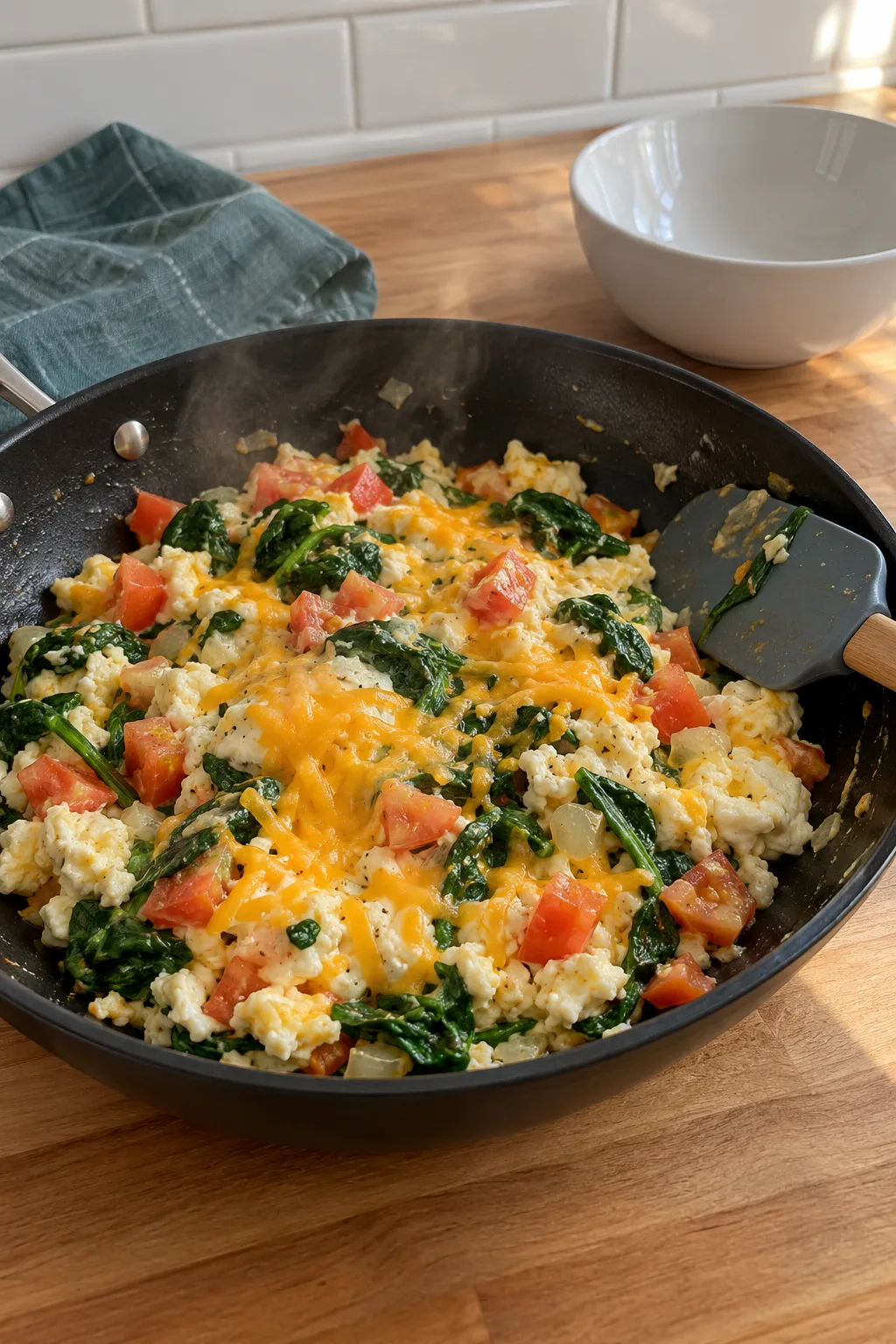
- Pour in the egg whites and season with salt and pepper. Let them sit undisturbed for 30 seconds, then begin gently folding with a spatula, pushing the cooked edges toward the centre.
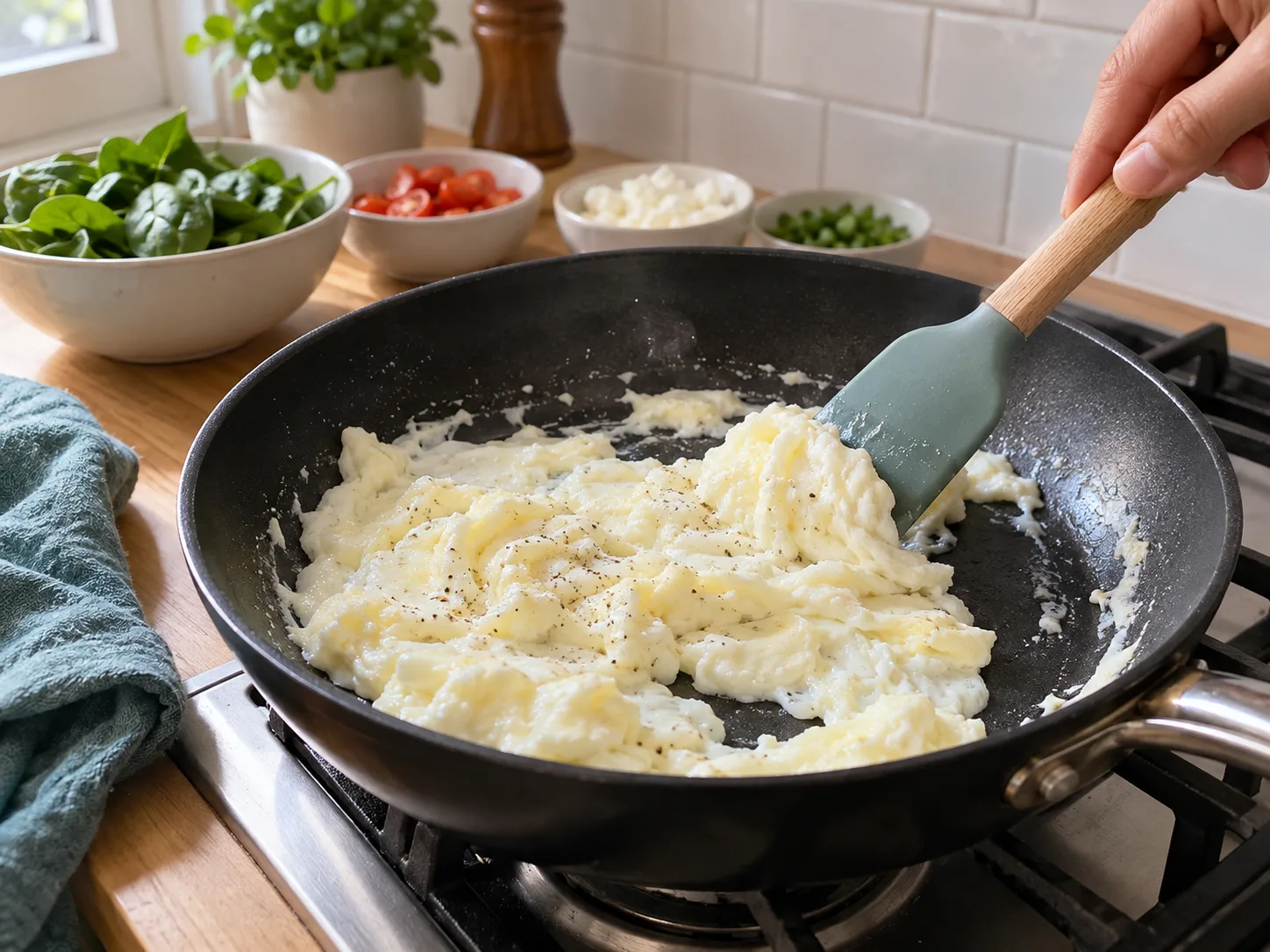
- Continue folding gently for 3–4 minutes, until set but still moist and the centre reaches 165°F / 74°C. Egg whites firm up quickly, so remove them from the heat as soon as they reach that point.
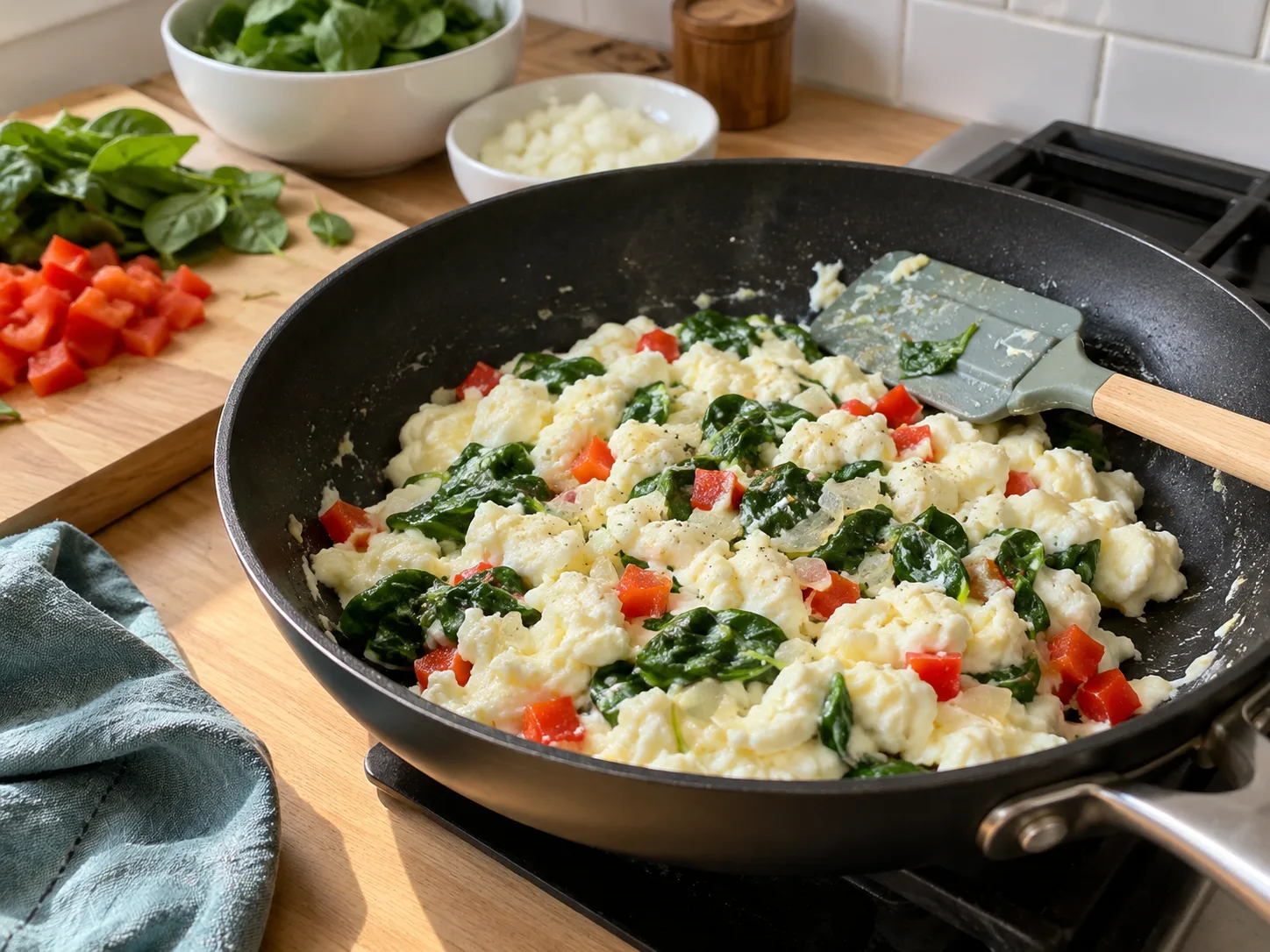
- Sprinkle the cheese over top, remove from heat, and let it melt for a minute before dividing between two bowls.
Microwave method for one bowl
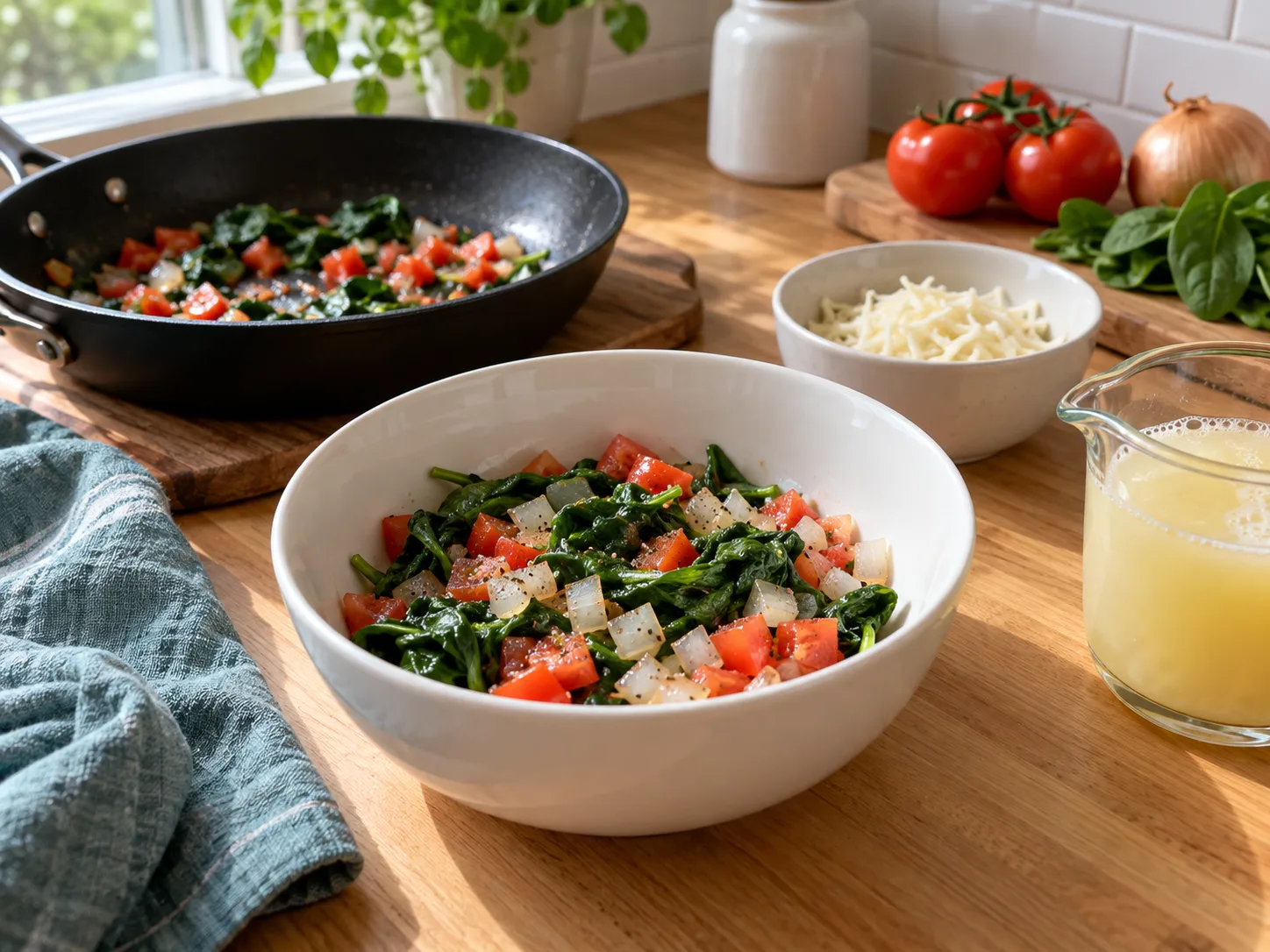
- Put half the onion, tomato, spinach, and oil in a large microwave-safe bowl. Microwave for 45–60 seconds, until the spinach wilts.
- Add 3/4 cup egg whites and seasoning. Microwave at 70% power for 60 seconds, stir from the edges toward the centre, then continue in 20–30 second intervals.
- Stop when the eggs are set and reach 165°F / 74°C. Add half the cheese and rest for 1 minute.
Which method is best?
- Best texture: skillet. Gentle folding gives the most even, tender curds.
- Best single serving: microwave. It is fast and useful at work, but requires short intervals to avoid rubbery edges.
- Best meal-prep approach: pre-cook and portion the vegetables, then cook the egg whites fresh in either method.
Cost and protein breakdown
- 1.5 cups egg whites — the main cost and the main protein source; separating your own eggs is the cheaper route if you have a use for the yolks
- Spinach, tomato, onion — inexpensive fresh vegetables, a small fraction of total cost
- Cheese — a moderate add, worth it for the flavour it brings to an otherwise lean dish
- Total estimate — cheap to make, per serving
Protein lands around 22–26g per serving. Egg whites are almost pure protein by weight, which is why this scramble carries a high protein count despite being a fairly light-looking dish — there’s very little fat or filler diluting the number.
How to make it cheaper
- Separate whole eggs yourself instead of buying a carton of pre-separated whites — this is meaningfully cheaper per gram of protein, provided you have a use for the yolks.
- Use frozen spinach instead of fresh, thawed and squeezed dry first — often cheaper per serving and keeps longer in the freezer until you need it.
- Skip the cheese if the budget is tight — it adds flavour, not protein that the egg whites aren’t already providing.
Why egg whites turn rubbery, and how to avoid it
Egg whites are almost entirely protein with very little fat to buffer the heat, which means they overcook faster than whole eggs and firm up into a rubbery texture if left on the heat even a minute too long. The fix is mostly about timing: pull them from the pan while they still look slightly wet and glossy on top — they’ll continue setting from residual heat for another 30 seconds or so off the burner. Medium heat, not high, gives more control over exactly when to stop.
Storage
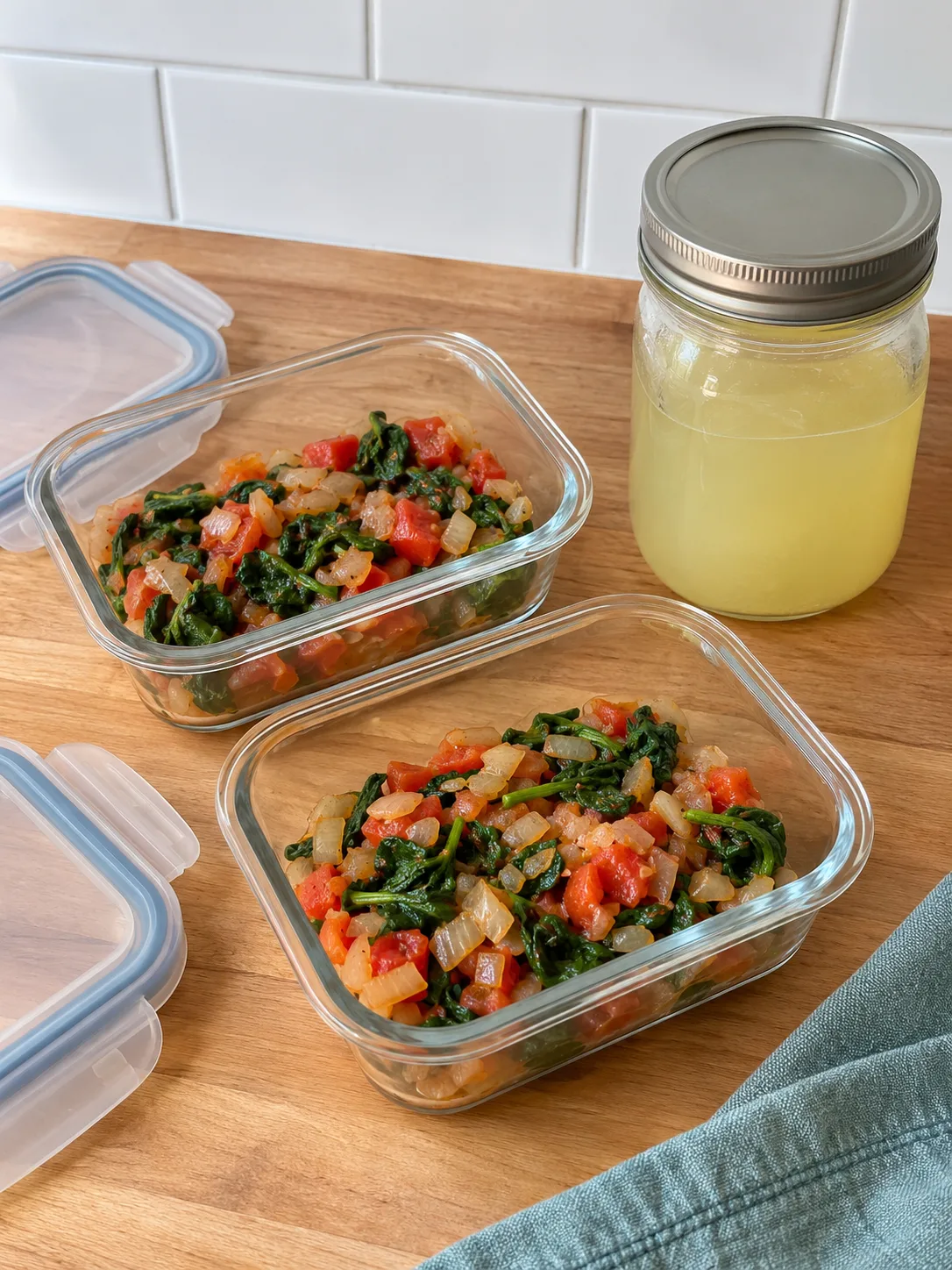
The best make-ahead strategy is to cook the onion, tomato, and spinach, then refrigerate two vegetable portions for up to 3–4 days. Keep the egg whites measured separately and cook them fresh in the skillet or microwave. A finished scramble keeps for up to 2 days; reheat covered at 50–70% power in 20-second intervals, stopping once the centre reaches 165°F / 74°C. Freezing is not recommended because the texture becomes watery and rubbery.
Frequently asked questions
Can I add the yolks back in partway?
Yes — adding one or two whole eggs to the egg whites is a reasonable middle ground if you want some of the richness back without going fully back to whole eggs. It will lower the protein-to-calorie ratio slightly but still land well above a regular scramble.
What else can I add to this besides spinach and tomato?
Bell peppers, mushrooms, and diced cooked turkey bacon or ham all work well folded in. Keep any added vegetables cooked down before the egg whites go in — raw vegetables added at the same time as the egg whites release water and can make the scramble watery.
Is it cheaper to buy a carton of egg whites or separate my own?
Separating your own is almost always cheaper per gram of protein, since you’re paying for whole eggs rather than a processed, pre-separated product. The carton wins on convenience and zero food waste from unused yolks — which one makes sense depends on whether you have a regular use for extra yolks.
Related reading: Egg and Potato Breakfast Meal Prep, Cheap High-Protein Breakfasts, and High-Protein Breakfast Meal Prep.