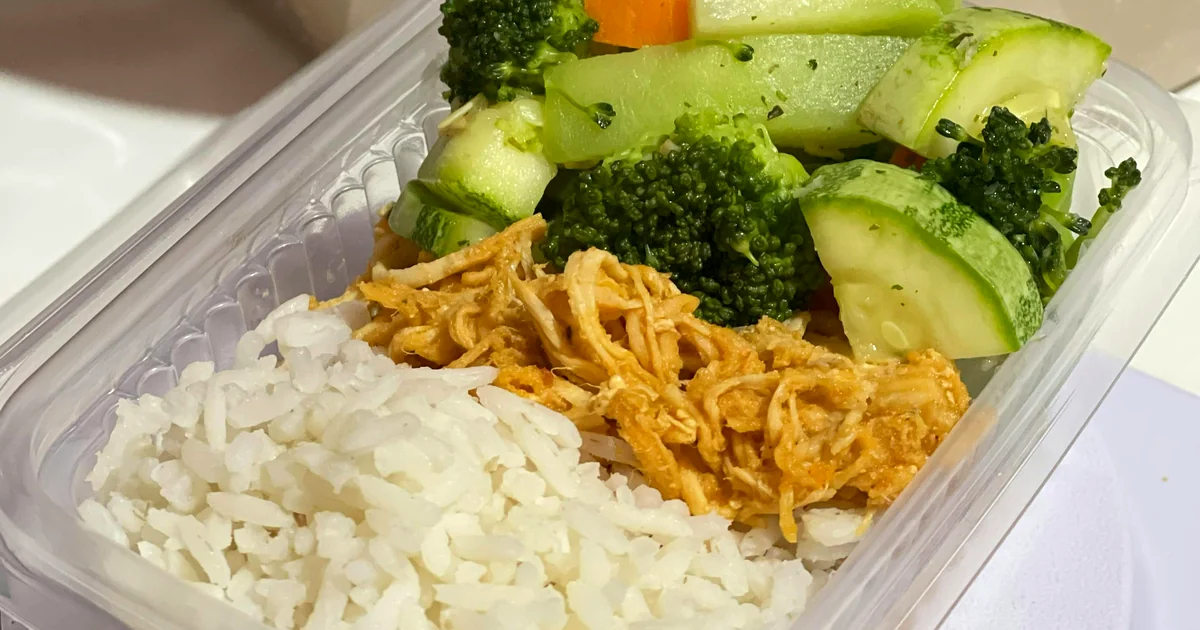
High-Protein Chicken Rice Meal Prep Bowls
Chicken and rice is one of the most reliable high-protein meal prep combinations at Canadian grocery stores. Boneless chicken thighs are one of the more affordable protein options at most Canadian grocery stores, and white rice bought in a larger bag stretches a budget further than most other carbohydrate options.
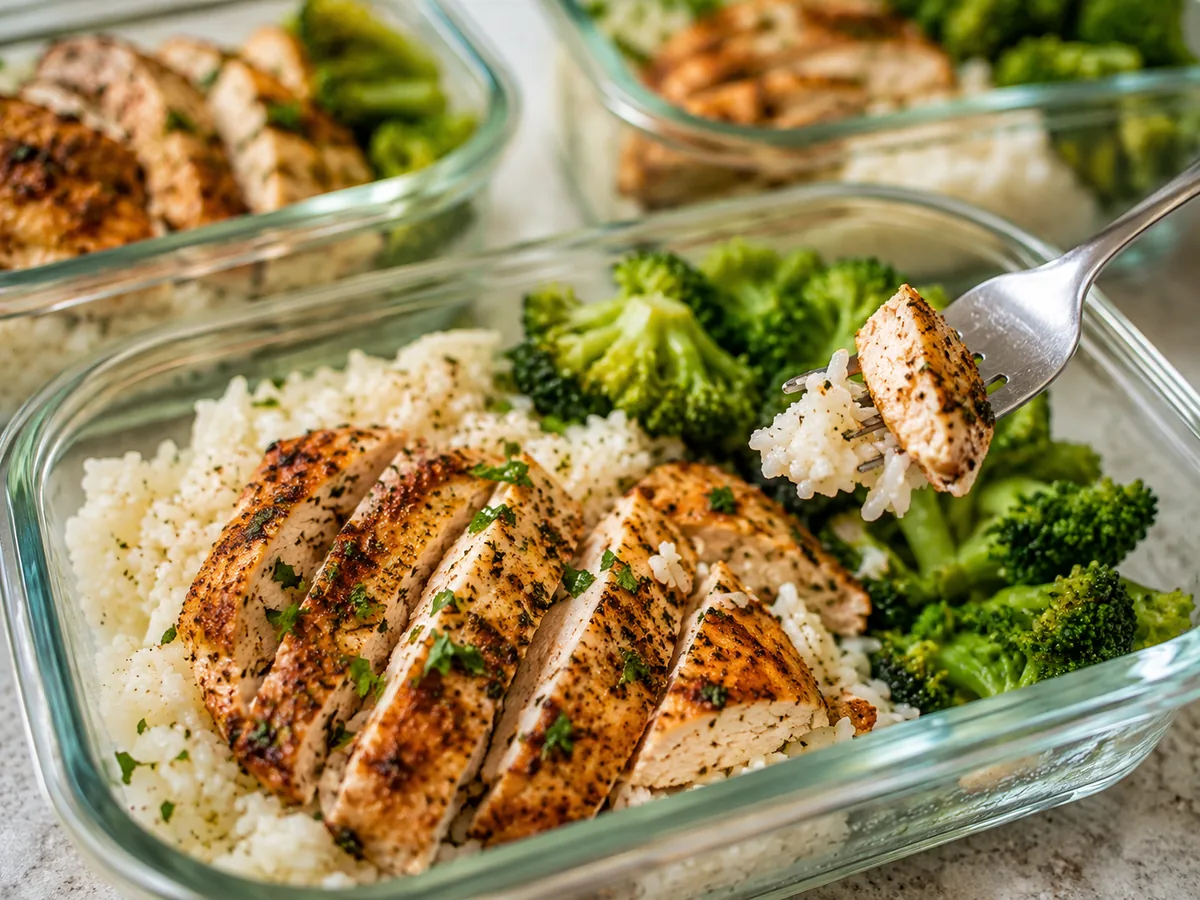
This recipe builds five filling meal prep bowls, estimated somewhere around $2.50–$3.50 CAD each depending on store and current prices. Each bowl contains a meaningful amount of protein from the chicken, rice, and broccoli — a rough estimate and breakdown are in the article, though actual values depend on exact portions. Frozen broccoli keeps the vegetable cost predictable and the prep time short.
| Estimated cost per serving | ~$2.50–$3.50 CAD* |
| Protein per serving | ~40–55g* |
| Prep time | 15 minutes |
| Cook time | 30 minutes |
| Servings | 5 bowls |
| Meal prep rating | ★★★★★ Batch-friendly |
| Freezer-friendly | Yes |
*Cost and protein are estimates. Actual values depend on your store, exact portions, and current prices.
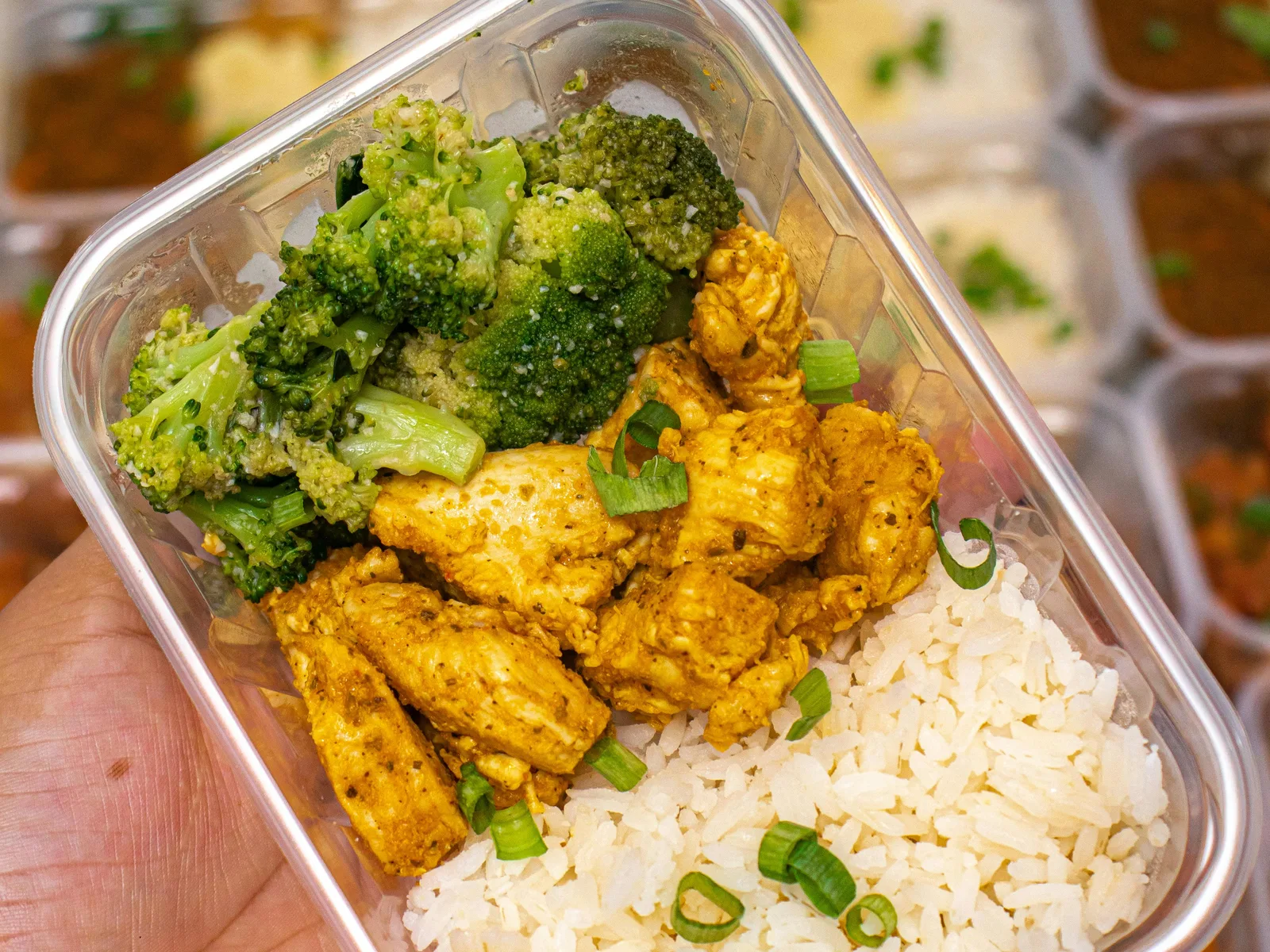
High-Protein Chicken Rice Meal Prep Bowls
Ingredients
Method
- Rinse the rice in cold water until the water runs mostly clear. Add rice, water or broth, and salt to a medium saucepan. Bring to a boil over medium-high heat, then reduce to the lowest setting and cover tightly. Cook for 18 minutes. Remove from heat, keep covered, and rest for 5 minutes. Fluff with a fork.
- Pat chicken thighs completely dry with paper towel — this helps browning. Drizzle with olive oil and coat evenly with garlic powder, paprika, Italian seasoning, salt, and pepper.
- Heat a large skillet over medium-high heat. Cook chicken thighs for 6–7 minutes per side until cooked through (internal temperature 74°C / 165°F). Cook in batches if needed — do not crowd the pan. Rest for 5 minutes, then slice or chop into bite-sized pieces.
- While the chicken rests, cook the frozen broccoli in the same skillet with a small amount of oil and a pinch of salt for 3–4 minutes, or microwave per bag instructions. Broccoli should be cooked through but not mushy.
- Divide cooked rice evenly across 5 meal prep containers. Add sliced chicken and broccoli to each container. Let cool for 20–30 minutes before sealing. Do not seal hot food in airtight containers.
Notes
Cost and protein breakdown
These estimates are based on typical Canadian grocery prices as of 2026. Actual costs vary by store, province, and whether you are buying at a regular or sale price.
- Chicken thighs 1.5 kg — price varies; often in the $4–$7/kg range depending on store and flyers
- White rice 400g dry — portion of a larger bag; one of the most affordable carbs per serving
- Frozen broccoli 500g — standard bag; price varies by store and season
- Broth, oil, spices — pantry staples; estimated $0.50–$1.00 for the batch
- Total estimate — roughly $2.50–$3.50 per bowl based on typical prices; exact cost depends on your store and any sales
Protein per serving varies with your exact portions. A rough estimate based on typical cooked amounts for this recipe is in the 40–55g range, with the chicken providing the bulk of it. Cooked rice adds around 5–7g and broccoli around 2–3g. For accurate values, enter your specific ingredient weights into a nutrition calculator. If you want to work out your exact cost per bowl, the cost per serving guide walks through the math with any recipe.
Cheaper swaps
- Bone-in chicken thighs — often $1–$2/kg cheaper than boneless. More prep work to debone, but lower cost per gram of protein.
- Water instead of broth — saves $0.50–$1.00 per batch with minimal flavour difference if the chicken is well-seasoned.
- Cheapest frozen vegetable available — frozen peas, green beans, or mixed vegetables substitute 1:1 by weight. Use whichever is on sale.
- Larger rice bag — a 10 kg bag at Superstore or Costco Canada brings the cost per 100g down significantly compared to smaller bags.
- Wait for a sale — chicken thighs regularly go on sale at discount grocers, which can bring the cost per serving down significantly from the everyday price.
Higher-protein option
- Increase chicken to 2 kg — adds to the batch cost but meaningfully increases protein per bowl.
- Add 2 hard-boiled eggs per bowl — about 12g extra protein. Eggs are generally one of the most cost-effective protein additions. Add at assembly.
- Side of cottage cheese — 125g low-fat cottage cheese adds ~15g protein and is widely available at most grocery stores.
Storage and reheating
- Fridge: Ideally eat within 2–3 days for best quality; safe for up to 3–4 days if properly sealed and stored at 4°C / 40°F or below. Do not leave cooked chicken sitting out for more than 2 hours. Once it stops steaming, move the containers to the fridge uncovered to cool, then seal once they reach fridge temperature. Health Canada’s food safety guidance on leftovers covers this and other handling basics.
- Microwave: Heat on high for 2–3 minutes, stirring once halfway through. Microwave times vary by wattage — the food should be steaming throughout and reach 74°C / 165°F before eating. Add a splash of water if the rice seems dry.
- Stovetop: Small skillet over medium heat with a splash of water or broth. Stir until heated through, about 3–4 minutes.
Freezer notes
These bowls freeze well. Chicken and rice both hold their texture after freezing and reheating better than many other meal prep combinations.
- Freeze: Cool completely, then transfer to freezer-safe containers or zip-lock bags. Label with the date. Broccoli can be frozen with the bowl or stored separately.
- Freezer life: Up to 3 months for best quality.
- Reheat from frozen: Microwave at 50% power for 4–6 minutes, stirring once halfway, until steaming throughout and reaching 74°C / 165°F. Or thaw overnight in the fridge and reheat at full power for 2–3 minutes until heated through.
- Space tip: Use flat zip-lock bags, lay flat to freeze, then stack vertically once solid.
What to serve with it
These bowls are designed as complete meals. A few additions help with flavour variety across a full week of eating the same lunch:
- Hot sauce or sriracha — changes the profile enough that the fifth bowl feels different from the first.
- Soy sauce or tamari (1 tbsp) — adds umami and salt at minimal cost.
- Hard-boiled egg on the side — if you want more protein for a small cost increase.
- Plain Greek yogurt (100g) — adds ~9g protein and pairs well with the seasoning in this bowl.
Frequently asked questions
Can I use chicken breast instead of chicken thighs?
Yes. Chicken breast works as a direct substitute with similar protein content. The main difference is cost: breast tends to be noticeably more expensive per kilogram than thighs at most Canadian grocery stores, though the gap varies. Breast meat also dries out faster when reheated, so pull it off heat the moment it reaches 74°C / 165°F internally.
What is the cheapest store in Canada for chicken thighs?
Discount grocery chains generally have the most competitive everyday prices on chicken thighs. Larger chains run regular sales that can close the gap. Warehouse stores are worth comparing for bulk packs if you plan to freeze extra portions. Prices change frequently, so checking current flyers before you shop is the most reliable approach.
Can I freeze these bowls?
Yes. Both chicken and rice freeze well. Let bowls cool completely, seal in freezer-safe containers, and label with the date. Reheat from frozen at 50% microwave power for 3–4 minutes, stirring once halfway through, or thaw overnight in the fridge first.
How long do these keep in the fridge?
Plan to eat them within 2–3 days for best quality. With proper sealing and storage at 4°C / 40°F or below, they can last up to 3–4 days, but the sooner the better for both taste and safety. Make sure the food has fully cooled before sealing, as trapping steam speeds up spoilage.
Why chicken thighs instead of breast?
Cost per gram of protein. Chicken breast has slightly more protein per 100g than thighs, but the price difference at Canadian grocery stores is often large enough that thighs deliver more protein per dollar. Thighs also reheat better because the higher fat content prevents them from drying out in the microwave. If breast is cheaper at your store or on sale, use it — the recipe works either way.
More from Budget Protein Kitchen: New to budget high-protein meal prep? The Start Here guide covers the basics. The Meal Prep Basics page walks through a simple batch-cook system for the week. For more recipes as they are added, browse the Meal Prep & Planning category or the full Recipe Index.