
High-Protein Chickpea Salad
No cooking, fifteen minutes, and it tastes better the second day than the first. Chickpea salad is the kind of recipe worth having in rotation for weeks when the stove feels like too much effort — canned chickpeas, a handful of fresh vegetables, and a simple dressing is the whole list.
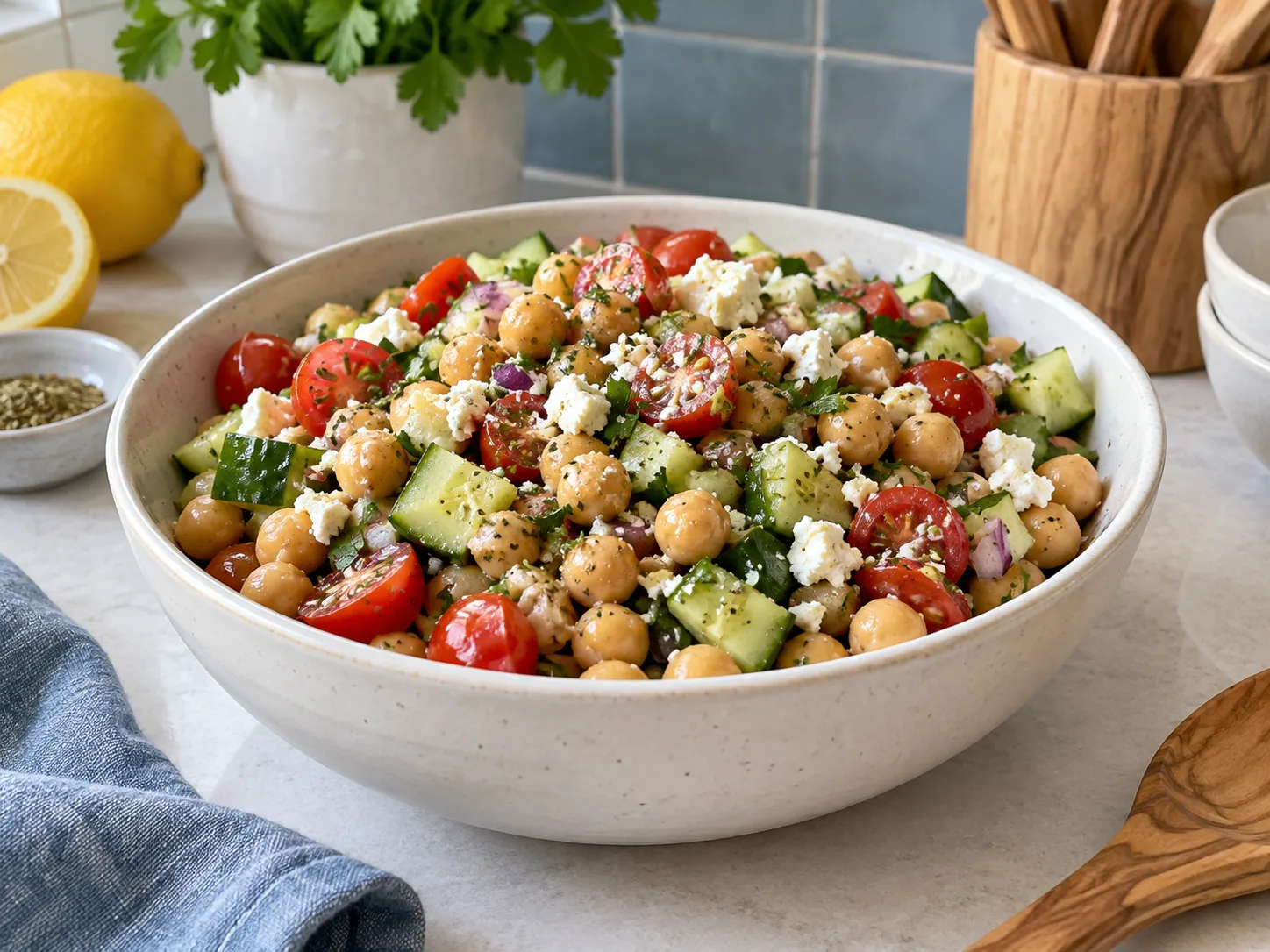
It’s also one of the more forgiving recipes on this site in terms of exact measurements. A little more or less cucumber, a slightly heavier hand with the lemon, an extra pinch of oregano — none of it will ruin the dish the way getting a baking ratio wrong can ruin a baked recipe. That flexibility is part of why it’s a good one to make on autopilot once you’ve made it a couple of times.
| Estimated cost per serving | Cheap |
| Protein per serving | ~12–15g* |
| Prep time | 15 minutes |
| Cook time | None |
| Servings | 4 |
| Freezer-friendly | No |
*Protein is an estimate. Actual values depend on your exact ingredients and portions.
Why letting it sit actually changes the texture
Chickpeas have a slightly firm, almost chalky surface straight from the can, and an acidic dressing like this one — lemon juice plus olive oil — works on that surface the same way a marinade works on meat, just more gently. Given 10 minutes or more, the acid softens the outer layer just enough that the chickpeas take on a noticeably less “canned” texture and actually absorb some of the oregano and lemon flavour rather than just being coated in it. This is also why the salad tastes better on day two: the chickpeas have had hours, not minutes, to sit in the dressing, and the cucumber and tomato have released a bit of their own liquid into the mix as well, which rounds out the dressing further.
Ingredients
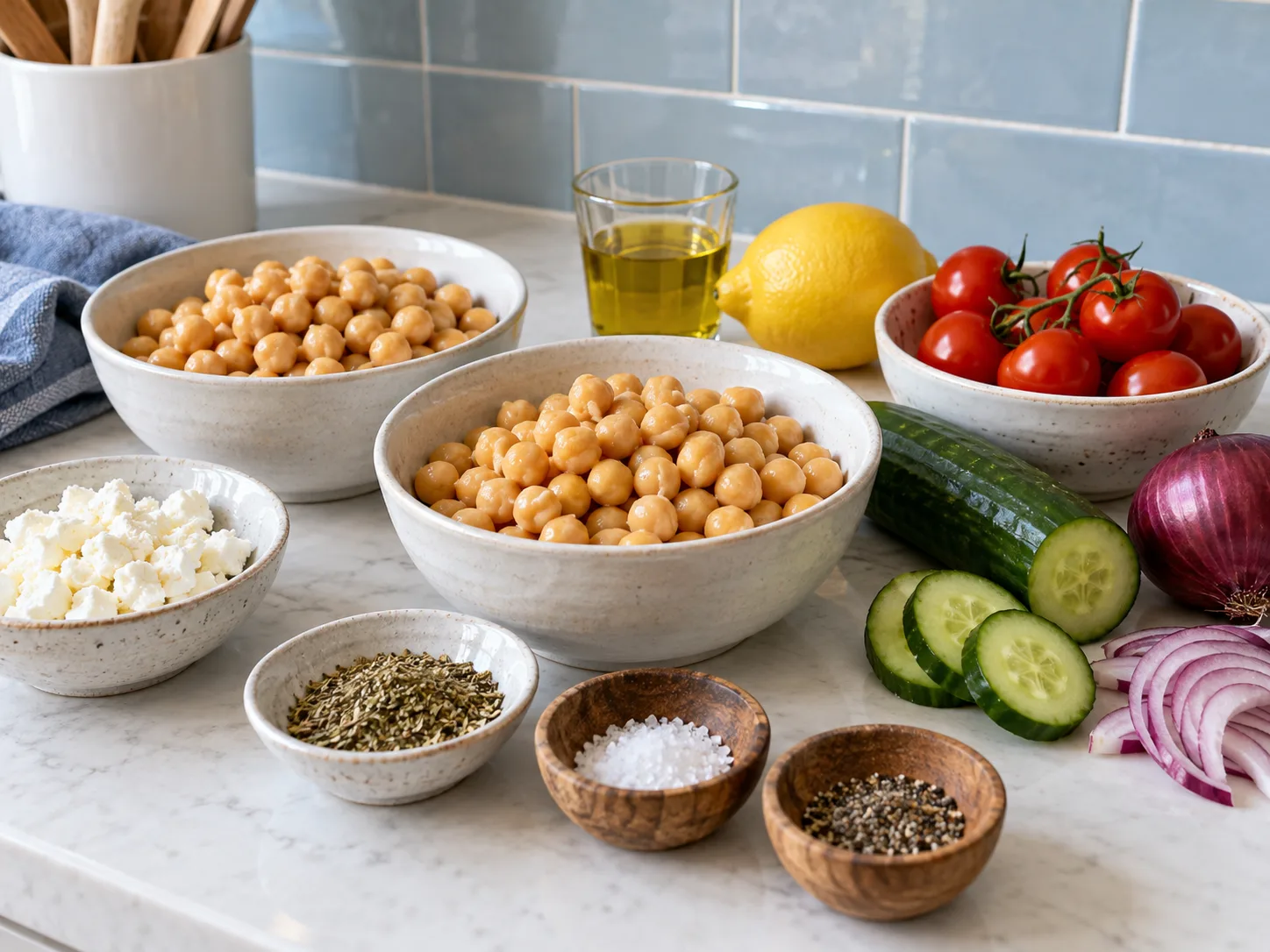
- 2 cans (540mL each) chickpeas, drained and rinsed
- 1 cucumber, diced
- 1 cup cherry tomatoes, halved
- 1/4 red onion, finely diced
- 1/4 cup crumbled feta (optional)
- 3 tbsp olive oil
- 2 tbsp lemon juice
- 1 tsp dried oregano
- Salt and pepper to taste
How to make it
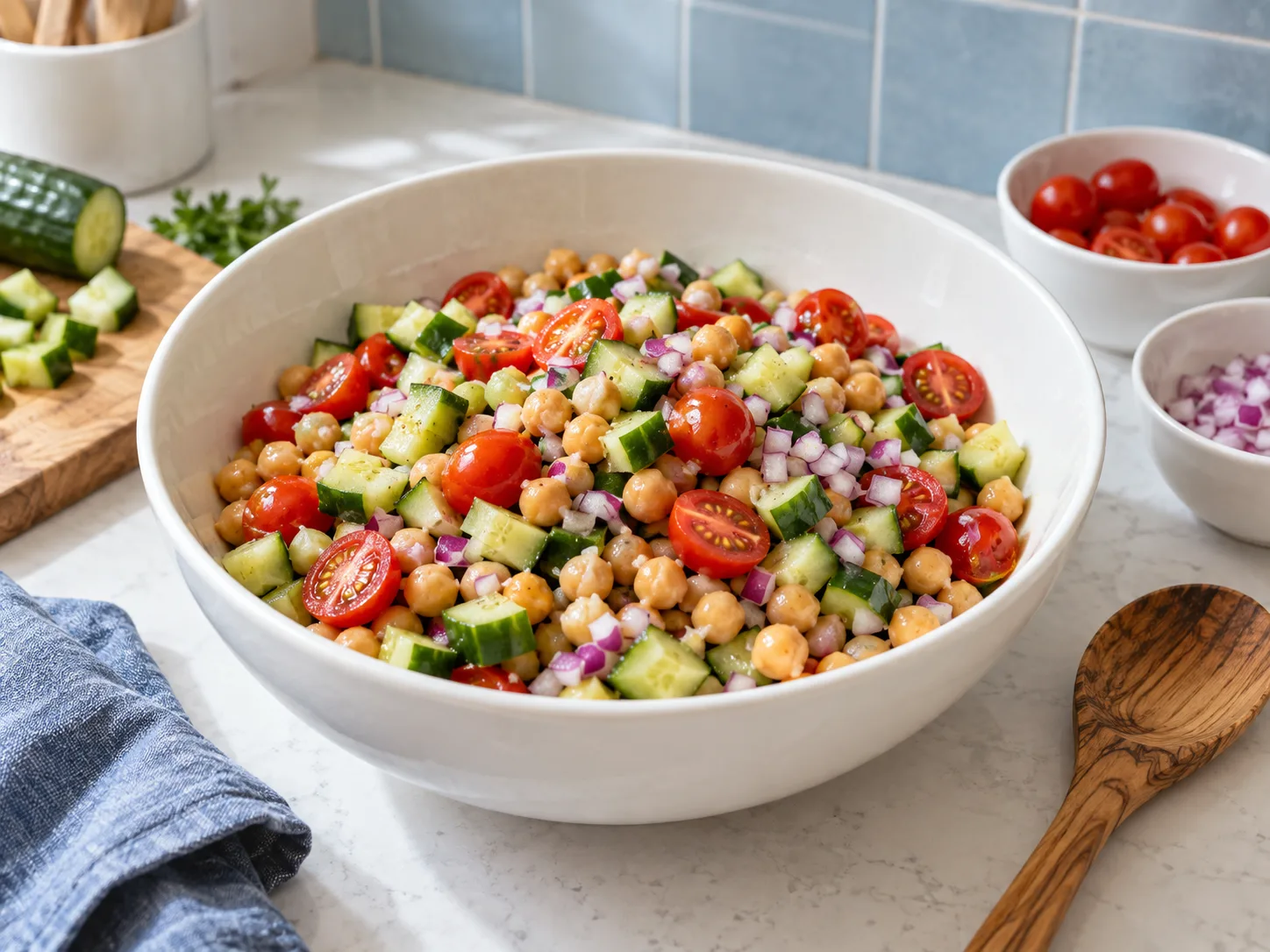
- Combine the chickpeas, cucumber, tomatoes, and red onion in a large bowl.
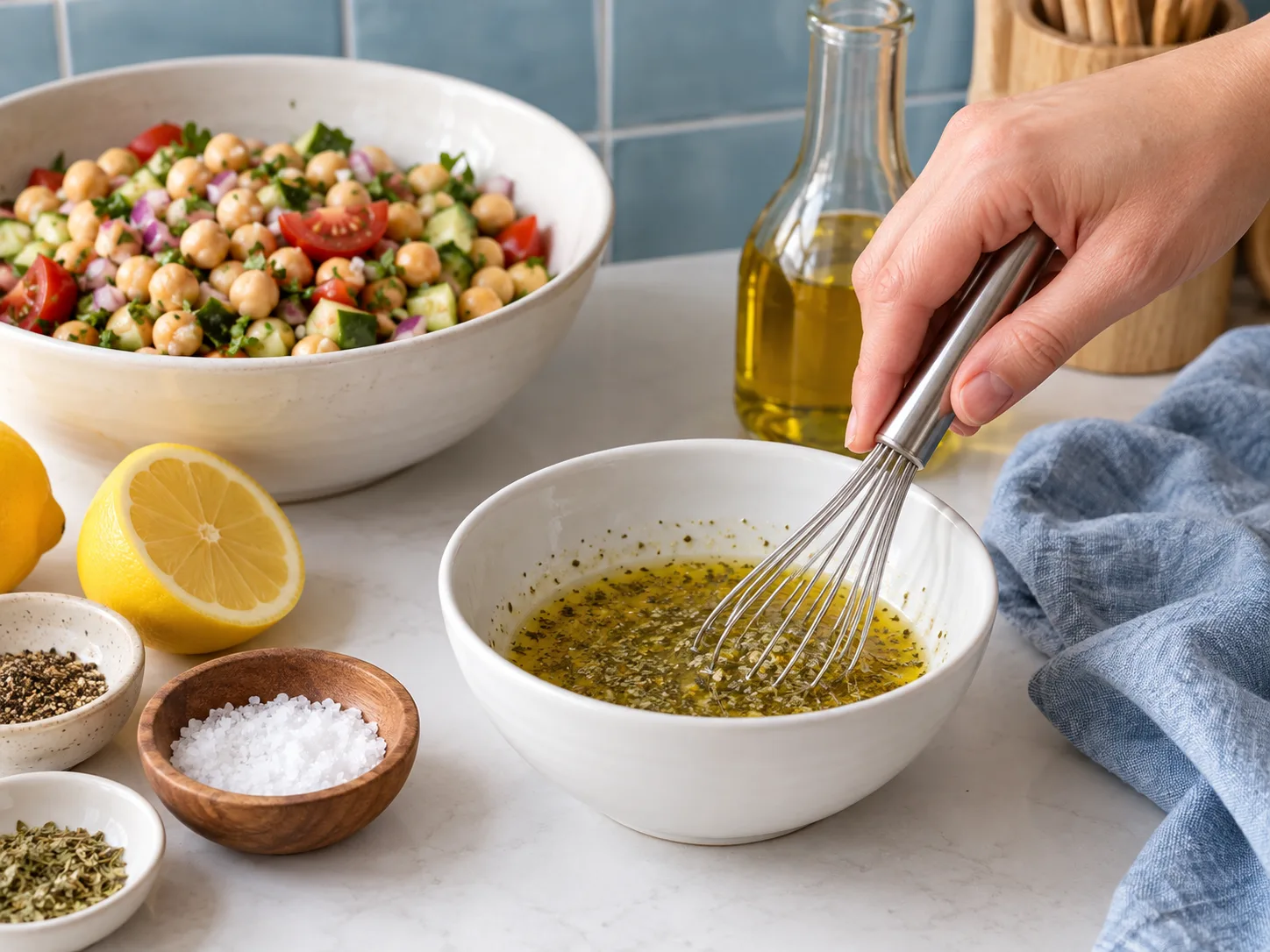
- Whisk together the olive oil, lemon juice, oregano, salt, and pepper in a small bowl.
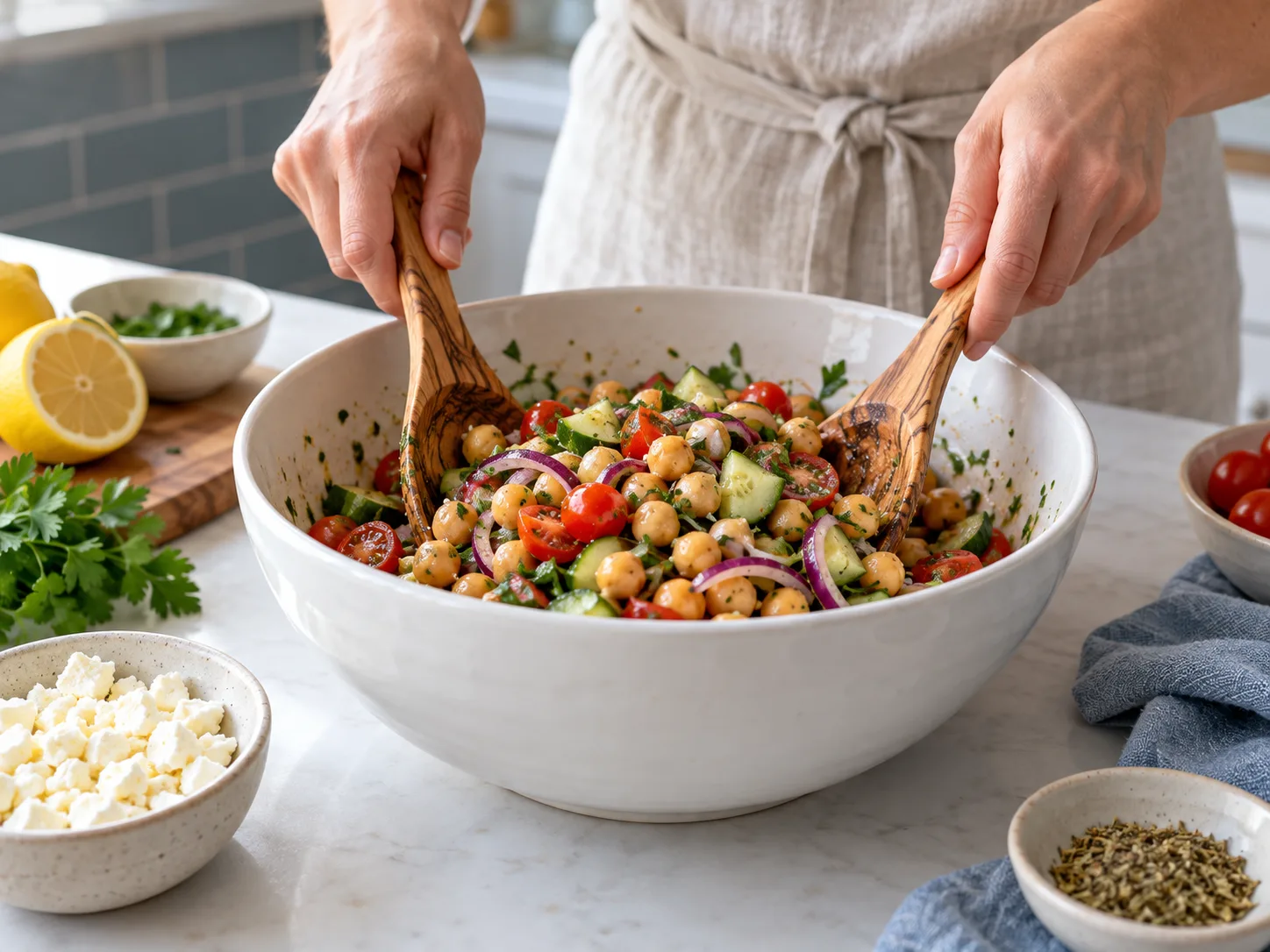
- Pour the dressing over the salad and toss to combine. Fold in the feta if using.
- Let it sit for at least 10 minutes before serving — the flavour improves noticeably once the chickpeas have had a chance to absorb some of the dressing.

Using dried chickpeas
Use about 1 1/3 cups dried chickpeas to replace the two large cans in this recipe. One bulk cooking session can cover this salad plus several freezer portions.

Stovetop method
- Soak the chickpeas in plenty of water for 8–12 hours, then drain.
- Cover with fresh water by about 2 inches. Bring to a boil, reduce to a steady simmer, and cook for 60–90 minutes, until tender but not falling apart.
- Drain, cool, and dry well before adding the dressing.
Pressure cooker method
Cover soaked chickpeas with fresh water by about 1 inch and cook on high pressure for 15 minutes, followed by a 15-minute natural release. For unsoaked chickpeas, cook for 35–40 minutes with a 20-minute natural release. Drain and cool before using.
Which option is best?
- Best for a 15-minute salad: canned chickpeas. They are consistent and ready after rinsing.
- Best budget batch: pressure-cooked dried chickpeas. They need little active work and extras freeze well.
- Best without special equipment: stovetop dried chickpeas. They cost less but require advance soaking and a longer simmer.
Cost and protein breakdown
- 2 cans chickpeas — cheap, plant-based protein, the base of the whole dish
- Cucumber, tomatoes, onion — inexpensive fresh vegetables
- Feta, olive oil — the feta is optional and the priciest single ingredient per gram; skip it to lower the cost further
- Total estimate — cheap to make, per serving
Protein lands around 12–15g per serving — moderate for a meal on its own, but a solid side or addition to a bigger spread. Pair it with a hard-boiled egg or a scoop of grilled chicken if you want it to carry more of a meal’s worth of protein.
How this differs from the dense bean salad on this site
The dense bean salad on this site is a deliberately different recipe, not a near-duplicate of this one. It leans on multiple bean varieties at once for a higher protein count per serving and a heartier, more filling result meant to work as a standalone meal. This chickpea salad is lighter, built around fresh vegetables rather than multiple beans, and reads more as a side dish or a light lunch than a full dinner. If you want something that can carry a whole meal on its own, the dense bean salad is the better starting point; if you want something fresh and bright to go alongside a protein you’re already making, this one fits that role better.
Turning it into other cuisines
The Mediterranean flavour profile here (lemon, oregano, feta) is one direction among several this base can go. For a Mexican-leaning version, swap the lemon for lime, the oregano for cumin and a pinch of chili powder, and add corn and diced avocado. For an Indian-inspired version (chaat-style), skip the feta and olive oil entirely and dress the chickpeas in a mix of lime juice, chaat masala if you have it, and a drizzle of plain yogurt, finished with chopped cilantro. Both variations use the same two cans of chickpeas as the protein base — only the dressing and a few add-ins change, which keeps the cost and effort essentially identical to the original.
Common mistakes
Serving it immediately instead of letting it sit. As covered above, the 10-minute rest isn’t just a suggestion — skipping it gives you a noticeably blander, more “straight from the can” result.
Not drying the chickpeas before dressing them. Rinsed chickpeas that go straight into the bowl still wet dilute the dressing slightly. A quick pat with a clean towel or a few minutes in a colander before mixing keeps the dressing at full strength.
Over-salting before the feta goes in. Feta is quite salty on its own. Salting the dressing to taste before adding the feta, then tasting again afterward, avoids an over-salted final result.
How to make it cheaper
- Skip the feta — it adds flavour, not protein, and is the most expensive ingredient per gram in the recipe.
- Use whatever fresh vegetable is cheapest that week. Bell pepper, carrot, or celery all work as substitutes or additions to cucumber and tomato.
- Buy chickpeas in the largest can available — the per-gram cost usually drops with size.
Storage
- Fully mixed salad: refrigerate promptly in a sealed container and use within 3–4 days.
- Best meal-prep texture: store the chickpeas with the dressing, but keep cucumber, tomato, onion, and feta separate until the day you eat them.
- Cooked chickpea batch: refrigerate plain chickpeas for 3–4 days or freeze 2-cup portions for up to 3 months.
- Freezer: do not freeze the fully assembled salad; cucumber and tomato soften badly after thawing.
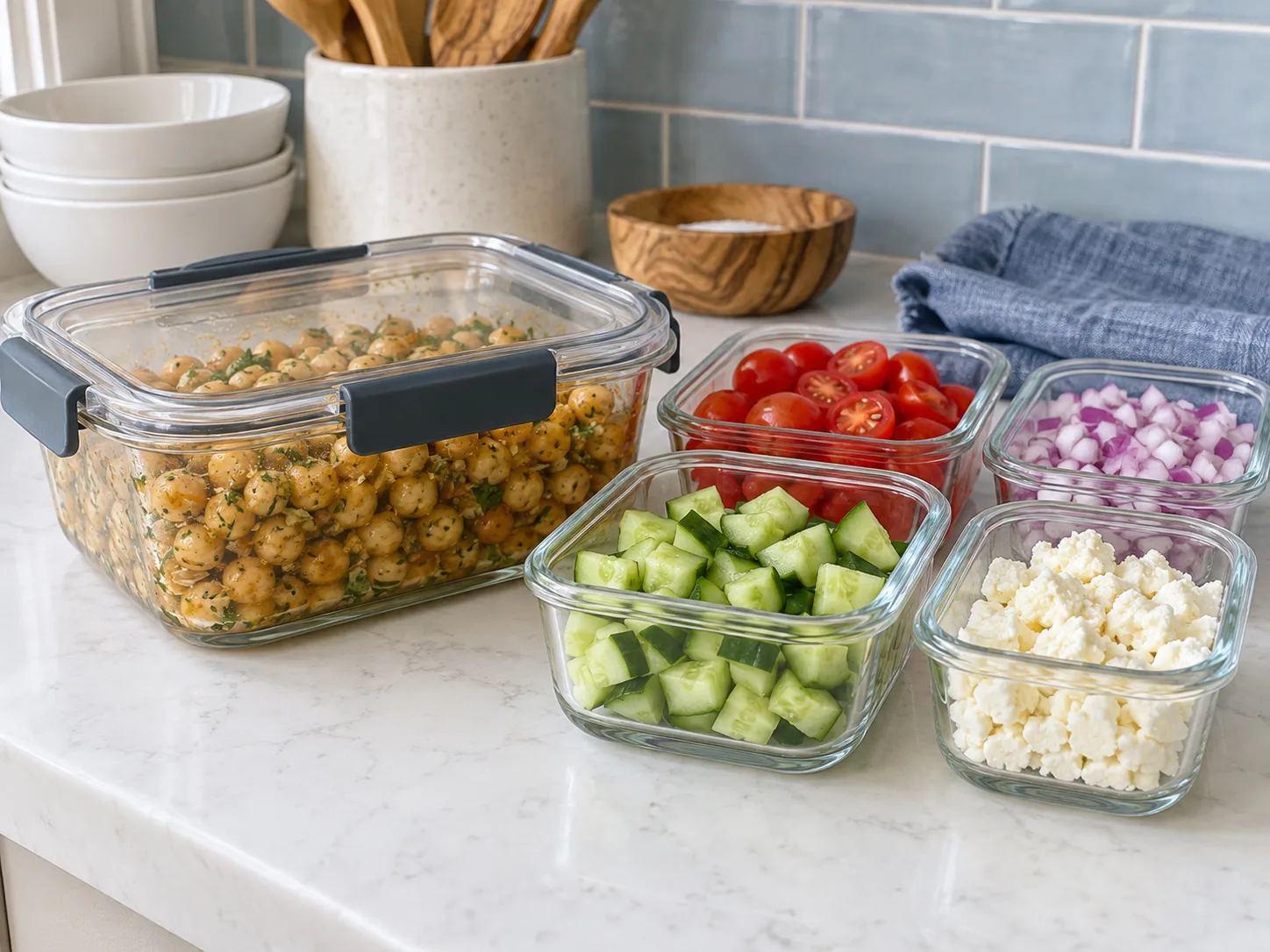
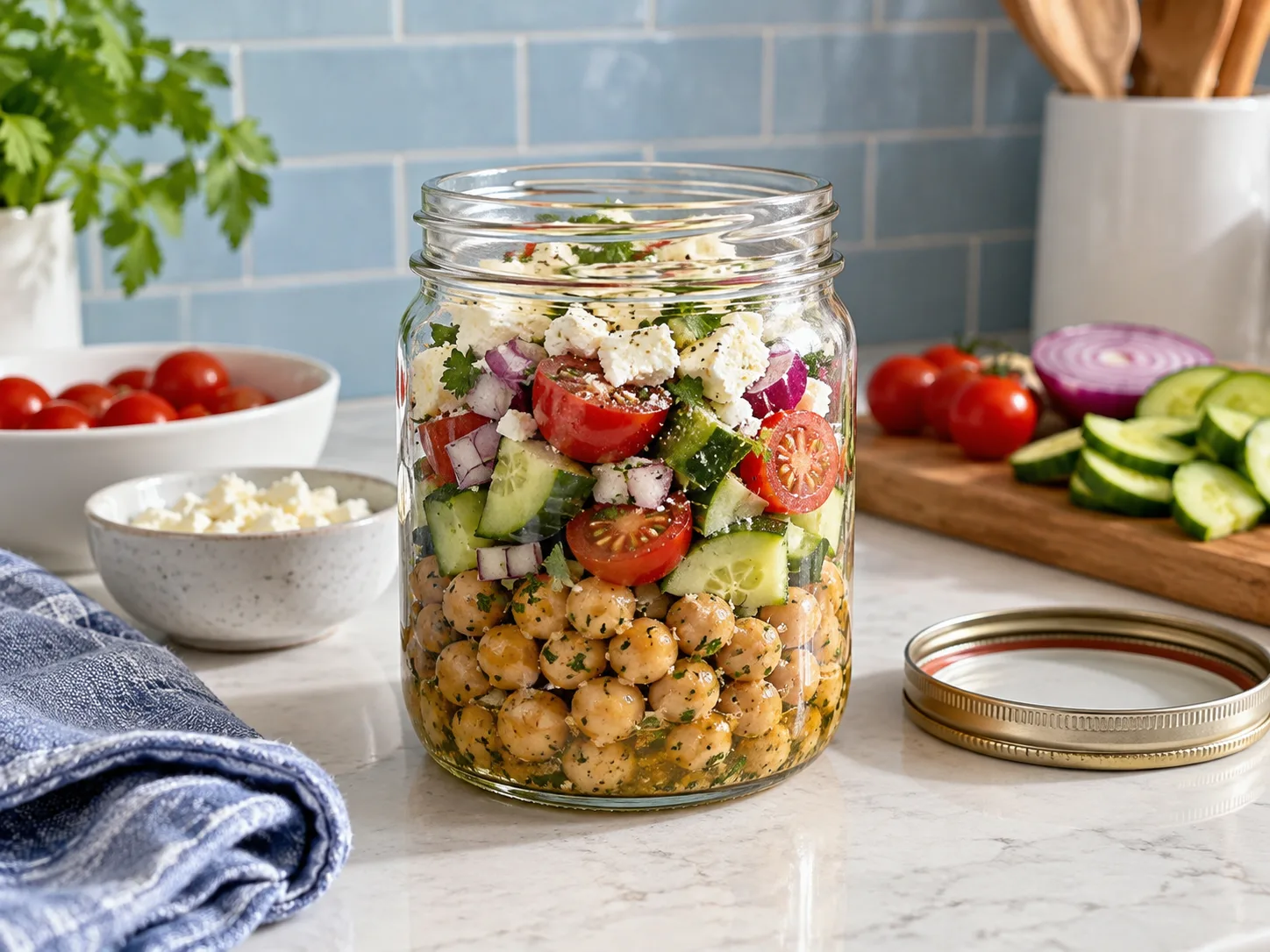
For a packed lunch, put dressed chickpeas at the bottom of a wide-mouth container and the fresh vegetables and feta on top. Stir just before eating. This keeps the vegetables crisp while still letting the chickpeas absorb the lemon-oregano dressing.
Simple swaps and additions
- Add a hard-boiled egg, chopped — boosts protein noticeably for almost no cost.
- Swap feta for cubed cottage cheese — higher protein, different texture, similar tangy flavour.
- Serve over greens to stretch it into a bigger salad without changing the core recipe.
- Add a pinch of cumin alongside or instead of the oregano for a different flavour direction entirely.
- Stir in a spoonful of tahini to the dressing for a creamier, nuttier result that pairs especially well with the cumin variation.

Chickpeas as a protein source, specifically
A cup of cooked chickpeas provides roughly 14–15g of protein, which puts them solidly in the “legume” tier — well below meat, eggs, or dairy gram-for-gram, but notably higher than most other canned vegetables, and with a meaningful amount of fibre alongside it that those animal proteins don’t carry. The fibre is part of why a chickpea-based salad like this one tends to feel more filling per calorie than the protein number alone would suggest; fibre slows digestion in a similar direction to protein, and the two effects add together in a dish like this one that has a reasonable amount of both.
This is also the reason this recipe leans on two full cans of chickpeas rather than one — at a lower protein density than meat, getting to a useful gram count for a 4-serving salad takes more volume of the base ingredient than a meat-based salad would need.
Frequently asked questions
Do I need to cook the chickpeas first?
No — canned chickpeas are fully cooked and ready to eat straight from the can, once drained and rinsed. Rinsing removes some of the canning liquid, which can taste slightly tinny otherwise.
My chickpeas are still a bit firm even after rinsing — is that normal?
Yes — canned chickpeas have more bite than, say, canned black beans, and that’s part of their appeal in a salad rather than a flaw. If you prefer them softer, letting the salad marinate longer (several hours, or overnight) softens them further. Simmering canned chickpeas for a few minutes in water before using them is another option if you want a noticeably softer result right away, though it’s an extra step most people skip for a no-cook recipe.
Is this filling enough as a full meal?
On its own, it’s more of a substantial side than a complete meal for most people. Adding a protein like a hard-boiled egg, grilled chicken, or cubed cottage cheese turns it into something that holds up as lunch or dinner on its own.
Why does my salad taste watery after a day in the fridge?
Cucumber and tomato both release water as they sit, especially once salted or mixed into an acidic dressing. This is mostly cosmetic rather than a sign anything went wrong — a quick stir before serving redistributes the dressing, and draining off a spoonful of excess liquid at the bottom of the container fixes the rest. Using English or Persian cucumbers, which hold less water than standard slicing cucumbers, reduces this somewhat if it bothers you.
Can I meal prep this for the whole week?
Yes, within the 3–4 day fridge window stated above. If you want it to stretch further into the week, prep the chickpeas and dressing together but keep the fresh vegetables separate, combining them only the day you plan to eat it — the chickpeas hold up fine marinating for days, while the vegetables are the component that softens and loses quality fastest.
What’s a good protein to add if I want this as a full dinner?
Grilled or pan-seared chicken thigh, sliced and added on top, is the most straightforward addition and complements the lemon-oregano flavour well. Canned tuna is a faster no-cook option that fits the same Mediterranean profile. A couple of hard-boiled eggs, quartered, is the cheapest add-in by a wide margin and works with almost any variation of this recipe.
Related reading: Budget High-Protein Lentil Chili, Best Cheap Protein Sources by Cost Per Gram, and No-Cook High-Protein Lunch Meal Prep.