
Budget High-Protein Smoothie
No protein powder needed — this one gets its protein from Greek yogurt and dry milk powder, both whole foods, both cheaper per gram of protein than a tub of flavoured powder. Five minutes, one blender, and it holds together as a genuine meal replacement rather than a sugary drink that happens to be cold.
| Estimated cost per serving | Cheap |
| Protein per serving | ~25–30g* |
| Prep time | 5 minutes |
| Cook time | None |
| Servings | 1 |
| Freezer-friendly | No (drink fresh) |
*Protein is an estimate. Actual values depend on your exact ingredients and portions.
Why a protein smoothie beats a protein shake, cost-wise
A tub of flavoured whey or plant protein typically costs more per scoop than you’d expect, depending on the brand, and that’s before adding any fruit, milk, or ice to actually make it drinkable. This smoothie gets to a comparable 25–30g of protein using ingredients that are doing double duty — the Greek yogurt and dry milk powder provide protein and bulk at the same time, while a scoop of powder provides protein alone and still needs a base built around it. The practical result is a smoothie that costs about the same or less than a protein-powder shake, while also being a real food with fibre and micronutrients from the fruit rather than an isolated macro.
Ingredients

- 1 cup milk
- 3/4 cup plain Greek yogurt
- 2 tbsp non-fat dry milk powder
- 1 banana
- 1 cup frozen mixed berries
- 1 tbsp honey or maple syrup (optional)
- A few ice cubes
How to make it

- Add the milk, Greek yogurt, and dry milk powder to the blender first — blending the liquid and powder together before adding frozen ingredients helps the powder dissolve fully instead of clumping.
- Add the banana, frozen berries, honey if using, and a few ice cubes.
- Blend until completely smooth, about 45–60 seconds, scraping down the sides partway through if needed.
- Pour and drink right away — this doesn’t hold well once blended.
Smoothie bowl method
Use only 1/2 cup milk and skip the ice. Blend the milk, yogurt, and dry milk powder first, then add the frozen fruit a little at a time. Use the blender tamper or stop to scrape the sides as needed. Spoon into a bowl and add oats, nuts, or a little extra fruit. This is the best version when you want a slower, more filling sit-down breakfast.

Make-ahead smoothie cubes
Blend the full recipe, pour it into ice cube trays, and freeze until solid. Transfer the cubes to a labelled freezer bag for up to 1 month. To serve, reblend one recipe’s worth of cubes with 1/2 cup milk, adding more only as needed. The texture is better than storing a blended smoothie in the fridge, where it separates.

Which method is best?
- Best overall: blend and drink immediately. It gives the smoothest texture with the least work.
- Best for a more filling breakfast: smoothie bowl. Less liquid creates a spoonable base that supports toppings.
- Best for emergency mornings: frozen cubes. They preserve a pre-blended batch without accepting a separated fridge texture.
- Best routine prep: freezer ingredient bags. They keep the fresh-blended texture and take the least freezer space.
Cost and protein breakdown
- Greek yogurt and dry milk powder — together, the main protein source and cheaper per gram of protein than a flavoured protein powder
- Banana and frozen berries — inexpensive, especially frozen berries bought in a large bag
- Total estimate — cheap to make, per serving
Protein lands around 25–30g per serving — high for a smoothie, and in the same range as a scoop of most protein powders, without needing one.
Worth noting where that protein actually comes from: roughly 10g from the Greek yogurt, 6–7g from the dry milk powder, and the rest from the cup of milk itself. No single ingredient is carrying the whole recipe, which is part of why swapping any one of them — using a different yogurt brand, or a plant milk instead of dairy — shifts the total but doesn’t collapse it.
Why dry milk powder works so well here
Dry milk powder dissolves into a liquid base far more easily than it would into something solid, which makes a smoothie close to the ideal use case for it. Two tablespoons add a meaningful amount of protein and a slightly richer, creamier texture, without changing the flavour in any way you’d notice once the fruit is blended in.
Getting the texture right
The order ingredients go into the blender matters more than most people expect. Liquid and powders first, frozen fruit and ice last — blending in that order means the blades have something thin to spin through before they hit the frozen chunks, which both blends more completely and puts less strain on a lower-powered blender. Adding frozen fruit straight into a mostly-empty blender is the most common reason for a smoothie that stays lumpy no matter how long you run the machine.
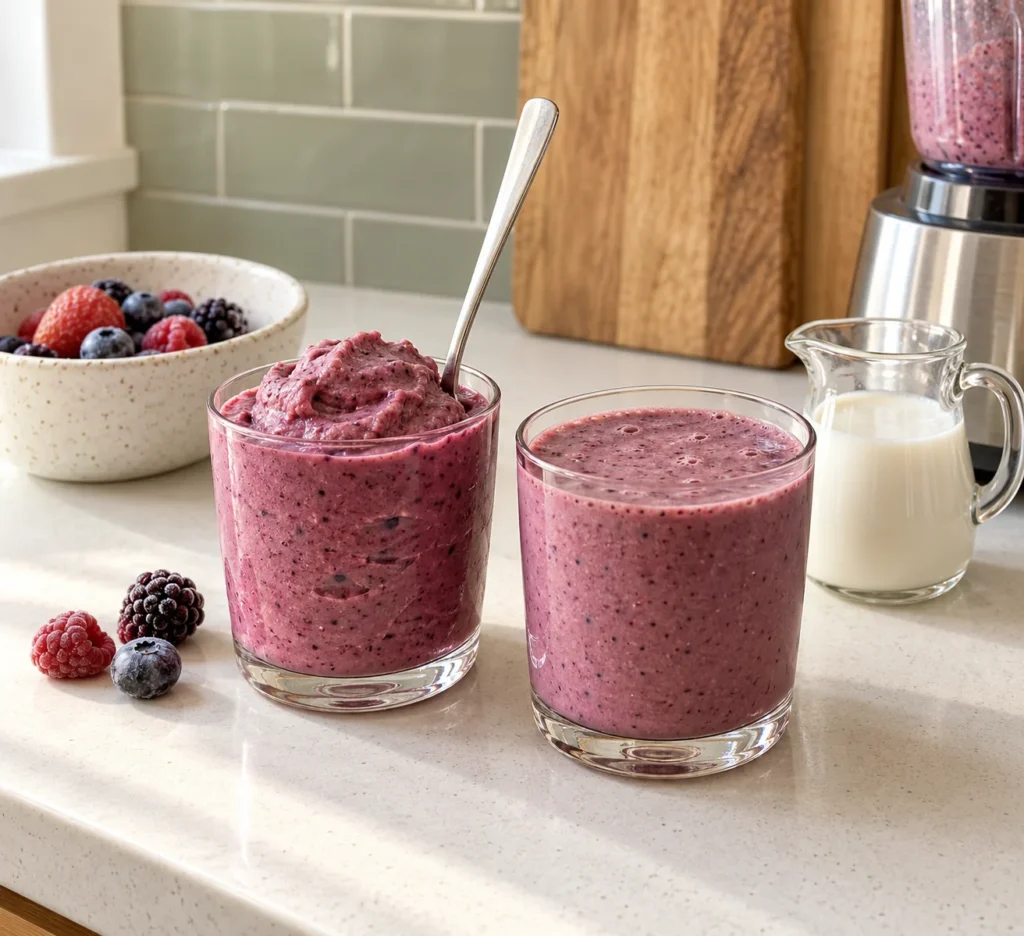
If your blender is on the weaker side, letting the frozen berries sit at room temperature for five minutes before blending softens them just enough to blend smoothly without turning the whole drink warm. A full-size countertop blender generally doesn’t need this step; a smaller personal-size blender usually benefits from it.
Batching the dry ingredients ahead
While the finished smoothie doesn’t hold up in the fridge, the dry components travel well. Portioning the dry milk powder (and a pre-measured scoop of frozen berries, if you buy them loose) into small bags or containers the night before, or for several mornings at once, cuts the actual blending process down to measuring the liquid and dumping in a pre-made bag. This gets you most of the time-saving benefit of a make-ahead smoothie without the texture problems that come from blending it ahead and storing the liquid version.
Pre-portioned frozen smoothie bags — banana, berries, and any other frozen add-ins sealed together — are an even faster version of this. Freeze a batch of five or six bags on a slow afternoon, and each morning becomes: dump a bag in, add liquid and yogurt, blend.
How to make it cheaper
- Buy frozen berries in bulk bags rather than small containers — the per-cup cost drops substantially at larger sizes.
- Use plain, unsweetened Greek yogurt rather than flavoured — better protein density, lower cost, and you control the sweetness yourself with the banana and honey.
- Skip the honey if the banana and berries already provide enough sweetness for your taste.
Scaling it up for the whole household
This recipe is written for one serving, but it scales cleanly if more than one person wants a smoothie in the morning. Doubling or tripling every ingredient works directly in most full-size blenders, though you’ll likely need to blend in two batches once you’re past about 4 cups of total volume — overfilling the blender past its max line is the main limit, not the recipe itself.
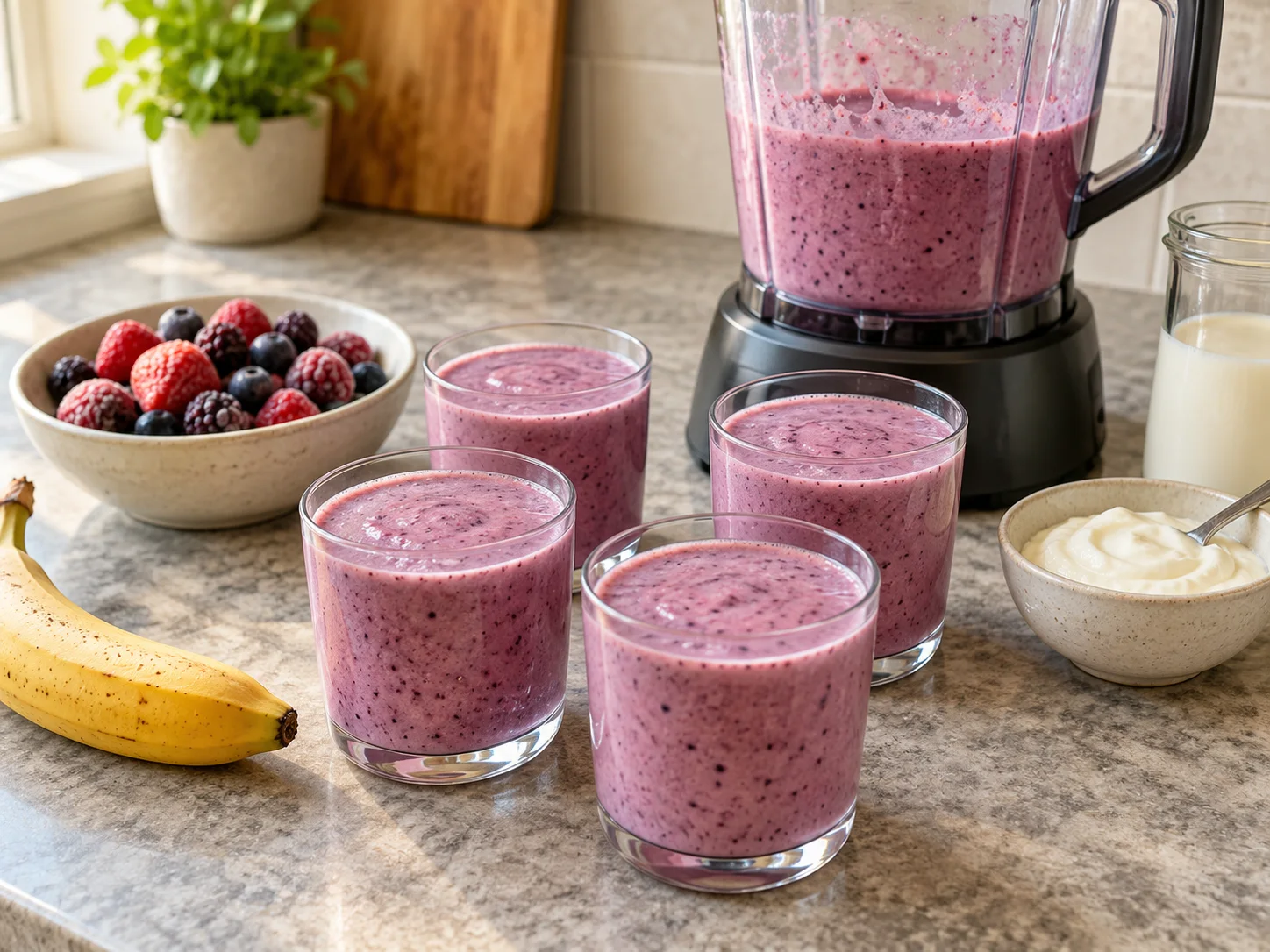
For a family that wants smoothies most mornings, it’s often more efficient to premix a big batch of the dry milk powder (it keeps for months in a sealed container) and keep a large bag of frozen mixed berries on hand specifically for this, rather than remeasuring tiny amounts fresh each day. The yogurt and banana still need to be fresh per batch, but the two shelf-stable ingredients can be set up once and used for weeks.
Fruit swaps and what they change
Frozen mixed berries are the default here mainly because they’re inexpensive and freeze well without turning mushy on thaw, but the smoothie works with most frozen fruit. Frozen mango or pineapple gives a sweeter, more tropical result and usually means you can skip the honey entirely. Frozen cherries pair well with the cocoa variation below. Fresh fruit works too, but you’ll want to add a few extra ice cubes to make up for the lack of frozen bulk, or the smoothie will come out thinner than intended.
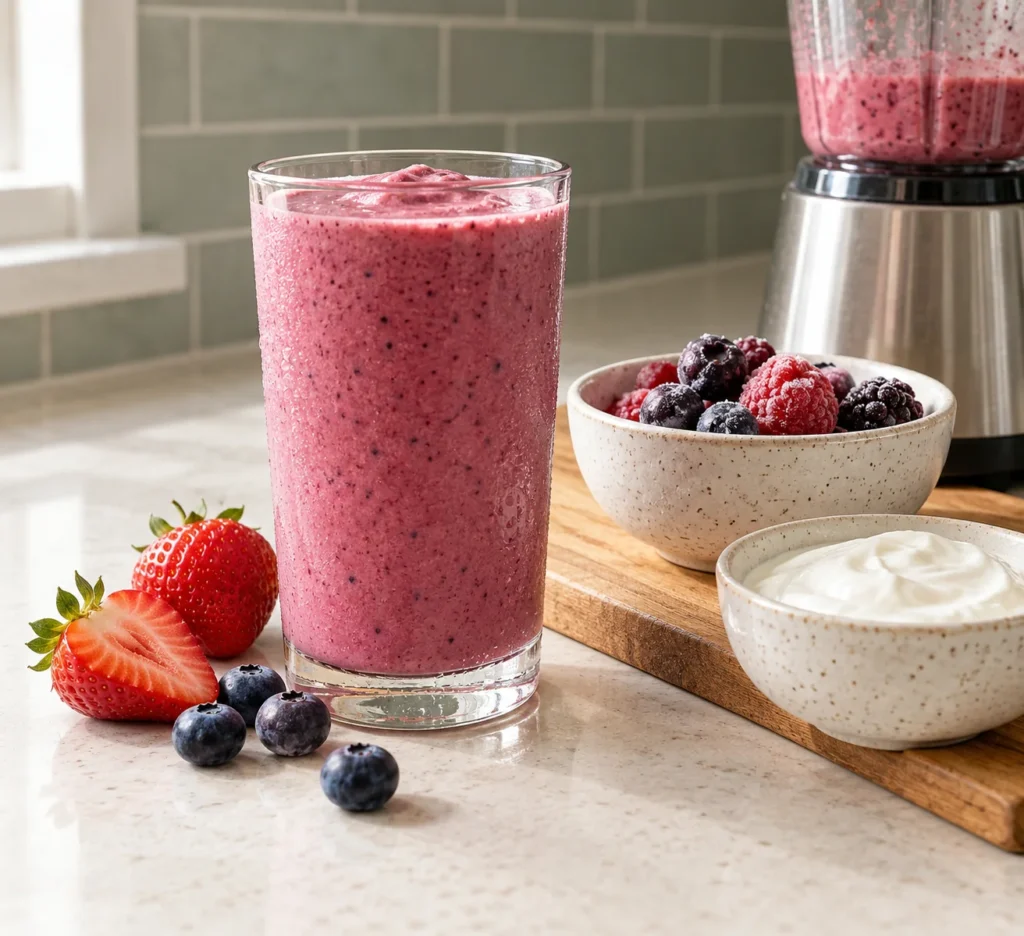
One thing worth knowing: frozen fruit is very often cheaper per cup than fresh, even for fruit that’s in season, because it’s picked and frozen at peak ripeness in bulk rather than priced for individual retail sale. For a recipe like this one, where the fruit gets blended beyond recognition anyway, there’s no real downside to defaulting to frozen.

Simple variations
- Peanut butter banana: swap the berries for 2 tbsp peanut butter and a bit more banana.
- Chocolate: add 1 tbsp cocoa powder and swap the berries for banana only.
- Green smoothie: add a handful of spinach — it disappears in colour and flavour once blended with the fruit.
- Coffee protein smoothie: swap half the milk for cold brewed coffee and drop the berries for banana only — an easy way to combine a morning coffee and breakfast into one cup.


When to drink this (and when not to)
This works as a full breakfast on its own, a post-workout recovery drink, or a between-meal snack when solid food isn’t convenient. As a full breakfast replacement it’s genuinely filling thanks to the protein and fibre from the fruit, but it digests faster than a plate with eggs or oats on it — if you tend to get hungry again within two hours of a liquid breakfast, pairing it with a small handful of nuts or a slice of toast on the side closes that gap without much added cost.
It’s a weaker choice right before bed — the natural sugar from the banana and berries is more useful earlier in the day when you’ll actually use that energy, and a slower-digesting option like cottage cheese fits an evening protein snack better.
Common mistakes
Using flavoured yogurt and then adding honey on top. Flavoured yogurt already carries added sugar, and stacking honey on top of that pushes the drink from a protein smoothie toward a dessert. Plain yogurt plus a small, controlled amount of honey gives you more control over the final sweetness.
Too much liquid. A full cup of milk plus ice plus yogurt can make the smoothie thinner than expected. If you prefer a thicker, spoonable texture, start with 3/4 cup of milk and add more only if the blender is struggling.
Forgetting the blender runs hotter with longer blend times. A smoothie blended for two full minutes to chase a perfectly smooth texture will come out noticeably less cold than one blended for 45 seconds, since the blending itself generates heat. If a very cold drink matters to you, add an extra ice cube or two rather than over-blending.
Frequently asked questions
Can I make this ahead and drink it later?
For the best texture, portion fruit into freezer bags and blend fresh in the morning. If you need the whole recipe already blended, freeze it as smoothie cubes using the method above and reblend with milk; this works much better than refrigerating the finished drink.
My smoothie came out clumpy — what happened?
Usually the dry milk powder was added after the frozen ingredients instead of with the liquid first. Blending powder directly into a thick, frozen mixture gives it less chance to dissolve — always start with the liquid and powder, blend briefly, then add the frozen fruit.
Can I use a plant-based milk instead?
Yes. Unsweetened soy milk keeps the protein closest to dairy milk; oat and almond milk usually lower the total. Dry milk powder still dissolves, but it is a dairy ingredient. For a fully dairy-free version, omit both the milk powder and Greek yogurt and use soy milk plus a thick high-protein soy yogurt.
Is this filling enough to replace a full breakfast?
For most people, yes — 25–30g of protein plus the fibre from a full cup of fruit is a substantial meal, not a snack. If you tend to need more volume in the morning to feel satisfied, adding a small handful of oats to the blender adds bulk and a bit more staying power without changing the flavour much.
Why does my smoothie taste chalky?
That’s almost always under-blended dry milk powder, or too much of it. Stick to the 2 tbsp in the recipe and make sure it’s fully blended into the liquid before adding anything frozen — more than about 3 tbsp per serving starts to taste noticeably powdery no matter how well it’s blended.
Can I drink this on the way out the door?
Yes — that’s one of the real advantages over a cooked breakfast. Blend it straight into a travel cup with a lid instead of a glass, and it’s one of the few options on this site’s breakfast lineup that genuinely works one-handed while walking or driving. It still separates faster than a shake made with just protein powder and water, so drink it within 20–30 minutes rather than letting it sit in a cup holder for hours.
Related reading: High-Protein Meals Without Protein Powder, High-Protein Overnight Oats, and No-Bake High-Protein Protein Balls.