High-Protein Chicken Noodle Soup (Budget)
Chicken noodle soup doesn’t usually get filed under “high protein,” but shredded chicken thighs and a generous hand with the noodles push this version well past the thin, broth-heavy soup most people picture. It’s also one of the more forgiving recipes on this site — hard to get wrong, easy to stretch, and better the next day.
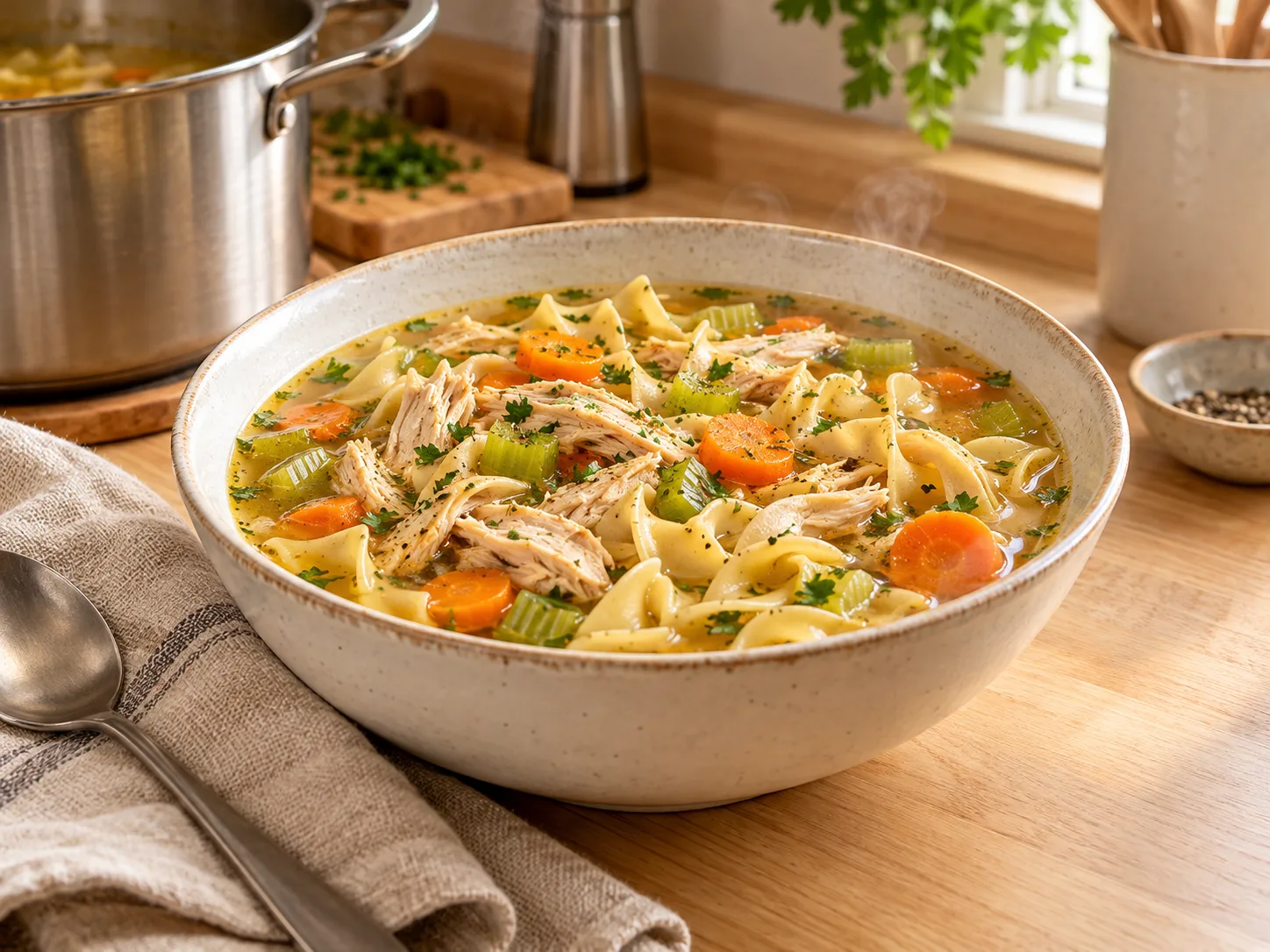
It’s a genuinely useful recipe to keep in rotation even outside of sick days, simply because it’s hard to mess up and uses ingredients that are almost always in stock in a budget-focused kitchen. Chicken thighs, carrots, celery, onion, and broth are a combination most of the recipes on this site already assume you have some version of on hand.
| Estimated cost per serving | Cheap |
| Protein per serving | ~24–28g* |
| Prep time | 10 minutes |
| Cook time | 30 minutes |
| Servings | 6 |
| Freezer-friendly | Yes (without noodles) |
*Protein is an estimate. Actual values depend on your exact ingredients and portions.
Why thighs rather than chicken breast or a whole chicken
Boneless thighs hit a practical middle ground for this recipe: they’re more flavourful than breast meat thanks to their higher fat content, which also means they stay tender through the 20-minute simmer without drying out the way lean breast can. They’re also faster to prep than a whole chicken, which needs to be simmered longer and then picked apart bone by bone once cooked. A whole chicken does give a richer, more gelatin-heavy broth if you have the extra time, which is covered in the cost section below as a trade worth making on a week when the per-kilogram price favours it — but for a straightforward weeknight version, thighs are the better balance of flavour, speed, and cost.
Ingredients
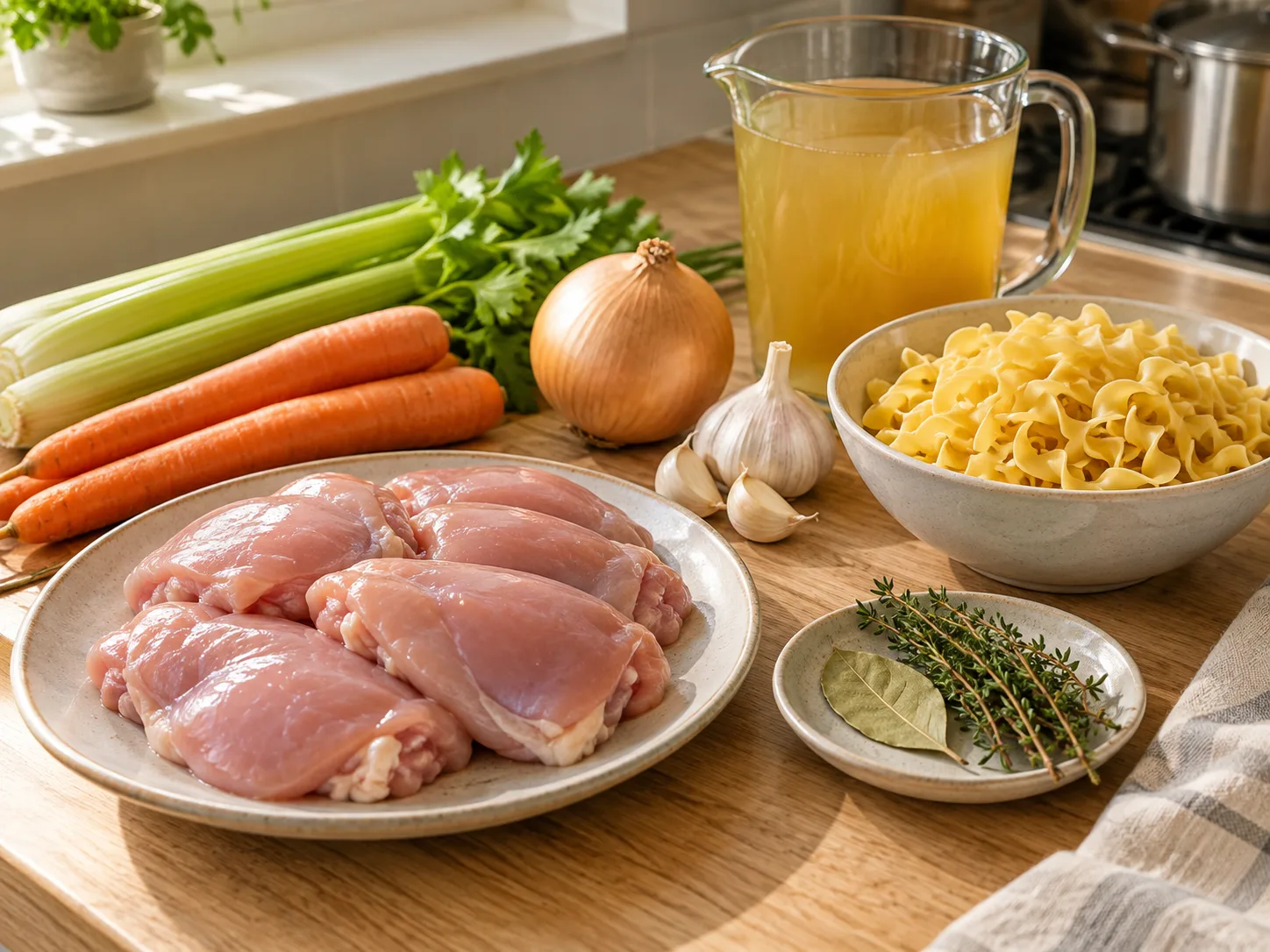
- 700g boneless skinless chicken thighs
- 2 carrots, sliced
- 2 celery stalks, sliced
- 1 onion, diced
- 3 cloves garlic, minced
- 8 cups chicken broth
- 2 cups egg noodles, dry
- 1 tsp dried thyme
- 1 bay leaf
- Salt and pepper to taste
How to make it
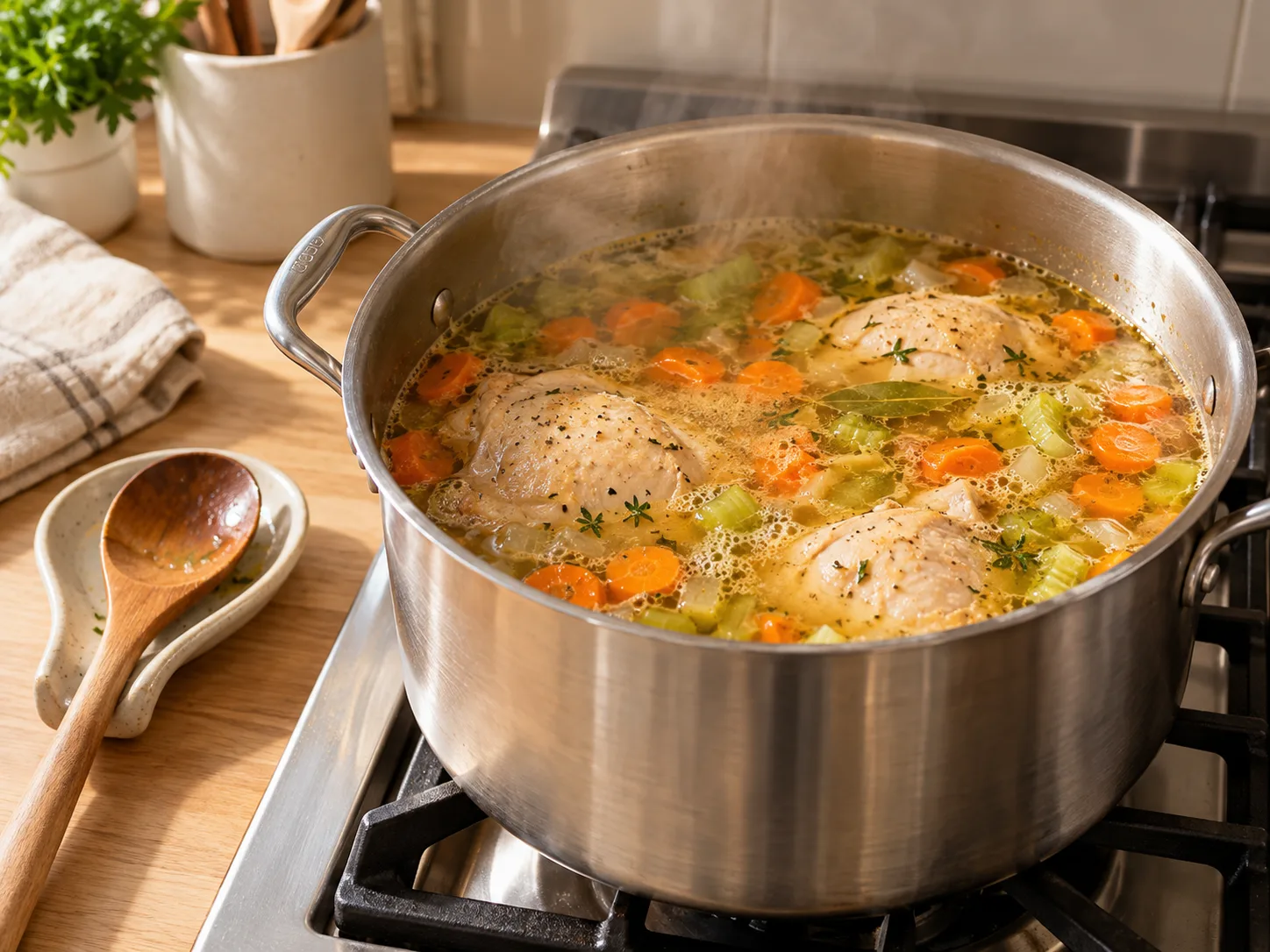
- In a large pot, combine the chicken thighs, carrots, celery, onion, garlic, broth, thyme, and bay leaf. Bring to a boil, then reduce to a simmer.
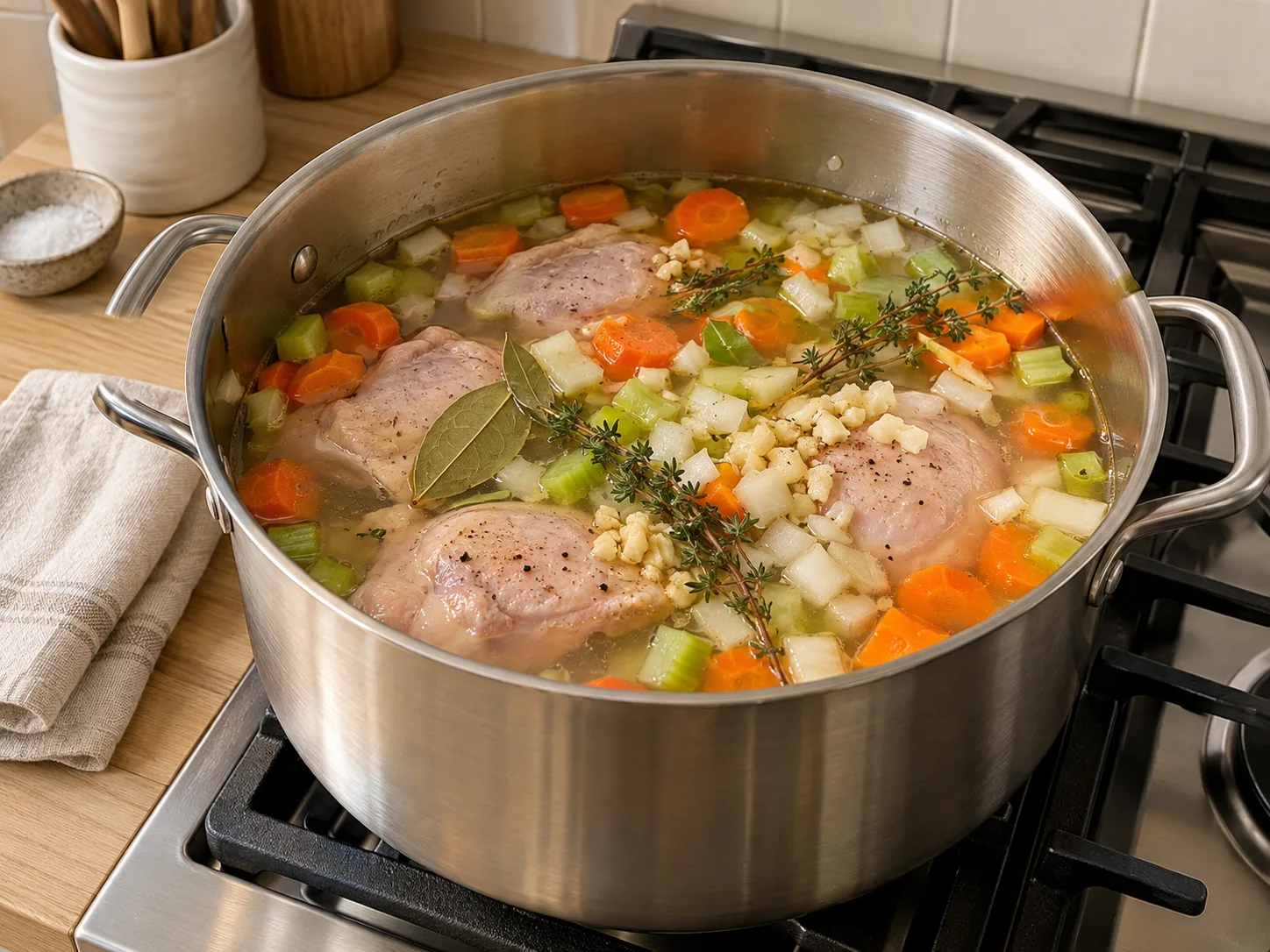
- Simmer 20 minutes, until the chicken is cooked through and the vegetables are tender.
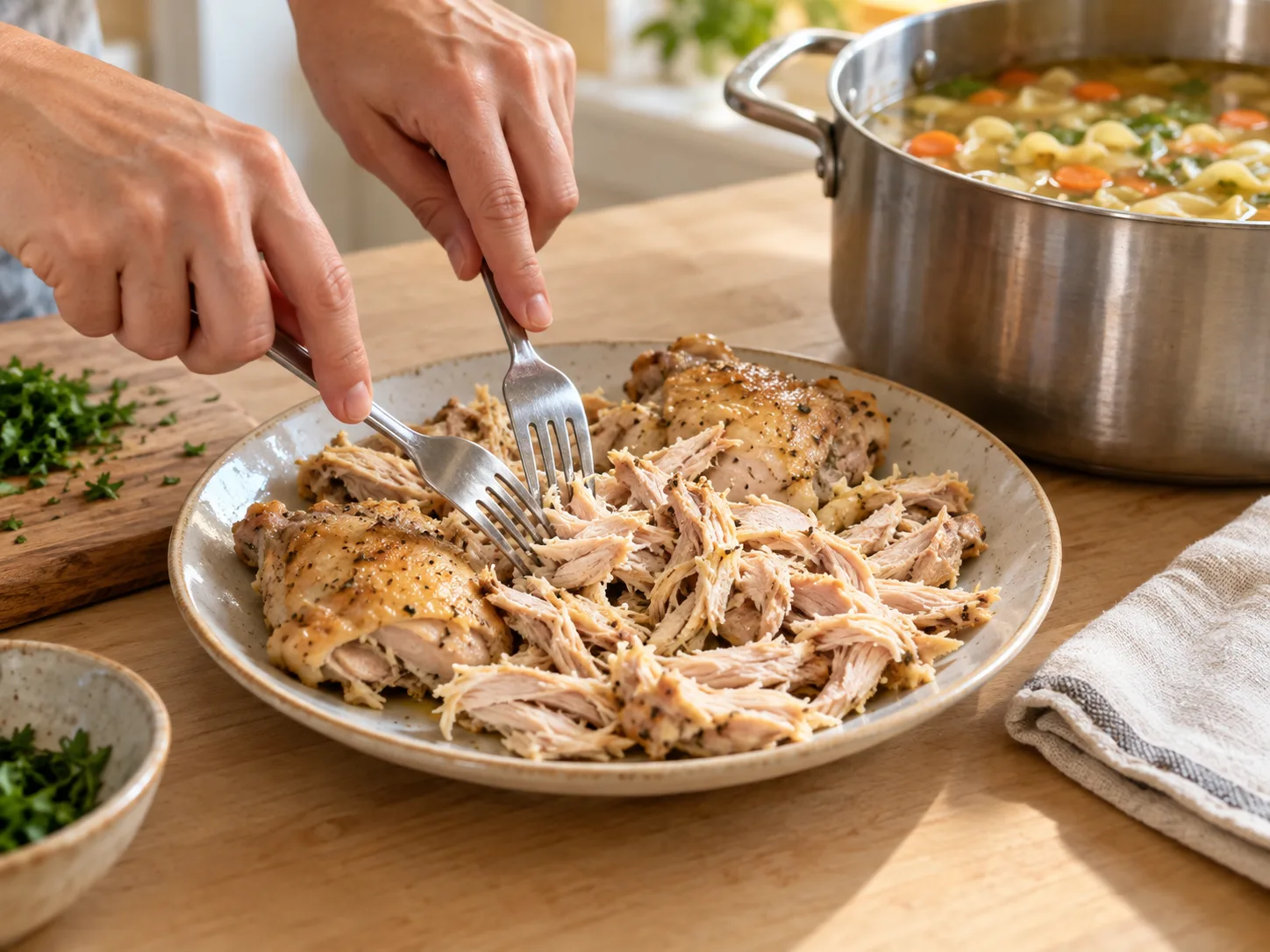
- Remove the chicken, shred or chop it, and return it to the pot.
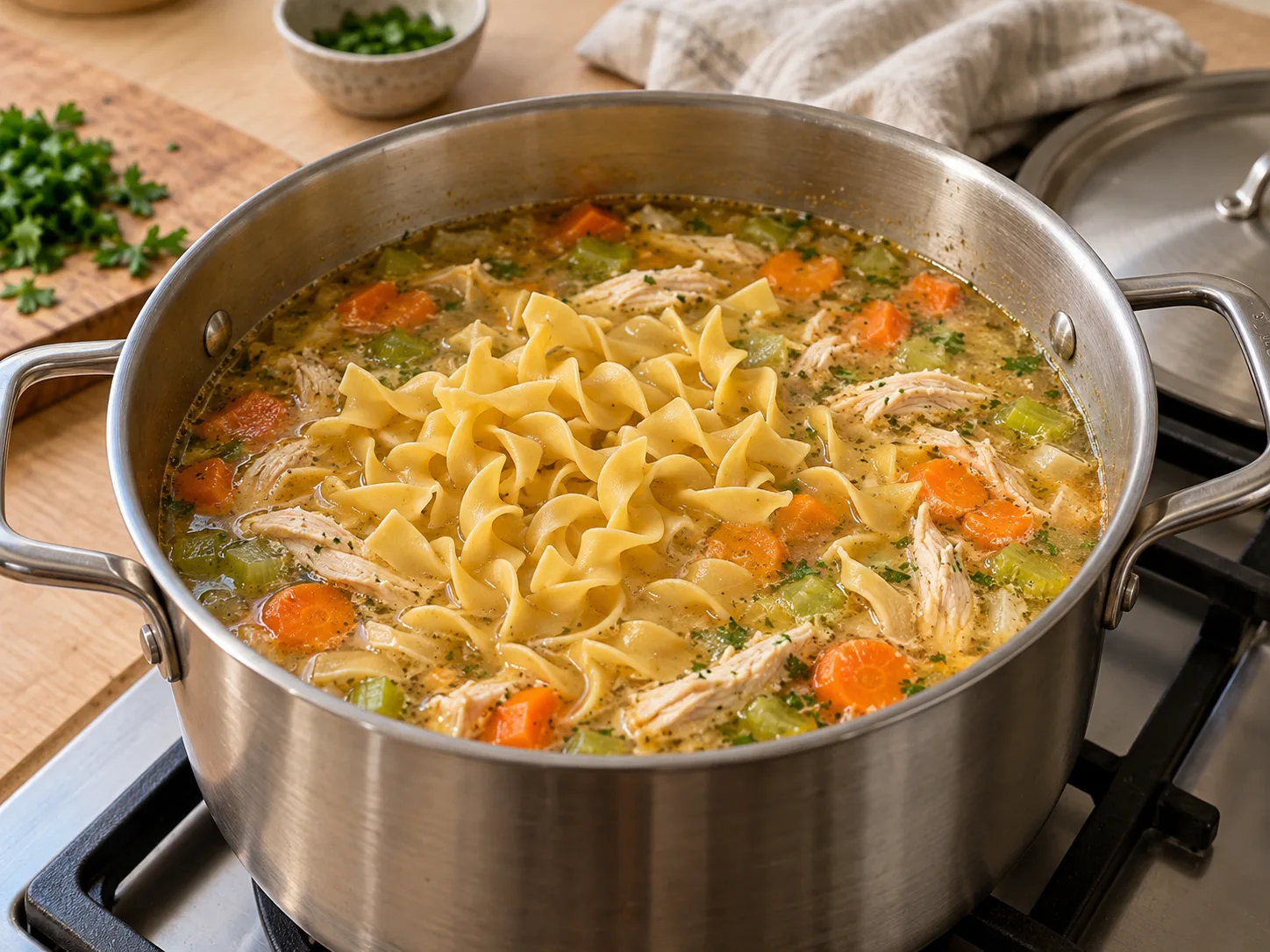
- Add the egg noodles and simmer 8–10 minutes, until tender. Remove the bay leaf before serving.
- Season with salt and pepper to taste.
Pressure cooker method
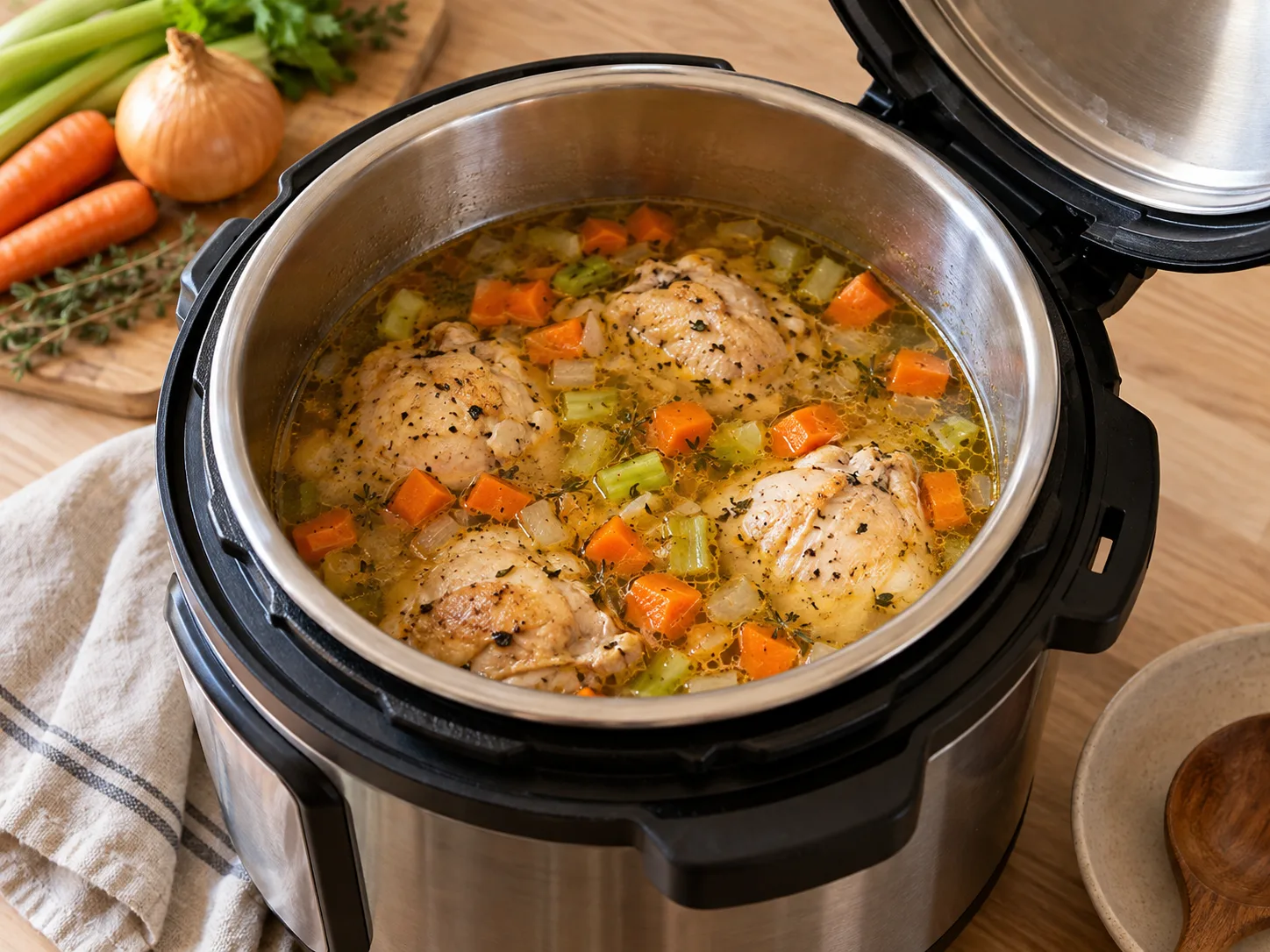
Use a 6-quart electric pressure cooker and leave the noodles out for now. Add the chicken, carrots, celery, onion, garlic, thyme, bay leaf, and 8 cups of broth. Cook on High Pressure for 10 minutes, allow 5 minutes of natural release, then carefully release the remaining pressure. Remove the chicken, confirm the thickest pieces reached 165°F / 74°C, shred, and return it to the pot.
For soup you will eat immediately, switch to Sauté, bring the broth back to a gentle boil, and cook the egg noodles according to the package timing. For meal prep or freezing, cook noodles in a separate pot and add them to individual bowls. The pressure-cooker version is convenient, but its vegetables will be softer and its broth slightly less concentrated than the stovetop version.
Slow cooker method
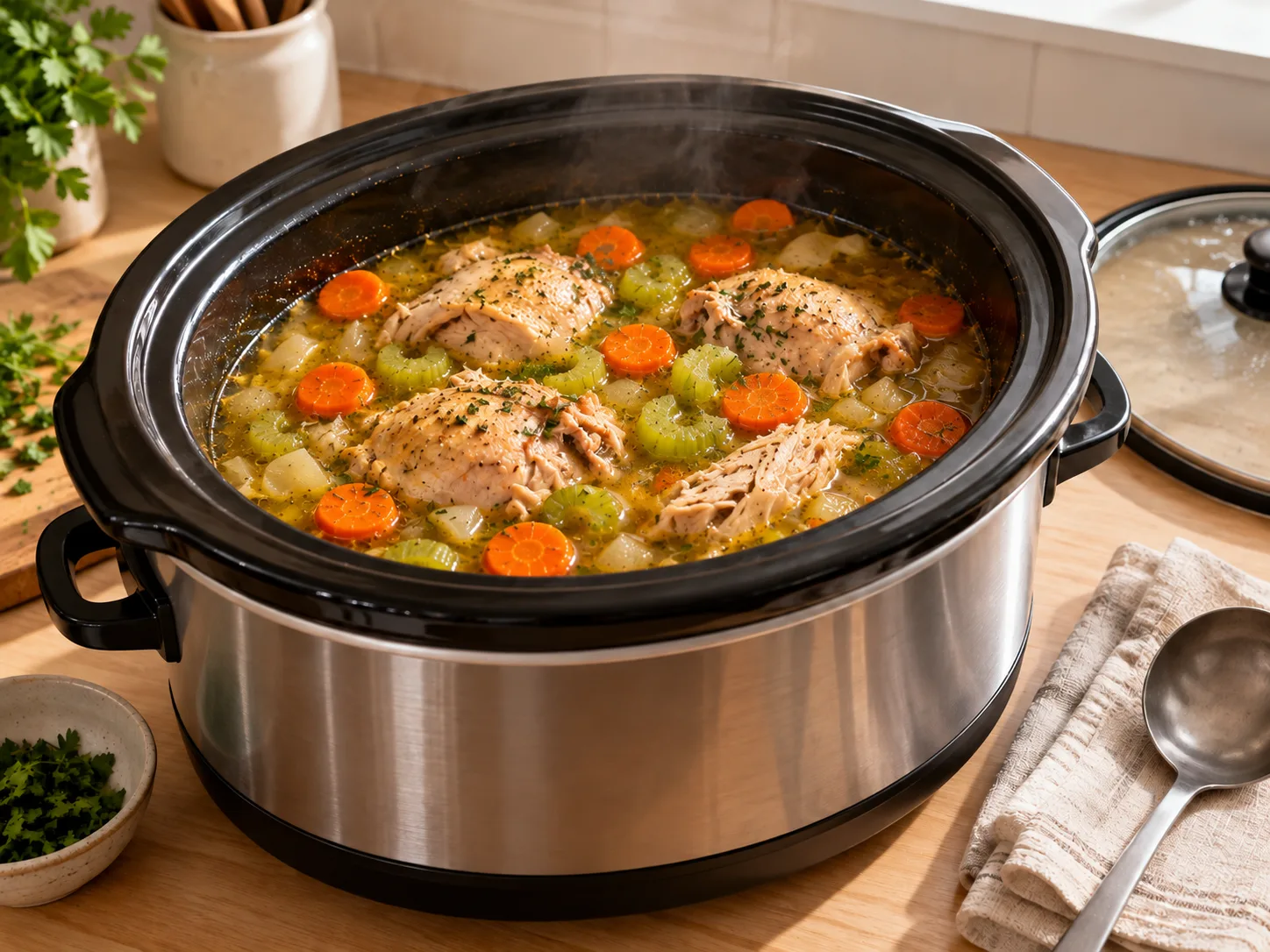
Combine fully thawed chicken, vegetables, garlic, thyme, bay leaf, and broth in a 6-quart slow cooker. Cover and cook on Low for 6–7 hours or High for 3–4 hours. Remove the chicken, check it reached 165°F / 74°C, shred it, and return it to the broth. Cook the noodles separately and add them only to the bowls being served; noodles left in the slow cooker will continue absorbing broth and become soft.
Which method is best?
- Best broth and vegetable texture: Stovetop — the gentle uncovered simmer gives you the most control.
- Least hands-on: Slow cooker — best when you want the soup waiting at dinner time.
- Fastest hands-off option: Pressure cooker — allow roughly 35–45 minutes total for pressurizing, cooking, and release.
- Best for meal prep: Any method works, provided the noodles are stored separately.
A microwave is useful for reheating individual portions, not for safely and evenly cooking this full batch from raw chicken. An oven or air fryer offers no practical benefit for a broth-based soup.
Cost and protein breakdown
- 700g chicken thighs — the main protein source, typically cheaper than using a whole chicken for the same amount of meat
- Broth, vegetables, noodles — inexpensive bulk, stretching the chicken across six full servings
- Total estimate — cheap to make, per serving
Protein lands around 24–28g per serving — higher than most people expect from a soup, since this version is built around a generous amount of shredded chicken rather than a thin broth with a token amount of meat.
Why the noodles go in separately, not frozen with the soup
Noodles cooked directly in the broth soak up a lot of the liquid as they sit, and they turn mushy and bloated after a few days in the fridge or any time in the freezer. The fix: freeze or store the soup base without noodles, and cook fresh noodles separately each time you reheat a portion, stirring them in right before eating. A few extra minutes, much better texture.
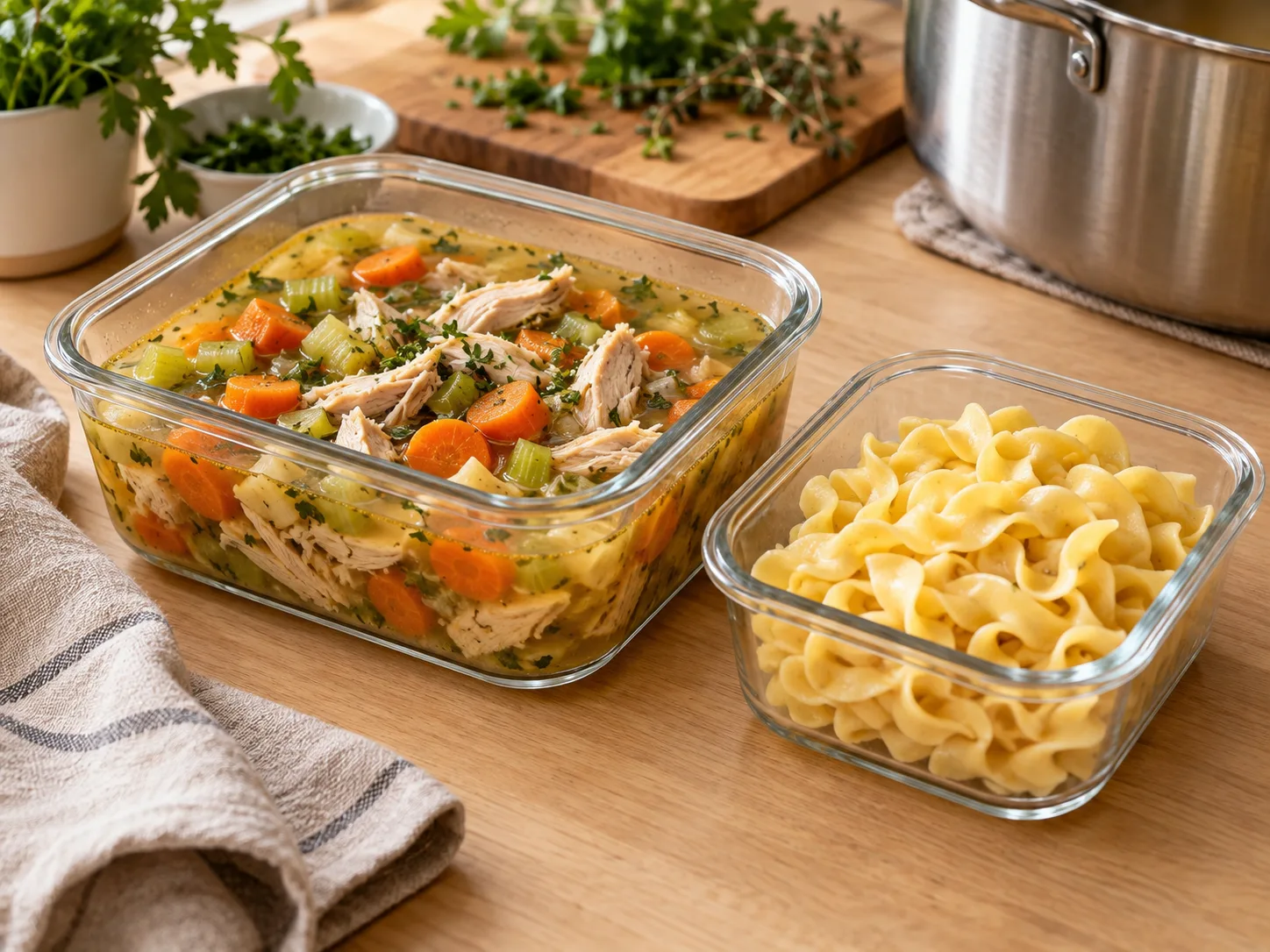
Egg noodles specifically absorb liquid faster than a lot of other pasta shapes because of their soft, porous texture, which is part of why this issue is more noticeable here than in a dish using a firmer pasta. If you’re making this for same-day eating with no leftovers planned, cooking the noodles directly in the pot as the recipe allows is completely fine — the separate-cooking advice really only matters once storage time of more than a few hours enters the picture.
How this compares to the minestrone on this site
Both this and the minestrone recipe share the same “pasta goes in separately” lesson, but they’re built around different proteins and flavour traditions — this one is a classic chicken-and-broth soup leaning on dried thyme and bay leaf, while the minestrone is vegetable-forward and built on beans rather than meat as its main protein source. If you want a higher-protein, meat-based soup, this chicken noodle version is the better pick; if you want something lighter on meat and more flexible with whatever vegetables are on hand, the minestrone fits that better.
The comfort-food association, and what’s actually true about it
Chicken noodle soup has a long-standing reputation as the thing to eat when you’re feeling under the weather, and there’s some real basis for part of that reputation: warm liquids can help with congestion and hydration, and a soup like this is easy to get down when appetite is low. It isn’t a treatment for illness, and nothing here should be read as medical advice — but as a practical, easy-to-eat, high-protein meal for a day when cooking anything more involved feels like too much, it holds up for reasons beyond nostalgia alone.
Common mistakes
Boiling hard instead of simmering. A vigorous boil toughens chicken thighs and can break vegetables down into mush faster than intended. A gentle simmer, as the recipe specifies, cooks everything through more evenly.
Adding noodles directly to a pot you plan to freeze, as covered above. This is the single most common way this soup goes from great to disappointing by the time it’s reheated weeks later.
Under-seasoning before tasting. Chicken broth varies a lot in saltiness between brands, and this recipe’s seasoning (thyme, bay leaf, salt, pepper) is meant to be adjusted to the specific broth you’re using. Taste before serving rather than assuming the stated salt and pepper amounts will be right for every broth.
How to make it cheaper
- Use a whole chicken instead of thighs if the per-kilogram price is better — simmer it whole in the broth, then pull the meat off the bones once cooked. You’ll also get a richer broth this way.
- Buy a frozen mixed vegetable soup blend instead of fresh carrots and celery if it’s cheaper that week — it works just as well cooked into the broth.
- Use bouillon and water instead of pre-made broth — usually a meaningful cost saving with little flavour difference once everything else is added.
Storage and freezing
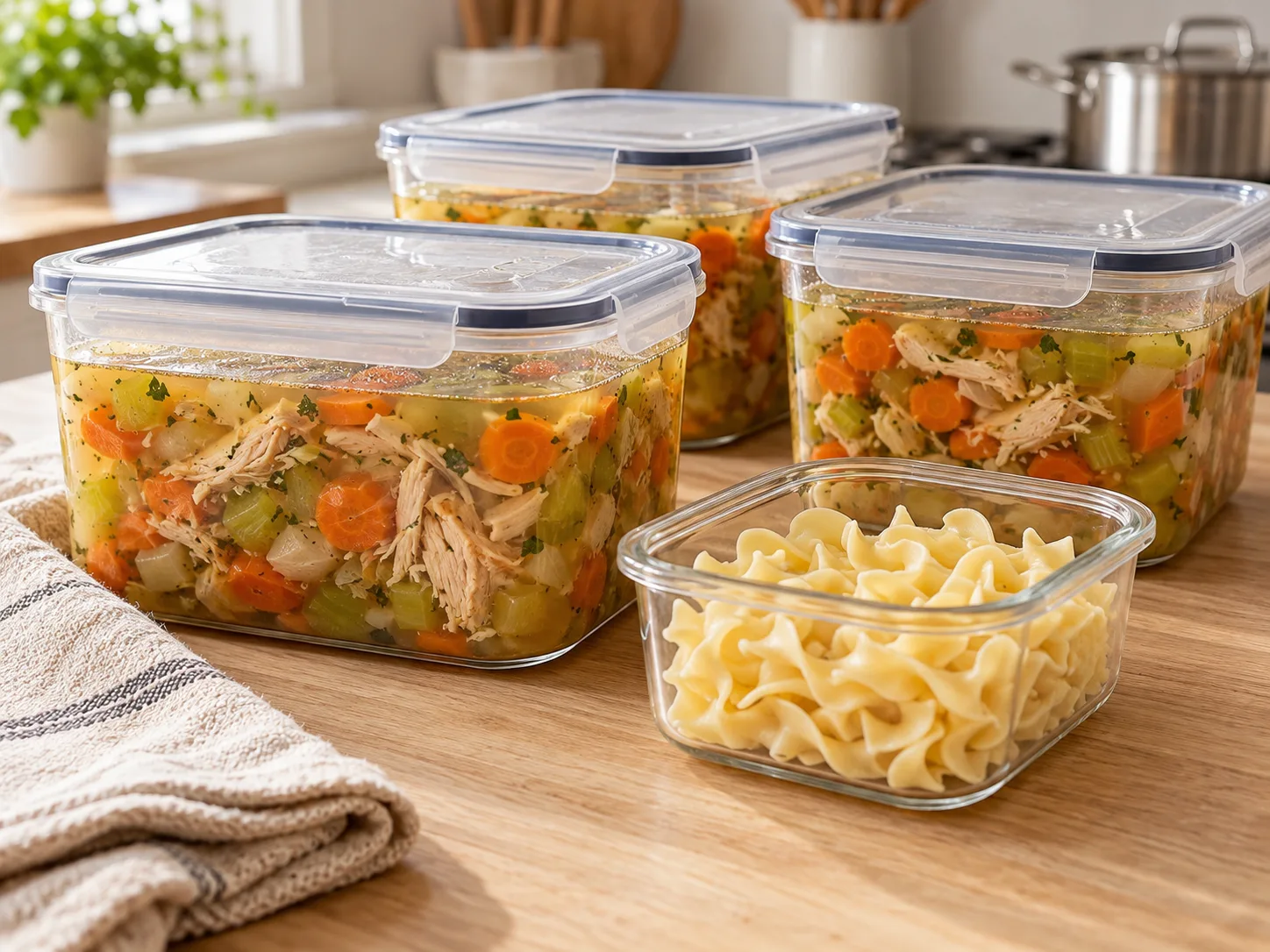
- Fridge: Cool the soup quickly in shallow containers, refrigerate within 2 hours, and use within 2–3 days. Store noodles separately so they do not absorb the broth.
- Freezer: Freeze the chicken-and-vegetable base without noodles for up to 3 months for best quality. Leave a little expansion room in the container and thaw overnight in the refrigerator.
- Reheating: Bring the soup to a full rolling boil on the stovetop, or stir an individual microwave portion halfway through and heat it to 165°F / 74°C. Add cooked noodles after the soup is hot.
Frequently asked questions
Can I use rice instead of egg noodles?
Yes — cook rice separately and add it the same way as the noodles, or stir in already-cooked rice at the end just to heat through. The same mushy-if-frozen-together issue applies, so keep rice separate from the base if you’re freezing any of it.
My broth came out cloudy — did I do something wrong?
No, this is normal for a simmered soup like this one and doesn’t affect taste or safety. A perfectly clear broth usually requires a slower, more careful simmer and regular skimming, which isn’t necessary for a quick weeknight soup like this.
Can I double this recipe for a bigger batch?
Yes, in a large enough pot — see the equipment note above on pot size. Keep the simmer time roughly the same, since it’s governed by how long the chicken and vegetables take to cook through, not the total volume in the pot. A doubled batch (without noodles, added separately as always) freezes in individual portions for a genuinely useful stock of ready-made soup bases.
Why does the recipe call for both dried thyme and a bay leaf?
They’re doing slightly different jobs. Thyme adds a direct, herby flavour that stays in the finished soup, while bay leaf contributes a subtler background depth during the simmer and is removed before serving rather than eaten — it’s a classic soup and stew addition specifically for that slow-release background flavour, not meant to be a prominent, identifiable taste on its own.
Can I use rotisserie chicken instead of cooking raw thighs?
Yes, and it’s a genuine time-saver — simmer the vegetables in the broth until tender (skipping the raw-chicken simmer step entirely), then stir in shredded rotisserie chicken near the end, just long enough to heat through. This shortens the total cook time noticeably, though you lose some of the flavour that cooking the chicken directly in the broth contributes to the final soup.
Can I add more vegetables to stretch it further?
Yes — frozen peas, corn, or extra carrots all work well added in the last 10 minutes of cooking. This is an easy way to add servings without adding much cost.
What size pot do I need for this?
A 6-quart (roughly 5.5L) pot comfortably holds this recipe with room to simmer without boiling over. If you’re doubling the recipe, as suggested below, you’ll want an 8-quart or larger stockpot, or you’ll need to split the batch across two pots.
Is bone-in chicken a better choice for flavour?
Yes, somewhat — bones release gelatin and extra flavour into the broth as they simmer, giving a richer result than boneless thighs alone. The trade-off is more prep work (removing bones after cooking) and typically a higher price per usable kilogram of meat once you account for the bone weight. For a quick weeknight version, boneless thighs are the more practical choice; for a slower weekend batch, bone-in is worth considering.
Related reading: Thanksgiving Turkey Leftovers Meal Prep, High-Protein Roasted Butternut Squash Soup, High-Protein Black Bean Soup, and High-Protein Chicken Broccoli Cheddar Soup.