
Ground Pork Budget Stir-Fry
Ground pork is one of the more overlooked proteins in the budget aisle — often cheaper than ground beef, and it takes to a stir-fry-style sauce better than almost anything else on this site. Fifteen minutes, one pan, and it tastes like something from a takeout menu for a fraction of the cost.
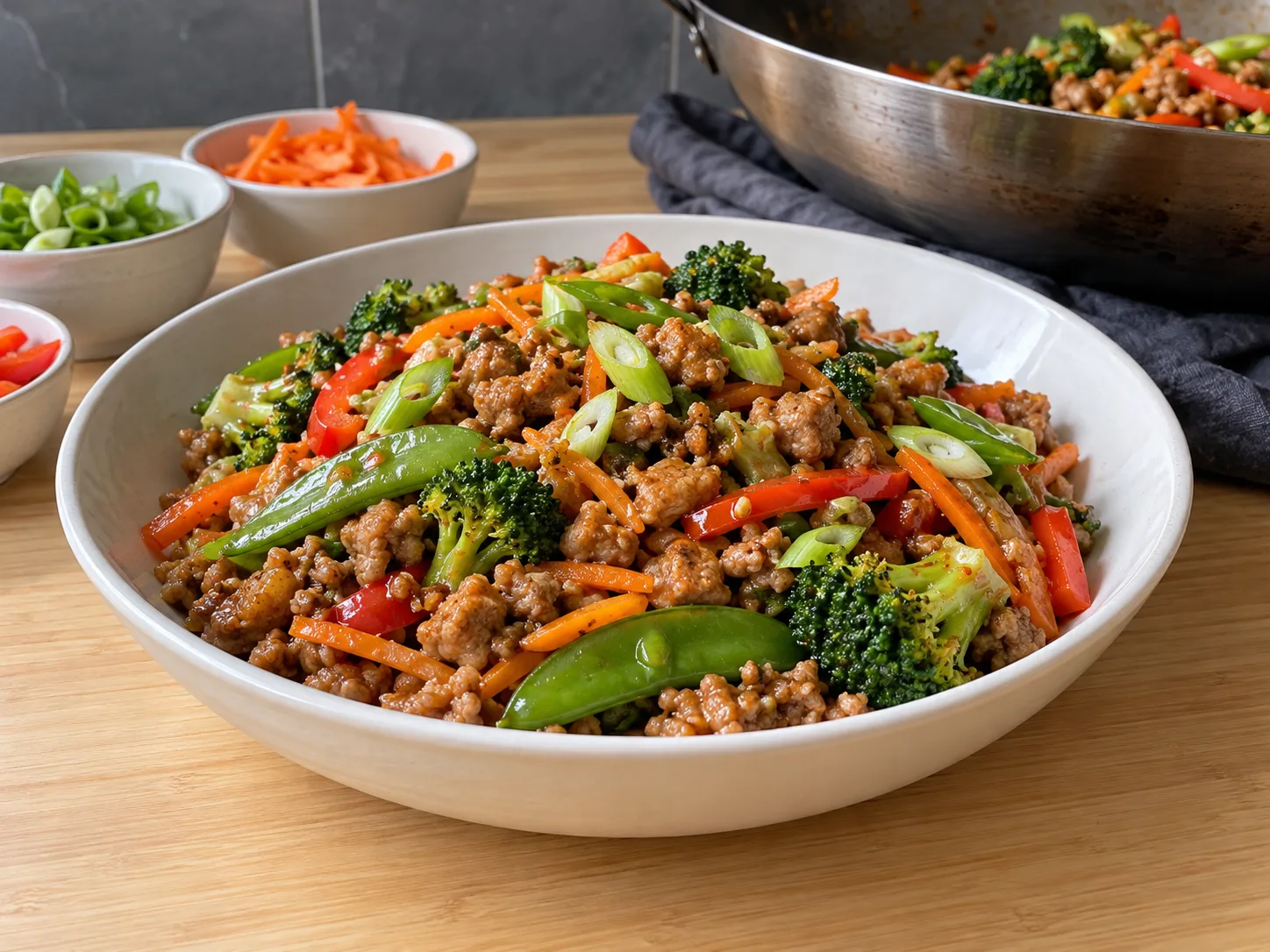
It’s also a useful recipe to have on hand for the specific situation where dinner needs to happen fast with whatever’s in the freezer and fridge — ground pork, a bag of frozen vegetables, and a handful of pantry staples is a realistic Tuesday-night inventory for a lot of households, and this turns that exact inventory into a meal that doesn’t taste like an emergency improvisation.
| Estimated cost per serving | Cheap |
| Protein per serving | ~26–30g* |
| Prep time | 10 minutes |
| Cook time | 12 minutes |
| Servings | 4 |
| Freezer-friendly | Yes |
*Protein is an estimate. Actual values depend on your exact ingredients and portions.
Why high heat matters more than any specific pan
Real stir-fry restaurants cook over burners far hotter than a typical home stove can produce, which is part of why restaurant stir-fry has that distinct slightly-charred flavour (sometimes called “wok hei”) that home versions rarely fully replicate. You can’t match a commercial burner at home, but you can get closer by not fighting the heat you do have: use the highest setting your stove allows, don’t crowd the pan with more ingredients than it can hold in a thin layer, and resist the urge to stir constantly — letting the pork sit in contact with the hot pan for a few seconds at a time before stirring again gives it more chance to actually brown rather than just steam in its own moisture.
Ingredients
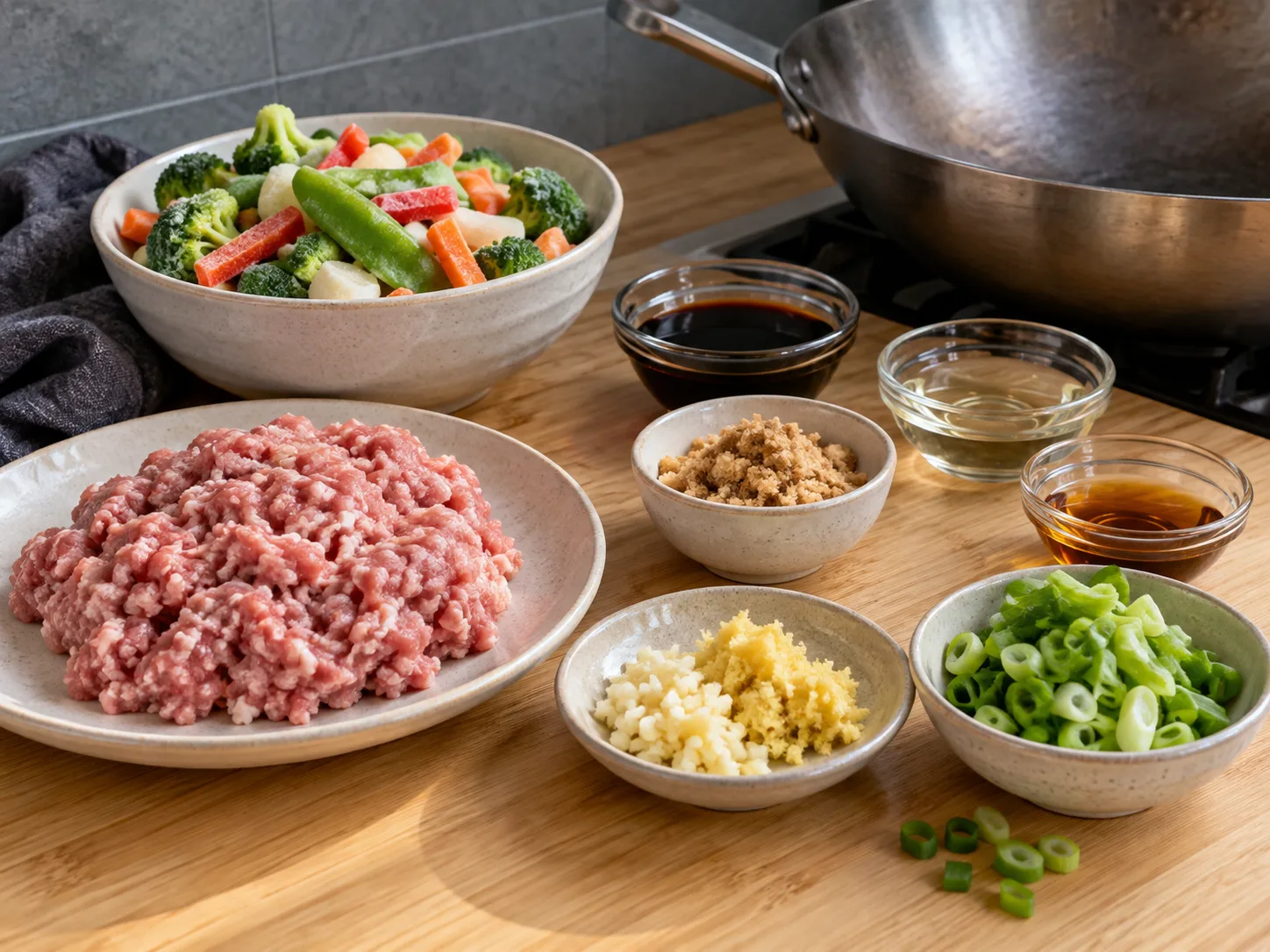
- 500g ground pork
- 3 cups frozen stir-fry vegetable mix
- 3 cloves garlic, minced
- 1 tbsp fresh ginger, minced (or 1/2 tsp ground ginger)
- 3 tbsp soy sauce
- 1 tbsp rice vinegar
- 1 tbsp brown sugar
- 1 tsp sesame oil
- 1 tbsp oil, for cooking
- 2 green onions, sliced
How to make it
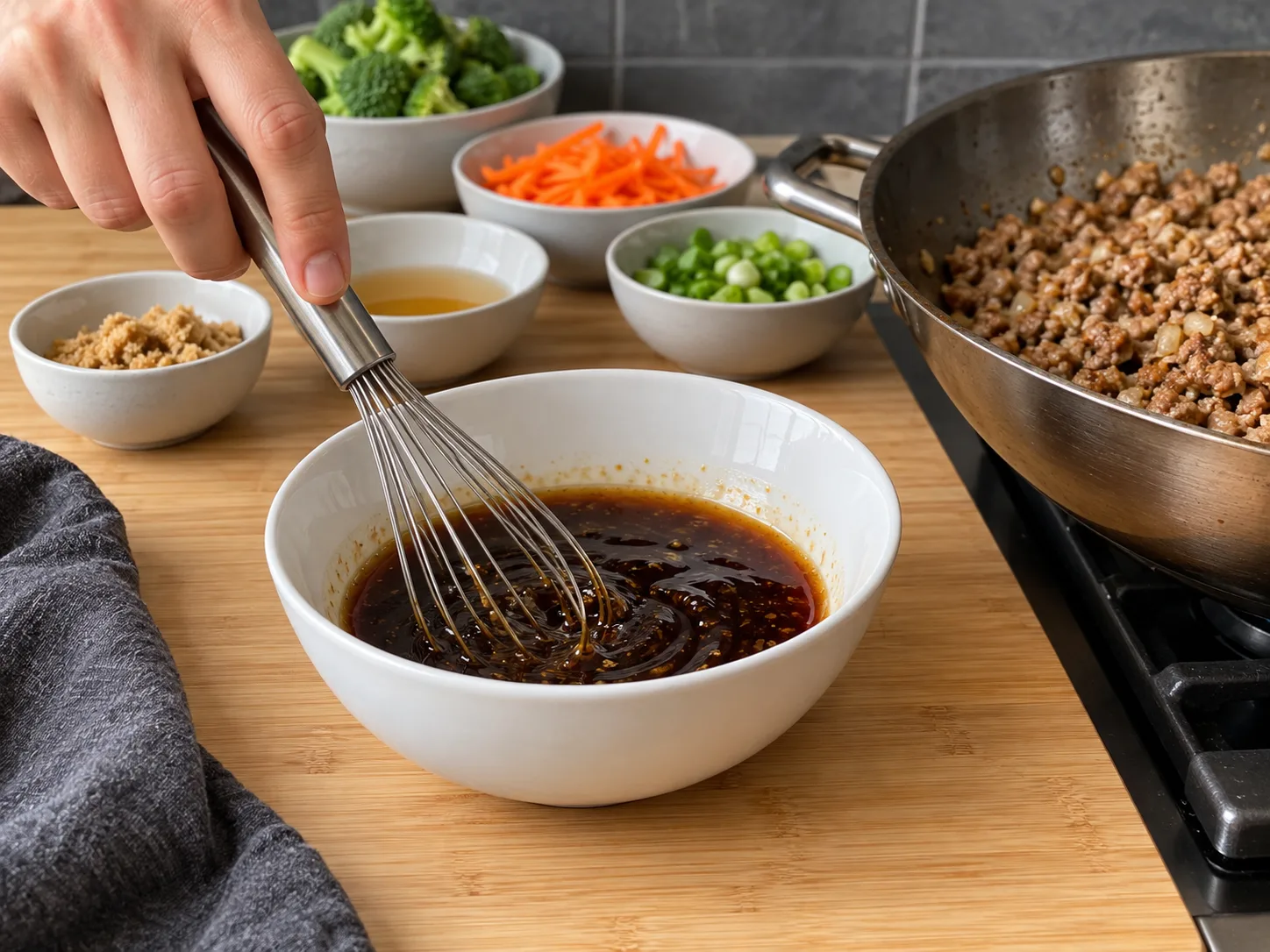
- Whisk together the soy sauce, rice vinegar, brown sugar, and sesame oil in a small bowl. Set aside.
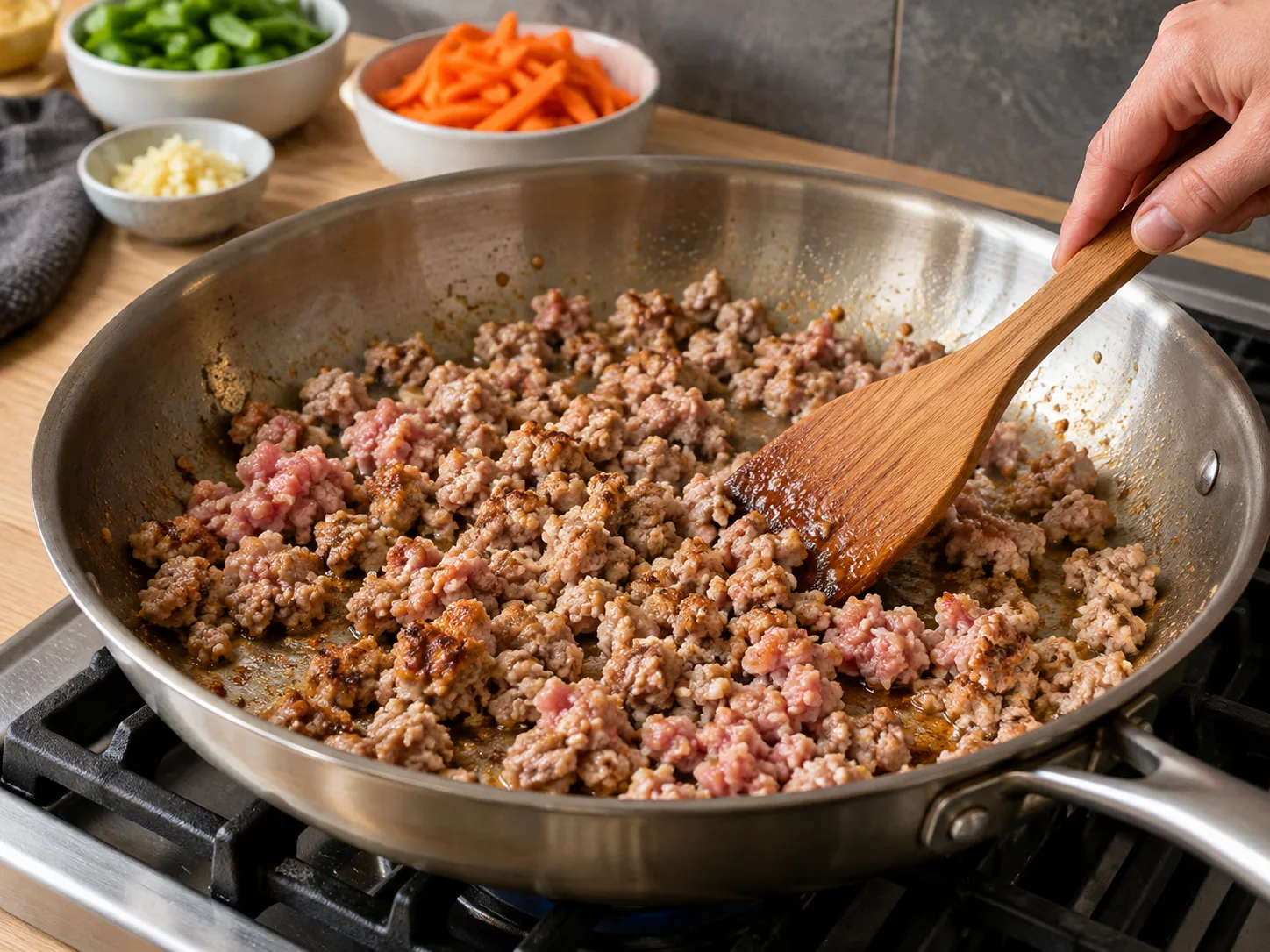
- Heat the oil in a large skillet or wok over high heat. Add the ground pork, breaking it into small pieces as it cooks, 5–6 minutes until browned and the largest pieces reach 160°F / 71°C.
- Add the garlic and ginger, cooking 30 seconds until fragrant.
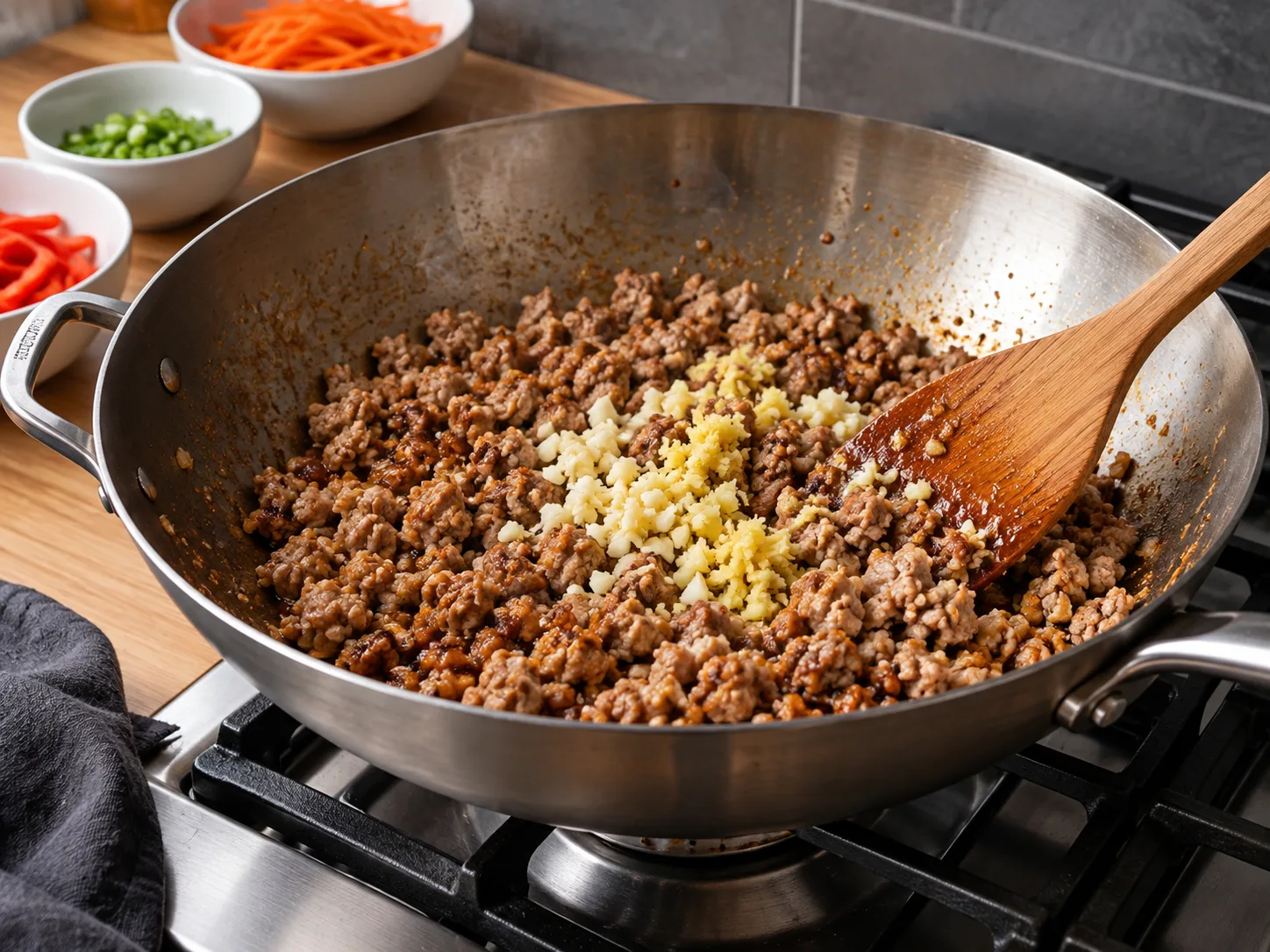
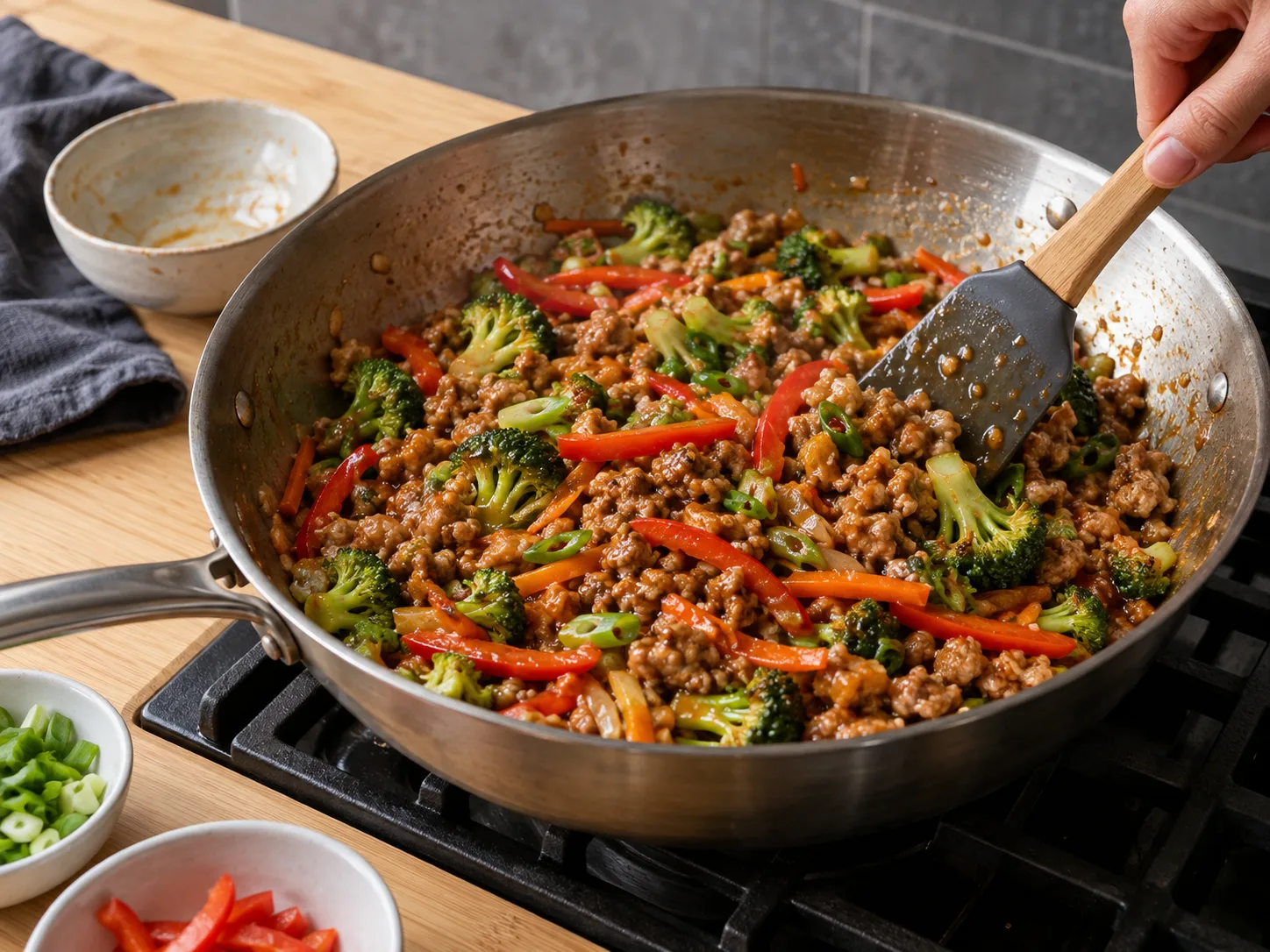
- Add the frozen vegetables straight from frozen — no need to thaw. Cook 4–5 minutes, stirring occasionally, until tender-crisp.

- Pour in the sauce and toss everything together for 1–2 minutes until it coats evenly and slightly thickens. Top with green onions.
Which pan gives the best result?
- Best on most home stoves: a wide skillet. Its flat base keeps more pork and vegetables in direct contact with the heat.
- Best browning: carbon steel or cast iron. Preheat briefly, add the oil, and cook in a thin layer.
- Best for easy cleanup: non-stick. Use medium-high rather than maximum heat and give the pork a little longer to brown.
- A wok is best only with a strong burner. Its shape makes tossing easy, but a small hot base can be slower than a wide skillet on a standard electric stove.
Cost and protein breakdown
- 500g ground pork — frequently cheaper per kilogram than ground beef, and a good value for protein density
- Frozen stir-fry vegetables — convenient and inexpensive, with no prep beyond opening the bag
- Sauce ingredients — pantry staples, a small fraction of total cost
- Total estimate — cheap to make, per serving
Protein lands around 26–30g per serving, almost entirely from the pork.
Understanding the sauce ratio so you can adjust it
The sauce here breaks down to roughly 3 parts soy sauce, 1 part rice vinegar, 1 part brown sugar, with a small amount of sesame oil for aroma rather than bulk. Once you know that ratio, you can adjust it by feel rather than needing to follow the recipe exactly every time: more vinegar if you want it sharper, more brown sugar if you want it sweeter and more glaze-like, or a splash of water if it tastes too concentrated once it’s reduced in the pan. Keeping this general ratio in mind also makes it easy to double or triple the sauce for a bigger batch without doing much math.
Flavour variations
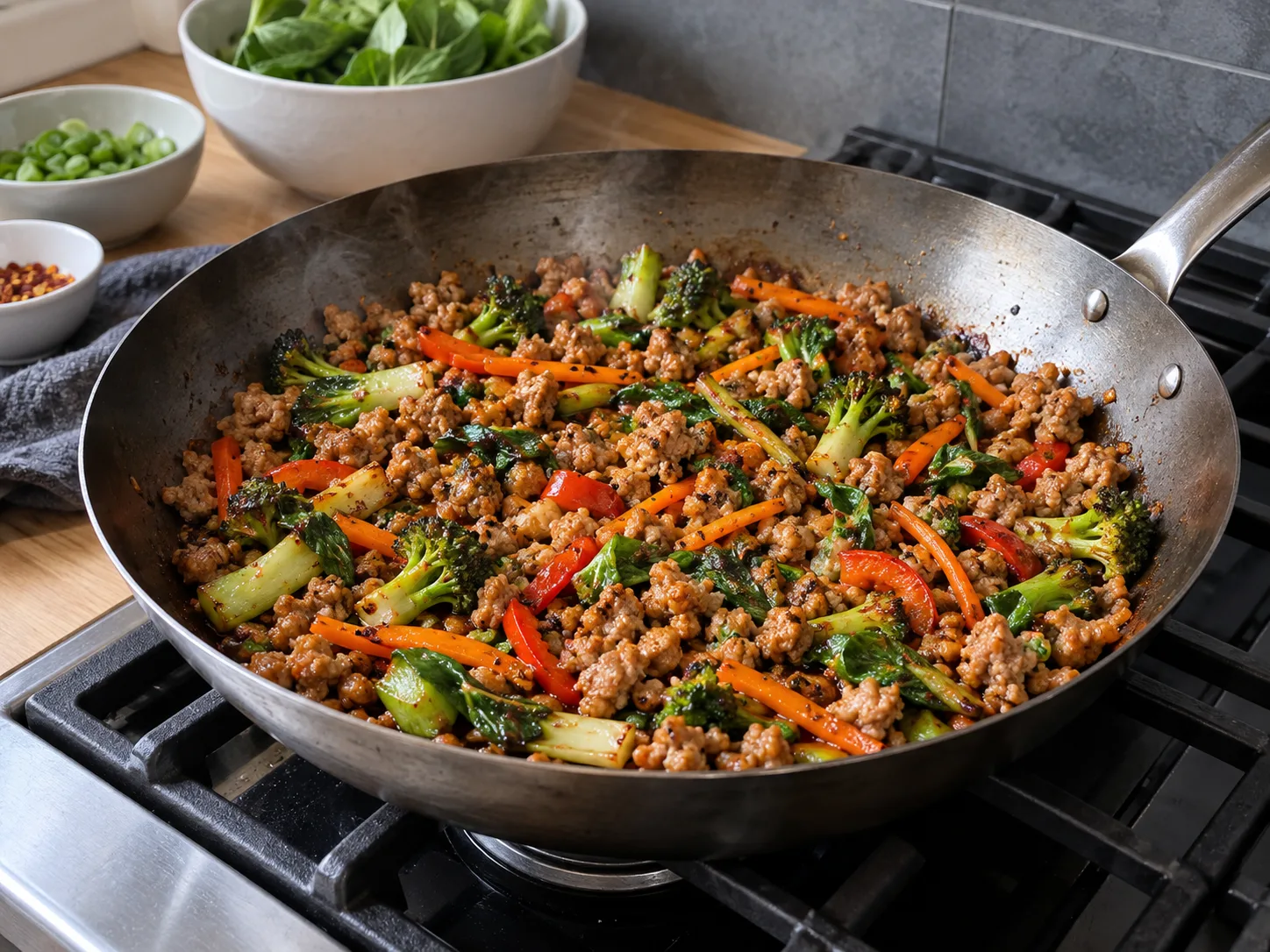
The soy-ginger-garlic base here is a neutral, widely-liked starting point, but it adapts easily toward other stir-fry traditions. For a Korean-inspired direction, add a tablespoon of gochujang to the sauce and swap the green onion garnish for a sprinkle of sesame seeds. For a Thai basil pork direction, add a diced chili and a generous handful of fresh basil stirred in at the very end, off the heat, so it wilts rather than fully cooks. For a sweet and sour direction, double the brown sugar and vinegar and add a splash of ketchup or a spoonful of pineapple juice if you have either on hand.
Scaling it for a week of meal prep
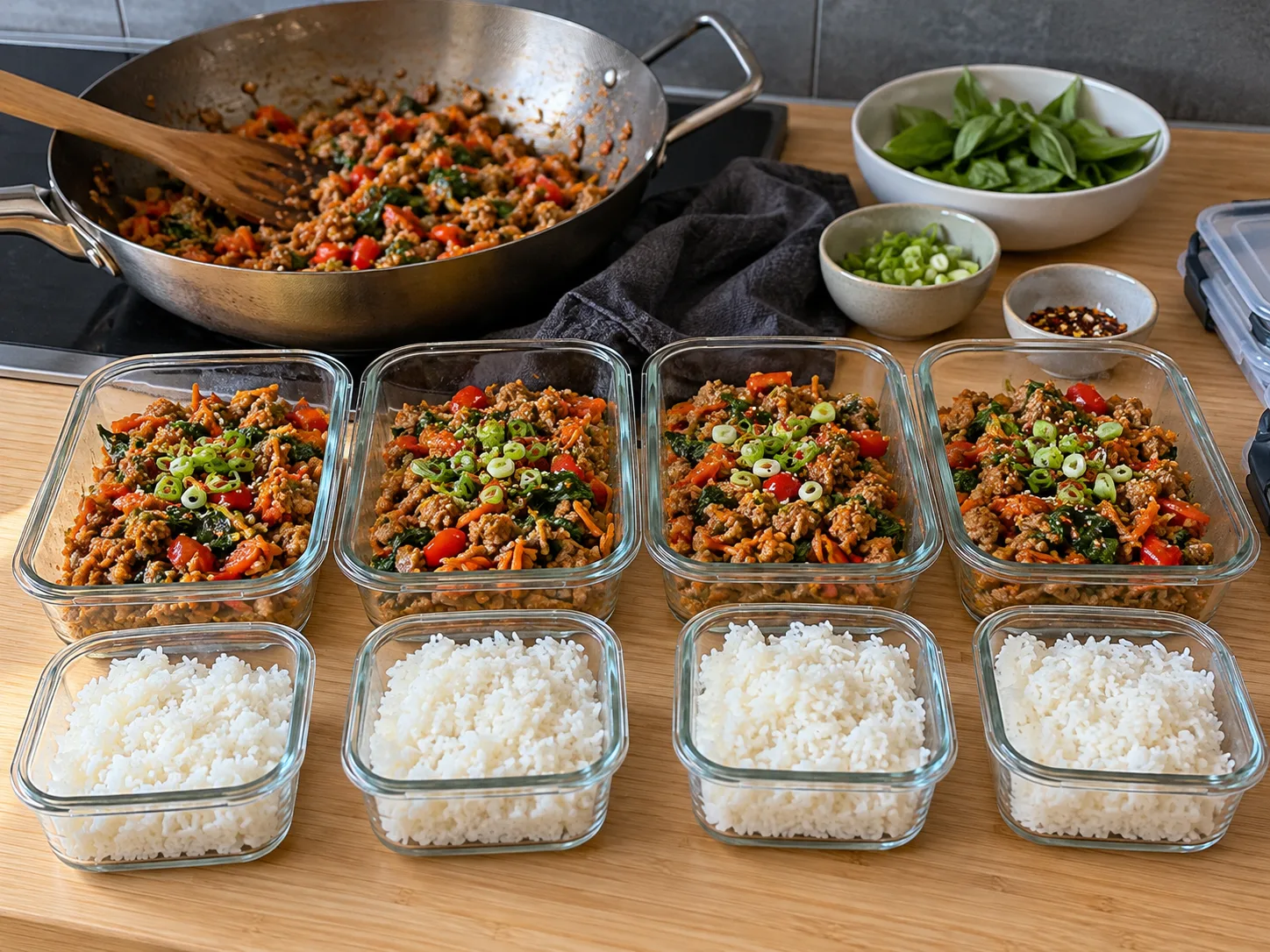
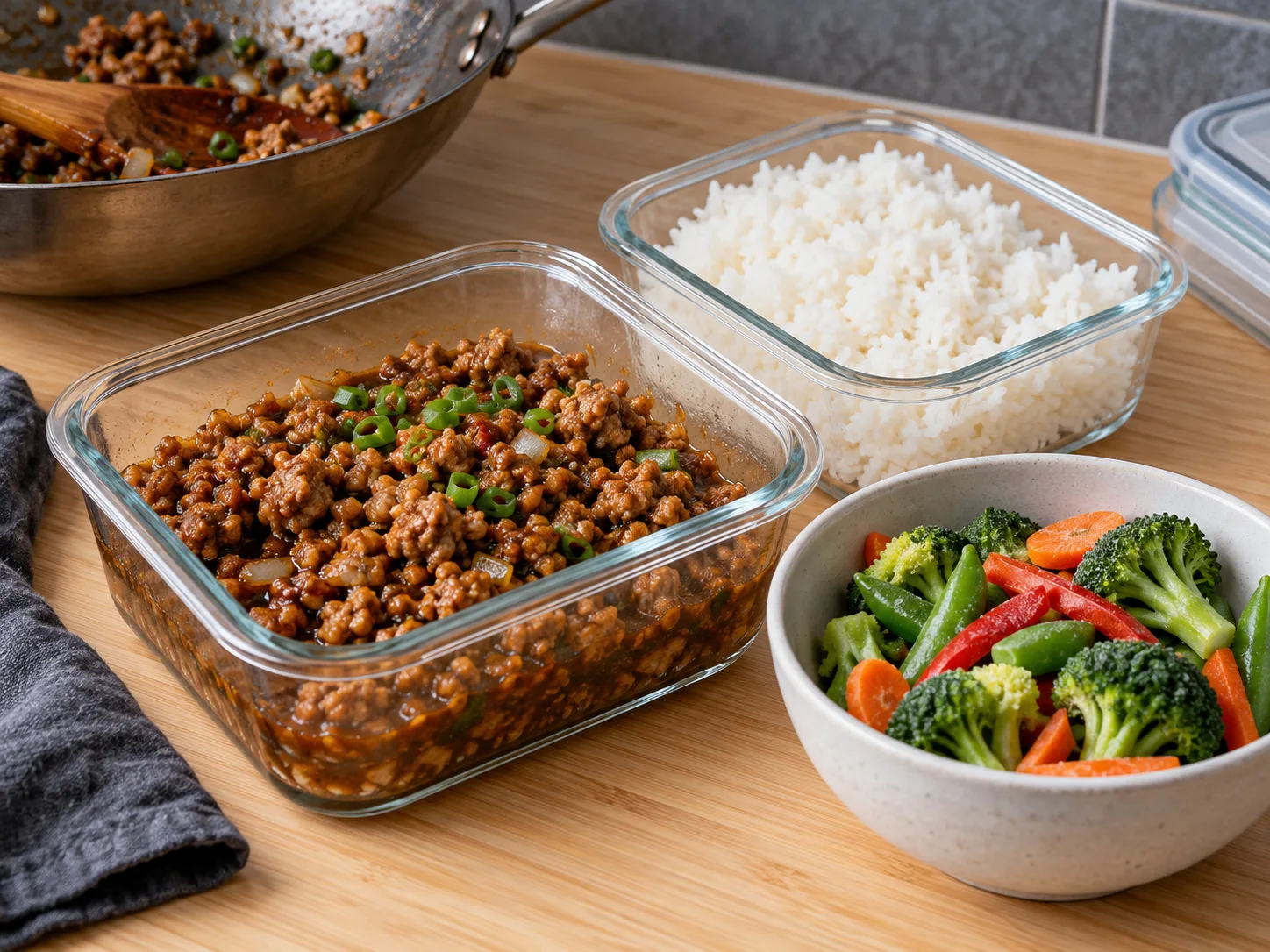
For 8 servings, mix a double quantity of sauce in one jar, but cook the pork in two batches and transfer each browned batch to a bowl. Cook the vegetables in two batches as well, then return everything to the pan and add the sauce for the final 1–2 minutes. Pack the rice separately so it does not absorb the sauce and become soft during storage.
Common mistakes
Adding the sauce too early. Pouring the sauce in before the pork has browned and the vegetables have cooked through means everything braises in liquid instead of actually searing. Sauce goes in last, for exactly the reason the recipe’s order specifies.
Thawing the frozen vegetables first. This seems like it should help, but it actually makes the stir-fry watery — frozen vegetables release less excess moisture cooked straight from frozen over high heat than they do after sitting out and thawing first.
Using a crowded or undersized pan. As covered above, stir-fry needs room for ingredients to actually make contact with the hot surface. A pan that’s too small for the volume of food steams everything in its own liquid instead.
How to make it cheaper
- Buy a plain frozen vegetable mix rather than a “gourmet” blend with sauce already added — those cost more and often duplicate the sauce you’re making yourself.
- Skip the fresh ginger if cost or availability is an issue — ground ginger works as a substitute at a fraction of the price.
- Buy ground pork when it’s on sale and freeze what you don’t use — it holds up well in the freezer for a couple of months.
- Make the sauce from pantry staples you already have rather than buying a pre-made stir-fry sauce bottle, which usually costs several times more per serving for a similar flavour profile.
Equipment notes
Use the widest pan you have so the ingredients stay in a thin layer. Carbon steel and cast iron can be heated more aggressively for deeper browning. With a non-stick skillet, use medium-high heat and extend the pork step by a minute if needed. On electric or induction, let the pan preheat briefly before adding the oil, and allow it to recover its heat between batches.
Storage and reheating
- Fridge: cool and refrigerate within 2 hours, then use within 3–4 days. Store rice in a separate container.
- Freezer: freeze portions for up to 3 months. For better vegetable texture, freeze the cooked pork and sauce together and add a fresh handful of frozen vegetables when reheating.
- Skillet reheating: add 1 tablespoon of water and toss over medium-high heat until the pork reaches 165°F / 74°C.
- Microwave reheating: cover loosely and heat at 70% power in 60-second intervals, stirring between intervals, until the centre reaches 165°F / 74°C.
What to serve it over
Rice is the default and the cheapest option. Rice noodles or regular noodles both work too if you want to switch it up — toss the cooked noodles directly into the pan with the sauce in the last step instead of serving the stir-fry over a separate bed of rice.
For a lower-carb option, cauliflower rice holds up well here since the stir-fry sauce is flavourful enough to carry a milder base. Riced broccoli or shredded cabbage, quickly steamed or microwaved, are less common but work on the same principle — anything mild and starchy-adjacent that can soak up a bit of the sauce.
Frequently asked questions
Can I use ground chicken or turkey instead of pork?
Yes. Ground chicken or turkey absorbs the sauce well; add 1 teaspoon of cooking oil if the meat is extra lean. Cook either poultry option to 165°F / 74°C before adding the vegetables.
Do I need a wok, or does a regular skillet work?
A regular large skillet works fine. The main thing a wok’s shape helps with is tossing ingredients over very high heat without them flying out of the pan — useful, but not essential for a home stovetop version of this dish.
Can I use fresh vegetables instead of frozen?
Yes — bell pepper, broccoli, carrot, and snap peas all work well fresh. Cut them into similarly sized pieces so they cook evenly, and expect the cook time for the vegetable step to run a minute or two longer than with pre-cut frozen vegetables.
Why is my stir-fry watery instead of saucy?
Usually one of two causes: the heat wasn’t high enough to evaporate the liquid the vegetables and pork release as they cook, or the sauce step didn’t get enough time in the pan before serving. Give the final toss a full 1–2 minutes over high heat rather than rushing it — that’s specifically when the sauce reduces and thickens around the other ingredients instead of pooling at the bottom of the pan.
Can I thicken the sauce with cornstarch for a glossier result?
Yes — whisk a teaspoon of cornstarch into the sauce mixture before it goes in the pan, rather than trying to add dry cornstarch directly to the hot pan, where it clumps. This gives a glossier, more restaurant-style coating than the natural reduction method alone produces, at the cost of one extra small step.
Is ground pork fully cooked at the same temperature as ground beef?
Ground pork should reach an internal temperature of 160°F / 71°C, the same target as ground beef and slightly lower than the 165°F / 74°C needed for poultry. In a stir-fry cooked in small pieces over high heat for 5–6 minutes as this recipe calls for, it reaches that temperature easily — the main risk is undercooking large, unbroken clumps rather than the overall cook time being too short.
Related reading: Ground Beef and Rice Skillet, Budget Ground Turkey Meatballs, and Best Cheap Protein Sources by Cost Per Gram.