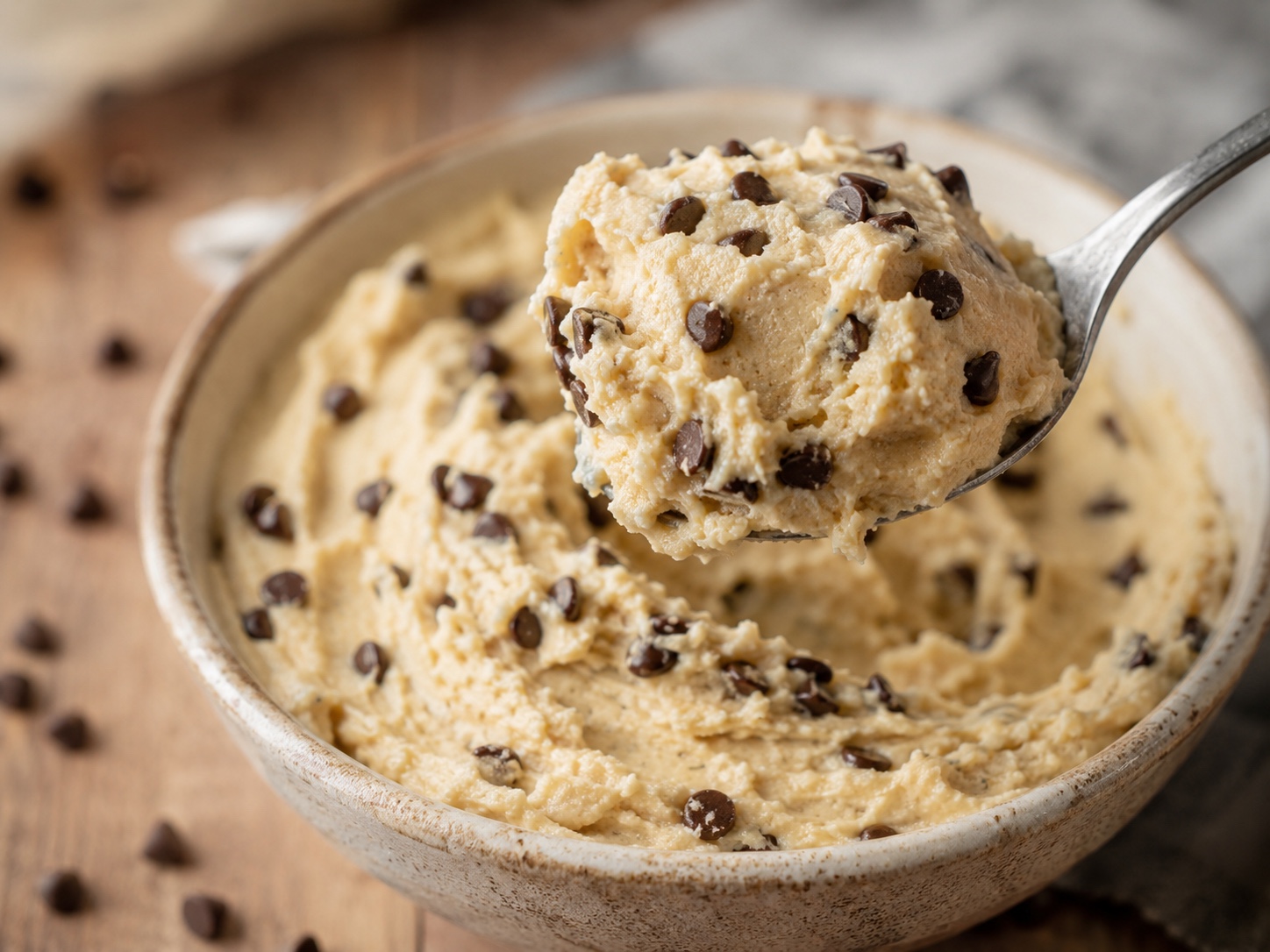
Cottage Cheese Cookie Dough Without Protein Powder
Quick Answer
You can make cottage cheese cookie dough without protein powder by blending cottage cheese until completely smooth, mixing it with vanilla, sweetener, a little nut butter, and then stirring in oat flour or heat-treated flour until it becomes thick and scoopable. The key is blending the cottage cheese well and chilling the dough before serving.
This version is egg-free, no-bake, budget-friendly, and higher in protein than regular cookie dough because the base is cottage cheese instead of butter and sugar.
Why This Recipe Works
Cottage cheese can sound strange in cookie dough, but once it is blended smooth, it becomes a creamy base with a mild flavor. Vanilla, a small amount of sweetener, salt, and chocolate chips do most of the “cookie dough” work.
This recipe does not use protein powder. That matters because protein powder can make no-bake desserts chalky, expensive, or overly sweet. Here, the protein comes from normal grocery ingredients, mainly cottage cheese.
The texture is the make-or-break part. If the cottage cheese is under-blended, the dough can taste grainy. If too much flour is added, it becomes pasty. The method below keeps the dough creamy, thick, and easy to adjust.
Why You’ll Like This Recipe
- No protein powder — no chalky texture or supplement taste.
- No eggs — made for eating by the spoon, not baking.
- Higher protein than classic cookie dough — cottage cheese adds protein without much effort.
- Budget-friendly — uses simple grocery ingredients.
- Quick to make — about 10 minutes of prep, then chill.
- Easy to customize — make it chocolate peanut butter, birthday cake, cinnamon roll, or oatmeal cookie style.
- Good for meal prep — portion into small containers for a quick sweet snack.
Looking for more budget-friendly ways to use affordable proteins in a weekly cooking routine? The guide to cheap high-protein meal prep in Canada covers practical batch cooking approaches on a grocery budget.
Ingredients
Cottage Cheese
Use 1 cup (227g) of 2% or full-fat cottage cheese. These usually blend smoother than fat-free cottage cheese and give the dough a creamier texture.
Use pasteurized, store-bought cottage cheese and keep the finished dough refrigerated. Cottage cheese is a perishable dairy product, so do not leave the dough sitting out for long periods.
Cottage cheese is also one of the better protein values at Canadian grocery stores. For a comparison of how it stacks up against other proteins by cost per gram, see Best Cheap Protein Sources in Canada.
Oat Flour or Heat-Treated Flour
Use oat flour for the easiest version. You can buy oat flour or make it by blending rolled oats until fine.
For the strictest food-safety approach, use commercially heat-treated flour or heat-treat your flour at home and let it cool before mixing. Do not use raw all-purpose flour in no-bake cookie dough.
Maple Syrup or Honey
Use 2 tablespoons to start. Add more only after tasting. Maple syrup gives a softer, caramel-like flavor. Honey works too, but it has a stronger taste.
Vanilla Extract
Vanilla is important here. It helps the mixture taste more like cookie dough and less like cottage cheese.
Nut Butter
Use 1 to 2 tablespoons of peanut butter, almond butter, or cashew butter. Nut butter adds richness and helps the dough feel more satisfying.
Use 1 tablespoon for a lighter version. Use 2 tablespoons if you want a richer, more dessert-like texture.
Mini Chocolate Chips
Mini chocolate chips work better than regular chips because they spread through the dough more evenly. You get chocolate in more bites without needing to use a lot.
Salt
A small pinch of salt makes the vanilla and chocolate taste stronger. It also balances the mild tang from the cottage cheese.
Optional Cinnamon
Cinnamon is optional, but it works well if you use oat flour. It gives the dough a warmer oatmeal-cookie flavor.
How to Make Cottage Cheese Cookie Dough Without Protein Powder
1. Blend the Cottage Cheese
Add the cottage cheese to a blender or food processor. Blend for 60 to 90 seconds, or until completely smooth.
There should be no visible curds. If the mixture still looks grainy, keep blending. This step matters more than any other step in the recipe.
2. Add the Flavor Ingredients
Add the maple syrup, vanilla, nut butter, and salt to the blended cottage cheese. Blend again for 10 to 15 seconds, or stir very well in a bowl.
Taste the mixture before adding flour. It should taste slightly sweeter than you want the final dough to taste, because the flour will soften the sweetness.
3. Add the Flour Slowly
Transfer the mixture to a bowl. Stir in 1/3 cup oat flour or heat-treated flour.
Let it sit for 2 minutes. Oat flour thickens slightly as it hydrates.
If the dough is still too loose, add more flour 1 tablespoon at a time. If it becomes too thick, add 1 teaspoon of milk or water at a time.
4. Fold in Chocolate Chips
Fold in the mini chocolate chips gently. Do not overmix.
5. Chill
Cover and refrigerate for at least 30 minutes. The dough gets thicker and tastes more balanced after chilling.
For the best texture, chill it for 1 to 2 hours.
Recipe Card
Cottage Cheese Cookie Dough Without Protein Powder
A creamy, no-bake cottage cheese cookie dough made without protein powder. Egg-free, budget-friendly, and easy to customize.
| Recipe Detail | Amount |
| **Prep Time** | 10 minutes |
| **Chill Time** | 30 minutes |
| **Total Time** | 40 minutes |
| **Servings** | 3 snack-size servings |
| **Yield** | About 1 1/4 cups |
Ingredients
- 1 cup (227g) 2% or full-fat cottage cheese
- 1/3 cup (35g) oat flour, plus 1 to 3 tablespoons more if needed
- 2 tablespoons maple syrup or honey, plus more to taste
- 1 teaspoon vanilla extract
- 1 to 2 tablespoons peanut butter, almond butter, or cashew butter
- 2 tablespoons mini chocolate chips, plus 1 tablespoon for topping if desired
- 1/8 teaspoon fine salt
- 1/4 teaspoon cinnamon, optional
- 1 to 2 teaspoons milk or water, only if needed
Instructions
- Add cottage cheese to a blender or food processor. Blend for 60 to 90 seconds, until completely smooth.
- Add maple syrup, vanilla, nut butter, and salt. Blend briefly or stir until fully combined.
- Transfer to a mixing bowl. Stir in 1/3 cup oat flour.
- Let the mixture sit for 2 minutes, then check the texture.
- If the dough is too soft, add more oat flour 1 tablespoon at a time. If it is too thick, add milk or water 1 teaspoon at a time.
- Fold in mini chocolate chips.
- Cover and refrigerate for at least 30 minutes before serving.
- For the smoothest texture, use a blender instead of a food processor.
- Fat-free cottage cheese can work, but it may make the dough thinner and slightly grainier.
- If using all-purpose flour, heat-treat it first and let it cool before adding it to the dough.
- If using oat flour, choose rolled oats you are comfortable eating in a no-bake recipe, or toast the oat flour first for a more cautious approach.
- The dough will firm up as it chills.
- Do not use raw all-purpose flour.
- Use heat-treated flour, commercially heat-treated flour, or a no-bake flour option you are comfortable with.
- Keep the finished dough refrigerated.
- Do not leave the dough at room temperature for more than 2 hours.
- Use clean utensils and an airtight container.
- [FDA: Flour Is a Raw Food and Other Safety Facts](https://www.fda.gov/consumers/consumer-updates/flour-raw-food-and-other-safety-facts)
- [CDC: Raw Flour and Dough Food Safety](https://www.cdc.gov/food-safety/foods/no-raw-dough.html)
- Use store-brand cottage cheese.
- Make oat flour by blending rolled oats instead of buying a separate bag.
- Use mini chocolate chips so a small amount feels like more.
- Skip protein powder completely.
- Portion the dough into small containers instead of buying single-serve protein desserts.
Recipe Notes
Estimated Nutrition
Estimated per serving, based on 3 servings and made with 2% cottage cheese, oat flour, 2 tablespoons maple syrup, 1 tablespoon peanut butter, and 2 tablespoons mini chocolate chips.
| Nutrient | Estimated Amount |
| Calories | 210–240 |
| Protein | 10–13g |
| Carbohydrates | 24–30g |
| Fat | 7–10g |
| Sugar | 12–16g |
| Fiber | 2–3g |
Nutrition is an estimate only. Actual values depend on the brands, cottage cheese fat percentage, sweetener amount, flour choice, and serving size.
Food Safety Notes for Edible Cookie Dough
This recipe does not contain eggs, but flour still matters. The FDA considers flour a raw food and advises against eating raw flour, dough, or batter. The CDC also warns that uncooked flour can contain germs that may cause food poisoning.
For a safer no-bake cookie dough:
Helpful source links for final fact-checking:
Texture Tips
If the Dough Tastes Grainy
Blend the cottage cheese longer. A high-speed blender gives the smoothest result. A food processor works, but it may leave more texture.
If the mixture still feels grainy after blending, pass it through a fine mesh strainer before adding the flour.
If the Dough Is Too Runny
Add oat flour 1 tablespoon at a time. Then chill the dough for at least 30 minutes.
Runny dough usually happens when the cottage cheese is watery, fat-free, or not blended smoothly.
If the Dough Is Too Thick
Add 1 teaspoon of milk or water at a time until it becomes scoopable again.
Do not add too much liquid at once. A little goes a long way.
If It Tastes Too Much Like Cottage Cheese
Add a little more vanilla, a tiny pinch of salt, or an extra teaspoon of maple syrup. Chilling also helps soften the cottage cheese flavor.
Best Blender Option
A personal blender or high-speed blender is ideal. A regular countertop blender also works if you blend longer and scrape down the sides.
Budget Tips
This recipe is not the absolute cheapest dessert you can make, but it is a good budget option if you want a sweet snack with more protein than classic cookie dough.
To work out what this recipe actually costs per serving with your own grocery prices, the method is in How to Calculate Cost Per Serving for Any Recipe.
Flavor Variations
Chocolate Peanut Butter
Use peanut butter as the nut butter. Add 1 tablespoon cocoa powder and an extra teaspoon of maple syrup if needed.
Birthday Cake
Use vanilla extract, white chocolate chips, and 1 tablespoon sprinkles. Add a tiny drop of almond extract if you like classic birthday cake flavor.
Cinnamon Roll
Add 1/2 teaspoon cinnamon and skip the chocolate chips. Swirl in a small spoonful of Greek yogurt mixed with powdered sugar for a frosting-style topping.
Double Chocolate
Add 1 tablespoon cocoa powder and use mini chocolate chips. If the dough thickens too much, add 1 teaspoon milk.
Oatmeal Cookie
Add 2 tablespoons quick oats after the dough is mixed. Add cinnamon and a few raisins or chocolate chips.
Peanut Butter Chocolate Chip
Use 2 tablespoons peanut butter and finish with a small pinch of flaky salt.
Storage
Store cottage cheese cookie dough in an airtight container in the refrigerator for up to 4 days.
The dough will thicken as it sits. Stir before serving, or let it sit at room temperature for 5 minutes if it becomes too firm.
You can freeze it for up to 2 months. Portion it into small containers or silicone molds, freeze, and thaw in the refrigerator overnight. The texture may be softer after thawing.
Common Mistakes
Not Blending the Cottage Cheese Enough
This is the biggest mistake. If the cottage cheese is not smooth before you add the other ingredients, the finished dough will be grainy.
Adding Too Much Flour Too Fast
Start with 1/3 cup. Add more only after the dough rests for a couple of minutes.
Skipping the Chill Time
The dough is softer right after mixing. Chilling makes it thicker and closer to cookie dough texture.
Using Raw All-Purpose Flour
Do not use raw all-purpose flour in a no-bake recipe. Use heat-treated flour or another no-bake option.
Expecting Classic Butter Cookie Dough
This is a cottage cheese dessert, not traditional cookie dough made with butter and brown sugar. It should taste creamy, sweet, vanilla-forward, and chocolatey, but not exactly like raw bakery cookie dough.
FAQ
Can you make cottage cheese cookie dough without protein powder?
Yes. Cottage cheese adds protein on its own, so you do not need protein powder to make a higher-protein cookie dough-style dessert.
Is cottage cheese cookie dough safe to eat?
It can be made as an edible cookie dough because it does not use eggs. The main safety issue is flour. Do not use raw all-purpose flour. Use heat-treated flour or a no-bake flour option you are comfortable with, and keep the dough refrigerated.
Does it taste like cottage cheese?
Not strongly, as long as the cottage cheese is blended very smooth. Vanilla, sweetener, salt, and chocolate chips help make the flavor closer to cookie dough.
Can I use Greek yogurt instead?
Yes, but the texture will be different. Greek yogurt is tangier and usually makes the dough softer. Use full-fat or 2% Greek yogurt and expect to add more flour.
Can I make it with oat flour?
Yes. Oat flour works well because it thickens the dough and has a mild flavor. You can make it by blending rolled oats until fine.
How do I make it thicker?
Add oat flour 1 tablespoon at a time and chill the dough. It will firm up more in the fridge.
How long does it last in the fridge?
It lasts up to 4 days in an airtight container.
Can I freeze it?
Yes. Freeze it in small portions for up to 2 months. Thaw in the refrigerator overnight before eating.
Is this high protein?
It is higher in protein than classic cookie dough because it uses cottage cheese as the base. Depending on the ingredients and serving size, it has about 10 to 13 grams of protein per serving.
Can I make it lower calorie?
Yes. Use 1 tablespoon nut butter instead of 2, reduce the chocolate chips, and use a lower-fat cottage cheese if you like the texture. These changes lower calories but may make the dough less rich.